Books Like Zen and the Art of Motorcycle Maintenance
Find philosophical road novels and reflective nonfiction like Zen and the Art of Motorcycle Maintenance, with ideas that linger.
Updated June 10, 2026
Robert Pirsig's 1974 book is a strange hybrid that nothing has quite replicated: a real motorcycle trip from Minnesota to California with his young son Chris, interleaved with a philosophical inquiry into Quality, the unnameable thing that makes work and life good, and shadowed by Phaedrus, the ghost of the narrator's own past self, who pursued these questions into a breakdown and electroshock treatment. The famous insight, that the Buddha resides as comfortably in the gears of a motorcycle as on a mountaintop, is an argument for caring about technology and craft rather than fleeing them. Rejected by over a hundred publishers, it became one of the best-selling philosophy books ever written.
Because no single book does all of that, this list splits by which thread you want to follow. For the Zen and Eastern philosophy underneath it, Alan Watts's The Way of Zen is the serious source and The Tao of Pooh the friendly one, with The Art of Happiness adding the Buddhist take on living well. For philosophy as a personal practice, there is Meditations and, at the steep end, Being and Time. And for the American tradition of withdrawing from society to examine your life, Walden is the direct ancestor, with Siddhartha and The Alchemist covering the seeker's journey in fiction.
A practical note: these range from an afternoon's read (The Tao of Pooh) to one of the hardest books in the Western canon (Being and Time). Pirsig's real peer for blending narrative and ideas is his own second book, Lila, which extends the Quality argument on a sailboat instead of a motorcycle. Each entry below tells you what you are signing up for.
Read this if you want the East-meets-West conversation made practical.
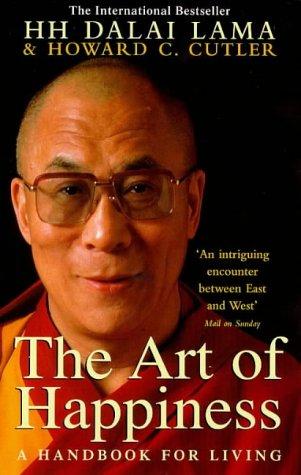
This 1998 book pairs the Dalai Lama with Howard Cutler, an American psychiatrist, and the structure echoes what Pirsig does: Eastern wisdom tested against a Western, analytical mind. Cutler interviews the Dalai Lama over a series of sessions and frames the answers with psychiatric commentary and case studies, asking whether Buddhist ideas about compassion, suffering, and training the mind hold up as practical psychology. Like Pirsig, it insists that inner life is something you work on deliberately, the way you would maintain a machine.
It is far gentler and more conventional than Pirsig, a question-and-answer self-help book rather than a narrative or an argument, and Cutler's framing can feel padded next to the Dalai Lama's directness. There is no road, no story, and no intellectual vertigo. Pick it if what you took from Pirsig was the desire to actually be calmer and saner, rather than the philosophical chase itself.
Read this for the seeker's journey as a novel instead of a memoir.
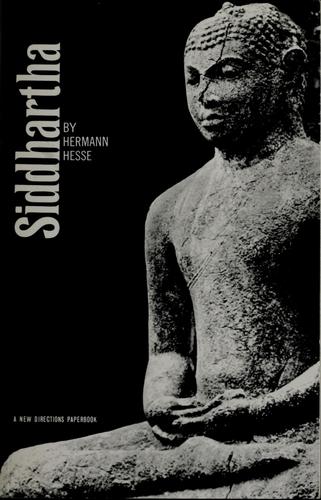
Hesse's 1922 novel is the fictional template for what Pirsig did with his own life: a man who cannot accept received answers walks away from every institution that claims to have them, and learns instead from experience, work, and a river. Siddhartha tries asceticism, commerce, and love, and finds that wisdom cannot be taught, only lived, which is close kin to Pirsig's insistence that Quality cannot be defined, only recognized. Both books treat enlightenment as something found in ordinary attention rather than doctrine.
The vehicle is completely different: a short, lyrical fable set in the India of the Buddha's lifetime, with none of Pirsig's technical detail, analytical rigor, or autobiographical rawness. It can be read in two evenings and asks nothing of you philosophically except openness. Choose it when you want the spiritual arc of Pirsig's book distilled to its essence, especially if Phaedrus's chautauquas on rhetoric and the Greeks were the parts you skimmed.
Read this if you want the Eastern philosophy with the difficulty dialed all the way down.
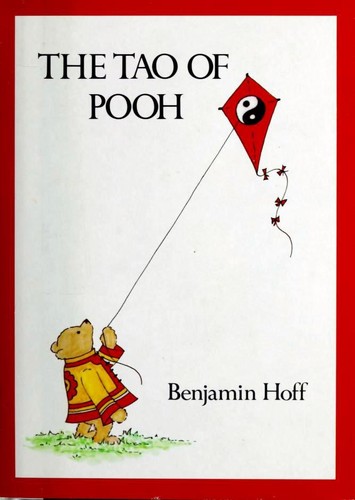
Benjamin Hoff's 1982 book does deliberately what Pirsig's title does as a joke: it attaches Eastern philosophy to something disarmingly homely. Hoff explains Taoism through Winnie the Pooh, arguing that Pooh's uncarved simplicity, his ability to just be while Rabbit schemes and Owl pontificates, is the Taoist ideal in action. Like Pirsig, Hoff is openly suspicious of cleverness for its own sake and of the Western compulsion to dissect everything, and he wants philosophy returned to daily living.
It is also a fraction of Pirsig's weight, readable in an afternoon, with no narrative, no darkness, and no intellectual struggle. Where Pirsig earned his conclusions through a breakdown, Hoff offers his with a smile, and readers who loved Pirsig's rigor sometimes find Pooh's wisdom thin. Treat it as a palate cleanser or a gift book, or as the gentlest possible introduction to the ideas Watts treats seriously.
Read this for the original philosophy-as-maintenance manual.
Marcus Aurelius wrote these private notes to himself while running the Roman Empire and fighting wars on the Danube, and they are the closest thing antiquity produced to Pirsig's project: philosophy not as an academic subject but as daily mental upkeep. The Stoic disciplines (control what you can, accept what you cannot, do the work in front of you with full attention) rhyme with Pirsig's gumption and his care for the motorcycle as care for the self. Both books say, in effect, that the quality of your attention is the quality of your life.
It is a book of fragments, repetitive by design since Marcus was reminding himself of the same truths over and over, so it is best read a few pages at a time rather than straight through. There is no story and no system, and the Stoic register is cooler and more austere than Pirsig's romantic intensity. A good modern translation (Gregory Hays's is the usual recommendation) makes a difference. It is the most durable companion book on this list.
Read this only if you want to follow Phaedrus all the way in.
Heidegger's 1927 work is the deep end of the questions Pirsig raises. What Pirsig calls Quality, the pre-intellectual encounter with the world that precedes the split into subject and object, has a serious philosophical cousin in Heidegger's analysis of being-in-the-world, and his famous discussion of tools (the hammer you understand by using, not by staring at) is the academic version of Pirsig's case that you know a motorcycle through wrenching on it. Readers who wanted Pirsig to stop telling stories and finish the argument will find the argument here.
Total honesty: this is one of the most difficult books in Western philosophy, written in a dense invented vocabulary, and almost no one gets through it unaided. A guide or companion volume is not optional for most readers. It is also the one pick here with no spiritual comfort on offer, and Heidegger's later Nazi affiliation permanently stains his biography. Attempt it only if Phaedrus's hunt through Kant and the Greeks was your favorite thread, and consider starting with a secondary introduction.
Read this for the actual Zen behind Pirsig's title.
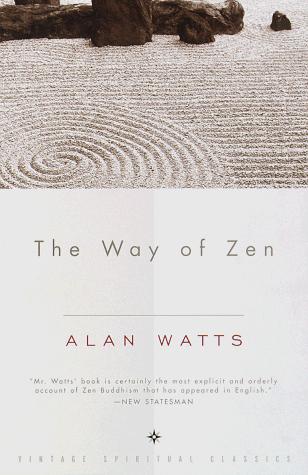
Pirsig's title nods at Zen but his book, as he admitted, is not very factual about it; Alan Watts's 1957 classic is where you go for the real thing. Watts lays out the history of Zen from its Indian and Chinese roots through Taoism and into Japanese practice, then explains its principles and arts with the same gift Pirsig has for making hard ideas feel urgent and personal. The two share a central preoccupation: the way Western subject-object thinking splits us from direct experience, and what it would mean to heal that split.
This is exposition rather than narrative, a lucid scholarly essay with no road trip and no Chris, so it works the analytical side of your brain more than the storytelling side. Watts is the rare writer who can be rigorous and readable at once, though purists note he interprets Zen freely. If Zen and the Art left you wanting to understand what Zen actually teaches, this is the single best next step on the list.
Read this if you want the journey-with-a-lesson in its most accessible form.
Coelho's fable shares Pirsig's skeleton: a long physical journey that is really a journey toward a way of seeing, with lessons delivered along the road. Santiago the shepherd crosses the desert to the pyramids chasing a dream, learning to read omens and to trust that meaning is found in the pursuit itself, which loosely parallels Pirsig's insistence that the real cycle you work on is yourself, and that the journey matters more than the destination. It is the easiest, most companionable book on this list.
Be clear about the gap, though. The Alchemist is a simple parable with its moral printed on the surface, and the universe-conspires-to-help-you optimism is the opposite of Pirsig's hard-won, sometimes harrowing inquiry; there is no equivalent of Phaedrus here, and nothing is at stake intellectually. Readers who loved Pirsig's rigor may find it thin. Pick it for a light read in the same general direction, or as a gift for someone not ready for Pirsig.
Thoreau's 1854 account of two years in a cabin at Walden Pond is the book Pirsig's most resembles in kind: an American writer steps outside ordinary life, attends closely to practical work (building, planting, keeping accounts), and uses that concrete experience as a platform for first-person philosophy about how to live. Thoreau's quarrel with lives of quiet desperation and with technology that rides mankind anticipates Pirsig's quarrel with a culture that hates and fears its own machines, and both insist that deliberate attention to simple work is a spiritual discipline. Pirsig and his son even carry a copy of Thoreau on the trip in the book.
The differences are pace and temperament. Walden sits still where Pirsig rides; its nineteenth-century sentences are long and digressive, and Thoreau can be prickly and self-satisfied in a way that divides readers. It rewards slow reading, a chapter at a time, ideally outdoors. Choose it if the parts of Pirsig you loved were the mornings on the road, the camping, and the conviction that a careful life is the answer to a frantic one.
What book is most similar to Zen and the Art of Motorcycle Maintenance?
The closest match is Pirsig's own sequel, Lila: An Inquiry into Morals (1991), which extends the Quality argument during a sailboat trip down the Hudson. Among other authors, Walden is the nearest ancestor (first-person philosophy grounded in practical work) and The Way of Zen by Alan Watts is the best companion for the Eastern ideas. Many readers also pair it with Matthew Crawford's Shop Class as Soulcraft, a modern philosophical defense of working with your hands.
Is Zen and the Art of Motorcycle Maintenance actually about Zen?
Not really, and Pirsig says so in his author's note, joking that it is not very factual on Zen or on motorcycles either. The book uses Zen-adjacent ideas about direct experience and attention, but its core is Pirsig's own Metaphysics of Quality, drawn as much from the Greeks and American pragmatism as from Buddhism. For actual Zen, The Way of Zen by Alan Watts on this list is the standard accessible introduction.
Is the book a true story?
Substantially, yes. Pirsig really made the 1968 motorcycle trip with his son Chris, really taught rhetoric in Montana, and really underwent electroconvulsive therapy after a breakdown, which is the Phaedrus backstory. He shaped events for the book, calling it fictionalized autobiography. A sad coda: Chris was killed in a mugging in 1979, which Pirsig writes about in an afterword added to later editions.
Which of these books should I read if I found Pirsig too difficult?
Start with The Tao of Pooh, which covers related Eastern ideas in an afternoon, or The Alchemist for the journey-with-a-lesson in fable form. Siddhartha is the best middle step, short and lyrical but with real depth. Save Being and Time for last, if ever; it is by far the hardest book on the list and needs a companion guide. Meditations works at any level if you read it a few pages at a time.
As an Amazon Associate, we earn from qualifying purchases. · About & methodology