8 books like Walden, from Pilgrim at Tinker Creek to A Sand County Almanac: nature writing and quiet philosophy matched to what you loved in Thoreau.
Updated June 10, 2026
Walden is not really a book about living in the woods. Thoreau spent two years in a cabin by Walden Pond, but the experiment was a frame for something harder to pull off: looking closely at one small patch of the world until it yields a philosophy. The famous lines about living deliberately and marching to a different drummer survive because they sit on top of pages of exact observation, ice forming on the pond, the cost of nails, ants at war. The mix of accountant's ledger and sermon is what nobody has quite replicated since.
The books below split along what readers actually want next. If you want the closest living descendants, writers who watch one place until it becomes a worldview, go to Pilgrim at Tinker Creek, A Sand County Almanac, and The Sound of a Wild Snail Eating. If you want the philosophical roots, Emerson's Nature is the essay that made Walden possible. And if you are after the broader pleasures around the edges, the science of forests, the appeal of a slower life abroad, even how culture shapes the individualism Thoreau preached, The Hidden Life of Trees, Under the Tuscan Sun, and the last two picks cover that ground.
A practical note: almost none of these are books to race through. Dillard and Leopold in particular are written to be read the way Thoreau watched the pond, a few pages at a time, ideally outdoors or near a window. The entries below tell you which part of Walden each one echoes so you can match the book to what you underlined.
Read this for the essay that made Walden possible.
Emerson's 1836 essay is the founding document of American transcendentalism and, in a direct sense, Walden's parent. Emerson was Thoreau's mentor and friend, and he owned the land at Walden Pond where Thoreau built his cabin. The core ideas Thoreau tested in the woods, that nature is a teacher, that the divine is legible in the physical world, that society's approval is worth little next to firsthand experience, are all laid out here first, in compressed, aphoristic form.
Where Walden is an experiment with mud on its boots, Nature is pure argument: abstract, idealist, and short, readable in an evening. There are no bean fields or grocery bills, which is exactly why the two books pair so well. Read it after Walden and you can see what Thoreau took from his teacher and where he pushed back. If dense nineteenth-century prose puts you off, start with the first and last sections, which carry most of the famous passages.
Read this if you loved how Thoreau found a world in a small place.
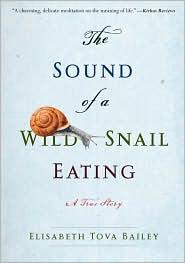
Elisabeth Tova Bailey's short memoir takes Walden's premise to its logical extreme. Bedridden by a severe illness, unable to manage even a visit to a window, Bailey spends a year observing a single woodland snail living in a pot of violets by her bed. Like Thoreau, she lets confinement become concentration: the snail's eating, sleeping, and habits open out into natural history, and the watching becomes a way to stay sane and present. It is the deliberate life conducted from a sickbed.
The obvious difference is that her simplicity was not chosen, which gives the book a quiet gravity Walden does not have; Thoreau could walk to town for dinner, and Bailey could not walk at all. It is also small in every sense, barely 200 pages, modest in tone, with real malacology threaded through. Read it in an afternoon when you want Walden's attentiveness with more humility and no sermons.
Read this if you want the closest thing to a modern Walden.
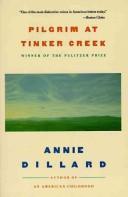
Annie Dillard's 1974 Pulitzer winner is the book most often called Walden's true heir, and the comparison holds up. Dillard spends a year watching a creek in Virginia's Blue Ridge Mountains the way Thoreau watched his pond, season by season, and like him she uses muskrats, mantises, and frozen water as raw material for questions about God, attention, and what seeing actually means. The structure is the same wager: stay in one place long enough and the whole universe will come to you.
The difference is temperature. Where Thoreau is dry, economical, and frequently scolding, Dillard is ecstatic and sometimes violent; her nature is full of waste, parasites, and a giant water bug sucking a frog hollow, and she stares at all of it. The prose is denser and more demanding than Walden's, closer to poetry, and some readers find it overwrought. If you loved the watching more than the social criticism, this is the strongest book on the list.
Read this if Walden made you care about how we treat land.
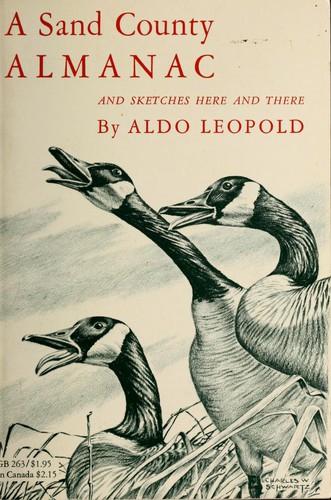
Aldo Leopold's 1949 classic does for conservation what Walden did for simplicity. The first half follows a year on a worn-out Wisconsin farm Leopold restored, month by month, in spare and often beautiful sketches of geese, oaks, and snow. The second half builds toward the land ethic, his argument that soil, water, plants, and animals belong to the same moral community we do. Like Thoreau, Leopold earns the philosophy with observation first, and his eye is at least as sharp.
Leopold was a professional forester and wildlife scientist, so the book is less inward than Walden. There is no cabin experiment and little about society or self-reliance; the subject is the land itself and our obligations to it. It is also gentler company, warm where Thoreau can be prickly. If Walden's chapters on the pond's ice and the seasons were your favorites, and the lectures your least favorite, Leopold is the better fit of anything here.
The Outdoor Scientist: The Human Footprint in the Natural World
by Temple Grandin
Read this if you want Walden's habit of observation passed to a young reader.
Temple Grandin's book is a guide to doing what Thoreau did at the pond: going outside, watching closely, asking questions, and keeping records. Grandin, the celebrated animal-behavior scientist, mixes stories from her own outdoor childhood with projects and prompts for studying rocks, birds, insects, and weather firsthand. The kinship with Walden is the method itself, the conviction that direct observation beats secondhand knowledge, and that anyone with patience can practice it.
Know before you buy that this is a children's book, written for roughly middle-grade readers, and the most practical rather than philosophical pick on this list. Adults will not find Thoreau's interiority here. It earns its place for a specific use: if Walden made you want to hand the habit of attention to a kid in your life, this is a better gift than Thoreau's own prose, which most young readers bounce off.
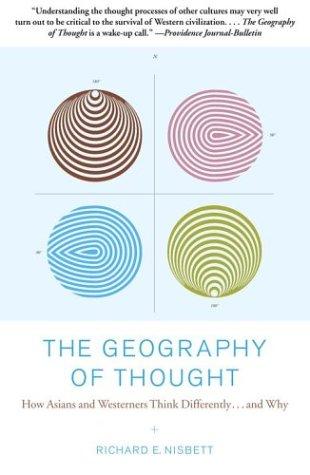
The Geography of Thought: How Asians and Westerners Think Differently...and Why
by Richard E. Nisbett
Read this only if you want to interrogate the individualism Walden preaches.
This is the outlier on the list, and it is best read as a lens on Thoreau rather than a companion to him. Richard Nisbett, a social psychologist, marshals research suggesting that Western thought leans individualist and analytic, focused on objects and personal agency, while East Asian traditions lean holistic and relational, focused on context and harmony. Walden is close to a pure specimen of the first mode, one man, self-reliant, defining himself against society, so Nisbett gives you the frame to see Thoreau's assumptions as cultural rather than universal.
There is no nature writing here and no narrative; it is a research-driven psychology book, occasionally dry, and its broad East-West contrasts have drawn fair criticism for flattening variation. Skip it if you came for ponds and seasons. Pick it up if Walden's philosophy gripped you enough that you want to argue with it, which is, after all, a very Thoreauvian impulse.
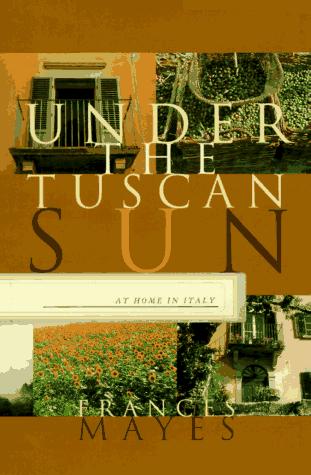
Read this if the dream of stepping off the treadmill was what hooked you.
Frances Mayes did a recognizably Thoreauvian thing: she stepped out of a hurried American professional life, bought a neglected house called Bramasole in the Tuscan countryside, and rebuilt it with her own hands while learning the rhythms of a slower place. The memoir shares Walden's practical texture, the costs and labor of making a home, the seasons, the food grown and gathered, and its underlying claim that changing how you live changes who you are.
Be clear about what it is not: an argument for simplicity. Mayes embraces abundance, long meals, renovation budgets, and sensory pleasure, which is closer to the opposite of Thoreau's bean rows and borrowed axe. There is also no social criticism; the book is sun-soaked where Walden is flinty. Choose it when you want the escape-and-rebuild story as comfort reading, with recipes, rather than as a philosophical challenge.
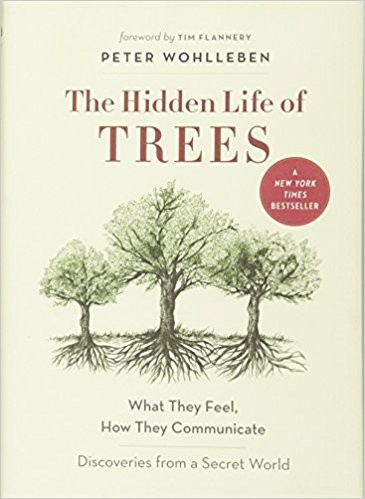
The Hidden Life of Trees: What They Feel, How They Communicate
by Peter Wohlleben
Read this if you want the science behind the forest Thoreau loved.
Peter Wohlleben is a German forester, and his bestseller describes what modern research suggests is happening in the woods Thoreau walked: trees sharing nutrients through fungal networks, signaling distress, supporting their sick neighbors. The book shares Walden's central conviction that the natural world is far more alive and interconnected than busy people assume, and that paying attention to it is its own reward. For many readers it produces the same effect Walden does, making an ordinary walk feel newly strange.
This is popular science, not philosophy or memoir, and it has no narrator's life at stake. Wohlleben also writes in a deliberately anthropomorphic style (trees as friends and parents) that charms most readers and irritates some scientists, so hold the specifics loosely. Pick it up if Walden left you more curious about the woods than about Thoreau; skip it if what you wanted was the solitary voice working out how to live.
Pilgrim at Tinker Creek by Annie Dillard is the standard answer, and it earned the comparison. Dillard spends a year closely observing a Virginia creek and builds a philosophy out of what she sees, exactly Walden's method. It won the Pulitzer Prize for general nonfiction in 1975. A Sand County Almanac by Aldo Leopold is the other classic in the same lineage, with a stronger conservation focus.
Should I read Emerson before or after Walden?
Either order works, but after is easier. Emerson's Nature lays out the transcendentalist ideas Thoreau tested at the pond, and it is short but abstract. Most readers find Walden's concrete details a friendlier entry point, then enjoy Nature as the source code. Emerson was Thoreau's mentor and owned the Walden Pond land where the cabin stood, so the two books are in direct conversation.
Did Thoreau really live alone in the wilderness?
Not in the way the myth suggests. The cabin was about a mile and a half from Concord, on land owned by Emerson, and Thoreau walked to town regularly, hosted visitors, and had his laundry done at home. He lived there for two years, two months, and two days starting in 1845. He was open about this in the book; the point was a deliberate experiment in simplicity, not survival in deep wilderness.
What should I read if Walden felt too preachy?
Go to A Sand County Almanac or The Sound of a Wild Snail Eating. Leopold makes his argument through warm, exact sketches of land and wildlife rather than lectures, and Bailey's snail memoir has Walden's attentiveness with none of its scolding. Both keep the close observation that makes Thoreau worth reading while dropping the tone that puts some readers off.
As an Amazon Associate, we earn from qualifying purchases. · About & methodology