8 books like Deep Work by Cal Newport, from Digital Minimalism to Atomic Habits and Essentialism: focus, attention, and doing fewer things better.
Updated June 11, 2026
Cal Newport's Deep Work makes a single argument and makes it well: the ability to concentrate without distraction on cognitively demanding tasks is becoming rarer at exactly the moment it is becoming more valuable. Newport, a computer science professor at Georgetown, splits the book in two. The first half is the case for depth, drawing on figures like Carl Jung retreating to his tower and Adam Grant batching his teaching. The second half is rules: schedule every minute, embrace boredom, quit social media, drain the shallows. It is more philosophy-of-work than tips book, which is why it has outlasted most productivity titles from the mid 2010s.
Readers who finish it tend to want one of three things, and this list covers each. Some want the next step in Newport's own program, the lifestyle side of the argument, which is Digital Minimalism, or the career philosophy underneath it, So Good They Can't Ignore You. Some want tactical systems for actually protecting their attention day to day (Indistractable, Make Time, Atomic Habits). And some want the prioritization layer, deciding what deserves deep work in the first place, which is where Essentialism and The One Thing come in.
A practical note: these books overlap heavily, and reading all eight would be the opposite of their shared advice. Pick one from each cluster at most. The entries below tell you which part of Deep Work each book extends and where it pulls in a different direction, so you can choose by the gap you actually feel.
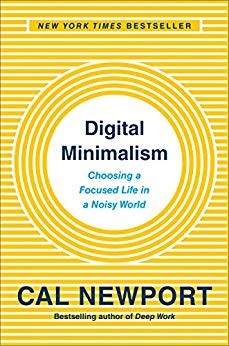
Read this if Deep Work convinced you and you want Newport's plan for your life outside work.
Digital Minimalism is the natural sequel, written by Newport three years after Deep Work. Where Deep Work targets your professional hours, this book targets everything else: the phone checking, the social feeds, the low-quality leisure that erodes the very capacity for concentration the first book argued you need. The centerpiece is a thirty-day digital declutter in which you drop optional technologies entirely, then reintroduce only the ones that serve something you deeply value. The voice and the conviction are exactly the same.
It is also a more personal and philosophical book, with chapters on solitude, conversation, and high-quality leisure rather than career strategy, so if what you liked about Deep Work was the professional edge, this will feel softer. The fair criticism is that it repeats the diagnosis at length before the prescription arrives. Still, most readers find the two books work as a pair: Deep Work for the office, Digital Minimalism for the other sixteen hours.
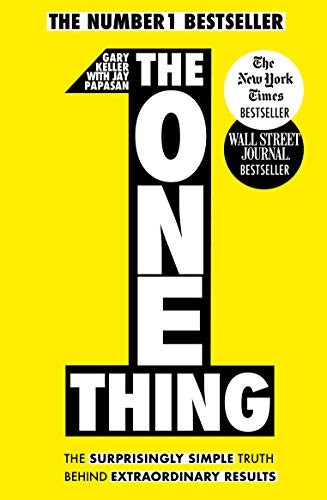
Read this if you want depth aimed at a single priority instead of a work style.
Gary Keller and Jay Papasan's book shares Deep Work's core conviction that extraordinary results come from narrow, sustained focus rather than busyness. Their organizing tool is the focusing question: what is the one thing I can do such that by doing it everything else becomes easier or unnecessary? They also champion time blocking, four hours protected each morning for your most important work, which is functionally Newport's deep work ritual with a different name. Keller built Keller Williams, the real estate company, and writes from that operator's vantage.
The difference is register. This is a business and goal-setting book, with domino metaphors, myth-busting chapters (multitasking, willpower, work-life balance), and a more motivational tone than Newport's professorial argument. It is also broader, applying the one-thing lens to health, relationships, and finances. Pick it if Deep Work persuaded you to focus but you are still unsure what to focus on; skip it if the self-help cadence grates.
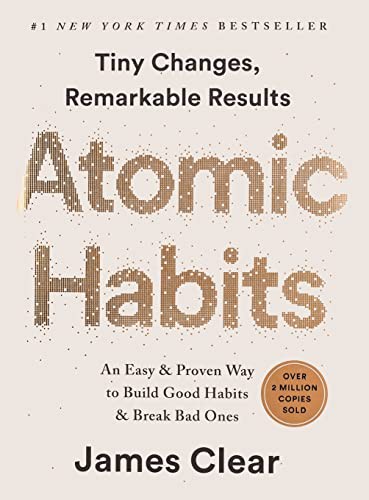
Read this if your problem is not believing in deep work but actually doing it daily.
James Clear's book answers the question Deep Work mostly leaves to you: how do you make focused work automatic instead of a daily act of willpower? Clear's framework (make it obvious, attractive, easy, satisfying) turns Newport's rituals into buildable habits, and his emphasis on environment design, putting the phone in another room, laying out the work the night before, is the practical machinery behind embracing boredom. The two books are probably the most common pairing in the entire productivity genre, for good reason.
It is not about depth specifically; habits here cover everything from flossing to gym attendance, and there is no argument about the economics of attention or the value of craftsmanship. Clear is also a smoother, more aphoristic writer than Newport, which some readers find clean and others find thin. Read Deep Work for the why, Atomic Habits for the how. If you already have a working system and wanted ideas, you can skip it.
Read this if you want to fight distraction with psychology rather than abstinence.
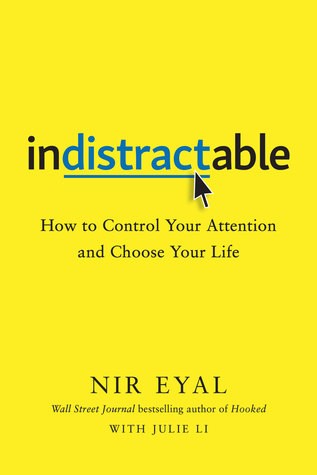
Nir Eyal comes at the same enemy as Newport, the shredded attention span, from the opposite end. Eyal wrote Hooked, the book tech companies used to make products habit-forming, and Indistractable is his account of defending yourself against those same mechanics. His key claim is that distraction starts from within: we reach for the phone to escape discomfort, so mastering internal triggers matters more than blocking apps. He pairs that with concrete tactics, timeboxing your calendar, pacts that raise the cost of slipping, and chapters on email, meetings, and even distracted children.
The philosophical difference from Deep Work is real. Newport says quit the attention economy; Eyal says you can live inside it on your own terms, which readers find either more realistic or less principled depending on temperament. Indistractable is also lighter on the case for depth itself, assuming you already want focus and just need the mechanics. Pick it if quitting social media feels like the wrong answer but checking it forty times a day clearly is too.
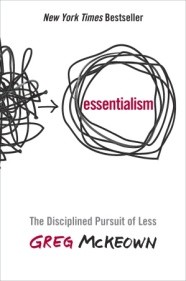
Read this if your calendar, not your phone, is what keeps you from deep work.
Greg McKeown's Essentialism supplies the layer Deep Work depends on but does not fully cover: ruthless selection. Newport tells you to work deeply on what matters; McKeown's whole book is about deciding what matters and saying no to everything else. His formula, less but better, runs through chapters on escaping the trap of trying to do it all, the power of a graceful no, and building buffers instead of cramming. If your distraction problem is actually a commitment problem, too many projects, meetings, and obligations, this is the more relevant book.
It is broader and more of a life philosophy than a work manual, and it has noticeably less research scaffolding than Deep Work; McKeown argues mostly through stories and aphorisms, and the point is largely made by the halfway mark. The two books complement each other cleanly: Essentialism to choose the few things, Deep Work to execute on them. Many readers say this pairing, not either book alone, is what actually changed their schedule.
Read this for the career argument that Deep Work was built on.
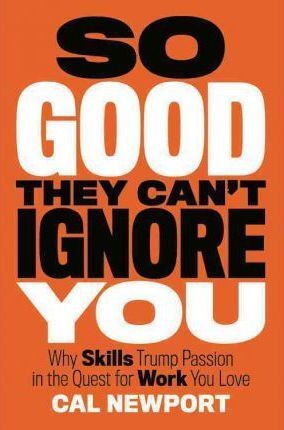
This is Newport's previous book, published in 2012, and Deep Work is essentially its sequel. Its target is the advice to follow your passion, which Newport argues is both wrong and harmful. His alternative: passion follows mastery, so adopt a craftsman mindset, build rare and valuable skills through deliberate practice, and then trade that career capital for autonomy and mission. Deliberate practice is the seed that grew into deep work, so reading this is like seeing the earlier draft of the philosophy, applied to career strategy rather than daily schedules.
It is a career book, not a focus book; there is nothing here about email, distraction, or attention. The case studies (a TV writer, an organic farmer, a venture-backed founder) are about how people got good and got leverage. It is also looser and more polemical than Deep Work. Read it if you are early in a career or rethinking one, and want the why-build-skills argument before the how-to-focus mechanics.
Read this if you want the friendliest, lowest-stakes version of these ideas.
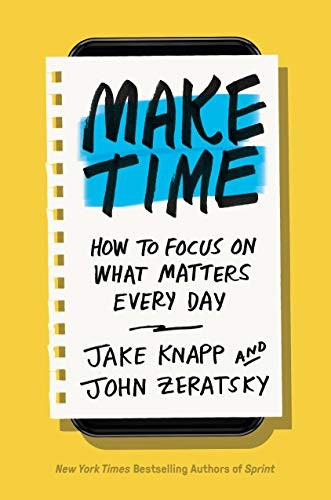
Jake Knapp and John Zeratsky were designers at Google and Google Ventures, the people who helped build the attention-grabbing products everyone else on this list warns about, and Make Time is their insider's defection. The system is simple: pick one daily highlight, use laser tactics to defend focus on it, energize the body, and reflect each evening. The chapter on rewiring your phone into a distraction-free device is the most concrete anti-distraction tactic in any of these books, and it shares Deep Work's conviction that defaults, not willpower, decide where your attention goes.
It is deliberately modest where Deep Work is sweeping: no grand theory of the knowledge economy, just a menu of eighty-odd tactics you sample like recipes, with cartoons and a cheerful tone. That makes it the easiest book here to actually implement and the least intellectually filling. Pick it if Newport's rules felt rigid or monastic and you want a flexible everyday version; skip it if you wanted the argument deepened rather than lightened.
Read this for the psychology underneath sustained effort, not for focus tactics.
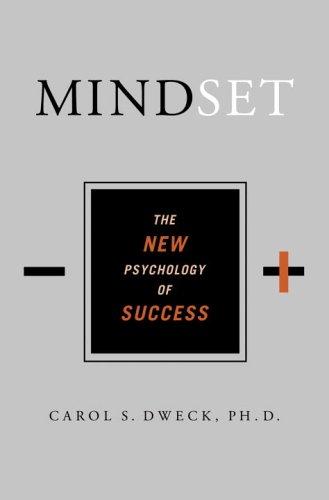
Carol Dweck's book is the academic heavyweight on this list. A Stanford psychologist, Dweck spent decades researching the difference between a fixed mindset, the belief that ability is static, and a growth mindset, the belief that ability is built through effort. That distinction underwrites everything Newport asks of you: deliberate practice, embracing the strain of hard thinking, and treating concentration as a trainable skill all assume you believe improvement is possible. Readers who bounce off deep work because it feels uncomfortable often find Dweck explains why, and how to reframe it.
Be clear about what it is not: there is nothing in here about attention, scheduling, or distraction, and its examples run to education, sports, parenting, and management rather than knowledge work. It is the loosest fit on this list, a complement to Deep Work rather than a sibling. The book is also repetitive, and the core idea can be absorbed in a few chapters. Read it for the foundation; read the others for the building.
The most natural next step is Digital Minimalism, Newport's own follow-up, which applies the same philosophy to your phone and personal life. If you want practical systems instead, Atomic Habits by James Clear is the most common pairing, and Essentialism by Greg McKeown adds the prioritization layer Deep Work assumes. So Good They Can't Ignore You is the right pick if you want Newport's career philosophy.
Is Digital Minimalism the same as Deep Work?
No. Both are by Cal Newport and share a philosophy, but Deep Work (2016) is about your professional hours, arguing that focused work is an economic advantage and giving rules to protect it. Digital Minimalism (2019) is about life outside work, centered on a thirty-day declutter of optional technologies. Most readers treat them as a pair rather than substitutes.
Deep Work vs Atomic Habits: which should I read first?
They do different jobs. Deep Work makes the case for why focused work matters and what to aim at; Atomic Habits gives you the mechanics for making any behavior stick, including focus rituals. If you need convincing or direction, start with Deep Work. If you are already convinced and keep failing to follow through, start with Atomic Habits.
Are there books like Deep Work that are not about productivity systems?
On this list, Mindset by Carol Dweck is psychology research rather than a system, and So Good They Can't Ignore You is career strategy. Beyond the list, readers often pair Deep Work with Stolen Focus by Johann Hari, which investigates why attention is collapsing society-wide, or Four Thousand Weeks by Oliver Burkeman, which pushes back on productivity culture altogether.
As an Amazon Associate, we earn from qualifying purchases. · About & methodology