8 books like Meditations by Marcus Aurelius, from Letters from a Stoic to The Obstacle Is the Way: Stoic classics and modern companions, honestly compared.
Updated June 10, 2026
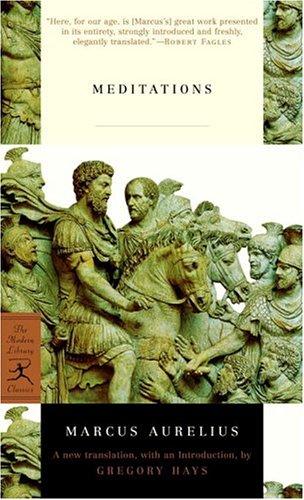
Meditations is a strange book to love, and people love it anyway. Marcus Aurelius never meant anyone to read it: these are the private notebooks of a Roman emperor reminding himself, in camp during the Marcomannic Wars, how to stay patient, do his duty, and not fear death. There is no argument and no structure, just short entries circling the same Stoic themes (control what you can, accept what you cannot, you could leave life right now). The appeal is exactly that intimacy: the most powerful man in the world talking himself down, entry by entry.
Readers who finish it tend to want one of three things, and this list covers all of them. Some want more primary Stoicism, the texts Marcus himself studied, which is where The Enchiridion and Letters from a Stoic come in. Some want the same calm pursued through other traditions, which The Tao Te Ching, The Art of Happiness, and Man's Search for Meaning deliver from Taoist, Buddhist, and psychological directions. And some want the philosophy translated into modern practice, the territory of The Obstacle Is the Way, The Four Agreements, and Awaken the Giant Within.
A practical note: which translation of these ancient texts you pick matters as much as which book. For the Stoic works, modern renderings (Gregory Hays for Meditations itself, Robin Hard or the older Long for Epictetus) read far more naturally than Victorian ones. None of these are books to race through; the ancient ones in particular reward a few pages a day more than a weekend binge.
Read this if you want the Stoic handbook Marcus Aurelius himself learned from.
Epictetus is the philosopher Marcus quotes and leans on most; the Meditations openly borrows his ideas, starting with the dichotomy of control, the rule that some things are up to us and some are not. The Enchiridion (literally 'handbook') compresses his teaching into a few dozen short numbered entries, compiled by his student Arrian. It covers the same ground as Meditations, grief, insults, ambition, death, but as direct instruction rather than private reflection. If Meditations felt like overhearing wisdom, this is being handed it.
The difference in temperament is real. Epictetus was a former slave teaching students, and his voice is blunter and more demanding than Marcus's weary self-coaching; some entries land like a slap. It is also very short, readable in an hour and rereadable for years. Pick it up if you want Stoicism at maximum concentration. If you find it too clipped, his longer Discourses expand every point with examples and arguments.
Read this if you want Stoic ideas with warmth, style, and room to breathe.
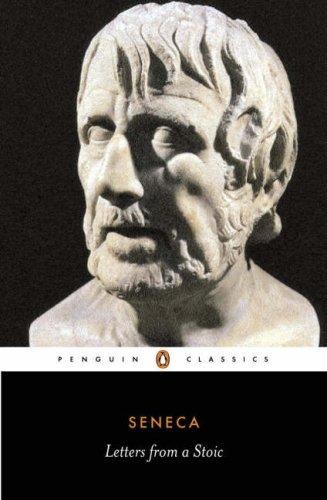
Seneca completes the trio of great Roman Stoics with Marcus and Epictetus, and his letters to his friend Lucilius are the most readable thing the school produced. Each letter takes one subject (friendship, the fear of death, crowds, time, wealth) and works through it conversationally, with anecdotes from Roman life and a moralist's eye for self-deception. The themes overlap heavily with Meditations, but where Marcus jots compressed reminders, Seneca actually explains, persuades, and entertains.
He is also the most compromised of the three, a wealthy courtier to Nero who preached simplicity from a fortune, and knowing that adds a useful friction to his advice on luxury and ambition. The letters can be read in any order, which makes this an easy book to live with on a nightstand. If Meditations sometimes felt too terse or repetitive, this is the corrective: the same philosophy, delivered by the best prose stylist who ever held it.
Read this if Marcus's calm appealed to you more than his Stoicism specifically.
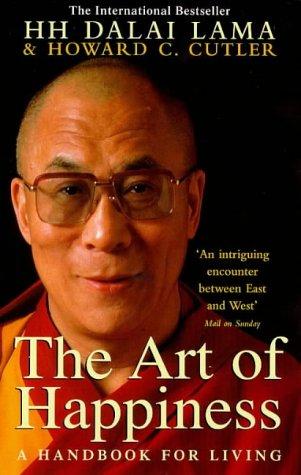
What draws many readers to Meditations is less the doctrine than the temperament: a serious person working out how to stay even-keeled, compassionate, and unafraid. The Art of Happiness pursues that same temperament from the Buddhist side. Built from psychiatrist Howard Cutler's extended interviews with the Dalai Lama, it argues that happiness is a trainable skill grounded in compassion and a disciplined mind, a claim Marcus would have recognized, since Stoicism likewise treats tranquility as the product of practice rather than luck.
The format is very different from a classic text: Cutler frames each conversation with Western psychology, case studies, and his own commentary, which some readers find helpful scaffolding and others find padding. It is a gentler, more therapeutic book than anything the Stoics wrote, with little of Marcus's memento mori severity. Choose it if you want the cross-cultural comparison, or if Meditations left you wanting the same destination reached by a kinder road.
Read this if you want Marcus's ideas turned into a modern playbook.
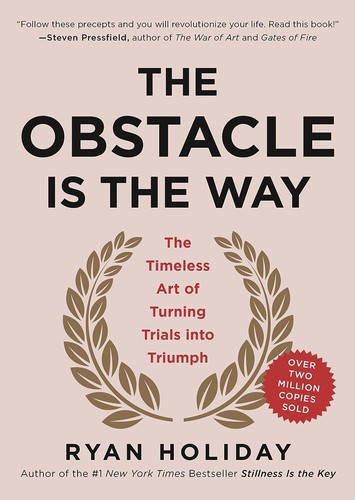
Ryan Holiday's book is built directly on a line from Meditations: the impediment to action advances action; what stands in the way becomes the way. Holiday takes that single Stoic move, reframing every obstacle as material, and illustrates it with dozens of short historical case studies, from John D. Rockefeller to Amelia Earhart to Ulysses S. Grant. More than any other book, it is responsible for the modern Stoicism revival that sends readers back to Marcus in the first place.
Be honest with yourself about what it is, though: this is popular self-help built on Stoic foundations, not philosophy. The historical anecdotes are tidy, the tone is motivational, and the hard parts of Stoicism (its demands about death, justice, and desire) are softened into a success framework. That trade is fine if you know you are making it. Read it for energy and application; keep Marcus, Seneca, and Epictetus for depth.
Read this for the strongest modern proof that mindset survives the worst circumstances.
Viktor Frankl's account of surviving Auschwitz and other camps is the twentieth century's most powerful test of the Stoic claim at the center of Meditations: that no one can take away your judgment about what happens to you. Frankl observed that prisoners who held onto a why, a meaning, endured what should have been unendurable, and his famous line about the last of the human freedoms, the ability to choose one's attitude in any given set of circumstances, is the dichotomy of control written in extremis. Frankl knew the Stoics and the kinship is explicit.
It is half memoir, half introduction to logotherapy, the school of psychotherapy Frankl founded around the human need for meaning, and the second half is drier than the first. It is also emotionally heavy in a way none of the philosophy texts here are; this is testimony, not reflection. Read it when you want the ideas in Meditations stress-tested against the darkest possible material and found to hold.
Read this if you want the same brevity and depth from the opposite direction.
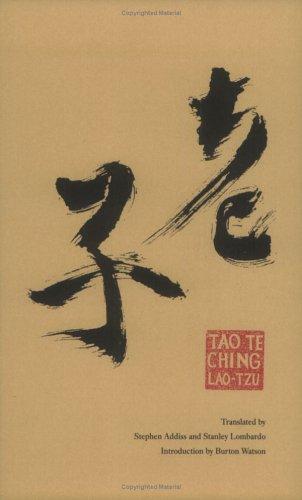
Like Meditations, the Tao Te Ching is short, fragmentary, endlessly rereadable, and concerned with how to live without being mastered by ambition or fear. Attributed to the sage Laozi, its eighty-one brief chapters counsel yielding, simplicity, and acting without forcing (wu wei), and many of its conclusions converge with the Stoics': water defeats stone, the wise person wants little, fighting reality is the root of misery. Readers who love Meditations as a bedside book of fragments will feel at home immediately.
The method, though, is the opposite. Marcus argues with himself in plain imperatives; Laozi speaks in paradox and image, and the text resists the kind of direct application Stoicism invites. Translation matters enormously here, more than for any other book on this list, since versions range from scholarly to very loose. Pick it up when you want suggestion rather than instruction, and expect to understand a different third of it each time you return.
Read this if you want a few simple rules rather than a whole philosophy.
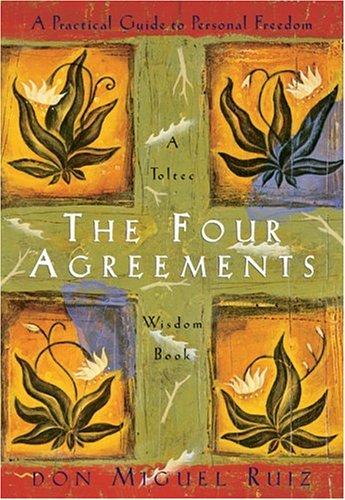
Don Miguel Ruiz's book shares the practical core of Meditations: the claim that suffering mostly comes from our own judgments and stories, not from events. His four agreements (be impeccable with your word, don't take anything personally, don't make assumptions, always do your best) function like Stoic maxims, short rules you carry into the day, and the second agreement in particular is nearly pure Epictetus: other people's behavior is their business, your reaction is yours.
It comes wrapped in a very different package, framed as ancient Toltec wisdom with a New Age spiritual vocabulary of dreams and domestication that readers of Roman philosophy may find thin or unearned. It is also far less demanding than the Stoics, offering comfort where Marcus offers discipline. As a short, accessible companion that overlaps with Stoic practice, it works; as a substitute for the primary texts, it is not trying to be one.
Read this only if you want self-mastery at full motivational volume.
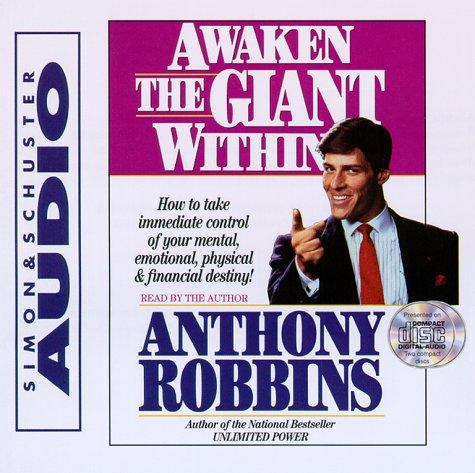
The genuine overlap with Meditations is the subject: mastery of your own mind. Tony Robbins's central claim, that the meaning you assign to events, the questions you ask yourself, and the standards you hold determine your life, is recognizably the Stoic position that judgment, not circumstance, rules experience. Robbins turns that into systems: techniques for changing emotional states, reshaping beliefs, and acting on decisions immediately, with an emphasis on personal agency Marcus would not dispute.
Everything else is a contrast in register. Meditations is a private, austere book about duty and accepting death; this is a long, loud, exclamation-mark-driven program aimed at achievement, complete with goal-setting exercises and 1990s anecdotes. The Stoic goal is tranquility; the Robbins goal is an extraordinary life, and those are not the same thing. Choose it if you want energy and concrete exercises, and skip it if what you loved in Marcus was the quiet.
What should I read after Meditations by Marcus Aurelius?
The natural next step is the other two great Roman Stoics: The Enchiridion of Epictetus, whose teaching Marcus drew on directly, and Seneca's Letters from a Stoic, which is the most readable of the three. If you want modern application instead, Ryan Holiday's The Obstacle Is the Way is built explicitly on a passage from Meditations.
Which is better to read first, Epictetus or Seneca?
Seneca is the easier entry point: his letters are conversational essays on everyday topics, and you can read them in any order. The Enchiridion is shorter but more compressed and demanding, closer to a list of rules than a discussion. Many readers do both, since together they are barely three hundred pages and cover the foundations Marcus assumed.
What is the best translation of Meditations?
Gregory Hays's translation (Modern Library) is the most popular modern choice, rendering Marcus in plain, punchy contemporary English. Robin Hard's Oxford edition is closer to the Greek and includes useful notes, while the old George Long version is free everywhere but reads stiffly today. If a first attempt at Meditations felt like a slog, the translation was probably the problem.
Is Meditations a religious book?
Not in the modern sense. Marcus refers to the gods and to a rational order in nature, as Stoics did, but the book contains no doctrine, ritual, or appeal to revelation; its advice rests on reason and practice. That is why it pairs so naturally with texts from other traditions like the Tao Te Ching or the Dalai Lama's conversations in The Art of Happiness, and why readers of any faith or none continue to use it.
As an Amazon Associate, we earn from qualifying purchases. · About & methodology