8 books like Dune, from Hyperion to Foundation to The Left Hand of Darkness: epic worldbuilding, politics, and big-idea science fiction.
Updated June 10, 2026
Frank Herbert's Dune is the rare science fiction novel that works as ecology, theology, and political thriller at once. Arrakis is not a backdrop but an argument: a desert planet whose scarcity of water shapes Fremen culture, whose spice shapes galactic politics, and whose messiah, Paul Atreides, is presented as a warning rather than a triumph. Herbert layers feudal houses, a hidden breeding program, and centuries of religious engineering into a single coming-of-age story, and the appendices and epigraphs make the world feel older than the plot. Nothing else in the genre balances that density with that much momentum.
No single book does everything Dune does, so this list splits by what you want more of. For galaxy-spanning politics and the long arc of civilizations, go to Foundation or Hyperion. For Herbert's anthropological seriousness, the sense that a planet and its people have been thought through to the bone, the Le Guin pair (The Left Hand of Darkness and The Dispossessed) is the closest match in the genre. For religion, knowledge, and deep time, A Canticle for Leibowitz; for war and its costs, The Forever War; for sheer propulsive invention, Snow Crash and The Stars My Destination.
A practical note: most of these are from science fiction's classic era, so expect leaner page counts than Dune but also some dated edges, particularly around gender in the older titles. Each entry below says which part of Dune it echoes and where it goes its own way, so match it to the part you actually loved.
Read this if you want Dune's scope with a stronger literary engine.
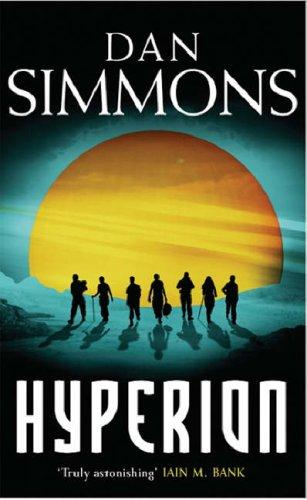
Dan Simmons's 1989 Hugo winner is the book most often handed to readers who finish Dune and ask what comes close. Seven pilgrims travel to the Time Tombs on the world of Hyperion, each telling the story of why they were chosen, in a structure borrowed from The Canterbury Tales. Like Dune, it builds an interstellar civilization with real texture (the Hegemony, the AI TechnoCore, the Church of the Shrike) and threads politics, religion, and a looming war through every personal story. The sense that vast forces are converging on one planet is very much the Arrakis feeling.
The difference is structure and register. Where Herbert gives you one tightening plot, Simmons gives you six novella-length tales in six different genres, from military SF to a father's heartbreaking story about his daughter aging backward, and the frame ends on a deliberate cliffhanger resolved in The Fall of Hyperion. It is more openly literary, full of Keats references, and less interested in ecology. Pick it if you want Dune's ambition with more emotional range, and commit to the two-book arc from the start.
Read this for the fall of empires played out over centuries.
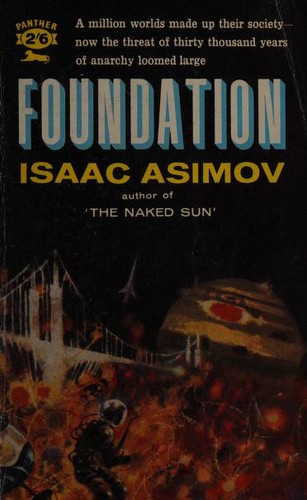
Asimov's Foundation is the other pillar of golden-age epic SF, and its DNA is all over Dune. A Galactic Empire is dying, and mathematician Hari Seldon's psychohistory predicts thirty thousand years of barbarism unless a Foundation of scientists can shorten the dark age to one. Like Herbert, Asimov is interested in how religion, trade, and politics are used as instruments of power; whole sections of Foundation read like the Bene Gesserit's Missionaria Protectiva given its own book. Herbert wrote Dune partly in argument with Foundation, replacing predictable masses with an unpredictable superhuman, and reading both makes each sharper.
Expect a very different texture. Foundation is a fix-up of linked stories spanning generations, so there is no single protagonist to follow and almost no action; crises are resolved by conversation and cleverness. The prose is plain and the characters are thin by design, chess pieces in a historical argument. Read it for ideas and sweep rather than immersion, and if it clicks, Foundation and Empire and Second Foundation complete the original trilogy.
Read this if the Fremen were your favorite part of Dune.
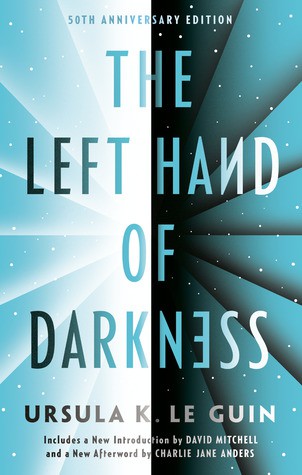
What Herbert did for desert ecology, Le Guin does for gender and culture. An envoy named Genly Ai arrives alone on the ice planet Gethen to invite its nations into an interstellar community, and must navigate societies built by people who are neither male nor female except for a few days each month. Like Dune, it takes a single extreme world and thinks through every consequence: politics, myth, religion, even table manners follow from the planet's cold and its people's biology. The harrowing trek across the Gobrin ice is the closest thing in SF to Paul and Jessica's flight into the deep desert.
It is a much more intimate book. There is no empire at stake, no chosen one, and the plot turns on trust between two people rather than on war. Le Guin's prose is also simply better than Herbert's, spare and exact where his can be stiff. Pick this if Dune's anthropology and worldbuilding mattered more to you than its battles, and be ready for a slower, quieter, more devastating story.
Read this for religion, knowledge, and deep time after the fall.
Walter M. Miller Jr.'s 1959 classic shares Dune's two great obsessions: religion as a carrier of civilization, and history as a cycle humans seem unable to escape. After nuclear war and a backlash against learning, monks of the Order of Saint Leibowitz spend centuries copying and preserving scraps of scientific knowledge they barely understand. The novel covers about eighteen hundred years in three sections, and like Dune's appendices and epigraphs, it makes you feel institutions outliving every individual character.
It is post-apocalyptic Earth rather than a galactic stage, and its Catholicism is sincere and central, where Dune treats religion mostly as an engineered tool. It is also darkly funny in a way Herbert never is, then quietly shattering by the end. There are no heroes, no action set pieces, and no messiah, just the long question of whether knowledge can be kept without being misused. Read it when you want Dune's gravity in a more meditative key.
Read this if Dune's political philosophy hooked you more than its swordfights.
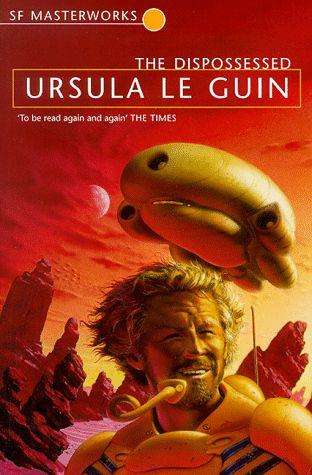
Le Guin's other masterpiece on this list is the genre's best novel of political ideas, which is the conversation Dune is always gesturing toward. The physicist Shevek leaves Anarres, an anarchist moon settled by revolutionaries, for Urras, the wealthy capitalist world his ancestors fled, and the book cuts between his two lives to test both societies honestly. Like Herbert, Le Guin refuses easy answers: the anarchist utopia has calcified into conformity, and the gilded world beneath it runs on poverty. If the Landsraad, CHOAM, and the Imperium were the parts of Dune you wanted expanded, this is that impulse given a whole novel.
There is no adventure plot here at all. The stakes are a theory of time, a wall, and one man's integrity, and the pleasure is in the thinking rather than the spectacle. It is the most demanding book on this list and the most rewarding to argue with. Choose it when you are in the mood for the seminar, not the knife fight.
Read this if you loved Dune's invention and want it at triple speed.
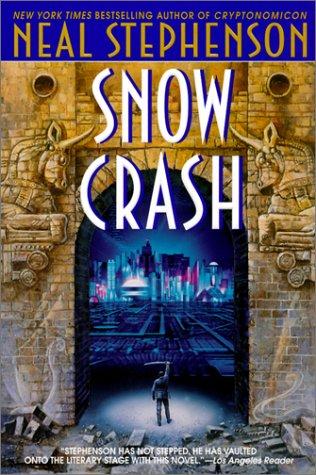
Snow Crash seems like an odd pairing until you notice what Stephenson and Herbert share: the conviction that language, religion, and information can program human beings. Dune has the Bene Gesserit's Voice and the Missionaria Protectiva; Snow Crash has a Sumerian neurolinguistic virus spreading through both ancient myth and modern code. Stephenson builds his fractured, franchise-run future America with the same density Herbert gave Arrakis, down to digressive mini-essays on Sumerian religion that work like Dune's appendices folded into the text.
Tonally they could not be further apart. Snow Crash is satirical, hyperactive, and funny, opening with a pizza delivery for the Mafia and starring a hero literally named Hiro Protagonist. There is no nobility, no deep time, no desert stillness, and the ending arrives fast and a little loose. Pick it when you want the worldbuilding rush and big ideas about minds and memes, delivered as a joyride instead of an epic.
Read this for the cost of war that Dune's later books only imply.
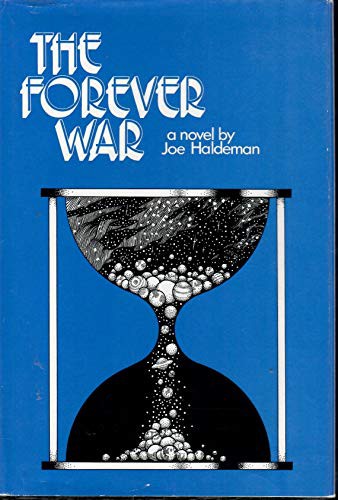
Haldeman's 1974 Hugo and Nebula winner takes the question under Paul's jihad, what war does to the people swept up in it, and makes it the whole book. Private William Mandella fights an interstellar war against the alien Taurans, and relativistic travel means each campaign skips him decades into a future Earth he understands less each time he returns. Written by a Vietnam veteran, it shares Dune's skepticism of glorious crusades and its interest in how institutions outgrow and discard the humans inside them.
It is lean where Dune is layered: one soldier's voice, plain prose, and a few hundred pages covering more than a thousand years. There is no ecology, no aristocracy, and no prophecy, and some mid-century attitudes about sexuality have aged roughly even though the book was progressive for its moment. Read it as the ground-level counterweight to Dune's view from the throne, and as one of the best antiwar novels in any genre.
Read this for a faster, nastier story of one man transformed by an unforgiving universe.
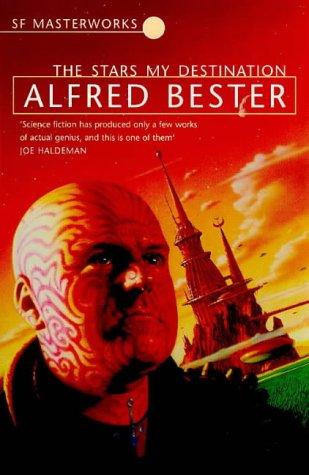
Alfred Bester's 1956 novel is the proto-Dune in one specific sense: it is about an unremarkable man hammered by circumstance into something more than human, set against feuding merchant clans that feel like a sketch of Herbert's Great Houses. Gully Foyle, left to die in a wrecked spaceship, claws his way to vengeance through a solar system where personal teleportation has rewritten society. Like Dune, it ends with its transformed hero handing a dangerous power to ordinary people and trusting them with it.
Where Paul is bred and trained for greatness, Foyle starts as a brute, and the book never fully sanitizes him; one early act in particular makes him hard to forgive, which is the point. The pacing is ferocious, closer to The Count of Monte Cristo in space than to Herbert's slow accumulation, and the worldbuilding is vivid but impressionistic rather than systematic. Read it in two sittings when you want intensity over depth.
Hyperion by Dan Simmons is the most common answer, and it holds up: a richly built interstellar civilization, converging politics and religion, and a planet at the center of vast forces. For Dune's specific anthropological depth, The Left Hand of Darkness is closer in spirit, and for its imperial sweep, Foundation is the classic pairing. Which is best depends on whether you loved the worldbuilding, the politics, or the cultures.
Should I just keep reading the Dune series instead?
If you have only read the first book, Dune Messiah and Children of Dune complete Paul's arc and sharpen Herbert's warning about messiahs; many readers consider God Emperor of Dune, the fourth book, the strangest and most rewarding. The series gets more philosophical and less action-driven as it goes. The books on this list are better choices if you want Dune's qualities in a fresh setting rather than more of Herbert's increasingly dense sequels.
Which of these books is closest to Dune's desert setting and ecology?
None of them repeats the desert directly, but The Left Hand of Darkness is the nearest match in method: it takes one extreme environment, a planet locked in ice, and derives its cultures, politics, and myths from it the way Herbert derived the Fremen from Arrakis. A Canticle for Leibowitz, set in a desert-southwest wasteland after nuclear war, comes closest in landscape if not in approach.
Are these books harder or easier to read than Dune?
Mostly easier. Foundation, The Forever War, Snow Crash, and The Stars My Destination are all faster and lighter on invented terminology than Dune. The Dispossessed is the most intellectually demanding pick, though its prose is clear, and Hyperion asks the biggest time commitment since its story completes in a second volume. Nothing here requires Dune's glossary-flipping.
As an Amazon Associate, we earn from qualifying purchases. · About & methodology