8 books like Think and Grow Rich, from The Richest Man in Babylon to Rich Dad Poor Dad: classic success books and money guides, honestly compared.
Updated June 10, 2026
Think and Grow Rich, published in 1937, is the template almost every success book since has copied. Napoleon Hill claimed to have distilled the principles of Andrew Carnegie and hundreds of wealthy men into thirteen steps, from desire and faith to the 'Master Mind' group, and the book's core bet is psychological: that riches begin with a definite purpose held with burning intensity. Modern readers should know the famous Carnegie commission story is disputed by historians, and the book says almost nothing about actual money mechanics. What it sells, and still sells well, is conviction.
The books below split along the two halves of Hill's title. If 'think' is what hooked you, the mindset-and-belief thread runs through The Power of Positive Thinking, The Magic of Thinking Big, You Are a Badass, and Awaken the Giant Within. If 'grow rich' is the part you wanted more of, The Richest Man in Babylon and Rich Dad Poor Dad get closer to money itself. The 7 Habits of Highly Effective People and How to Win Friends and Influence People sit apart as the character and relationships classics, and both have aged better than most of the genre.
A practical note: these books repeat each other, because the genre repeats itself. Reading two or three picked for different angles will serve you better than reading all eight, and the entries below are honest about which ones overlap. The Babylon book and Carnegie are the shortest; Covey and Robbins are the longest and the most systematic.
Read this if you want the success genre's most substantial book.
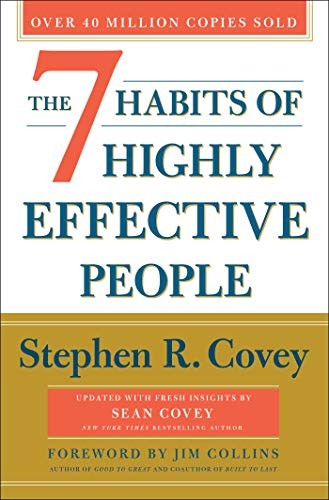
Covey's 1989 classic shares Hill's foundational moves: begin with a definite aim (Covey calls it 'begin with the end in mind'), take responsibility for your own results ('be proactive'), and treat success as something built from the inside out. Like Hill, Covey studied a large body of success literature before writing, and his framework of seven habits is the same kind of numbered, learnable system that made Think and Grow Rich so portable.
The difference is depth and aim. Covey explicitly criticizes what he calls the 'personality ethic,' the quick-technique school Hill helped found, and argues for a 'character ethic' built on principles like integrity and win-win cooperation. There is no talk of attracting riches; effectiveness, in work and family life, is the goal. It is denser and more earnest than Hill, with less narrative momentum, but it is the book on this list most likely to still be useful to you in twenty years.
Read this if Hill's faith chapter was your favorite part.
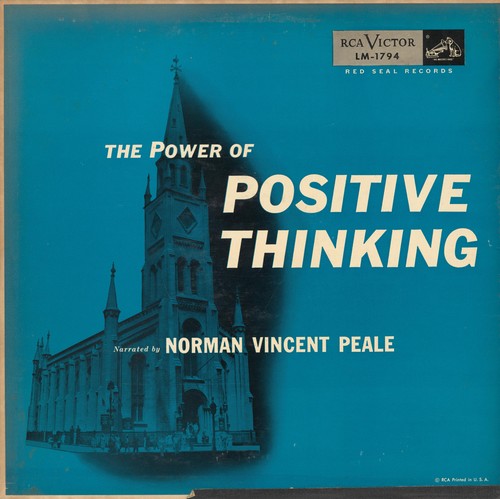
Norman Vincent Peale's 1952 bestseller is the closest historical sibling to Think and Grow Rich: both come from the same American tradition that treats belief as a causal force, and both prescribe affirmations, visualization, and the deliberate expulsion of doubt. Hill's 'faith' and 'autosuggestion' steps reappear in Peale as practical techniques, repeat affirmations, picture the outcome, refuse negative thoughts, aimed less at wealth than at confidence and peace of mind.
Peale was a Manhattan pastor, and the book is explicitly Christian in a way Hill is not; many techniques involve prayer and scripture, which will either be a feature or a barrier. It has also drawn decades of criticism from psychologists for treating positive assertion as a cure-all. Read it as the religious branch of the same family tree, best for readers who want encouragement and a devotional tone rather than a business program.
Read this if you want Hill's psychology rebuilt with modern tools and maximum intensity.
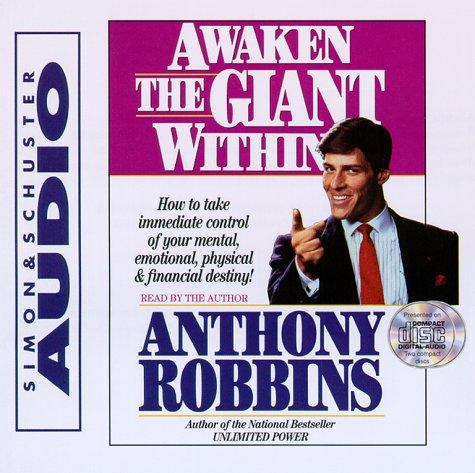
Tony Robbins is Hill's most direct heir. Awaken the Giant Within runs on the same engine, decision, desire, and the retraining of your own mind, but swaps Hill's autosuggestion for 1990s-era techniques drawn from neuro-linguistic programming: changing your emotional state, the questions you habitually ask, the metaphors you live by, and the beliefs underneath them. Where Hill asserts that thoughts become things, Robbins tries to show you the levers, with exercises on nearly every topic from finances to relationships to health.
It is a long book, around 500 pages, and the volume never drops: relentless capitalization, seminar stories, and self-promotion that some readers find energizing and others exhausting. The science behind NLP is thin, so treat the techniques as practical psychology rather than established research. Choose it over Hill's other descendants when you want sheer comprehensiveness and a workbook feel rather than a quick motivational read.
Read this for the people skills Hill's Master Mind principle assumes you have.
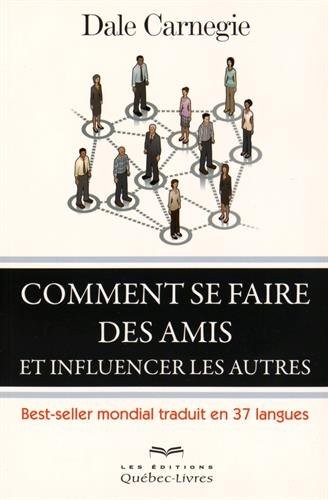
Dale Carnegie published this in 1936, one year before Think and Grow Rich, and the two books built the self-improvement genre together. Hill tells you that wealth comes through organized effort with other people, the Master Mind; Carnegie supplies the missing manual for actually dealing with those people. His principles (give honest appreciation, talk about the other person's interests, never tell someone flatly they are wrong) are illustrated with short anecdotes in the same period flavor as Hill's stories of Edison and Ford.
It has aged better than Hill because its claims are smaller and verifiable in daily life; nothing here requires believing in vibrating thought. The criticism it does attract, that it can read as a course in strategic flattery, is worth keeping in mind, though Carnegie repeatedly insists on sincerity. It is the most immediately usable book on this list, and the one to pick first if your goals run through other people, which Hill himself would say they do.
Read this if you want Think and Grow Rich's message with less mysticism.
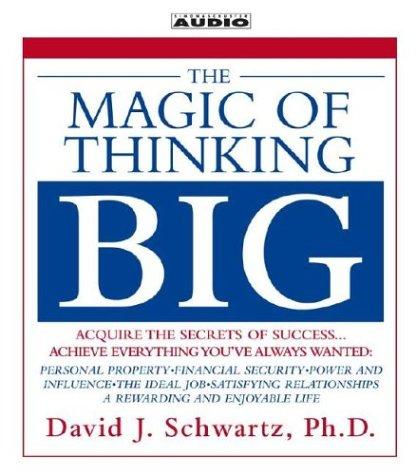
David Schwartz's 1959 book is the cleaned-up, midcentury version of Hill's thesis: the size of your success is set by the size of your thinking. The chapters track Hill's program closely, cure yourself of excusitis (Hill's alibis), build confidence by acting confident, set goals far above what seems reasonable, and Schwartz shares Hill's conviction that belief precedes ability. If you finished Think and Grow Rich underlining the mindset passages, this is the same sermon preached a generation later.
What Schwartz drops is the occult residue: no Infinite Intelligence, no sex transmutation chapter, no claims of secret knowledge, just a professor's plain advice with workplace examples. The trade-off is that it is also less vivid, the 1950s corporate setting (salesmen, organization men, wives at home) is dated, and it repeats itself freely. It is the safest single recommendation for someone who liked Hill's energy but winced at his metaphysics.
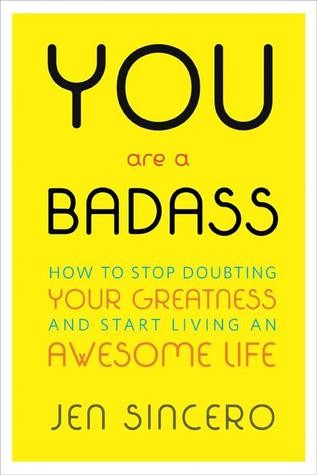
You Are a Badass: How to Stop Doubting Your Greatness and Start Living an Awesome Life
by Jen Sincero
Read this if you want Hill's ideas in a modern, funny, profane voice.
Jen Sincero is open about her lineage: she has named Think and Grow Rich as a key influence, and her book recycles its machinery, desire, faith, affirmations, and a frank embrace of wanting money, for readers who would never pick up a 1937 success manual. The chapters are short, the tone is comic and sweary, and the through-line is pure Hill: your subconscious beliefs are running the show, so change them and act before you feel ready.
The trade is the same as with Hill, just restated for the 2010s: the book leans on the law of attraction and 'Source Energy,' and the evidence is anecdote, mostly Sincero's own path from broke freelancer to wealthy coach. There is little here about method or money management. Pick it when you want a fast motivational jolt and a likable narrator, and pair it with Babylon or Rich Dad Poor Dad if you also want something to do with the motivation.
Read this for the money fundamentals Hill never gets around to.
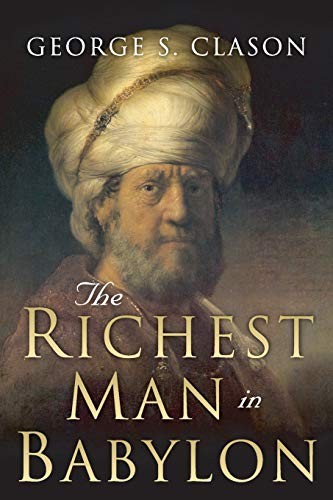
George Clason's parables, published in the same interwar boom that produced Hill, are the practical counterweight to Think and Grow Rich. Through stories set in ancient Babylon, mostly following Arkad, the city's richest man, Clason teaches the mechanics Hill skips entirely: pay yourself first by saving a tenth of everything you earn, control expenses, invest only where principal is safe and with people who know their field, and let compounding do the work. Hill tells you to burn with desire; Clason tells you what to do with your next paycheck.
The faux-ancient narration is a gimmick, and the advice is deliberately simple, nothing here on modern instruments, taxes, or careers, plus the period assumptions about men and wealth show their age. But it is barely a hundred pages, and its core rules remain the consensus starting point of personal finance a century later. Of everything on this list, it is the cheapest insurance against finishing another mindset book with nothing changed.
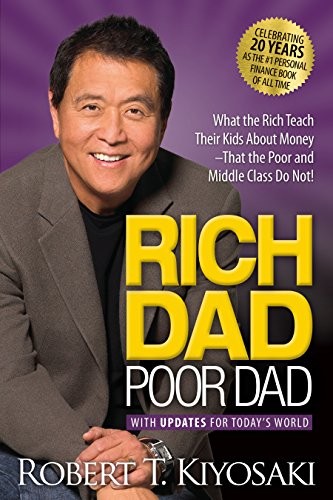
Rich Dad Poor Dad: What the Rich Teach Their Kids About Money That the Poor and the Middle Class Do Not!
by Robert T. Kiyosaki
Read this if you want the mindset of wealth applied to assets instead of affirmations.
Kiyosaki's 1997 bestseller is Think and Grow Rich's most successful modern descendant on the money side. Its central device, contrasting the advice of his educated but struggling 'poor dad' with his friend's wealthy father, delivers a Hill-like reframing: the rich do not work for money, they acquire assets that pay them, and the difference is mental before it is financial. Definitions stick with readers (an asset puts money in your pocket, a liability takes it out), and the book's push toward financial education over job security is genuinely clarifying for people raised on the paycheck script.
Know the caveats going in. The rich dad's literal existence has been seriously questioned, the actionable detail is thin, the real estate enthusiasm reflects its era, and Kiyosaki's later seminar business has drawn heavy criticism. Like Hill, he is best read for the shift in perspective, not as an instruction manual. Pair it with The Richest Man in Babylon for fundamentals it assumes or skips.
What is the best book to read after Think and Grow Rich?
It depends on which half you wanted more of. For the mindset thread, The Magic of Thinking Big is the closest match with less mysticism, and The 7 Habits of Highly Effective People is the most substantial. For actual money, start with The Richest Man in Babylon, then Rich Dad Poor Dad. How to Win Friends and Influence People, published a year before Hill, covers the people skills his Master Mind principle depends on.
Is Think and Grow Rich based on a true story?
Parts of its backstory are disputed. Hill claimed Andrew Carnegie commissioned him to study the principles of success and that he interviewed hundreds of magnates, but historians have found no independent evidence of the Carnegie meeting, and several of Hill's biographical claims have been challenged. The book's value, such as it is, lies in its psychology of goal-setting and persistence rather than its reporting.
Which is better, Think and Grow Rich or Rich Dad Poor Dad?
They do different jobs. Hill's book is about the psychology of ambition: desire, belief, persistence, and planning, with almost nothing about money mechanics. Kiyosaki's is about financial orientation, assets versus liabilities and making money work for you, though it is also light on step-by-step detail. Hill suits readers who need drive; Kiyosaki suits readers who have drive but think about money like an employee.
Do these books actually work?
Treat them as motivation with some durable principles, not as proven systems. The parts that hold up are unglamorous: define a goal, save and invest consistently, build relationships, persist past early failure. The parts to hold loosely are the claims that thought alone attracts wealth, which no evidence supports. Covey and Carnegie make the most defensible claims; Hill, Peale, and Sincero require the most generosity from the reader.
As an Amazon Associate, we earn from qualifying purchases. · About & methodology