Books Like How to Win Friends and Influence People
8 books like How to Win Friends and Influence People, from Influence to Never Split the Difference: people-skills classics matched to what you want next.
Updated June 11, 2026
Dale Carnegie's 1936 classic has outsold nearly everything in the self-help genre for a simple reason: its advice is concrete and immediately usable. Remember people's names, become genuinely interested in others, let the other person feel the idea is theirs, never tell someone flatly that they are wrong. The examples are dated (Charles Schwab the steel executive, not the brokerage), but the principles are not, because they rest on one insight Carnegie repeats in different forms: people are creatures of emotion who crave feeling important, and you get further by feeding that need honestly than by arguing.
The books below split along what readers want after Carnegie. Some want to know why his techniques work, which is Robert Cialdini's Influence, the research-backed account of persuasion. Some want the skills updated for harder situations: Never Split the Difference for negotiation, Crucial Conversations for conflict, The Like Switch for rapid rapport-building from an FBI behavioral specialist. Some want more tactical conversation tips in the Carnegie spirit, which is How to Talk to Anyone and The Art of People. And The 7 Habits and The Power of Now widen out from people skills to the character and presence underneath them.
A practical note: these are skill books, and they work like Carnegie's does, one principle at a time put into actual use. Reading two persuasion books back to back teaches less than reading one and trying its ideas in your next three conversations.
Read this if you want the character-first version of Carnegie's people skills.
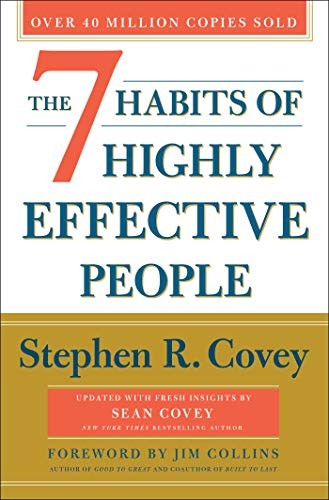
Stephen Covey's 1989 book is the other pillar of the genre, and it begins with an explicit critique of the tradition Carnegie helped found. Covey argues that the decades after World War I shifted self-improvement from a character ethic to a personality ethic, techniques and impressions, and that lasting effectiveness has to be built from the inside out. His habits still land squarely on Carnegie's territory, especially habit five, seek first to understand, then to be understood, which is Carnegie's genuine-interest principle turned into a discipline, and habit four's win-win framing of every relationship.
It is a heavier read than Carnegie: more conceptual scaffolding (the maturity continuum, production versus production capability, the time-management quadrants) and a more earnest, almost devotional tone. Carnegie gives you things to do tomorrow; Covey asks you to rethink who you are first. Pick it if Carnegie's advice ever felt slightly like technique to you and you want the version grounded in principles, and expect to take weeks rather than days with it.
Read this to learn why Carnegie's techniques work, with the research to prove it.
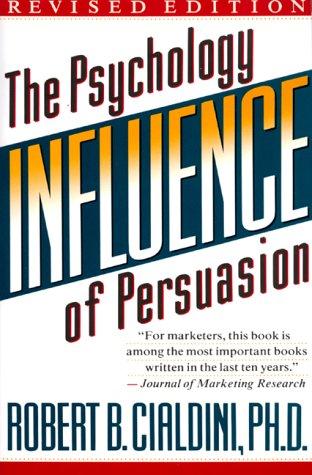
Robert Cialdini's 1984 classic is the scientific backbone of everything Carnegie observed by instinct. A social psychologist who spent years inside the worlds of salespeople, fundraisers, and recruiters, Cialdini organizes persuasion into a handful of universal principles, reciprocity, commitment and consistency, social proof, liking, authority, and scarcity (a later edition adds unity). Carnegie's rules map onto them almost one to one: giving sincere appreciation is reciprocity and liking, letting others talk themselves into your idea is commitment, and so on. Reading it feels like seeing the wiring diagram behind a machine you already use.
The orientation is different, though. Carnegie writes as a coach for your relationships; Cialdini writes partly as a defense manual, showing how compliance professionals use these levers on you, with each chapter explaining how to resist. It is also a psychology book with experiments and case studies rather than warm anecdotes, so it informs more than it encourages. It is the most intellectually substantial book on this list and the one most likely to change how you see every ad, pitch, and request you encounter.
Read this for a friendly, modern business take on the Carnegie playbook.
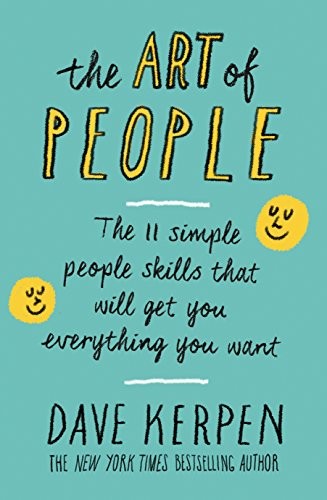
Dave Kerpen, a social media entrepreneur, writes consciously in the Carnegie tradition: short chapters, each built around one people skill, illustrated with stories from his own career and ending with practical action steps. The core message is pure Carnegie updated for the LinkedIn era, listening is the most underrated skill in business, genuine interest beats self-promotion, and helping others without keeping score is the best networking strategy that exists. If you liked the format of Carnegie's book, principle plus story plus application, this is the same architecture with current references.
It is the lightest pick on this list, and that cuts both ways. The advice is sensible but rarely surprising if you have already absorbed Carnegie, and the anecdotes lean heavily on Kerpen's own startup world, which gives it a narrower frame than the classics around it. Choose it as an easy, energizing refresher with a business networking slant, not as a book that will teach you something Cialdini or Voss could not.
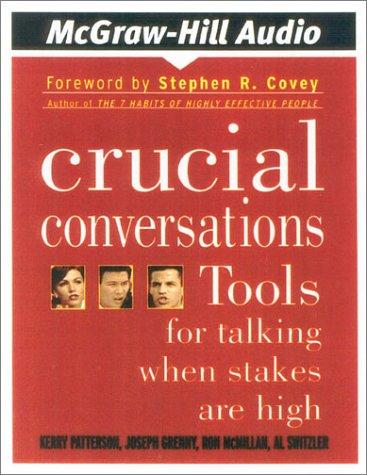
by Kerry Patterson, Joseph Grenny, Ron McMillan, Al Switzler
Read this for the situations Carnegie's charm cannot carry: high stakes, strong emotions, real disagreement.
Carnegie's famous advice is to avoid arguments altogether, since you cannot win one. Crucial Conversations picks up exactly where that leaves you: the conversations you cannot avoid, where stakes are high, opinions differ, and emotions run hot, with your boss, your spouse, your teenager. The authors' framework is the most systematic on this list, watching for when safety breaks down in a dialogue, restoring it before pushing your point, and stating tough messages without triggering defensiveness. The underlying Carnegie principle survives intact: people accept influence only when they feel respected and understood first.
It reads more like corporate training material than Carnegie's storytelling, complete with acronyms (STATE, AMPP) and worked dialogue examples, and some readers find the style dry. But it is the book on this list most likely to change the outcome of an actual difficult moment this month. Pick it if your real problem is not making friends but navigating conflict without either caving or blowing up.
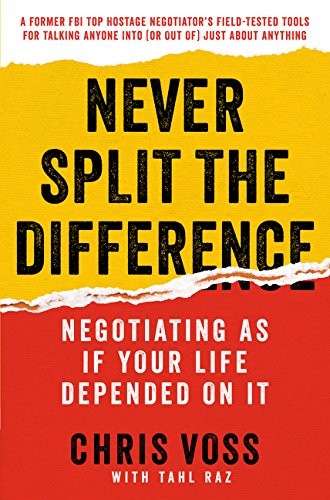
Never Split the Difference: Negotiating As If Your Life Depended On It
by Chris Voss
Read this if you want Carnegie's empathy weaponized for negotiation.
Chris Voss spent years as the FBI's lead international kidnapping negotiator, and his 2016 book lands closer to Carnegie than its tactical title suggests. His core method, tactical empathy, is Carnegie's see-things-from-the-other-person's-view principle made operational: label the other side's emotions out loud, mirror their last words to keep them talking, and aim for a that's right moment where they feel completely understood. Voss even agrees with Carnegie that letting the other side feel in control is how you actually steer, which is why his favorite questions begin with how and what.
The difference is the arena. Carnegie wants warm relationships; Voss wants better deals, and he explicitly attacks the win-win compromise mindset (hence the title). The hostage stories, a bank standoff in Brooklyn, kidnappings in Haiti and the Philippines, make it the most gripping read here, and every chapter cashes out in scripts you can use on a salary discussion or a car purchase. Pick it if your interest in influence has a concrete goal attached, and read it alongside Cialdini for theory plus practice.
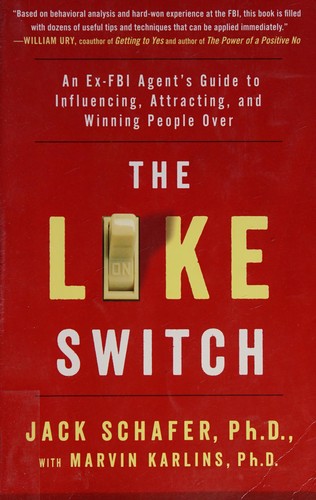
The Like Switch: An Ex-FBI Agent's Guide to Influencing, Attracting, and Winning People Over
by Jack Schafer
Read this for the nonverbal side Carnegie barely touches.
Jack Schafer worked in FBI behavioral analysis, where his job included getting strangers, sometimes foreign agents, to like and trust him, and his book is essentially Carnegie's program rebuilt from body language up. His friendship formula (proximity, frequency, duration, intensity) explains the mechanics of how relationships form, and his catalog of friend signals, the eyebrow flash, the genuine smile, head tilts, open posture, covers the channel Carnegie's word-focused advice mostly skips. Like Carnegie, Schafer insists the techniques only work when the interest behind them is real.
The spy-craft framing is a genuine difference in flavor: examples involve recruiting informants and detecting deception, which some readers find fascinating and others find a little clinical for a book about friendship. The material on testing relationships and spotting lies pushes past anything in Carnegie. Choose it if you have absorbed what to say and want to understand what your face, posture, and timing are saying before you open your mouth.
The Power of Now: A Guide to Spiritual Enlightenment
by Eckhart Tolle
Read this only if you want to work on presence rather than technique.
This is the outlier on the list, and it earns its place through one connection: the quality Carnegie keeps demanding, genuine attention to the other person, is exactly what Eckhart Tolle's book trains. Tolle's subject is presence, stepping out of the stream of compulsive thinking and into the current moment, and people who practice it commonly report becoming much better listeners, less defensive in conflict, and less driven by the ego needs (looking good, being right) that Carnegie identifies as the great spoilers of relationships.
Be clear that this is a spiritual book, not a people-skills book. There are no scripts, no principles for handling complaints or remembering names, and the language (pain-body, ego, Being) asks you to meet it on its own terms; readers wanting practical communication advice often bounce off it completely. Pick it up if you have noticed that your real obstacle in conversations is that you are not actually in them, and skip it if you came to this list for tactics.
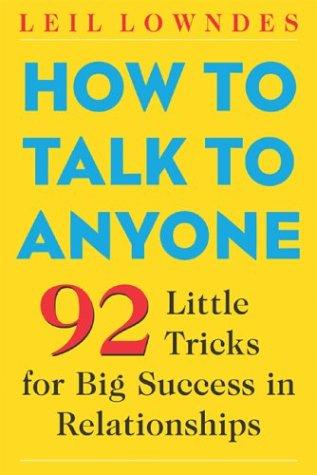
How to Talk to Anyone: 92 Little Tricks for Big Success in Relationships
by Leil Lowndes
Read this for a grab-bag of concrete conversation tactics in the Carnegie spirit.
Leil Lowndes delivers the most literal follow-up to Carnegie on this list: 92 numbered techniques for meeting, talking to, and winning over people, from the flooding smile (let it spread slightly delayed, so it reads as genuine and just for them) to never asking the naked what do you do. It is Carnegie's territory, first impressions, small talk, making others feel important, broken into tips small enough to try one per day, and it extends into modern settings like parties, phone calls, and working a room.
The trade-off is depth for breadth. Ninety-two tricks means no single idea gets Carnegie's patient development, and the tone is brisk and sometimes gimmicky, with cute names for everything; a few tips can feel manipulative if applied without the genuine warmth Carnegie insists on. It works best as a tactical supplement after Carnegie has set the foundation, especially for readers who feel awkward in the first five minutes with strangers and want specific, rehearsable moves.
What is the closest modern equivalent to How to Win Friends and Influence People?
For overall spirit and format, The Art of People by Dave Kerpen is the most direct modern descendant, short principle-driven chapters about genuine interest and listening. For substance, most readers get more from Influence by Robert Cialdini, which explains the psychology behind Carnegie's techniques, or Never Split the Difference, which updates his empathy-first approach for real negotiations.
Is How to Win Friends and Influence People still relevant?
Yes, more than most books of its era. The examples are dated (it was published in 1936) and a revised edition updates some of them, but the core principles, genuine interest, sincere appreciation, avoiding direct contradiction, letting others save face, are confirmed repeatedly by modern persuasion research, including the liking and reciprocity principles documented in Cialdini's Influence.
Is Carnegie's advice manipulative?
Carnegie himself insists it is not, and the book repeatedly warns that flattery and faked interest fail because people detect them. The techniques work only as expressions of genuine interest in others. That said, the same psychological levers can be used manipulatively, which is why Cialdini's Influence is a good companion read: it teaches the principles and how to recognize when someone is using them on you.
Which book should I read for negotiation specifically?
Never Split the Difference by Chris Voss is the strongest pick here, built on his FBI hostage negotiation career and full of usable scripts like mirroring and calibrated questions. Crucial Conversations is the better choice when the situation is an emotionally charged conversation rather than a deal. The older classic Getting to Yes by Fisher and Ury is also worth knowing, though Voss wrote partly in reaction against it.
As an Amazon Associate, we earn from qualifying purchases. · About & methodology