9 books like The Richest Man in Babylon, from The Millionaire Next Door to The Wealthy Gardener: parables and plans for saving, investing, and wealth.
Updated June 11, 2026
The Richest Man in Babylon has survived a century (George S. Clason began publishing it as bank pamphlets in 1926) because it does one thing perfectly: it wraps a handful of unbreakable money rules in story. Arkad, the richest man in ancient Babylon, teaches that you should pay yourself first by keeping a tenth of all you earn, live below your means, make your savings work for you, and never invest where you lack knowledge. The faux-ancient prose ('a part of all you earn is yours to keep') is half the charm and, for some readers, half the annoyance. Either way, the principles underneath are the same ones modern finance writers keep rediscovering.
Readers who finish it usually want one of three things, and this list covers all of them. Some want more wisdom in story form, which is where The Wealthy Gardener and Napoleon Hill's Think and Grow Rich sit. Some want the same principles backed by data and modern detail, which The Millionaire Next Door and Your Money or Your Life deliver. And some want an actual step-by-step plan to execute Arkad's advice with real bank accounts, which is the territory of The Total Money Makeover, I Will Teach You to Be Rich, The Barefoot Investor, Rich Dad Poor Dad, and Money: Master the Game.
A practical note: there is real overlap in the advice across these books, because the fundamentals have not changed since Babylon. Pick by format and situation rather than reading all nine. If you are in debt, start with Ramsey; if you are starting your first real job, Sethi; if you want another parable for the nightstand, Soforic. Each entry below says which cure-for-a-lean-purse it expands on.
Read this for proof that Arkad's frugality actually builds fortunes.
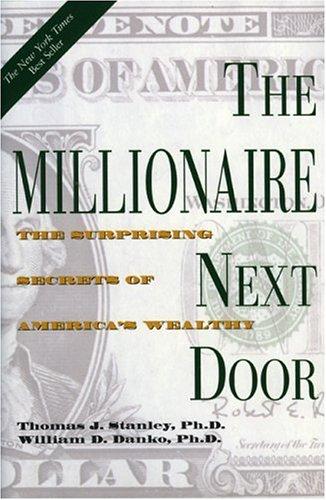
If The Richest Man in Babylon asserts that quiet thrift makes wealth, this 1996 book demonstrates it. Thomas Stanley and William Danko spent years surveying actual American millionaires and found that most of them look nothing like the popular image: they drive used cars, live in modest neighborhoods, and built their money through decades of living well below their means, which is Arkad's first and second cure translated into survey data. Concepts like being a prodigious accumulator of wealth versus an under-accumulator give you a way to measure yourself against Clason's standard.
The difference is texture. This is research writing, with tables and case profiles instead of parables, and parts of it (the chapters on car buying, the dated dollar figures) show their age. It also describes how the wealthy behave more than it prescribes a plan for you. Pick it when you want evidence that the Babylon rules work in the modern world; pick Ramsey or Sethi when you want the to-do list.
Read this if you want the other Depression-era wealth classic, mindset first.
Napoleon Hill's 1937 book is The Richest Man in Babylon's close contemporary and its natural companion: both are pre-war classics still selling millions of copies, both teach through stories, and both insist wealth follows discipline. But where Clason focuses on the mechanics of money (save a tenth, control spending, invest carefully), Hill focuses on the psychology of getting it: burning desire, definite purpose, persistence, and autosuggestion, drawn from his claimed studies of Andrew Carnegie and other industrialists of his era.
Be honest with yourself about what this is. There is little practical finance in it, some of Hill's biographical claims have been questioned by later researchers, and the mystical streak (the chapter on the subconscious, the 'secret' he never quite states) reads as either inspiring or hollow depending on the reader. It pairs well with Clason precisely because each supplies what the other lacks: Hill the ambition, Clason the arithmetic. Read it as a historical motivation text, not a how-to.
Read this if you need to get out of debt before you can pay yourself first.
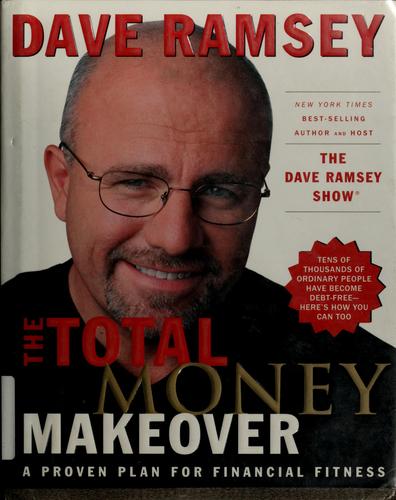
Dave Ramsey is the closest thing modern personal finance has to Arkad's blunt schoolmaster voice. His Baby Steps (a starter emergency fund, then the debt snowball, then a full emergency fund, then 15 percent into retirement) are essentially the cures for a lean purse rebuilt as a numbered checklist, and his core message is pure Babylon: live on less than you make, get out of the moneylender's grip, and let compounding do the rest. Clason's chapter on escaping debt, where Dabasir works his way out of slavery by splitting his income between living, repayment, and saving, is practically the Ramsey plan in robes.
The trade-offs: Ramsey is rigid where Clason is principled. He opposes all consumer debt including credit cards, his investment return assumptions are widely criticized as optimistic, and the book repeats itself. None of that matters much if you are actually in debt; this is the book that has marched millions of people out of it. If you are debt-free already, Sethi or Pape will serve you better.
Read this if 'a part of all you earn is yours to keep' made you rethink work itself.
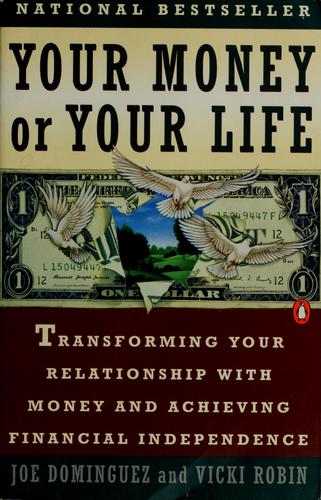
Vicki Robin and Joe Dominguez take Clason's central idea, that your earnings should buy your freedom rather than vanish, to its logical end. Their famous move is converting every purchase into hours of life energy: if your real hourly wage is 15 dollars, a 150 dollar purchase costs ten hours of your life. The nine-step program tracks every cent, asks whether each expense brought fulfillment, and aims at the crossover point where investment income covers living costs. It is Arkad's gold-that-works-for-you, pursued until you never need a paycheck again.
This is the most philosophical book on the list, and the one most likely to change what you want rather than just how you save. It is also the acknowledged grandparent of the FIRE (financial independence, retire early) movement. The original investment advice centered on Treasury bonds and has been updated in later editions, so get a recent one. Skip it if you only want tactics; read it if Babylon left you asking what the gold is for.
Read this for the simplest real-world setup, especially if you are in Australia.
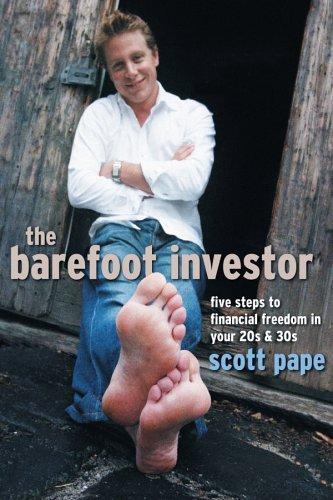
Scott Pape's runaway Australian bestseller is Clason's philosophy turned into a literal Tuesday-night routine: separate bank accounts (he calls them buckets) that automatically split each paycheck into daily expenses, splurge money, savings goals, and long-term investing. That is pay yourself first implemented with standing orders instead of willpower, and Pape's plain, jokey, no-shame voice makes it one of the friendliest money books ever written. Like Clason, he is ruthless about insurance, fees, and not investing in what you do not understand.
The one real caveat is geography. The book is written for Australians, so the specific recommendations (superannuation funds, named bank accounts, local insurers) do not transfer directly to American or European readers, though the bucket system and the date-night structure do. If you are outside Australia, read it for the framework and translate the details, or reach for Sethi's book, which does much the same job for a US audience.
Read this for the assets-versus-liabilities lens, with your skepticism switched on.
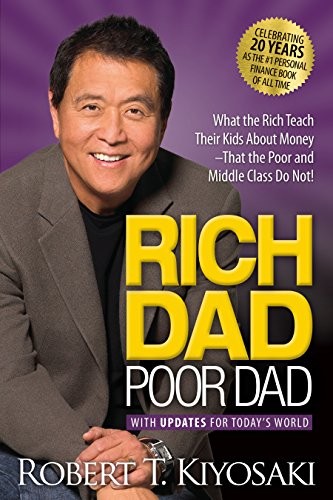
Robert Kiyosaki's 1997 mega-seller is, like Clason's book, financial teaching delivered through story: the contrasting lessons of his educated but struggling 'poor dad' and his entrepreneurial 'rich dad.' Its lasting contribution maps cleanly onto Babylon's third cure, make thy gold multiply: buy assets that put money in your pocket, avoid liabilities that take it out, and do not assume your house is an asset. For many readers it is the book that first made them think like an owner instead of an employee.
Read it with eyes open, though. The rich dad's literal existence has been questioned, the book is vague on actual steps, it is dismissive of index-fund-style investing in ways most advisors reject, and it functions partly as a funnel toward Kiyosaki's seminars and games. The mindset shift is genuinely valuable; the specific advice is the weakest on this list. Take the lens, leave the program.
Read this if the parable format itself is what you want more of.
This is the most direct heir to Clason on the list. John Soforic, a chiropractor who retired at 49 on rental income, wrote it for his college-age son, alternating fictional parables about a wealthy gardener mentoring a young man with short nonfiction chapters from Soforic's own life. The structure is Babylon's exactly: story first, lesson drawn out plainly, repeat. The themes are familiar too, disciplined saving, the cost of idle time, patient investment, and the dignity of building wealth slowly.
It is longer and looser than Clason, closer to 400 pages than 150, and the prose is earnest rather than polished; some chapters repeat their points, and it leans harder on work ethic and purpose than on specific financial mechanics. It also carries a modern self-help flavor (affirmations, visualization) Clason never had. Choose it as a bedside successor to Babylon, a chapter a night, rather than as a manual.
Read this to actually set up Arkad's system with real accounts this week.
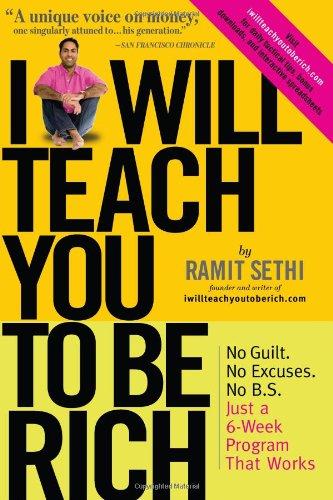
Ramit Sethi's book is the execution layer for everything Clason preaches. Its six-week program walks you through the literal mechanics: which credit cards and bank accounts to open, how to negotiate fees, how to automate transfers so a slice of every paycheck flows to investing before you can touch it, and how to put the rest into low-cost index funds or target-date funds. Automation is Sethi's version of pay yourself first, and it is arguably stronger than Arkad's, because it removes willpower from the equation entirely. His conscious spending idea, spend lavishly on what you love and cut ruthlessly on what you do not, is Babylon's 'control thy expenditures' without the hair shirt.
The voice is the opposite of Clason's: irreverent, contemporary, occasionally smug, and aimed at readers in their twenties and thirties with US-based accounts and employer retirement plans. There are no parables here and no poetry. If The Richest Man in Babylon convinced you and you now want the checklist, this is the single most actionable book on the list.
Read this only if you want the encyclopedic version with investor interviews.
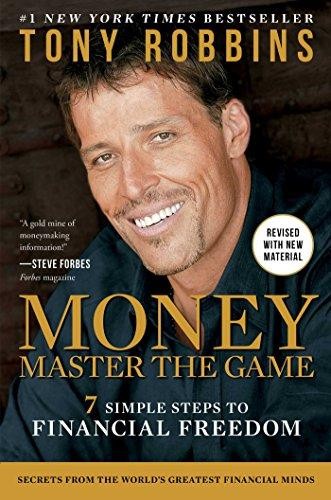
Tony Robbins's 600-plus page tome is what happens when Clason's seven cures get expanded into a full investment manual. Its core steps, commit a fixed percentage of income to a freedom fund, automate it, understand fees, diversify, are Babylon at scale, and its distinctive asset is access: Robbins interviews investors like Ray Dalio, Jack Bogle, and Carl Icahn, and the simplified version of Dalio's All Weather portfolio he extracts is the book's most cited takeaway. The chapters exposing how mutual fund fees compound against you are genuinely valuable and very much in the spirit of Arkad's warning about trusting gold to the wrong hands.
The honest caveats: it is badly in need of an editor, the motivational padding is heavy, and critics flagged its friendliness toward annuities and a firm Robbins was involved with. The useful content could fit in 150 pages. Choose it if you enjoy Robbins's energy and want the fee math and the interviews; otherwise Sethi covers the practical ground in a quarter of the time.
What book is most similar to The Richest Man in Babylon?
For the parable format, The Wealthy Gardener by John Soforic is the closest match: financial lessons taught through fictional stories paired with life lessons from the author. For the era and stature, Think and Grow Rich by Napoleon Hill is the natural companion, another pre-war classic, though it focuses on mindset where Clason focuses on money mechanics.
Is the advice in The Richest Man in Babylon still valid?
The core rules hold up completely: save at least 10 percent of income, live below your means, avoid debt, invest only in what you understand, and let compounding work over time. What the book lacks is modern implementation, since index funds, retirement accounts, and automatic transfers did not exist in 1926. Books like I Will Teach You to Be Rich and The Barefoot Investor supply exactly that layer.
Which book should I read next if I am in debt?
The Total Money Makeover by Dave Ramsey. Its debt snowball method, paying minimums on everything while attacking the smallest balance first, is the most widely used escape plan in print, and it mirrors the debt-repayment story Clason tells in the Dabasir chapters. Once you are debt-free, move on to Sethi or Pape for the investing and automation side.
What is the 'pay yourself first' rule from the book?
It is Arkad's first cure for a lean purse: before paying any bill or buying anything, set aside at least one-tenth of everything you earn, because 'a part of all you earn is yours to keep.' That tenth is then put to work earning more. Nearly every book on this list builds on the same rule; the modern versions simply automate it with scheduled bank transfers.
As an Amazon Associate, we earn from qualifying purchases. · About & methodology