Books Like The 7 Habits of Highly Effective People: Powerful Lessons in Personal Change
Explore personal development books like The 7 Habits with habits, leadership, productivity, and practical principles for change.
Updated June 11, 2026
Stephen Covey's 1989 classic has outlasted most of the self-help shelf because it is not really a productivity book. Covey's argument is that lasting effectiveness comes from character, not technique: you work from the inside out, starting with private victories (be proactive, begin with the end in mind, put first things first) before public ones (think win-win, seek first to understand, synergize), all sustained by renewal. The famous tools, the time-management quadrant, the circle of influence, the emotional bank account, are downstream of that principle-centered core. It is earnest, a little dated in its corporate examples, and still genuinely useful.
What you should read next depends on which layer of Covey grabbed you. If it was the habits themselves, the daily mechanics of changing behavior, Atomic Habits and Mindset are the modern behavioral-science successors. If it was Habit 2's inner work, the self-awareness underneath effectiveness, The Power of Now and Dare to Lead go deeper inward. And if you read Covey as a leadership book, Good to Great, Start with Why, Leaders Eat Last, and The Five Dysfunctions of a Team take the principles into organizations, teams, and companies.
A practical note: these are mostly fast reads compared to Covey, and several (Atomic Habits, Five Dysfunctions) are built to be applied the same week you finish them. Good to Great is the densest with research; The Power of Now is the only one that asks for slow, reflective reading rather than note-taking.
Our Top Picks
Best overall next read
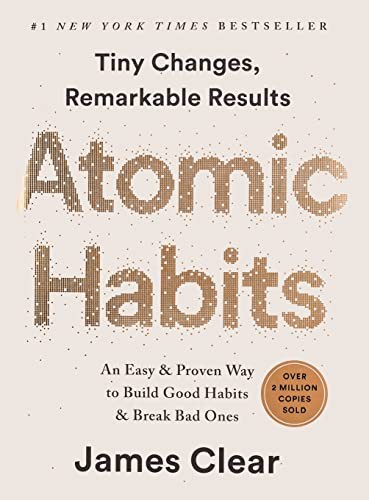
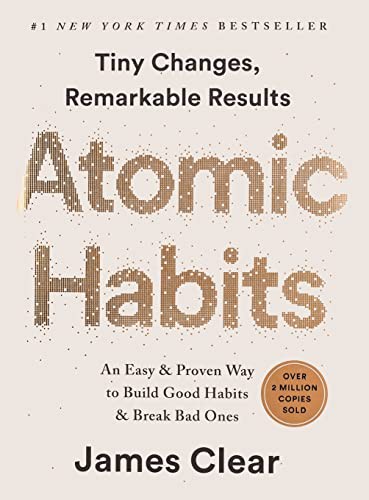
Atomic Habits: An Easy & Proven Way to Build Good Habits & Break Bad Ones
Books to Read If You Like The 7 Habits of Highly Effective People: Powerful Lessons in Personal Change
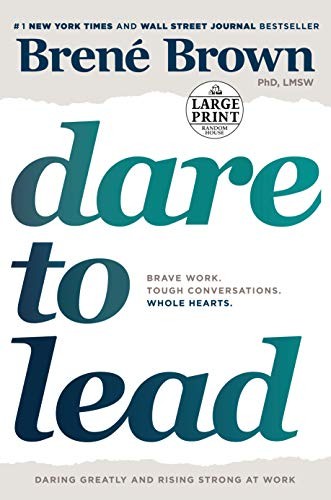
Dare to Lead: Brave Work. Tough Conversations. Whole Hearts.
by Brené Brown
Read this for the courage and vulnerability Covey's interpersonal habits quietly require.
Brené Brown's leadership book supplies something 7 Habits assumes but never teaches: the emotional courage to actually have the conversations Covey prescribes. Seeking first to understand, giving honest feedback, and confronting problems all require what Brown calls rumbling with vulnerability, and her research on shame, armor, and trust (her BRAVING framework breaks trust into seven observable behaviors) gives texture to Covey's emotional bank account. Brown is a research professor, and the book distills two decades of qualitative work with leaders.
The register is very different. Covey is structured and almost engineering-like; Brown is conversational, story-driven, and comfortable with words like wholehearted, which lands as refreshing or as soft depending on the reader. It is also less a system than a set of skills and vocabularies. Choose it if the interpersonal habits felt right but hard, and you want help with the hard part rather than another framework.
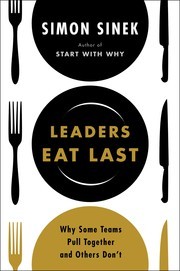
Leaders Eat Last: Why Some Teams Pull Together and Others Don't
by Simon Sinek
Read this for Covey's win-win thinking applied to building trust in teams.
Sinek's second major book is about the conditions under which people give their best, and its central concept, the Circle of Safety, is recognizably Covey's emotional bank account at the scale of an organization. Leaders who protect their people first create trust; trust enables the cooperation Covey calls interdependence. Sinek draws on military examples (the title comes from Marine Corps officers eating after their troops) and on a pop-science tour of oxytocin, serotonin, dopamine, and cortisol to explain why safety and belonging change how teams perform.
It is more diffuse than 7 Habits, part neuroscience explainer, part leadership sermon, part critique of shareholder-era corporate culture, and the chemistry is simplified enough that you should treat it as metaphor. There is little personal practice here; it is a book about what leaders owe the led. Pick it if you lead people and the public-victory habits were what you came to Covey for.
Atomic Habits: An Easy & Proven Way to Build Good Habits & Break Bad Ones
by James Clear
Read this if you want the habit half of Covey with thirty more years of behavioral science.
James Clear's 2018 bestseller is the natural modern companion to Covey, and the overlap is direct: both argue that who you become is the product of small, repeated choices, and both insist identity comes before outcomes. Clear's identity-based habits (decide who you want to be, then prove it with small actions) is essentially Covey's inside-out principle restated in behavioral terms, and his four laws of behavior change give you concrete machinery, cues, cravings, friction, rewards, that Covey's framework gestures at but never specifies.
The difference is altitude. Covey is a philosophy of character and effectiveness; Clear is a mechanic's manual for behavior, lighter on mission statements and values and heavier on environment design and systems. It says little about interpersonal effectiveness, Covey's Habits 4 through 6, so it replaces only half the book. Pick it if you finished 7 Habits agreeing with everything and changing nothing; this is the book that closes that gap.
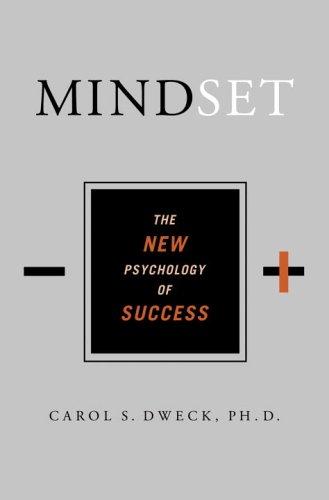
Read this for the research behind Covey's claim that you can change.
Covey's whole framework rests on an assumption: that people can fundamentally change how they operate. Carol Dweck's research is the strongest scientific case that the assumption is right, and that believing it matters. Her distinction between a fixed mindset (abilities are static, so failure is a verdict) and a growth mindset (abilities are developed, so failure is information) maps cleanly onto Covey's proactivity, the choice of how to respond to what happens to you. Dweck is a Stanford psychologist, and the book is built on decades of studies rather than seminar anecdotes.
It is descriptive where Covey is prescriptive. Dweck tells you what the two mindsets look like in school, sports, business, and parenting, but offers comparatively little step-by-step practice, and the book repeats its central idea more than it needs to. Read it for the foundation, not the toolkit. It pairs especially well with Atomic Habits, which supplies the mechanics Dweck leaves out.
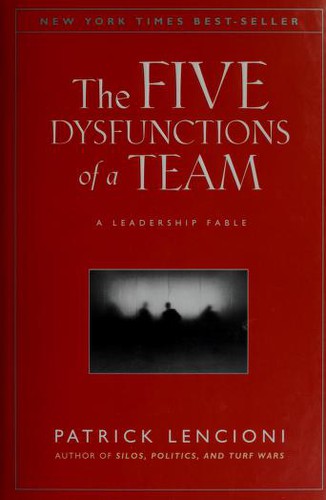
The Five Dysfunctions of a Team: A Leadership Fable
by Patrick Lencioni
Read this if you want Habits 4 through 6 turned into a usable team playbook.
Patrick Lencioni teaches through story: a new CEO inherits a talented but failing executive team and fixes it layer by layer. The five dysfunctions stack like a pyramid, absence of trust, fear of conflict, lack of commitment, avoidance of accountability, inattention to results, and the remedies are Covey's public victories in operational form. Seek first to understand becomes structured healthy conflict; win-win becomes shared commitment to collective results over individual ego.
The fable format is the divider. The business-novel characters are thin and the dialogue is functional, which some readers find painless and others find corny; the actual model takes up the short final section. It is also narrowly about leadership teams, not personal effectiveness. If you run or sit on a team, this is the most immediately actionable book on the list, readable in an evening and applicable at your next meeting.
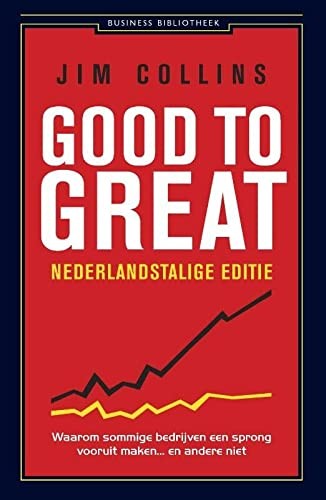
Good to Great: Why Some Companies Make the Leap... and Others Don't
by Jim Collins
Read this if you want Covey's principles tested against actual company data.
Jim Collins's 2001 study is the closest thing business writing has to Covey's principle-centered leadership with evidence attached. His team compared companies that made a sustained leap to great performance against near-identical peers that did not, and the findings rhyme with Covey constantly: Level 5 leaders combine humility with fierce resolve (character over charisma), the Hedgehog Concept is a corporate begin-with-the-end-in-mind, and confronting the brutal facts is proactivity at the organizational scale.
The unit of analysis is the company, not the person, so this is for readers who manage, lead, or want to. Some of the celebrated examples have aged badly (Circuit City went bankrupt, and Fannie Mae became a cautionary tale), which is worth knowing before you treat the findings as law. Read it as the best-researched application of Covey-style thinking to organizations, with the usual caveat that business case studies are snapshots, not guarantees.
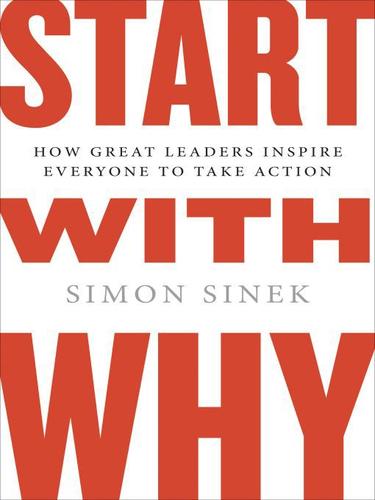
Start with Why: How Great Leaders Inspire Everyone to Take Action
by Simon Sinek
Read this if Habit 2, begin with the end in mind, was your favorite.
Simon Sinek's core idea is Covey's second habit turned outward. Where Covey asks individuals to define a personal mission before acting, Sinek argues that organizations and leaders inspire only when they communicate from purpose first: why before how before what, his Golden Circle. The Apple and Martin Luther King examples are famous for a reason, and if writing your personal mission statement was the part of 7 Habits that stuck, this book extends that exercise to teams, brands, and movements.
Be honest with yourself about the depth, though. Start with Why is a single TED-talk-sized idea stretched to book length, with repeated examples and some loose science (the brain-anatomy claims are oversimplified). It is inspirational rather than rigorous, closer to a long keynote than to Covey's worked-out system. Read it quickly for the framing, which is genuinely useful, and do not expect the structured practice Covey provides.
The Power of Now: A Guide to Spiritual Enlightenment
by Eckhart Tolle
Read this only if you want to go further inward than Covey does.
Covey's deepest move is the space between stimulus and response, the idea that self-awareness lets you choose your reaction rather than being run by it. Eckhart Tolle's 1997 book lives entirely in that space. His core teaching is that you are not your thoughts, that the compulsive thinking mind creates most suffering, and that presence, attention to the now, is the way out. Habit 7's renewal and Covey's emphasis on conscience and self-awareness point in this direction; Tolle simply keeps walking.
Know that this is a spiritual book, not a self-help or leadership book. There are no habits, goals, or mission statements, and Tolle's vocabulary (the pain-body, ego as illusion, enlightenment) sits far from Covey's seminar-room language; readers who liked Covey precisely for his practicality often bounce off it. Read it slowly, a few pages at a time, if the inner-life thread of 7 Habits is the one you want to follow. Skip it if you came for tools.
What book is most similar to The 7 Habits of Highly Effective People?
Atomic Habits by James Clear is the most common modern pairing. Both argue that character and identity drive results and that small repeated behaviors compound, but Clear adds practical behavior-change mechanics Covey never specifies. For the leadership side of Covey, Good to Great by Jim Collins is the closest match, applying principle-centered ideas to organizations with actual research behind them.
Should I read more Stephen Covey after 7 Habits?
His most direct follow-ups are First Things First, which expands Habit 3 into a full book on time and priorities, and The 8th Habit, which adds finding your voice and helping others find theirs. The Speed of Trust, by his son Stephen M. R. Covey, is also popular and develops the trust themes. None has the standing of the original, so most readers do better branching into the books on this list.
Is The 7 Habits still worth reading, or is it outdated?
The framework holds up well because it is built on principles rather than tactics; the proactivity, mission, and trust material reads as current. What dates it are the 1980s corporate anecdotes and the pre-internet examples. Many readers now pair it with Atomic Habits for modern behavior science and with Dare to Lead or Leaders Eat Last for contemporary leadership culture.
Which of these books is best if I lead a team?
Start with The Five Dysfunctions of a Team, which is short and immediately usable in meetings. Good to Great is the best researched and suits executives thinking about strategy and hiring. Leaders Eat Last and Dare to Lead both focus on trust and culture; pick Sinek if you want the argument for why safety matters, and Brown if you want skills for hard conversations.
As an Amazon Associate, we earn from qualifying purchases. · About & methodology