8 books like The Secret Life of Walter Mitty, from Big Fish to A Man Called Ove: stories of daydreamers and quiet lives that turn out larger than they look.
Updated June 10, 2026
James Thurber's The Secret Life of Walter Mitty is one of the most famous short stories in American literature, and it is short: first published in The New Yorker in 1939, it runs only a few pages. A henpecked man drives his wife on errands while slipping into vivid heroic daydreams, a Navy pilot, a brilliant surgeon, a man facing a firing squad, each fantasy punctured by some mundane interruption. Thurber's trick is that the comedy and the sadness arrive together. Mitty's inner life is grand precisely because his outer life is small, and the name has entered the language for exactly that gap. Many readers also arrive via the 2013 Ben Stiller film, which invents a plot where Mitty actually goes on the adventure.
Because the original is so brief, what people want next is really one of three things, and this list covers all of them. If you want the core Mitty move, tall tales and imagination blurring into ordinary life, start with Big Fish and The Little Prince. If you want the quiet, overlooked person whose routine existence cracks open, that is A Man Called Ove, Eleanor Oliphant Is Completely Fine, and The Curious Incident of the Dog in the Night-Time, all narrated from inside an unusual head. And if the film's version of Mitty is your reference point, the ordinary person who finally goes, The Alchemist and Wild deliver the actual journey, one as fable and one as memoir.
A practical note: nothing here imitates Thurber's style directly, because almost nothing does; his blend of deadpan comedy and melancholy in miniature is its own thing (his collected stories are the real sequel if you want more). These are novels and one memoir, most of them easy reads of a few hundred pages. Each entry below tells you which side of Mitty it speaks to, the dreamer or the doer.
Read this if you want the daydream taken literally, as a quest actually followed.
Paulo Coelho's fable is what happens when a Walter Mitty stops fantasizing and goes. Santiago, an Andalusian shepherd, has a recurring dream of treasure at the Egyptian pyramids and, unlike Mitty, acts on it, crossing the sea and the desert while omens and teachers urge him toward his Personal Legend. The 2013 film version of Mitty runs on exactly this arc, the gray routine life redeemed by finally embarking, and readers who came to Thurber through the movie will find The Alchemist scratches that itch far more than the original story does.
Know what you are getting: this is an earnest inspirational parable, simple almost to the point of scripture, with none of Thurber's irony or comedy. The universe in Coelho conspires to help dreamers; the universe in Thurber hands them a parking ticket. If that sincerity appeals, it is a short, pleasant afternoon read and one of the bestselling books ever written. If you loved Mitty precisely because it punctures fantasy, this book will read as the thing being punctured.
Read this for the young observer who lives in his head instead of his life.
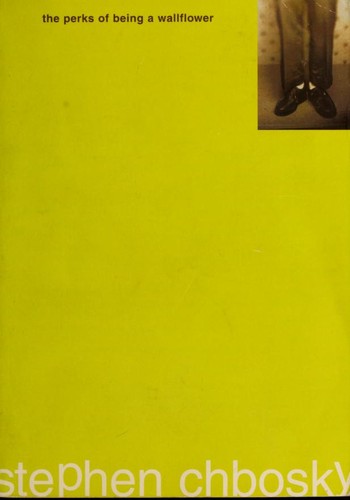
Stephen Chbosky's epistolary novel gives you Mitty's condition at fifteen. Charlie, writing anonymous letters about his freshman year, is the designated watcher, the kid on the edge of every room, processing life at one remove rather than participating in it, until two seniors pull him into friendship, music, and first love. The famous wallflower idea, observing and not participating, is a teenage cousin of Mitty's escape into reverie, and the book is explicitly about being coaxed out of it.
It is a heavier book than its reputation suggests, dealing with mental illness, abuse, and a buried trauma that surfaces late, and its 1990s mixtape sentimentality is a world away from Thurber's clipped New Yorker comedy. This is the pick for readers who responded to the loneliness in Mitty rather than the laughs, and it skews younger than anything else on the list. The letters format makes it very fast to read.
Read this if you want the grumpy, overlooked man whose small life turns out to matter.
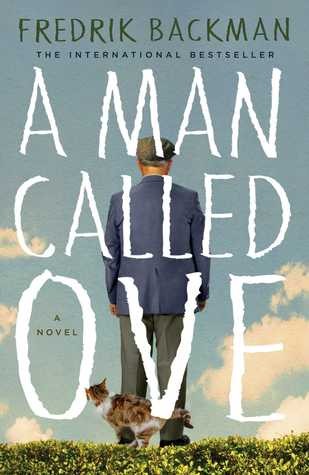
Fredrik Backman's bestseller shares Mitty's basic subject: a man the world has filed away as ordinary and a bit ridiculous, seen from the inside where everything looks different. Ove is a 59-year-old Swedish widower, rigid about rules and parking permits, who is interrupted in his plans to end his life by a chaotic new family next door. Like Thurber, Backman gets his effects by cutting between the man's exterior (comic, exasperating) and his interior (grieving, principled, secretly capable), and the gap between the two is where both the laughs and the ache live.
Ove is no daydreamer, though, and that is the real divergence. His inner life is memory rather than fantasy, flashbacks to his marriage and his work, and the book moves toward connection where Mitty's story stays sealed in irony. It is also openly heartwarming, engineered to make you cry in the last fifty pages, which Thurber would have viewed with suspicion. Choose it for the quiet-man-revealed theme and a satisfying emotional payoff rather than for wit.
Read this if you think the daydreamers are right and the practical people are wrong.
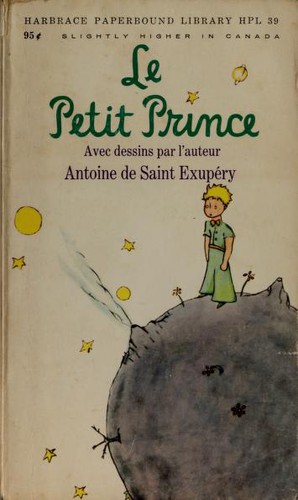
Antoine de Saint-Exupéry's 1943 fable is, at heart, a defense of the Walter Mittys of the world. Its narrator is a pilot whose childhood drawings were dismissed by adults obsessed with matters of consequence, and the little prince he meets in the desert tours a series of planets occupied by grown-ups (a king, a businessman counting stars, a lamplighter) whose serious occupations are revealed as absurd. Thurber makes gentle fun of Mitty while clearly siding with him against the scolding wife and the smirking parking attendant; Saint-Exupéry drops the irony and sides with the dreamer outright.
It is a very different reading experience: a short illustrated fable, written in plain language for children and aimed at adults, with a bittersweet ending that has no parallel in Thurber's comedy. There is no suburban texture here, no errands, no satire of marriage. Read it in an hour when you want the imagination-versus-practicality theme distilled to its purest, saddest form.
Read this for an unforgettable narrator whose inner world runs on entirely different rules.
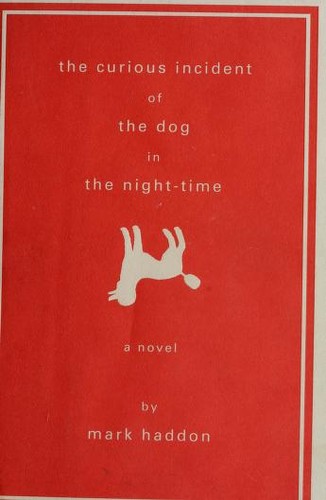
Mark Haddon's novel connects to Mitty through voice. Christopher Boone, a 15-year-old in Swindon who is a mathematical savant and reads as autistic (Haddon avoids the label), narrates his investigation into a neighbor's dead dog, and the whole pleasure of the book is the distance between how Christopher describes the world and what the reader can see happening in it. That ironic gap, narrator inside his own head, reader outside it, is precisely the engine Thurber built his story on, used here for mystery and family drama instead of comedy.
Unlike Mitty, Christopher does not fantasize; he is relentlessly literal, and the book's emotional force comes from facts he reports without understanding their weight, particularly about his parents. It is also genuinely plotted, with a detective structure that turns into a runaway-child story. Choose it if what fascinated you was being locked inside an unusual mind. It is a fast read, widely taught, and the rare experimental-voice novel that works for almost everyone.
Read this for a Mitty-like solitary routine seen from the inside, with darker rooms in it.
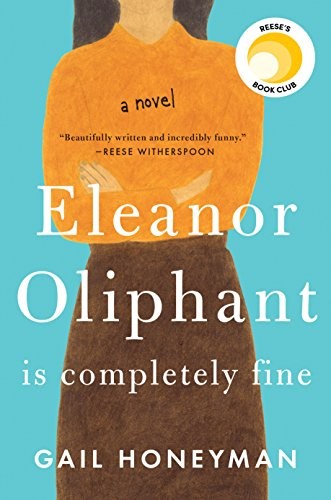
Gail Honeyman's debut is built on the same machinery as Thurber's story: a rigid weekly routine, a protagonist who narrates her own life with comic obliviousness, and an inner world (in Eleanor's case, an imagined romance with a musician she has never met) that substitutes for the life she is not living. Eleanor works a dull office job, talks like a Victorian etiquette manual, and is funny in exactly the unintentional way that makes you wince and laugh at once. The fantasy-crush subplot is the most literally Mitty-esque element on this list.
The book then goes somewhere Thurber never does: it slowly reveals the trauma underneath Eleanor's oddness, and the second half is less comedy than recovery story, complete with a twist about her past. Readers who wanted gentle quirk are sometimes blindsided by how dark it gets. Pick this if you want the daydreamer treated with real psychological seriousness; pick Ove instead if you mainly want the warmth.
Read this if Mitty's tall tales were the best part.
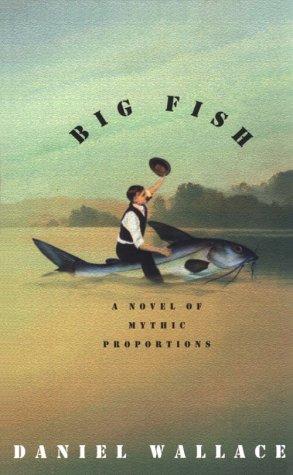
Daniel Wallace's novel is the closest thing on this list to Thurber's central device. Edward Bloom is an ordinary Alabama salesman who has narrated his own life as a string of impossible legends, giants, witches, heroic feats, and his dying days force his son William to sort the man from the myth. Like Walter Mitty, Edward is a person whose imagined self is bigger and braver than the visible one, and the book takes seriously the question Thurber only gestures at: what do those fantasies do for the people who live inside them, and what do they cost the people standing nearby?
The difference is warmth and structure. Where Thurber's story is a brisk comic sketch with a melancholy aftertaste, Wallace writes a father-son novel with real emotional stakes, told in short chapters that alternate the myths with deathbed scenes. It is sentimental in a way Thurber never is, and Tim Burton's 2003 film adaptation leans into that further. Pick it if you want the daydreaming theme expanded into a full story about family; skip it if what you loved was Thurber's dry, needling humor.
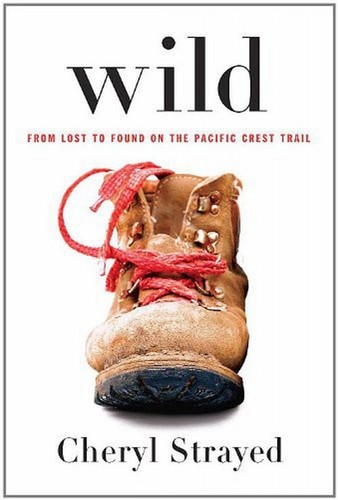
Wild: From Lost to Found on the Pacific Crest Trail
by Cheryl Strayed
Read this if you want the real, unglamorous version of finally having the adventure.
Cheryl Strayed's memoir is the nonfiction answer to the Mitty fantasy. At 26, with her mother dead and her marriage destroyed, Strayed walked over a thousand miles of the Pacific Crest Trail alone with no backpacking experience, and the book is honest about how little the reality resembles a daydream: lost toenails, an overloaded pack she names Monster, fear, boredom, and grief that does not resolve on schedule. For viewers of the 2013 Mitty film, this is the same arc, ordinary person bets on a journey to restart a stalled life, except it actually happened.
It is the one book here with no comic distance and no fantasy at all, and the trail narrative is interleaved with raw material about heroin, infidelity, and her mother's death that some readers find heavy. The prose is the strongest on this list. Choose it when you are done reading about dreamers and want proof of what walking out the door actually costs and pays; skip it if you wanted to stay in Thurber's register of wit.
Is The Secret Life of Walter Mitty a book or a short story?
It is a short story, first published in The New Yorker in 1939 and collected in Thurber's My World and Welcome to It. It runs only a few pages, which is why people who love it usually look next for novels with similar themes rather than a direct sequel. The 2013 film with Ben Stiller keeps the premise but invents an entirely new plot in which Mitty goes on a real adventure.
What should I read if I loved the Walter Mitty movie rather than the story?
The film's arc, a gray routine life transformed by finally embarking on a journey, is closer to The Alchemist and to Cheryl Strayed's Wild than to Thurber's original. The Alchemist gives you that arc as an inspirational fable; Wild gives it to you as a true story with all the blisters left in. The original story is far more ironic: Mitty never actually goes anywhere.
What is most similar to Thurber's actual writing style?
Honestly, more Thurber. His collected stories and essays (The Thurber Carnival is the standard gateway) deliver the same dry, melancholy comedy of small men and domestic defeat. Among the books on this list, Big Fish comes closest in spirit with its tall tales blurring into an ordinary life, and Eleanor Oliphant Is Completely Fine comes closest in technique, with a comic gap between how the narrator sees her life and how the reader does.
What does it mean to call someone a Walter Mitty?
The name became shorthand for an ordinary, ineffectual person who escapes into heroic fantasies, and dictionaries list it as a common noun. In British usage it also carries an accusation: someone who falsely claims adventures or credentials, especially faked military service. Thurber's original character is the gentler first sense, a daydreamer rather than a fraud.
As an Amazon Associate, we earn from qualifying purchases. · About & methodology