Explore books like The Art of War on strategy, leadership, conflict, power, and clear thinking, with quick notes on why each fits.
Updated June 10, 2026
The Art of War has survived roughly 2,500 years because it is almost impossibly compact. Sun Tzu's thirteen chapters of aphorisms (know your enemy and know yourself; the supreme art of war is to subdue the enemy without fighting; all warfare is based on deception) are short enough to read in an evening and abstract enough to apply to anything, which is why it gets handed out in boardrooms, locker rooms, and military academies alike. It is less a manual of battle than a philosophy of conflict: win by positioning, information, and timing, so the fight is decided before it starts.
The books below cover the three directions readers usually take from it. For more strategy in the same aphoristic register, The Book of Five Rings is the closest cousin, a Japanese swordsman's answer to Sun Tzu, while On War and Mahan's The Influence of Sea Power upon History are the heavyweight Western counterparts. For the application of strategy to power and people rather than armies, there is The Prince, The 48 Laws of Power, and The Art of Seduction. And for what war and power actually feel like from inside, War and Peace and The Anatomy of Fascism round out the list from fiction and history.
A practical note: these vary enormously in length and difficulty. Five Rings and The Prince are as short as Sun Tzu; On War and War and Peace are massive commitments most readers approach in selections or over months. Each entry below says which kind of book you are picking up.
Read this if you want Sun Tzu's cold-eyed realism applied to politics instead of war.
Machiavelli's 1532 treatise is the natural Western companion to The Art of War, and the two are constantly shelved and sold together. Both strip morality out of the analysis and ask only what works: Sun Tzu for the general, Machiavelli for the ruler. The famous counsel that it is safer to be feared than loved comes from the same unsentimental place as Sun Tzu's insistence on deception, and both books are short, quotable, and built from concrete advice rather than abstract theory. Machiavelli even discusses warfare directly, arguing a prince should think of little else.
The difference is target and tone. Sun Tzu writes about armies and stays serene and impersonal; Machiavelli writes about holding a state, draws on named examples from Italian and Roman history, and is far more cynical about human nature specifically. It is also genuinely contested how literally he meant it, which makes it a more provocative read. Pick it when the part of The Art of War you valued was the realism about how power actually operates, not the battlefield mechanics.
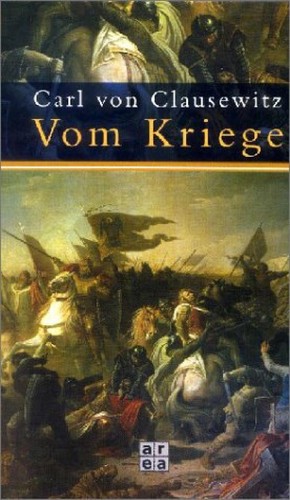
Read this if you want the other pillar of strategic thought, at full philosophical depth.
Clausewitz's On War, published in 1832 after his death, is the book military theorists weigh against Sun Tzu, and the contrast is the whole point of reading it. Both ask what war fundamentally is, but where Sun Tzu prizes winning without fighting, Clausewitz, shaped by the Napoleonic Wars, centers battle, friction, and the famous formulation that war is the continuation of politics by other means. Concepts like the fog of war and the culminating point of victory come from here, and any serious strategy education includes both authors.
Be honest about the commitment: this is a dense, unfinished, philosophical tome, hundreds of pages of dialectical argument where Sun Tzu gives you one-line aphorisms. Most readers do best with a good modern edition (the Howard and Paret translation is standard) and a willingness to read selectively, starting with Book One. Choose it if you want to graduate from the poetry of strategy to its philosophy; skip it if you wanted another quick, applicable read.
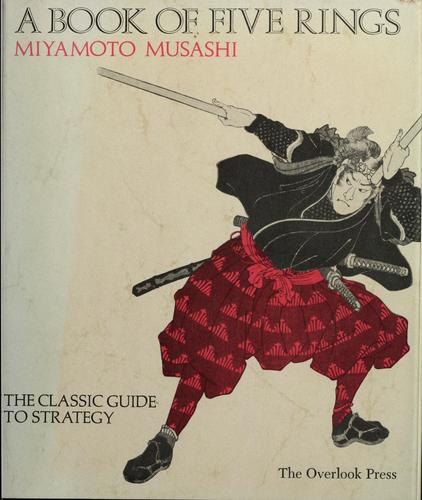
Read this for the closest thing to a second Art of War.
Miyamoto Musashi wrote this around 1645, near the end of a life in which he reportedly won some sixty duels, and it is the book most often bought alongside Sun Tzu. The format is strikingly similar: short, aphoristic chapters (organized as Ground, Water, Fire, Wind, and Void) that move constantly between the concrete craft of fighting and a larger philosophy of strategy, perception, and self-mastery. Like The Art of War, it has had a long second life as a business and competition manual, especially during the 1980s fascination with Japanese management.
The voice is the difference. Sun Tzu writes as a general about armies; Musashi writes as a lone duelist about the individual, his rhythm, his footwork, his refusal to depend on any one weapon or technique. That makes Five Rings feel more personal and more practical for one-on-one competition of any kind. It is also blunter and stranger, the testament of a man who lived everything he wrote. If you read The Art of War for self-improvement rather than military history, start here.
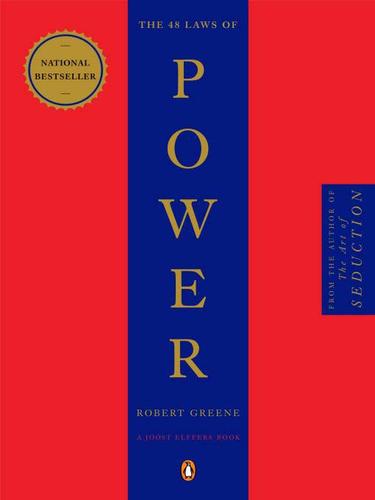
Read this if you want Sun Tzu's lessons translated into modern, usable form.
Robert Greene is the most successful modern heir to the Sun Tzu and Machiavelli tradition, and this 1998 book is his flagship. The structure mirrors The Art of War deliberately: numbered laws (never outshine the master; conceal your intentions; win through your actions, never through argument), each illustrated with historical episodes from courtiers, con artists, and generals, including Sun Tzu himself. Greene later wrote The 33 Strategies of War, an even more direct homage, but the 48 Laws is the book that defined the genre and remains the best entry point.
The trade-off is subtlety. Where Sun Tzu is spare and lets you do the interpreting, Greene spells everything out at length, and the amorality that reads as ancient wisdom in Sun Tzu can read as cynical playbook here; the book is regularly criticized, and banned in some prisons, for exactly that. Read it as a study of how power has been used, not necessarily a prescription. It is the most readable and immediately applicable book on this list.
Read this only if you want strategy applied to charm and persuasion specifically.
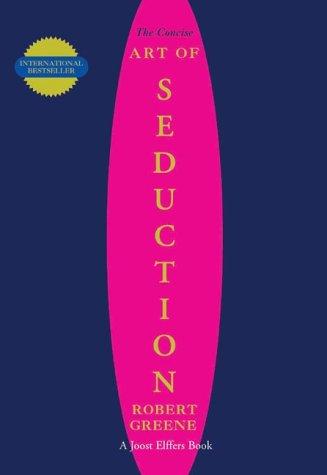
Greene's 2001 follow-up takes the same method, numbered principles backed by historical case studies, and aims it at the most intimate form of influence. The connection to Sun Tzu is real: seduction is framed explicitly as a campaign, with phases, misdirection, and the manufacture of desire, and Sun Tzu's insight that the best victories are won before any open contest applies on every page. Figures like Cleopatra, Casanova, and Duke Ellington serve as the generals of this particular battlefield.
It is also the most specialized and most uncomfortable pick on this list. The instrumental view of other people that feels abstract in a military text gets uncomfortably literal when applied to romance, and many readers find it manipulative by design; Greene would say he is describing what seducers do, not endorsing it. Pick it up if you are interested in influence and social power as a subject of study. If you wanted strategy in the classical sense, The 48 Laws or Five Rings serve you better.
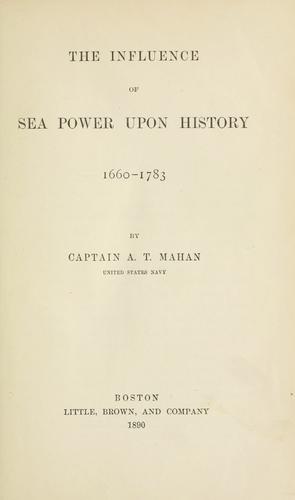
The Influence of Sea Power upon History, 1660–1783
by Alfred Thayer Mahan
Read this if you want strategy at the level of nations and centuries.
Mahan's 1890 study is one of the few books that genuinely changed history the way The Art of War is reputed to have. By arguing that command of the sea, secured by a concentrated battle fleet, determined the rise and fall of great powers, it shaped the naval buildups of the United States, Britain, Germany, and Japan before both world wars. Like Sun Tzu, Mahan is after permanent principles of strategy beneath the surface of events, and his emphasis on position, concentration of force, and the decisive line of communication will feel familiar.
This is a work of nineteenth-century naval history, though, built on detailed accounts of Anglo-French wars, and it asks more patience than anything else here except Clausewitz. There are no aphorisms to underline; the principles emerge from long campaign narratives. Choose it if you want to see strategic theory proven against real fleets and real centuries, and you have an appetite for history. Most readers focus on the famous opening chapters where Mahan lays out the elements of sea power.
Read this if your real interest is how power is seized and held in the modern world.
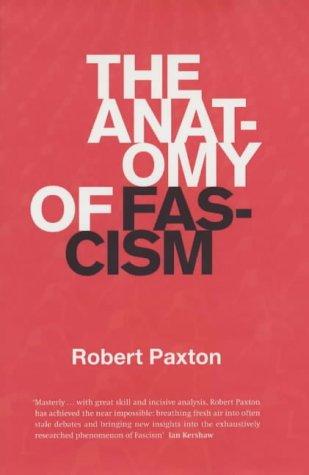
Robert O. Paxton's 2004 study is the outlier on this list: not a strategy manual at all, but a historian's dissection of how fascist movements actually worked, from their first appearance through Mussolini's and Hitler's regimes. The kinship with The Art of War is analytic temperament. Paxton, like Sun Tzu, refuses myth and slogan in favor of how things really function, defining fascism by what its movements did at each stage (taking root, getting power, exercising it) rather than by what they claimed to believe. As a study of political power in motion, it is rigorous and unsparing.
Know what you are getting: this is academic history with arguments and evidence, not advice, and nothing in it transfers to the boardroom. It earns its place for readers whose interest in Sun Tzu was always really about understanding conflict and domination, not winning at office politics. It is widely considered the standard one-volume work on its subject, and it pairs naturally with The Prince as a study of what unconstrained power looks like in practice.
Read this for the great counterargument to every strategy book on this list.
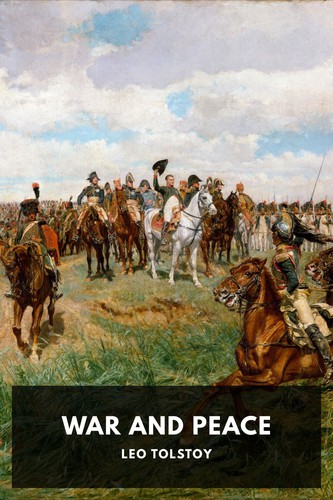
Tolstoy's novel of the Napoleonic Wars belongs here precisely because it talks back to Sun Tzu and Clausewitz. Through Napoleon's invasion of Russia in 1812 and the Russian general Kutuzov's patient, almost passive response, Tolstoy dramatizes ideas Sun Tzu would recognize: that the side that avoids the decisive battle can win, that armies are defeated by space, time, and morale more than by genius. Then he goes further, arguing in the novel and in its essayistic passages that great-man strategy is largely an illusion and that history moves by forces no commander controls.
It is also, of course, a 1,200-page novel about the Rostovs, the Bolkonskys, and Pierre Bezukhov, with love affairs, duels, and deaths alongside the battle of Borodino. That is the point of choosing it: you get war as lived experience rather than as diagram. The commitment is real but the book is far more readable than its reputation suggests. Pick it when you have absorbed the theory and want to see what it looks like when actual human beings are inside it.
The Book of Five Rings by Miyamoto Musashi is the closest match: a short, aphoristic strategy classic from an Asian martial tradition, written by a 17th-century Japanese swordsman, that is read today for business and competition as much as for combat. The two are frequently published and sold together. Among Western works, The Prince by Machiavelli is the standard companion for its similarly unsentimental view of power.
Should I read Sun Tzu or Clausewitz first?
Sun Tzu, without question. The Art of War is short, accessible, and readable in an evening, while On War is a dense, unfinished philosophical work of several hundred pages. They also make a natural pair read in that order, since Clausewitz centers battle and friction where Sun Tzu prizes winning without fighting, and seeing where they disagree is half the value of reading both.
Is The Art of War actually useful for business?
Its principles are general enough to apply: know your competition and yourself, prefer positioning to direct confrontation, value information and timing. That abstraction is why it became a business staple. For more directly applicable modern treatments, Robert Greene's The 48 Laws of Power on this list translates the same tradition into contemporary examples, and Greene's later The 33 Strategies of War is an explicit business-and-life adaptation of military strategy.
Who actually wrote The Art of War?
Tradition credits Sun Tzu (Sunzi), a Chinese general of the late 6th century BC, but scholars debate whether he existed as described and whether the text had a single author. Most date the work to the Warring States period, roughly the 5th to 3rd centuries BC, possibly compiled and expanded by later hands. The uncertainty does not affect its standing; it has been China's most influential military text for over two millennia.
As an Amazon Associate, we earn from qualifying purchases. · About & methodology