Explore books like The Prince about power, statecraft, leadership, persuasion, and political strategy across history.
Updated June 10, 2026
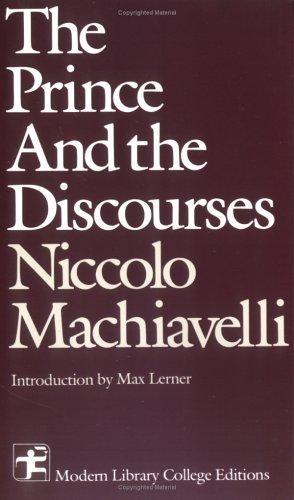
Niccolo Machiavelli wrote The Prince around 1513, after Florence's new Medici rulers had stripped him of office, imprisoned him, and tortured him. It is a short manual addressed to a prince on how to take and hold power, and its scandal, then and now, is its method: it describes politics as it is rather than as it should be. It is better to be feared than loved if you cannot be both, a ruler must learn how not to be good, and appearances matter more than virtues. Five centuries later it remains the starting point for anyone who wants power discussed without sentiment.
Readers come away from it wanting different things, and this list is organized around them. If you want more clear-eyed strategy from the classics, Sun Tzu's The Art of War and Clausewitz's On War apply the same unsentimental lens to conflict itself. If you want the modern descendants, Robert Greene's The 48 Laws of Power updates Machiavelli for office politics and Thomas Schelling's The Strategy of Conflict rebuilds strategic thinking on game theory. And if you want to go deeper into the political philosophy, Machiavelli's own Discourses shows his fuller (and more republican) mind, Hobbes's Leviathan gives the next great theory of power, and Quentin Skinner's Foundations of Modern Political Thought places all of it in context.
A practical note: The Prince is one of the few classics that is genuinely short and punchy, and not everything here matches that. The Art of War and The 48 Laws of Power read fast; On War, Leviathan, and Skinner are commitments. Each entry below says what it shares with Machiavelli and what kind of reader should pick it.
Read this for the same ruthless clarity, two thousand years earlier.
Sun Tzu's treatise, written in China roughly two millennia before Machiavelli, shares The Prince's defining quality: it treats conflict as a craft to be mastered, not a morality play. Its core ideas, that all warfare is based on deception, that the supreme skill is winning without fighting, that you must know yourself and your enemy, sit naturally beside Machiavelli's advice on appearances and force. The two books are the standard pairing on strategy shelves for a reason, and both have been adopted far beyond their original subject, by executives, coaches, and politicians.
The differences are real. Sun Tzu writes in compressed aphorisms about armies and terrain, where Machiavelli writes connected prose about courts, conspiracies, and named contemporaries; The Prince is grounded in Italian history while The Art of War floats free of any particular war, which is part of why it transfers so easily. It is also even shorter, readable in an hour and rereadable for years. Choose it when you want strategy distilled to first principles rather than applied to politics.
Read this if you want Machiavelli updated, expanded, and aimed at modern life.
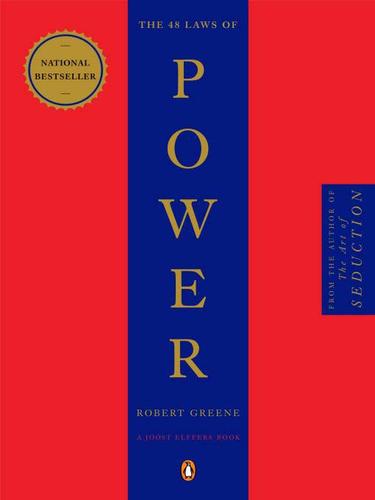
Robert Greene's 1998 bestseller is the most direct modern descendant of The Prince, and Greene leans on Machiavelli constantly, quoting him and retelling his examples alongside stories of courtiers, con artists, and statesmen from Sun Tzu's China to Talleyrand's France. The 48 laws (never outshine the master, conceal your intentions, crush your enemy totally) are Machiavelli's method turned into a numbered system for careers and social life rather than principalities. If you finished The Prince thinking it described your workplace, this is the book that makes the application explicit.
Be honest about what it is, though. Greene is an entertainer and anthologist more than a thinker; the historical anecdotes are chosen to fit the laws, some laws contradict others, and the amorality is a deliberate pose in a way Machiavelli's never quite was. It is also long, around 450 pages, built for dipping rather than reading straight through. Take it as a compendium of power stories with a Machiavellian frame, not as analysis on the level of the original.
Read this to find out what Machiavelli actually believed.
The Discourses on Livy is Machiavelli's longer, deeper book, written in the same period as The Prince, and it complicates everything the shorter work made famous. Organized as a commentary on Livy's history of early Rome, it argues for republics over principalities: Machiavelli praises civic virtue, mixed government, the productive conflict between nobles and people, and the conditions that keep a free state free. The unsentimental method is identical, but the politics are nearly opposite, which is why scholars have argued for centuries about which book represents the real Machiavelli.
It asks more of you than The Prince: several times the length, looser in structure, and dense with Roman examples that reward but do not require knowing Livy. The payoff is that the cynical adviser of princes turns out to be one of the founders of modern republican thought, an influence on the framers of the American constitution among others. If you read only one other book on this list, make it this one; The Prince alone gives you half the man.
Read this if you want the logic of power made rigorous with game theory.
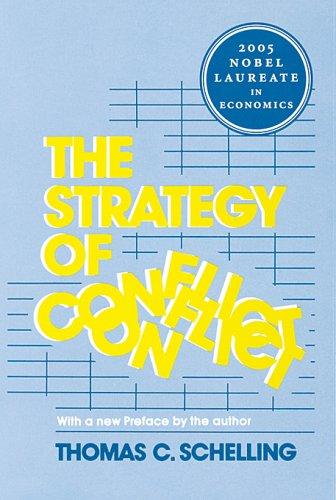
Thomas Schelling's 1960 classic does for strategy what Machiavelli did for statecraft: it strips away how people ought to behave and analyzes how the incentives actually work. Writing at the height of the Cold War, Schelling examines bargaining, threats, deterrence, and brinkmanship, and produces deeply Machiavellian results, such as the insight that it can be rational to limit your own options, or to cultivate a reputation for recklessness, because commitment and credibility move opponents in ways pure strength cannot. His chapter on credible threats is The Prince's advice on being feared, formalized.
This is the most analytically demanding book on the list. Schelling writes clearly and with dry wit, and the famous ideas (focal points, the threat that leaves something to chance) are accessible, but it is a work of economics with some formal apparatus, and its examples are nuclear standoffs and labor negotiations rather than Renaissance courts. Schelling later won the Nobel Prize in economics largely for this work. Pick it if you want the science that grew from the soil Machiavelli tilled.
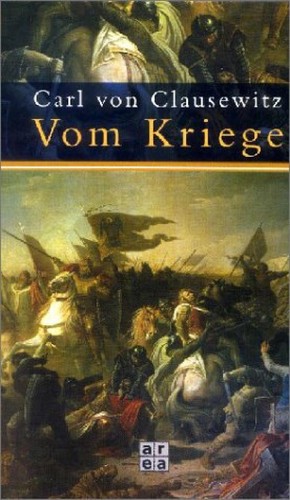
Carl von Clausewitz's On War, published in 1832 after his death, stands to war as The Prince stands to politics: the unsparing classic that insists on seeing the thing as it is. His most famous line, that war is the continuation of politics by other means, makes the connection to Machiavelli explicit, and his concepts of friction (why simple plans fail in reality) and the fog of war are the same corrective to wishful thinking that Machiavelli applied to governing. Clausewitz had read Machiavelli and admired his realism.
Know what you are picking up. On War is a sprawling, unfinished work of several hundred pages, written in dense nineteenth-century German prose, and parts of it argue with military debates that are long dead. Most readers do best with Book One, which contains the core ideas, or a good abridgment such as the Howard and Paret edition's selections. Choose it over The Art of War when you want depth and theory rather than aphorism, and accept that it is a project.
Read this for the next great theory of power after Machiavelli.
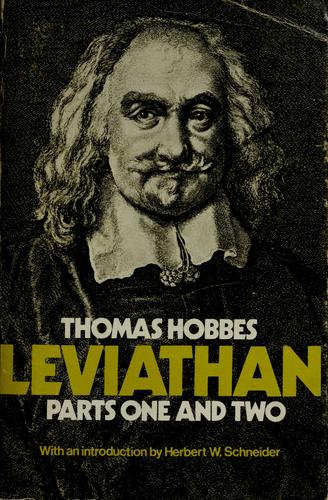
Thomas Hobbes published Leviathan in 1651, during the chaos of the English Civil War, and it shares Machiavelli's starting point: a bleak, clear-eyed view of human nature and a refusal to build politics on how people ought to be. Hobbes's state of nature, where life is solitary, poor, nasty, brutish, and short, is the Machiavellian world generalized, and his answer, that rational people would surrender their freedom to an absolute sovereign to escape it, is the first great social contract theory. Where Machiavelli advises the ruler, Hobbes explains why rulers must exist at all.
The step up in difficulty is real. Leviathan is a long systematic treatise that begins with human psychology and ends in theology, written in seventeenth-century English; the essential political argument lives in its first two parts, and many readers sensibly stop there. It is also a different kind of book: philosophy rather than advice, deduction rather than historical example. Read it when you want to move from how power is won to why it is legitimate.
Read this if you want to understand where Machiavelli came from and what he changed.
Quentin Skinner's two-volume history, published in 1978, is the scholarly landmark on the world that produced The Prince. The first volume covers the Renaissance, reconstructing the Italian city-republics, the tradition of advice books for princes that Machiavelli inherited and subverted, and the civic humanism around him; the second carries the story through the Reformation. Reading it shows you what was genuinely shocking in The Prince: dozens of writers had told princes to be virtuous, and Machiavelli answered that a prince must learn how not to be good.
This is academic intellectual history, not a popular narrative: hundreds of pages, thorough engagement with minor thinkers, and an argument about method (reading texts in their historical context) that made Skinner's name. It is the right pick for the reader who finished The Prince and the Discourses wanting the full intellectual map, and the wrong pick for someone who wants more strategic advice. For Machiavelli specifically, Skinner's short Machiavelli: A Very Brief Introduction is a friendlier door into the same scholarship.
The Art of War by Sun Tzu is the classic most often shelved beside it: short, unsentimental, and focused on winning rather than on how things ought to be. Among modern books, The 48 Laws of Power by Robert Greene is the most direct descendant, explicitly built on Machiavelli's examples and method. For Machiavelli's own fuller political thought, The Discourses is the essential companion.
Did Machiavelli really believe the advice in The Prince?
Scholars still argue about it. The Discourses, written around the same time, praises republics and civic freedom, which sits awkwardly with a manual for autocrats; some read The Prince as sincere advice, some as a job application to the Medici, and a few as satire exposing how tyrants operate. The most common view is that Machiavelli was a republican analyzing princely power honestly because he thought politics had to be understood as it is.
Should I read The Prince or The 48 Laws of Power first?
The Prince. It is far shorter, it is the source Greene draws on, and it gives you the original argument in its historical setting rather than repackaged anecdotes. The 48 Laws of Power works well afterward as a modern, application-focused expansion, as long as you read it knowing the historical stories are selected to fit the laws.
Which of these books is the hardest to read?
On War and Leviathan are the heaviest classics: both are long, systematic, and written in older prose, though good abridgments exist for Clausewitz and most readers stop after the political core of Hobbes. Skinner's Foundations of Modern Political Thought is demanding academic history. The Art of War, The Prince itself, and The 48 Laws of Power are the fast reads, with Schelling's The Strategy of Conflict in the middle.
As an Amazon Associate, we earn from qualifying purchases. · About & methodology