Discover books like The 48 Laws of Power about influence, power, psychology, strategy, and the darker side of human behavior.
Updated June 10, 2026
Robert Greene's The 48 Laws of Power works unlike almost any strategy book before it. It strips morality out of the question entirely, asking not whether a move is right but whether it gains or loses you power, then proves each of its 48 laws with a parade of historical case studies: courtiers, con men, generals, and emperors who either mastered the rule or were destroyed by ignoring it. The law-per-chapter structure, the cold-blooded epigrams, and the seductive whiff of forbidden knowledge are what make readers finish it wanting more of a very particular thing.
That thing splits into a few reader paths, and the list below is organized around them. Some readers want more Greene himself, the same amoral lens turned on war, seduction, or mastery. Some want the older classical sources Greene openly draws from, the foundational texts on power and strategy. And some are really after the persuasion psychology underneath: how influence actually works on human beings. Each pick below says which of these it serves, where it overlaps with the 48 Laws, and where it deliberately parts ways.
A practical note: several of these are blunt instruments. Read defensively as much as offensively, and remember that the most useful skill the 48 Laws teaches is spotting these tactics when they are aimed at you.
Read this if you want strategy distilled to its sparest, oldest form.
Sun Tzu sits among Greene's acknowledged sources, and the overlap is real: deception, positioning, knowing your opponent, and winning before the fight begins are themes 48 Laws translates into social terms. The Art of War is the ur-text of strategic thinking, roughly 2,500 years old, endlessly applied to business and leadership because its principles are abstract enough to map onto almost any contest. If you liked the strategist's mindset behind the 48 Laws, this is where that mindset was first written down.
Where Greene is exhaustively detailed and example-stuffed, Sun Tzu is the opposite: terse, aphoristic, almost a poem, leaving you to supply the application. That sparseness is the appeal for some and the frustration for others, and many editions come padded with commentary to fill the gaps. It's also concerned with actual warfare, not office politics, so the human-manipulation flavor of 48 Laws is absent. Best for the reader who wants the pure, ancient core of strategy.
Read this for the original amoral power manual Greene stands on.
Greene cites Machiavelli constantly, and The Prince is the philosophical bedrock of the entire 48 Laws project: the idea that effectiveness, not virtue, is the real measure of a ruler. Written in 1513 as advice to the Medici, it argues coldly about when cruelty is necessary, why it's safer to be feared than loved, and how appearances beat reality. Read it and you'll recognize the ancestor of dozens of Greene's laws, stated four centuries earlier and with even less apology.
It's far shorter than 48 Laws and written as a continuous argument rather than discrete chapters, so it lacks the modern self-help scaffolding and the wide buffet of anecdotes. The references are Renaissance Italian politics, which takes a little patience, and a good annotated edition helps. Read it as the source code behind Greene rather than a practical guide for your own week. If you want the foundation, start here; if you want application, Greene packaged it more usably.
Read this if you want influence without the Machiavellian edge.
Carnegie and Greene chase the same prize, getting people to do what you want, and arrive at almost opposite methods. Where Greene counsels concealment and calculated advantage, Carnegie's 1936 classic insists the surest route to influence is genuine interest in others: remembering names, admitting your own faults, letting the other person feel the idea was theirs. Several of Greene's softer laws (court attention, get others to do the work, master timing) rhyme with Carnegie's advice, just with the cynicism removed.
The difference is the whole point. Carnegie is warm, earnest, and unapologetically nice, which makes it feel dated and a touch saccharine to readers who came for Greene's cold realism. Some also read it as manipulation dressed in a smile. But its core techniques genuinely work, it's a quick read, and it pairs well with 48 Laws as the cooperative counterweight. Best for the reader who wants to win people over rather than out-scheme them.
Read this if you want more of exactly what 48 Laws does, applied to conflict.
This is the truest next step, because it's Greene running the same machine. The 33 Strategies of War keeps the identical architecture: a numbered set of principles, each illustrated with dense historical case studies (Napoleon, Hannibal, Sun Tzu, Genghis Khan) and distilled into quotable laws. Where 48 Laws maps the social battlefield of courts and offices, this one maps conflict directly, organized into self-directed, organizational, defensive, and offensive warfare. If the case-study-per-law rhythm was the addictive part, you will feel right at home here.
It's longer and denser than 48 Laws, and the military framing can feel more abstract when you try to apply it to a meeting rather than a battle. It's also the more demanding read of Greene's catalog, less snackable, more of a reference you return to. Best for the reader who finished 48 Laws and immediately wanted the bigger, heavier sequel rather than something lighter. If you want Greene but with less cynicism, choose Mastery instead; if you want Greene at full strategic intensity, this is it.
Read this for the rigorous science underneath the manipulation.
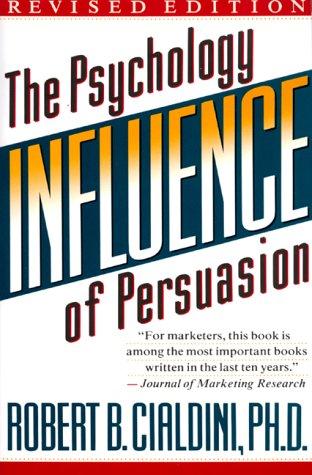
Where Greene proves his points with history, Cialdini proves his with experiments. Influence lays out the psychology that makes many of the 48 Laws actually work on people: reciprocity, commitment and consistency, social proof, authority, liking, and scarcity. If you read Greene and kept wondering why these tactics succeed, this is the answer key, grounded in decades of research rather than anecdote, and written with real clarity about how the levers get pulled.
The tone could not be more different. Cialdini is an academic warning you against exploitation as often as teaching it; the book's stated aim is defensive, helping you resist the very techniques it explains. There's no whiff of the forbidden here, no cold Greene swagger, just clean, evidence-based explanation. It's also focused on persuasion and marketing rather than the full sweep of court intrigue and power consolidation. Best for the reader who wants substance and proof over style and menace.
Read this if 48 Laws left you wanting Greene's constructive side.
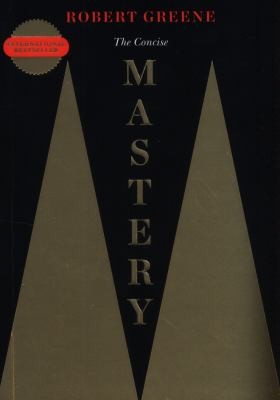
Mastery is Greene with the same method, deep historical case studies and a numbered developmental path, turned toward building yourself rather than outmaneuvering others. He traces figures like Leonardo da Vinci, Charles Darwin, and Mozart, plus living masters he interviewed, to argue that genuine power comes from the years of disciplined apprenticeship most people skip. It's the same author, the same biographical-proof style, aimed at a far healthier goal.
This is the gentlest, least cynical book in Greene's catalog, so readers who loved 48 Laws specifically for its ruthlessness sometimes find it tame. There's no scheming and little of the dark thrill; the payoff is long-term and earned rather than tactical and immediate. But it's arguably his most useful book, and the best pick for anyone who admired Greene's craft and rigor while feeling uneasy about the manipulation. Read it as the antidote and complement to the 48 Laws.
Yes. Greene built each of the 48 laws around historical anecdotes, from con artists and courtiers at Versailles to figures like Talleyrand, Bismarck, and P.T. Barnum. The history is real, though Greene selects and frames it to prove his point, so it reads more as persuasive case study than neutral scholarship. If the true-story machinery was the draw, The Prince and The 33 Strategies of War work the same way.
What order should I read Robert Greene's books in?
There's no required order; each stands alone. A common path: start with The 48 Laws of Power, then The Art of Seduction or The 33 Strategies of War if you want more of the same amoral-strategy register, then Mastery for the constructive, build-yourself flip side, and The Laws of Human Nature for the deepest psychology. Mastery is the gentlest entry point if 48 Laws felt too cynical.
What's the difference between The 48 Laws of Power and The Art of War?
The Art of War is a short, ancient Chinese treatise on winning conflict through positioning, deception, and economy of force. The 48 Laws is a modern, much longer compendium of social maneuvering aimed at interpersonal and office power. Sun Tzu is one of Greene's stated sources, so the strategic DNA overlaps, but The Art of War is sparser, more abstract, and far less concerned with manipulating individuals.
Is The 48 Laws of Power actually useful, or just cynical?
Both, depending on how you read it. As a manipulation manual it's troubling; many readers use it instead as a defensive guide, learning to recognize the tactics others run on them. If the cynicism wore you out, Mastery and How to Win Friends and Influence People reach related goals (influence, advancement) through far more cooperative, less Machiavellian means.
As an Amazon Associate, we earn from qualifying purchases. · About & methodology