8 books like War and Peace, from Anna Karenina to Les Misérables and The Radetzky March: sweeping epics of history, family, and fate.
Updated June 10, 2026
War and Peace is the book other big books get measured against, and its scale is only half the reason. Across the Napoleonic Wars, Tolstoy follows the Rostovs, the Bolkonskys, and the searching Pierre Bezukhov through ballrooms, battlefields, marriages, bankruptcies, and the burning of Moscow, while arguing on the side that history is not made by great men at all but by the sum of countless small lives. The famous intimidation factor (twelve hundred pages, a battalion of characters, essays on historiography) hides how readable it is: Tolstoy's scenes, Natasha's first ball, Prince Andrei at Austerlitz staring at the sky, are some of the most vivid ever written. Once it ends, almost nothing feels big enough to read next.
This list sorts the candidates by what you actually loved. If it was Tolstoy himself, the psychological precision and moral seriousness, go straight to Anna Karenina, then to Dostoevsky's The Brothers Karamazov for the other pole of the Russian novel. If it was the sweep of history crashing into private lives, Les Misérables, A Tale of Two Cities, Gone with the Wind, and The Radetzky March each do that for a different nation and a different upheaval. If it was the dense social web of families, marriages, and money, Middlemarch is the English masterpiece of exactly that, and The Count of Monte Cristo is the pick for readers who secretly wanted more plot.
A practical note on editions: most of these are translated, and the translation matters. For the Russians, the Pevear and Volokhonsky versions and the older Maude and Garnett translations all have partisans; for Les Misérables, an unabridged edition is worth it but an abridged one is a legitimate choice. None of these are books to rush. The ones below are ordered roughly by how directly they answer the question of what comes after Tolstoy.
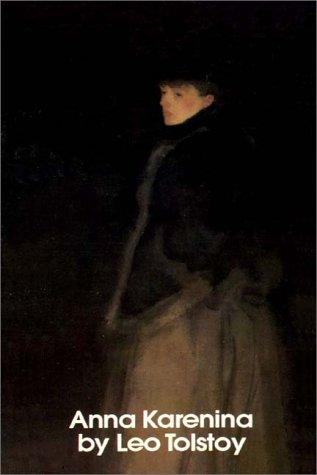
The obvious answer is the right one. Anna Karenina is the same author at the same height, doing the thing that makes War and Peace inexhaustible: rendering the inner life of every character, sympathetic or not, with a precision that feels like omniscience. The double plot follows Anna's affair with Count Vronsky as it destroys her standing in Petersburg society, and Konstantin Levin's restless search for a meaningful life on his country estate, a search that is openly Tolstoy's own. The ballrooms, the dinner parties, the mowing scene, the horse race: scene for scene it may be even better than War and Peace.
What it lacks is the war and the history. This is a domestic and social novel, tighter and more conventionally shaped, with no Napoleon and no essays; the catastrophe is private rather than national. Many readers consider it the greater novel for exactly that discipline. If you finished War and Peace caring most about Natasha, Pierre, and the marriages, this is your book. If you finished it caring most about Borodino, start with Les Misérables or The Radetzky March instead and come back.
Read this for the other summit of the Russian novel, hotter and stranger than Tolstoy.
Dostoevsky's final novel is the standard companion piece to Tolstoy, and the pairing is instructive because they share so much: nineteenth-century Russia, enormous length, a family at the center, and a dead-serious engagement with the questions Pierre Bezukhov spends War and Peace asking. What is a good life, does God exist, what do we owe each other? The story of the monstrous father Fyodor Karamazov and his three sons (sensualist Dmitri, intellectual Ivan, saintly Alyosha), and the murder that engulfs them, builds to set pieces like the Grand Inquisitor chapter that readers argue about for the rest of their lives.
But know that the temperature is completely different. Tolstoy is daylight: clear, patient, panoramic. Dostoevsky is fever: characters deliver page-long confessions, collapse, rant, and burn, and the plot is a murder trial rather than a war. There is little of Tolstoy's pleasure in ordinary happiness here. Pick it when you want the philosophical intensity of Pierre's crisis expanded into an entire book, and give yourself permission to read it slowly.
Read this if you want the closest thing to War and Peace outside Russia.
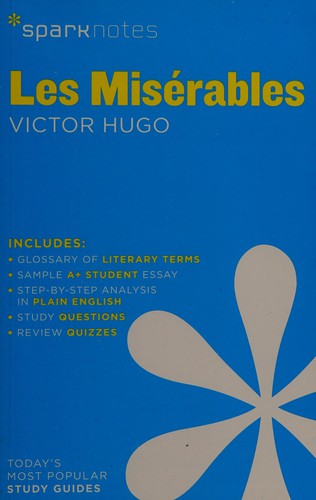
Hugo's 1862 epic is War and Peace's true French counterpart, and not only in page count. Both novels braid intimate human stories into national history (here the aftermath of Napoleon, the 1832 Paris uprising, and the barricades), and both interrupt the story for essays: where Tolstoy digresses on the theory of history, Hugo digresses on Waterloo, the Paris sewers, and convent life. Jean Valjean's decades-long flight from the policeman Javert, with Fantine, Cosette, and Marius caught in the current, gives it the same quality of lives swept along by forces larger than themselves.
The sensibility is the difference. Hugo is a Romantic and a moralist with the volume turned up: coincidences are providential, virtue and villainy are vivid, and the emotional peaks aim at the sublime where Tolstoy aims at the true. Some readers find it overwhelming in the best way, others find it operatic. The digressions are also more skippable than Tolstoy's. If War and Peace left you wanting another total world with history thundering through it, this is the most direct successor on the list.
Read this for the American attempt at a War and Peace, with its blind spots showing.
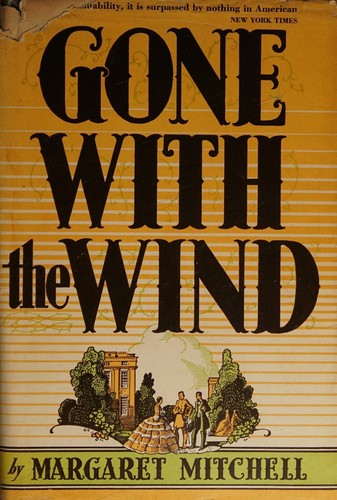
Margaret Mitchell's 1936 novel is structurally the closest American analogue to Tolstoy's design: a thousand-page epic in which a civilization, the plantation South, is destroyed by war, told through families whose loves and fortunes are inseparable from the catastrophe. Scarlett O'Hara, vain, ruthless, and impossible to look away from, is one of fiction's great anti-heroines, and the burning of Atlanta and the desperate aftermath at Tara have genuine Tolstoyan sweep. As pure storytelling, the Pulitzer it won was not a fluke; the pages turn themselves.
The essential caveat: where Tolstoy saw his society clearly, Mitchell romanticizes hers. The novel mourns the slaveholding South, traffics in plantation myth, and renders its Black characters through caricature, and a modern reader has to engage it as both a compulsive epic and a Lost Cause document. Read it with those eyes open, as many do, or skip it without guilt. For the same scale with clearer sight, The Radetzky March is the stronger choice.
Read this for history-as-storm in a book you can finish in a week.
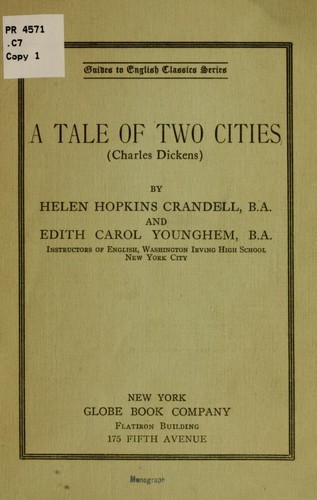
Dickens's novel of the French Revolution is the most compact treatment of the War and Peace theme: private lives seized by public catastrophe. Doctor Manette, broken by eighteen years in the Bastille, his daughter Lucie, the exiled French aristocrat Charles Darnay, and the dissolute English lawyer Sydney Carton are pulled from London into revolutionary Paris as the Terror rises, toward one of the most famous endings in English fiction. Like Tolstoy, Dickens is interested in how revolutions devour individuals, and his crowd scenes, the storming of the Bastille, the tribunal, have real panoramic power.
This is also the least Dickensian of Dickens's novels, with less comedy and fewer sprawling subplots, which makes it both tighter and, for some readers, thinner; the characters are closer to types than Tolstoy's people, and Carton's redemption is engineered where Pierre's is earned. Treat it as the gateway pick: a few hundred pages, relentless momentum, and the full historical-epic effect. If you want Dickens at Tolstoyan social scale afterward, Bleak House is the next step up.
Read this if you finished War and Peace wishing it had more plot.
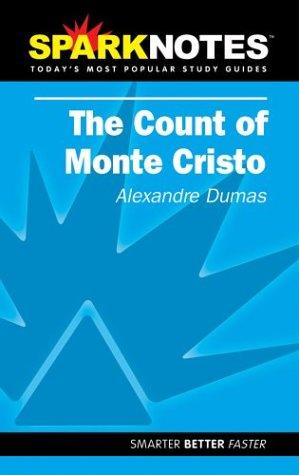
Dumas's revenge epic shares the furniture of War and Peace, the Napoleonic backdrop, the vast cast, the fortunes made and lost, but runs on an entirely different engine: story. Edmond Dantès, betrayed by jealous rivals and imprisoned for fourteen years in the Château d'If on a false charge of Bonapartist conspiracy, escapes, finds a treasure, and spends a thousand pages dismantling the lives of the men who destroyed him. Napoleon's shadow sets the whole machine moving, and the book's questions about justice and providence are more serious than its reputation suggests.
No one would call it psychologically Tolstoyan; characters are vivid rather than deep, and the moral complexity lives in the plot's design rather than in inner life. That is the trade, and it is a good one when you want it. This is the pick for the reader who loved War and Peace's scope and era but found the historiography essays a chore, and it is the most purely entertaining book on this list. Get an unabridged translation; the abridgments cut the best schemes.
Read this for the great twentieth-century heir to Tolstoy that too few people read.
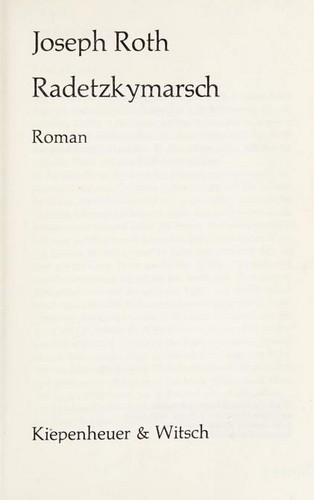
Joseph Roth's 1932 masterpiece is the deepest cut on this list and possibly the best recommendation on it. It follows three generations of the Trotta family, raised to nobility after the grandfather saves the Emperor's life at the Battle of Solferino, as their fortunes decay in step with the Austro-Hungarian Empire's slow slide toward 1914. Like War and Peace, it is a novel about how history moves through a family, about army life, honor, fathers and sons, and an old order dying; Roth even gives it the same elegiac double vision, love for a world and clear sight of why it had to end.
It is also a fraction of the length, around four hundred pages, with a compression and irony that are entirely modern; Roth does in a paragraph what the nineteenth century did in a chapter. The mood is more melancholy than Tolstoy, with little of his faith in family happiness as an answer. Read it after the giant books when you want the same scope distilled, and you may come away pressing it on people the way others press War and Peace.
Read this if the social web and the marriages held you more than the battles.
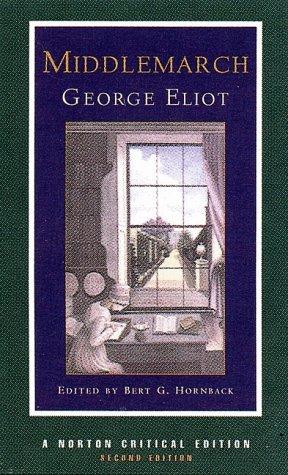
Middlemarch is regularly called the greatest English novel, and what it shares with War and Peace is the ambition to map an entire society through its interlocking private lives. Eliot sets her web in a provincial English town around 1830, with idealistic Dorothea Brooke's disastrous marriage to the dried-up scholar Casaubon and the young doctor Lydgate's slow entrapment by debt and a beautiful, shallow wife at its center. Like Tolstoy, Eliot extends real understanding to every character, and her running commentary on her people has the same wise, essayistic intelligence as Tolstoy's narration.
There is no war and no national canvas; Napoleon never comes to Middlemarch, and the historical forces here are quieter ones, reform bills, railways, medicine, and money. The scale is a town rather than a continent, which is precisely its claim: that ordinary unhistoric lives carry the full weight of moral drama. Choose it if Pierre's marriage, Nikolai's debts, and the Rostov family economics were what gripped you. Readers who need battlefield stakes should pick Hugo or Roth first.
Anna Karenina is the standard answer and the best one: it is Tolstoy at the same level, focused on private life rather than history. If it was the historical sweep you loved, Les Misérables is the closest epic outside Russia, and The Radetzky March by Joseph Roth covers the fall of an empire through one family in a quarter of the length. For the other giant of Russian fiction, go to The Brothers Karamazov.
Is Anna Karenina or The Brothers Karamazov more like War and Peace?
Anna Karenina, easily, since it is the same author with the same psychological method and social world, just without the war. The Brothers Karamazov shares the length, the Russian setting, and the big philosophical questions, but Dostoevsky's feverish, confessional style is the opposite of Tolstoy's calm panorama. Most readers do Anna Karenina first and Dostoevsky after.
Are there shorter books with the same epic feel?
Yes. The Radetzky March delivers the rise-and-fall-of-an-order epic in roughly 400 pages, and A Tale of Two Cities compresses revolution, terror, and sacrifice into one of Dickens's shortest novels. Among books not on this list, Tolstoy's own Hadji Murat is a short late masterpiece about war in the Caucasus, often called the best thing he ever wrote per page.
Which translation of War and Peace should I read?
The main modern choices are the Pevear and Volokhonsky translation, praised for staying close to Tolstoy's repetitions and rhythms, and the older Maude translation, approved by Tolstoy himself and smoother in English; Anthony Briggs's version is the most colloquially readable. Any of the three is fine. The same logic applies to Anna Karenina and The Brothers Karamazov, where Pevear and Volokhonsky are again the default modern pick.
As an Amazon Associate, we earn from qualifying purchases. · About & methodology