Discover existential classics like Notes from Underground about alienation, self-consciousness, moral conflict, and the darker mind.
Updated June 11, 2026
Notes from Underground is barely a novel and that is the point. Dostoevsky's unnamed narrator, a retired clerk stewing in a Petersburg basement, spends the first part arguing directly at you, against reason, against utopian progress, against the idea that people act in their own interest, insisting that man will choose suffering just to prove he is free. The second part shows you why he is like this, in humiliating episodes with old schoolmates and the prostitute Liza, where his spite destroys every chance at connection. Published in 1864, it is widely treated as the first existentialist book, and its voice, intelligent, self-lacerating, perverse, unreliable, is what everyone who loves it is looking for more of.
This list follows three roads out of the basement. The first is more Dostoevsky, where the underground man's ideas get full-length novels: Crime and Punishment puts the theory of the exceptional man into action, The Possessed (Demons) shows what happens when underground resentment goes political, and Notes from a Dead House is the prison memoir that taught Dostoevsky what people really are. The second road is the existentialist line he opened: The Stranger, The Trial, and The Metamorphosis, where alienation becomes a condition of the world rather than one man's spite. The third is the inward, psychological road, Steppenwolf and The Bell Jar, first-person accounts of minds at war with themselves, with The Blue Flower as a quieter outlier.
A practical note: most of these are short. Only Crime and Punishment and The Possessed are long, and The Possessed is the one genuinely difficult book here. For the Dostoevsky titles, translation matters; the Pevear and Volokhonsky versions keep the jagged, talky energy that smoother older translations sand down.
Read this if you want the underground man's ideas tested by an actual crime.
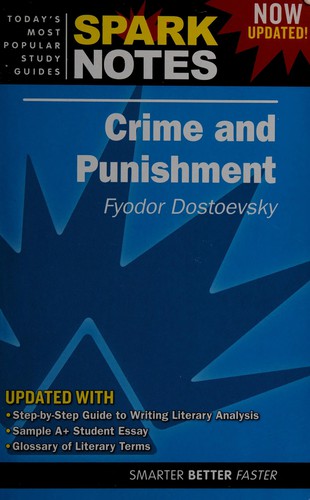
This is the natural next step, and Dostoevsky wrote it next, in 1866. Raskolnikov is what happens when a mind like the underground man's stops talking and acts: a poor ex-student who theorizes that extraordinary men stand above morality, murders a pawnbroker to prove it, and then spends the novel being dismantled by his own psychology. The feverish interior monologue, the Petersburg squalor, the compulsive self-justification followed by self-disgust, all of it is the Notes voice given a plot and a body count. Even the figure of the suffering prostitute, Liza in Notes, returns transformed as Sonya.
The difference is that Crime and Punishment is a genuine novel, with suspense, a cat-and-mouse police investigator in Porfiry, and a redemption arc the underground man would sneer at. It is four times longer and far more readable than that length suggests; many people finish it in days. If Notes felt like a brilliant overture, this is the opera. Start here unless you specifically do not want another Dostoevsky.
Read this if the polemic against utopian rationalism was your favorite part.
The first part of Notes from Underground is an attack on the rational egoism and crystal-palace utopianism of Dostoevsky's progressive contemporaries. Demons, from 1872, is that attack scaled up to a whole town. Based loosely on a real murder within a revolutionary cell, it follows a circle of nihilists and radicals, the charismatic void Stavrogin and the manipulator Pyotr Verkhovensky at their center, as ideology curdles into chaos and violence. The underground man's claim that man will burn down the world rather than be reduced to a piano key is essentially this novel's thesis, dramatized.
It is the hardest book on this list: a huge cast introduced slowly, a gossipy narrator, Russian political context that benefits from endnotes, and a structure that takes two hundred pages to ignite. It is also, for many Dostoevsky readers, the darkest and funniest of the big novels once it does. Save it for after Crime and Punishment, and read it when you want the political consequences of the underground rather than the personal ones.
Read this for the existentialist line Notes from Underground started, in its starkest modern form.
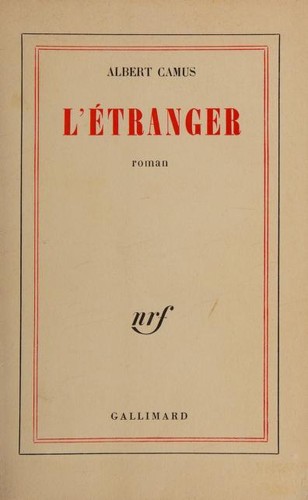
Camus's 1942 novella is the other canonical short book narrated by a man estranged from everything society expects him to feel. Meursault does not weep at his mother's funeral, kills an Arab man on an Algerian beach for no reason he can articulate, and is condemned as much for his indifference as for the act. Like Notes, it is a compact first-person confession that indicts the comfortable rationality of ordinary social life, and Camus knew his Dostoevsky thoroughly; the lineage is direct, not coincidental.
The voices could not be more different, though, and that is the interesting part. The underground man is overheated, wordy, desperate to be seen; Meursault is flat, sensory, and almost without inner argument until the final pages erupt. Dostoevsky's answer to alienation is buried in Christianity, Camus's in the absurd, lucidity without hope of meaning. It is very short and very readable. Pick it to see the underground temperament with the self-pity surgically removed.
Read this if you want the alienation built into the world instead of the narrator.
Kafka's Josef K. wakes one morning to find himself arrested by an authority no one can name, for a crime no one will state, and spends the novel navigating a court system that is everywhere and explains nothing. What it shares with Notes is the texture of humiliation: the endless anterooms, the petty officials, the sense of a man whose dignity is stripped by forces that never even do him the honor of confronting him directly. The underground man's war with his own insignificance becomes, in Kafka, a war with an entire bureaucratic universe, and Kafka read Dostoevsky closely.
The key difference is interiority. Dostoevsky's narrator explains himself relentlessly; K. barely has an inner life, and the horror comes from outside, from the logic of the institution. The novel was unfinished when Kafka died in 1924, so it is episodic and ends abruptly, which suits it. Choose this if what gripped you was powerlessness and absurdity rather than spite, and you want the nightmare version.
Read this for a self-loathing outsider who, unlike the underground man, is offered a way out.
Hesse's 1927 novel is the closest twentieth-century descendant of Notes in structure as well as spirit: it presents the private records of Harry Haller, a middle-aged intellectual who despises bourgeois comfort, despises himself for being drawn to it, and oscillates between the man and the wolf he believes are at war inside him. Like the underground man, Haller is brilliant, isolated by his own contempt, and given to long self-analysis; the embedded Treatise on the Steppenwolf reads like the underground monologue rewritten by a German romantic.
Where Dostoevsky leaves his narrator in the basement, Hesse stages a rescue. Through Hermine, jazz, dancing, and the hallucinatory Magic Theater, Haller is taught to laugh at himself, and the book turns mystical and hopeful in a way Notes never does. Some readers find that ending liberating, others find it woolly. Read it if you want the outsider's confession with Eastern-inflected redemption on the table, and accept some 1920s esoterica along the way.
Read this for alienation made literal in under a hundred pages.
Gregor Samsa wakes transformed into a monstrous insect, and Kafka spends the novella on what Notes from Underground is also about: a man who has become unfit for human society watching his last connections, here his own family, recoil and withdraw. The underground man digs his isolation himself, with spite; Gregor has his imposed in a single morning, yet the result converges, a consciousness trapped in a room, observing its own exclusion with terrible clarity. The famous opening is treated almost matter-of-factly, and that deadpan is the horror.
It is the shortest and most accessible book on this list, readable in a sitting, and unlike Notes it is told in a calm third person, so you watch Gregor rather than being trapped in his voice. It is also, in its grim way, about family and money and work rather than philosophy; there is no polemic. Start here if you want the feeling of the underground without the ranting, or if you have limited time.
Read this for the prison years that made Dostoevsky the writer of the underground.
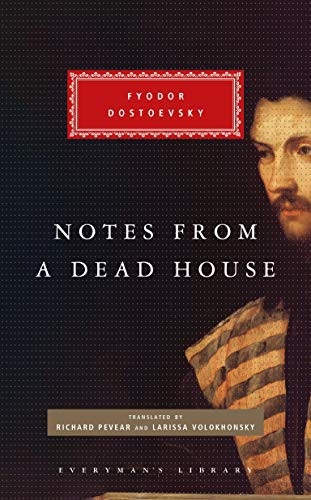
Before the underground there was Siberia. Dostoevsky spent four years in a labor camp for his part in a radical discussion circle, and this 1862 book, a lightly fictionalized memoir narrated by a gentleman convict, is the record. It shares with Notes the documentary title, the confessional first person, and the obsession that drives everything Dostoevsky wrote afterward: the discovery that human beings are not rational self-interest machines, that convicts would sacrifice anything for a moment of free will. The underground man's psychology was field-tested here first.
It is a very different reading experience, though: episodic, observational, closer to reportage than to fiction, with portraits of fellow prisoners, the baths, the hospital, a Christmas theatrical, rather than a plot. The tone is humane and curious where Notes is corrosive. Read it if you want to understand where the underground came from, or if you want Dostoevsky in his gentlest register. Tolstoy considered it his best book.
Read this for the confessional voice of a mind turning against itself, a century later.
Plath's only novel, published in 1963, is the entry here that matches Notes in voice rather than philosophy. Esther Greenwood narrates her own unraveling, a magazine internship in New York, the slide into depression, hospitalization and electroshock, with the same qualities that make the underground man unforgettable: intelligence sharpened into irony, alienation from every social script on offer, and an unsparing eye turned on herself. Her image of the bell jar, sealed inside her own stale air watching the world distorted through glass, is as exact a figure for the underground as the basement itself.
The crucial difference is sympathy. The underground man is a willful antihero, performing his sickness at you; Esther is a young woman being crushed by illness and by 1950s expectations of women, and the reader is with her, not braced against her. It is semi-autobiographical, published weeks before Plath's death. Choose it if what held you in Notes was the interior voice in extremity, not the spite or the philosophy.
Read this only if you want the philosophical 19th century from the opposite, romantic direction.
Penelope Fitzgerald's 1995 novel, her last and most admired, reconstructs the youth of Fritz von Hardenberg, the German Romantic poet who became Novalis, and his baffling, absolute love for a twelve-year-old girl, Sophie. Its connection to Notes from Underground is real but inverted: both are about minds gripped by an idea and estranged from the sensible world around them, but Hardenberg's idea is romantic transcendence, the longing the blue flower symbolizes, where the underground man's is corrosive doubt. It is the idealism Dostoevsky's narrator spends his whole monologue mocking, taken seriously and shown from inside.
Be clear that this is the loosest fit on the list. Fitzgerald writes in a spare, ironic, miniaturist third person, nothing like a confession, and the pleasures are historical texture, dry wit, and compression. It won the National Book Critics Circle Award and many regard it as her masterpiece. Pick it as a palate cleanser after the basement, or skip it if you came strictly for alienated narrators.
Crime and Punishment is the standard answer and the right one. Dostoevsky wrote it immediately after Notes, and it takes the underground man's theorizing about exceptional men and tests it with an actual murder, in a far more readable full-length novel. If you want a non-Dostoevsky follow-up, The Stranger by Camus is the closest short existentialist confession.
Is Notes from Underground really the first existentialist novel?
It is the most common candidate for that label. Walter Kaufmann's influential anthology of existentialism opened with it, and its themes, radical freedom, revolt against rational systems, the irrational self, run directly into Nietzsche, Kafka, Camus, and Sartre, who all read Dostoevsky. Kierkegaard wrote earlier but as a philosopher; Notes is where the sensibility first appears as fiction.
Which Dostoevsky novel should I read first after Notes?
Crime and Punishment, then The Brothers Karamazov if you want his deepest book, with The Idiot and Demons after that. Demons is on this list because it extends Notes' attack on radical utopianism, but it is the hardest entry point. Notes from a Dead House is the easygoing outlier, a prison memoir that shows where his psychology came from.
What is the best translation of Notes from Underground?
The Pevear and Volokhonsky translation is the most recommended for keeping the narrator's jagged, contradictory voice, including the famous wicked or spiteful opening line. Michael Katz's version, used in the Norton Critical Edition, is also excellent and comes with useful context. Older translations like Constance Garnett's are free and serviceable but smooth out the strangeness.
As an Amazon Associate, we earn from qualifying purchases. · About & methodology