8 books like Steppenwolf, from Demian to The Stranger and Nausea: novels of divided selves, alienation, and the search for meaning.
Updated June 10, 2026
Hermann Hesse's 1927 novel is the great midlife crisis book of European literature, written when Hesse himself was nearing fifty and close to despair. Harry Haller believes he is split in two, a cultured man and a savage wolf of the steppes, and the novel follows him from suicidal isolation through the saxophone-and-jazz demimonde of Hermine and Pablo to the hallucinatory Magic Theater, where a sign warns: for madmen only, price of admission your mind. The Magic Theater's lesson, that the self is not two but a thousand pieces and that Haller's real sin is taking himself too seriously, is what separates Steppenwolf from ordinary novels of alienation. It famously became a 1960s counterculture talisman, to Hesse's posthumous bemusement.
Readers who finish it tend to want one of three things. Some want more Hesse, and Demian and Siddhartha show the same search for the authentic self at different ages and registers. Some want the philosophical novel of alienation proper, the books Steppenwolf is always shelved with: The Stranger, Nausea, and Crime and Punishment, each putting an estranged man through an existential trial. And some respond to the raw psychological portrait of a person at odds with respectable society, which is where The Bell Jar, The Catcher in the Rye, and The Unbearable Lightness of Being come in.
A practical note: these range from an afternoon read (The Stranger) to a commitment (Crime and Punishment), and the two Sartre and Camus entries reward knowing that their authors disagreed about almost everything. Each pick below names what it shares with Haller's story and what it does differently, so you can choose by which room of the Magic Theater you want to enter next.
Read this for the same Hesse journey at the age when it begins.
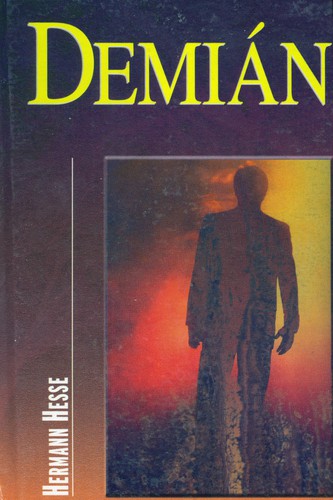
If Steppenwolf is Hesse's crisis at fifty, Demian (1919) is the same crisis at school age, and reading them together shows how consistent his one great subject was. Emil Sinclair grows up torn between the bright, respectable world of his parents and a darker world of instinct and transgression, until the magnetic Max Demian teaches him that both belong to him, an idea crystallized in the novel's famous image of the god Abraxas, who unites light and dark. That is Harry Haller's wolf-and-man split in embryo, and Demian plays for Sinclair roughly the role Hermine plays for Haller: the guide who gives him permission to be whole.
Demian is shorter, more earnest, and more linear than Steppenwolf, a coming-of-age story without the jazz, the irony, or the Magic Theater's hallucinatory machinery, and its mysticism (drawn from Hesse's Jungian analysis) is nearer the surface. It is the gentler entry point, often recommended as the place to start with Hesse. Pick it if Steppenwolf's ideas gripped you and you want their origin story, or if you are handing Hesse to a younger reader.
Read this if you want Haller's search resolved in serenity instead of crisis.
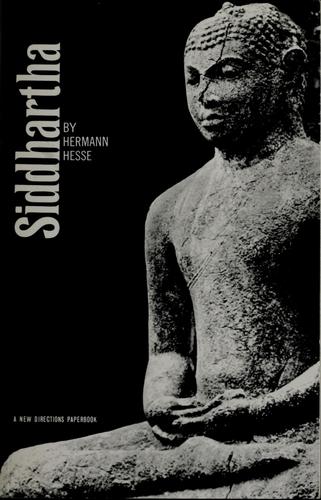
Siddhartha (1922) is the sunlit counterpart to Steppenwolf's midnight. Both novels follow a man who abandons respectable life to find his real self, and both insist that wisdom cannot be taught, only lived: Siddhartha leaves the ascetics, the Buddha himself, and a life of wealth and pleasure before learning, from a river and a ferryman, the unity Haller glimpses only in the Magic Theater. Where Haller is told the self is a thousand fragments, Siddhartha arrives at the same truth from the other side, that all the fragments, saint and sensualist, were one river all along.
The register could not be more different. Siddhartha is set in ancient India during the Buddha's lifetime and written in a calm, parable-like prose with none of Steppenwolf's jagged despair, bourgeois satire, or modernist structure. Some readers find it serene and others find it static; there is no Hermine, no jazz, no humor. Pick it when you want Hesse's destination rather than his dark night, or as a recovery read after Haller's company.
Read this for the outsider novel at its most stripped down.
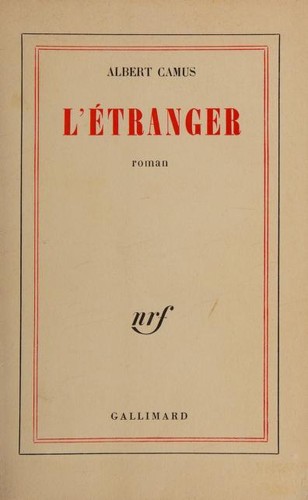
Camus's 1942 novel is the book Steppenwolf is most often shelved beside, the other canonical portrait of a man who cannot or will not play society's game. Meursault, a French Algerian clerk, does not weep at his mother's funeral, kills an Arab man on a sun-blinded beach, and is condemned as much for his refusal to perform expected feeling as for the murder itself. Like Haller, he is an outsider whose real offense is failing to take the bourgeois script seriously, and both novels end with their man arriving at a strange, hard-won affirmation in the face of what should be despair.
The method is the opposite of Hesse's. Where Steppenwolf is feverish, interior, and crowded with treatises, dreams, and mirrors, The Stranger is flat, exterior, and barely 120 pages, written in famously short declarative sentences that withhold everything Hesse pours out. Camus also rejects the mystical consolation Hesse offers; there is no Magic Theater, only the benign indifference of the universe. Pick it for the purest, fastest dose of the alienation theme, then argue with its ending.
Read this if Haller's despairing journal was your favorite layer.
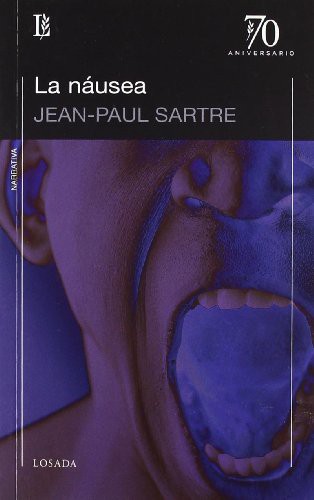
Sartre's 1938 debut is the closest formal cousin to Steppenwolf's inner record. Antoine Roquentin, a historian alone in a provincial French town, keeps a diary of a creeping affliction: the nausea, his horrified perception that existence itself, a tree root, a doorknob, his own hand, is gratuitous, excessive, and without given meaning. Like Haller's notebooks, the diary tracks a solitary, cultured man's disgust with the self-satisfied citizens around him and his slide toward crisis, and both books finally reach for art (Hesse's immortals and music, Roquentin's jazz record and the novel he might write) as the one thing that justifies anything.
Nausea is philosophy first and novel second, more rigorous and considerably drier than Steppenwolf, with no Hermine, no eroticism, and no fantastical theater; the famous chestnut tree scene is a phenomenology lecture staged as horror. It rewards slow reading and some patience for abstraction. Pick it if you underlined the Treatise on the Steppenwolf rather than the dance hall scenes, and want the existentialist argument made explicit.
Read this for the same suffocation and suicidal candor in a young woman's voice.
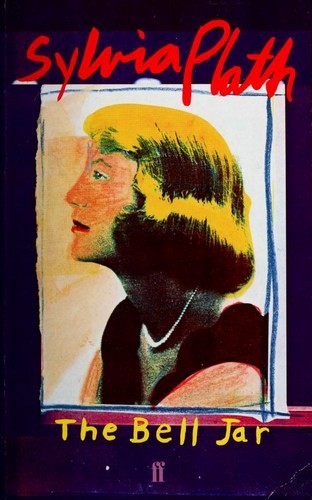
Plath's 1963 novel shares with Steppenwolf something rarer than themes: the willingness to describe suicidal despair from the inside without flinching and without losing its wit. Esther Greenwood, a brilliant college student in 1950s New York and Boston, feels herself sealed under a bell jar, watching a life of prescribed choices (the magazine career, the suitable husband) that she cannot want, much as Haller circles the bourgeois comforts he can neither inhabit nor leave. Both narrators are intellectuals whose intelligence aggravates rather than relieves their isolation, and both books were drawn directly from their authors' own breakdowns.
The differences matter. Esther's cage is specifically the trap set for gifted women, enforced by electroshock and engagement rings rather than by middle-aged ennui, and Plath's prose is sharp, concrete, and often bitterly funny where Hesse is symphonic and abstract. There is no mystical resolution, only a guarded recovery. Pick it if the psychological portrait held you more than the philosophy, or if you want this territory mapped by a poet's exactness.
Read this for the philosophical novel grown worldly, ironic, and erotic.
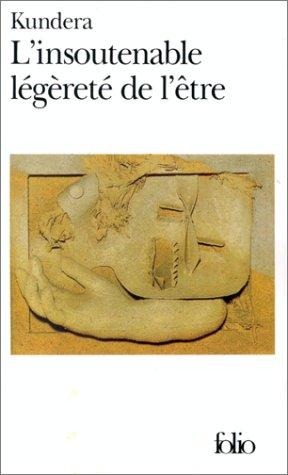
Kundera's 1984 masterpiece is what the Hesse tradition looks like after history has had its say. Set around the 1968 Soviet invasion of Czechoslovakia, it follows the surgeon Tomas, torn between compulsive womanizing and his love for Tereza, and asks Steppenwolf's question in new terms: is a life of lightness (detachment, freedom, multiplicity) liberation or emptiness, against the weight of commitment and meaning? Like Hesse, Kundera interrupts the story to philosophize openly, treats the divided self as his real subject, and refuses to let his characters be only one thing. Sabina, the painter of betrayals, is a kind of answer to Pablo and Hermine.
Kundera is everything Hesse is not in temperament: ironic, anti-romantic, distrustful of exactly the ecstatic transcendence Steppenwolf reaches for, and his essayistic interludes wear their learning lightly. The politics of occupation also ground the book in public history where Haller's crisis is private. Pick it if you want the divided-self novel with adult relationships, jokes, and a colder eye, and do not need a Magic Theater to forgive the world.
Read this for the ancestor of every tormented outsider in this list.
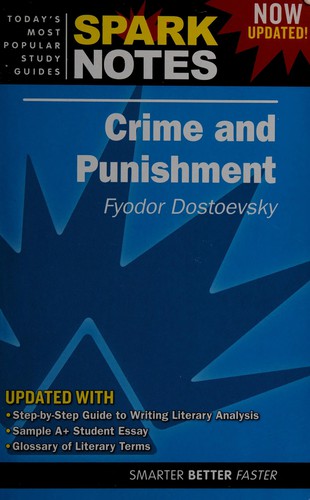
Dostoevsky's 1866 novel is the source Hesse himself acknowledged; he wrote admiringly of Dostoevsky, and Harry Haller is unimaginable without Raskolnikov. The impoverished Petersburg student murders a pawnbroker to prove he belongs to a higher category of man exempt from ordinary morality, then spends five hundred pages being dismantled by his own psyche. The split Haller theorizes (the cultured man versus the wolf) Raskolnikov enacts: his name derives from the Russian for schism, and the novel invented the modern literature of the self at war with itself that Steppenwolf, The Stranger, and Nausea all inherit.
It is the longest and most demanding book here, a full nineteenth-century novel with a detective-story engine, a crowded cast, and a Christian redemption arc that secular existentialism later stripped away. The fevered intensity makes it faster than its page count suggests. Pick it when you have the time and want the deep root of the alienation tradition, with the murder plot Steppenwolf only fantasizes in the Magic Theater carried out in earnest.
Read this for the steppenwolf as a teenager, allergic to phonies instead of the bourgeoisie.
Salinger's 1951 novel is the most accessible book on this list and, beneath its slang, a true relative. Holden Caulfield, expelled from prep school and drifting through New York for a lost weekend, despises the phonies exactly as Haller despises bourgeois self-satisfaction, and like Haller he is a divided creature: scornful of the world yet desperate for connection in it, wandering between bars, hotels, and encounters that keep going wrong. Both novels are essentially one long crisis monologue by a man (or boy) who cannot find a single room in society where he fits, edging toward breakdown.
The gap is in self-awareness. Hesse stands above Haller and judges his self-pity (the Magic Theater's verdict is to laugh at himself), while Salinger stays inside Holden's voice and lets readers do the judging, which is why people reread it at thirty and find a different book. There is no philosophy, no symbolism to decode, just voice. Pick it for the same alienation in two fast sittings, or to see what Haller might have sounded like at sixteen.
Within Hesse's own work, Demian is the closest match: the same divided self and search for authenticity in a shorter, earlier form. Outside Hesse, The Stranger by Camus and Nausea by Sartre are the standard companions, both novels of an alienated man confronting a meaningless world. Readers who want Hesse's full statement usually go on to The Glass Bead Game, his late masterwork.
Should I read Demian or Siddhartha after Steppenwolf?
It depends on what you responded to. Demian is closer in psychology, covering the divided self and the dark and light worlds, and is the better next step if Haller's inner conflict gripped you. Siddhartha is calmer and more spiritual, the right choice if you want the serenity Haller only glimpses. Both are short; many readers simply read both, and Siddhartha is the gentler one.
Is Steppenwolf an existentialist novel?
It anticipates existentialism rather than belonging to it. Published in 1927, it predates Nausea and The Stranger and shares their themes of alienation and self-creation, but Hesse's framework is romantic and mystical, drawing on Goethe, Mozart, Eastern thought, and Jungian psychology, and it ends in affirmation through humor rather than absurdity. Hesse won the Nobel Prize in 1946, and the novel later became a 1960s counterculture favorite.
Is Steppenwolf difficult to read?
Moderately. It is short, around 230 pages, but structurally odd: a preface by a fictional editor, Haller's notebooks, an inserted Treatise on the Steppenwolf, and the surreal Magic Theater finale. The middle sections move quickly once Hermine appears. Hesse complained that readers misunderstood it as pure despair; he insisted it is finally a book about healing, which is worth keeping in mind through the bleak opening.
As an Amazon Associate, we earn from qualifying purchases. · About & methodology