Find books like Animal Farm with political satire, allegory, dystopian warnings, and sharp stories about power and control.
Updated June 10, 2026
Animal Farm works because it is short, funny, and merciless. Orwell retells the Russian Revolution as a barnyard fable: the animals overthrow Farmer Jones, the pigs Napoleon and Snowball take charge, and commandment by commandment the revolution curdles until the pigs are walking on two legs and dining with the humans. 'All animals are equal, but some animals are more equal than others' is the most famous edit in literature. You can read it in an afternoon, hand it to a teenager, and still find it the sharpest thing ever written about how revolutions get betrayed.
Nobody else wrote a second Animal Farm, including Orwell, so this list sorts by what you want next. If you want Orwell's full statement on totalitarianism, 1984 is the obvious and correct first stop. If it was the allegory, a simple story standing in for a political argument, Lord of the Flies does for human nature what Orwell did for revolution. And if you want the dystopian tradition the book helped define, Brave New World, Fahrenheit 451, The Handmaid's Tale, A Clockwork Orange, and The Giver each take the question of control in a different direction.
A practical note: most of these are longer and darker than Animal Farm, which is the gentlest entry point its genre ever produced. The Giver is the one pick that stays as short and accessible. Each entry below says what it shares with Orwell's fable and where it goes its own way.
Read this first: it is Orwell finishing the argument Animal Farm starts.
Animal Farm shows how a revolution is betrayed; 1984, published four years later in 1949, shows what the world looks like once the betrayal is total. The machinery is the same and deliberately so. Squealer's revised commandments become the Ministry of Truth rewriting newspapers; the pigs' slogans become Newspeak; the cult of Napoleon becomes Big Brother. Reading them back to back is the intended experience, and most readers find the fable sharpens the novel and the novel deepens the fable.
The difference is that 1984 is not a fable and offers none of Animal Farm's distance or dark comedy. You live inside Winston Smith, under surveillance, through interrogation, to an ending that is famously one of the bleakest in fiction. It is three times the length and far heavier going. If Animal Farm was assigned reading you actually liked, this is the book it was preparing you for. There is no real substitute, so start here.
Read this if the rewriting of the commandments chilled you most.
Bradbury's 1953 novel attacks the same target as Orwell from the other side: where the pigs control the animals by rewriting the past, Bradbury's society controls people by burning it. Books are banned, firemen burn them, and the population is kept docile with wall-sized screens and constant entertainment. The kinship with Animal Farm is the insight that control runs on ignorance, and that the first thing power does is make sure nobody can check the record. Boxer's 'Napoleon is always right' is exactly the citizen Bradbury's state wants.
It is a different kind of book, though: a fast, lyrical dystopian thriller with chase scenes and mechanical hounds, not an allegory, and Bradbury blames willing mass distraction as much as the state, which gives it a flavor Orwell's fable does not have. The prose is hot and metaphor-heavy where Orwell's is famously plain. It is short enough to read in a couple of sittings, and it pairs especially well with 1984, since the two cover censorship by fire and censorship by edit.
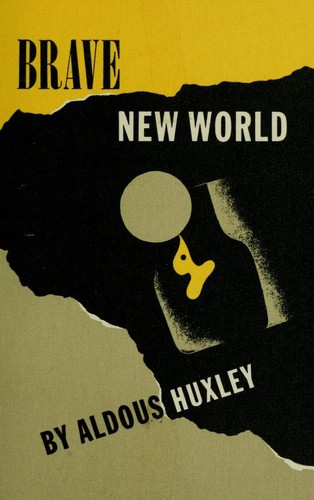
Read this for the dystopia that controls with pleasure instead of fear.
Huxley's 1932 novel is the standard counterpart to Orwell, and the contrast is the reason to read it. The pigs rule through scarcity, fear, and rewritten history; the World State rules through abundance, engineered contentment, and the drug soma. Nobody needs to rewrite the commandments because nobody cares enough to read them. Like Animal Farm, it is a complete political argument disguised as a story, and the two books together frame the genre's central question: are we more likely to be controlled by what we fear or by what we enjoy?
It is more cerebral and less warm than Animal Farm, with satirical world-building standing in for characters you love; there is no Boxer to break your heart. The 1930s sexual politics have also aged unevenly. Read it after 1984 rather than instead of it, and read it when you want ideas more than story. Many readers come away convinced Huxley's prediction fits the present better than Orwell's, which is an argument worth having with yourself.
Read this for a revolution betrayed, told by someone living under it.
Atwood's 1985 novel shares Animal Farm's core mechanism: a regime that seizes power promising restoration and order, then uses language, ritual, and rewritten rules to make its hierarchy feel inevitable. Gilead's slogans and ceremonies are Squealer's work scaled to a country, and Atwood, like Orwell, built her horror from real history; she has said she included nothing that humans had not already done somewhere. The focus on how ordinary people comply, adjust, and inform on each other is pure Orwell territory.
The vantage is the big difference. Animal Farm watches from above, almost coolly, while The Handmaid's Tale is narrated from underneath by Offred, a woman reduced to reproductive property, so the oppression is intimate and bodily rather than allegorical. It is also specifically about the control of women, a subject Orwell never touched. Pick it when you want the emotional interior the fable deliberately leaves out. It is the strongest novel on this list as a novel.
Read this if the allegory itself is what you loved.
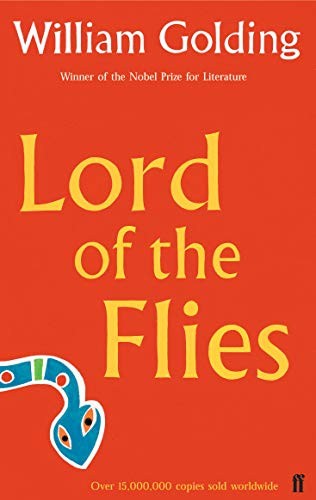
Golding's 1954 novel is Animal Farm's true sibling in method: take a small, closed society, strip away enforcement, and watch power organize itself. Schoolboys on a deserted island stand in for civilization the way farm animals stand in for revolutionary Russia, and the descent runs on the same gears, a charismatic strongman, a mob that wants meat and safety, a scapegoat, and the slow death of the rules. Piggy and Boxer occupy the same tragic slot: the loyal, decent character the new order destroys.
The argument is darker than Orwell's. Animal Farm blames particular men and a corruptible system; Golding blames human nature itself, suggesting the beast is in the boys before any pig ever lies to them. It is also a realistic novel rather than a fable, more visceral and more violent, with an ending that lands like a slap. The two books are the classic pairing on school syllabi, and if you read Animal Farm on your own, this is the natural companion piece.
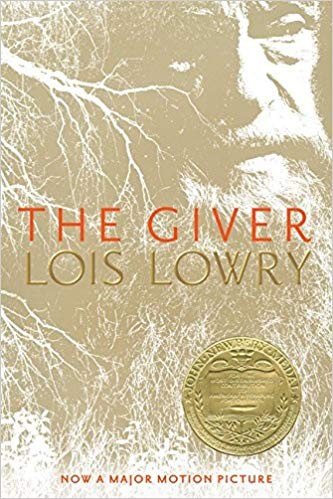
Read this for the gentlest entry to the same questions, ideal for younger readers.
Lois Lowry's 1993 Newbery winner does for middle-grade readers what Animal Farm does for everyone: it makes the cost of a controlled society legible through a simple, perfectly built story. Jonas's community has traded memory, color, and feeling for Sameness, and the rulers, like the pigs, justify every control as being for everyone's good. The moment Jonas learns what 'release' really means works exactly like the moment the reader grasps what happened to Boxer: the system's kindness is revealed as its lie.
It is quieter and more humane than anything else on this list, with no violence to speak of until the truth surfaces, and its ending is famously ambiguous rather than bleak. Adults can read it in an evening and will not find it thin. Choose it to hand to a reader around ten to thirteen, or to revisit the genre's questions in their most distilled form. If Animal Farm felt too cynical, this is the one pick that leaves room for hope.
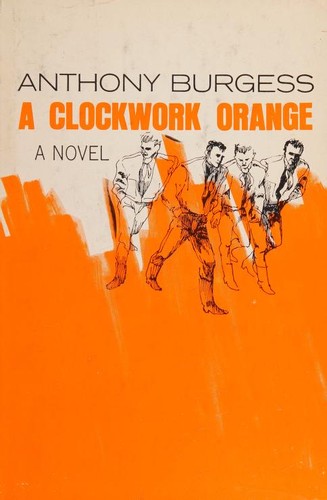
Read this only if you want the free will question pushed to its ugliest edge.
Burgess's 1962 novel takes the theme under Animal Farm, what a state may do to its citizens for the sake of order, and makes it a philosophical trap. Alex is a genuinely vicious young criminal; the state cures him with conditioning that removes his ability to choose violence; and the book asks whether a man forced to be good is good at all. Like Orwell, Burgess is interested in the language of control, and he goes further, narrating everything in Nadsat, an invented Russian-inflected slang you absorb as you read.
Be honest about what you are picking up: the first third contains brutal violence narrated with relish, and the slang makes the opening chapters real work. It is the most demanding and most divisive book here, closer to provocation than fable. Note also that the original American edition cut the final chapter, where Alex begins to outgrow violence on his own, and editions with chapter 21 restored read differently. Choose it for the argument, not for comfort.
1984, also by Orwell. Animal Farm shows a revolution being betrayed step by step, and 1984 shows the finished totalitarian state from the inside, so the two books complete each other. After that, Lord of the Flies is the closest match for the allegorical method, and Brave New World gives you the classic counterargument that control comes through pleasure rather than fear.
Is Animal Farm about the Russian Revolution?
Yes, explicitly. Orwell wrote it during World War II as a satire of the Soviet Union: Old Major stands in for Marx and Lenin's ideas, Napoleon for Stalin, Snowball for Trotsky, and events like the windmill and the purges track Soviet history. Orwell subtitled it 'A Fairy Story,' and several publishers rejected it in 1944 because the USSR was a wartime ally.
Should I read Animal Farm or 1984 first?
Either order works, but Animal Farm first is the gentler path: it is much shorter, lighter in tone, and lays out the mechanics of propaganda and rewritten history that 1984 then builds a whole world from. If you have already finished Animal Farm, go straight to 1984 before anything else on this list.
Are there other allegories like Animal Farm?
True political allegories at its level are rare, which is why it stands alone. Lord of the Flies is the closest, using stranded schoolboys instead of farm animals to argue about power and human nature. Watership Down by Richard Adams uses rabbits to explore different forms of society, including a police state warren, and is worth seeking out if the animal-fable form itself is what appealed to you.
As an Amazon Associate, we earn from qualifying purchases. · About & methodology