6 books like Fahrenheit 451, from 1984 to Brave New World and The Giver: dystopian classics matched to what you loved in Bradbury.
Updated June 11, 2026
Ray Bradbury's Fahrenheit 451 is the strangest of the great dystopias because it is the most lyrical. Guy Montag is a fireman whose job is burning books, in a future America that did not need a tyrant to ban them; people simply stopped reading, drifting into wall-sized televisions, earbud 'seashells', and a numb, fast, distracted happiness. Bradbury wrote it in 1953 on a rented typewriter in a library basement, and it shows: the prose runs hot and metaphorical where Orwell runs cold and precise, and the villain is less the state than the culture that asked for its own anesthetic.
Readers who finish it tend to want one of three things, and the six books below cover all of them. Some want the other pillars of the dystopian canon, the surveillance state of 1984 and the engineered pleasure of Brave New World, which between them split Bradbury's nightmare into its two halves. Some want the theme carried into different territory, the controlled societies of The Handmaid's Tale, The Giver, and A Clockwork Orange. And some want more of Bradbury's own voice, which The Illustrated Man delivers in story form.
A practical note: these range widely in difficulty. The Giver is a fast afternoon read suitable for younger readers, 1984 and Brave New World are standard but demanding classics, and A Clockwork Orange asks you to learn its invented slang as you go. Each pick below tells you which part of Fahrenheit 451 it echoes so you can choose by what actually gripped you.
Read this if Bradbury's point about pleasure, not censorship, is what stayed with you.
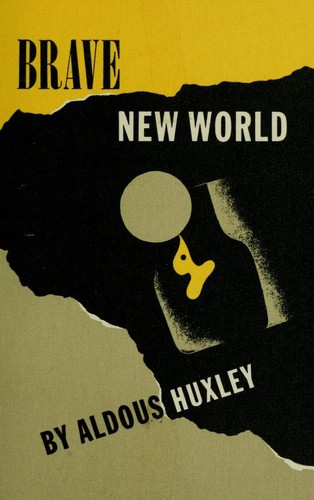
Aldous Huxley's 1932 novel is the closest match to what Fahrenheit 451 is actually arguing. Bradbury's fire captain Beatty explains that the government did not start the book burning; the public abandoned books on its own, preferring speed, fun, and comfort. Brave New World is that idea built out into a whole civilization: a World State that controls its citizens not through fear but through engineered contentment, the drug soma, casual sex, and entertainment, so that nobody wants the freedom they have lost. Mildred with her seashell radio and parlor walls would fit into Huxley's London without alteration.
The difference is scope and temperature. Huxley writes cool, satirical, idea-driven chapters where Bradbury writes feverish poetry, and Brave New World spends more time on the machinery of its society (hatcheries, conditioning, caste design) than on any one person's awakening. John the Savage, who quotes Shakespeare at a world that cannot understand him, is the closest thing to Montag here. Pick it if you want the fullest version of the argument that we will amuse ourselves into submission.
Read this for the other half of the dystopian equation, control by force instead of comfort.
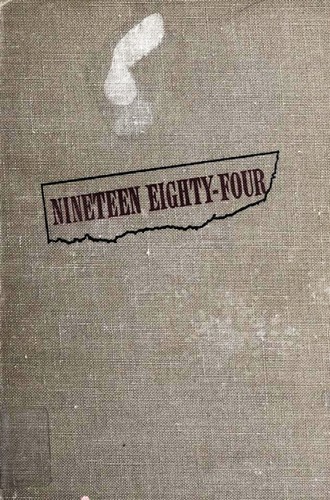
George Orwell's 1949 novel shares Fahrenheit 451's central machinery: a regime that rewrites and destroys the written record to control what people can think. Winston Smith literally works in the memory hole business, burning inconvenient documents at the Ministry of Truth, and his crime, like Montag's, begins with the private act of keeping forbidden words (a diary instead of a stolen Bible). Both books understand that language is the battleground; Newspeak's shrinking dictionary is the bureaucratic version of Beatty's bonfires.
Where they part is the source of the oppression. In Orwell the boot comes down from above, with surveillance, torture, and the Thought Police; in Bradbury the public largely did it to themselves, and the firemen are almost an afterthought. 1984 is colder, bleaker, and more politically systematic, with none of Bradbury's lyricism and a far darker ending. If Fahrenheit 451 felt too gentle, this is the harder dose, and it is the single most natural next read.
Read this if you want the forbidden-literacy theme with a sharper political edge.
Margaret Atwood's 1985 novel takes the suppression of reading and makes it gendered: in the theocratic Republic of Gilead, women are forbidden to read or write at all, and Offred's narration is itself an act of rebellion, a record made in a world that destroys records. Like Fahrenheit 451, it is a first-person account of someone waking up inside a system they once moved through numbly, and like Bradbury, Atwood insisted she invented nothing without precedent, only extrapolated.
It is a very different reading experience: intimate, slow-burning, and grounded in domestic detail rather than action, with the worldbuilding revealed in fragments of memory. The oppression is also specific rather than general, aimed at women's bodies and autonomy, which gives it a focus Bradbury's broad cultural warning does not have. Pick it if you want literary dystopia written at the highest level and do not need the plot to move at Montag's pace.
Read this for the most accessible version of a society that traded truth for comfort.
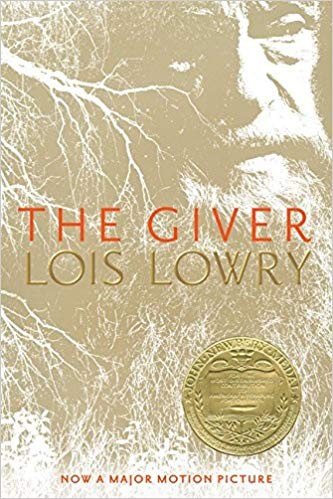
Lois Lowry's 1993 novel is built on the same trade Fahrenheit 451 describes: a community that has eliminated pain, conflict, and difference by eliminating memory, color, and choice, and a protagonist who is handed the suppressed knowledge and cannot go back. Jonas receiving the world's memories from the Giver plays the role books play for Montag; once he knows what was lost, the engineered contentment around him becomes unbearable. Both end with a flight from the community carrying something precious toward an uncertain future.
The difference is audience and weight. The Giver is a Newbery Medal winner written for middle-grade readers, so it is short, spare, and clean where Bradbury is dense and pyrotechnic, and its violence is quiet rather than incendiary. That makes it the right pick for a younger reader, a classroom pairing, or anyone who wants the theme distilled to its essentials in a couple of hours. Adults who dismiss it as a children's book usually finish it more unsettled than they expected.
Read this if what you loved was Bradbury's voice itself.
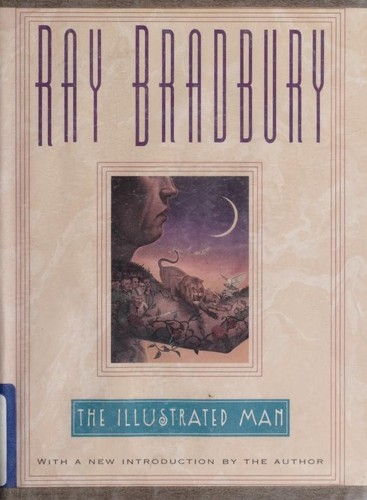
If the sentences were the thing, the metaphors, the dread dressed up as wonder, then the natural next stop is more Bradbury, and The Illustrated Man (1951) is his short fiction at full strength. Eighteen stories are framed as tattoos that come alive on a drifter's skin, and several work the same vein as Fahrenheit 451: 'The Veldt', the most famous, is about children whose wall-sized virtual nursery replaces their parents, essentially Mildred's parlor walls taken to their logical end, and the collection as a whole keeps circling technology, censorship of the imagination, and humanity burning itself.
It is a story collection, not a novel, so there is no Montag to follow and the quality varies from masterpiece to curiosity. The frame is thin and the stories are self-contained, which makes it ideal bedside reading rather than a single sitting. Choose it after the dystopias above if you want range, or first if you already know it was Bradbury's prose, not the plot, that hooked you. The Martian Chronicles makes an equally good follow-up.
Read this if you want the free will question pushed to its most uncomfortable extreme.
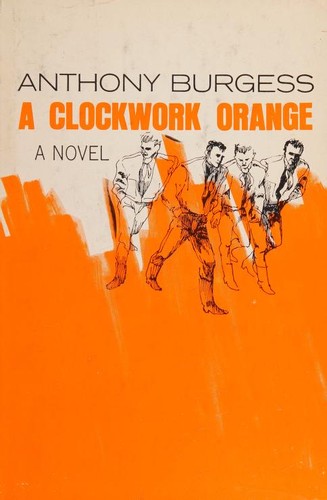
Anthony Burgess's 1962 novel attacks the same question Fahrenheit 451 raises, whether a state can manufacture good behavior, from the opposite direction. Alex is a teenage thug who is genuinely vicious, and the government 'cures' him with conditioning that removes his capacity to choose violence at all. Like Bradbury, Burgess argues that a forced, contented harmlessness is worse than freely chosen wrongdoing; Beatty's firemen burn the means of thinking, while the Ludovico Technique burns the means of choosing.
Be honest with yourself about what you are signing up for, though. The first third contains brutal violence narrated gleefully by its perpetrator, and the whole book is written in Nadsat, an invented Russian-inflected slang you decode as you read. It is also morally murkier than Fahrenheit 451; there is no innocent Clarisse here, only a hard philosophical problem. Pick it if you want dystopia as provocation rather than warning, and note that the original UK edition's final chapter changes the meaning considerably.
Brave New World is the closest in argument, since both books warn that people will surrender thought voluntarily in exchange for entertainment and comfort rather than having it taken by force. 1984 is the closest in plot machinery, with a protagonist whose job involves destroying the written record and whose rebellion begins with forbidden words. Most readers tackle both; together they map the two halves of Bradbury's warning.
Should I read 1984 or Brave New World after Fahrenheit 451?
Read Brave New World if what struck you was Bradbury's idea that society chose its own numbness, with wall screens and seashell radios standing in for soma. Read 1984 if you want the censorship and state control themes taken to their darkest, most systematic conclusion. 1984 is the bleaker and more demanding of the two; Brave New World is more satirical and closer to Bradbury's actual point.
Is Fahrenheit 451 about government censorship?
Less than its reputation suggests. In the novel, Captain Beatty explains that the public abandoned books on its own, preferring fast entertainment and the comfort of never being challenged, and the firemen only formalized that choice. Bradbury said in later interviews that the book was about television destroying interest in reading more than about state censorship, which is why Brave New World is in many ways the closer cousin than 1984.
Which book on this list is best for a younger reader?
The Giver. It is short, written for middle-grade readers, and carries the same core idea, a society that bought peace by erasing memory, truth, and choice. It is widely taught alongside Fahrenheit 451 for exactly that reason. A Clockwork Orange sits at the other extreme and is best left for adult readers comfortable with violent content.
As an Amazon Associate, we earn from qualifying purchases. · About & methodology