5 books like Lord of the Flies, from The Hunger Games to The Coral Island: survival stories and dark looks at what happens when the rules fall away.
Updated June 10, 2026
William Golding's Lord of the Flies starts as an adventure and curdles into a horror story, and the curdling is the point. British schoolboys crash on a tropical island with no adults, elect Ralph, find a conch, and set about being rescued; within weeks there are war paint, a severed pig's head on a stick, and boys hunting boys. Golding, who had taught schoolboys and served in the Royal Navy in World War II, wrote it as an answer to a century of cheerful castaway stories: take away the rules, he argues, and the beast is already in us. It won him the Nobel Prize in 1983 and a permanent place on school syllabi.
No other book repeats Golding's exact experiment, so this list sorts by which part gripped you. If it was the question of what people become when civilization is removed, The Hunger Games stages it as a forced arena and The 5th Wave as a collapsed world. If it was kids organizing into tribes and turning on each other, The Outsiders runs that conflict through 1960s Oklahoma with no island required. Hatchet keeps the survival and drops the savagery, and The Coral Island is the sunny Victorian original Golding was deliberately overturning.
A practical note: every book here is faster and easier reading than Golding, whose prose is denser than people remember. Hatchet and The Outsiders suit younger readers; The Hunger Games and The 5th Wave are standard YA; The Coral Island is a free public-domain classic best read for what Golding did to it. Each entry says what it shares with the island and where it leaves.
Read this to see exactly what Lord of the Flies was written against.
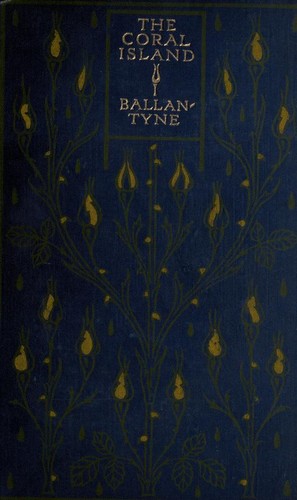
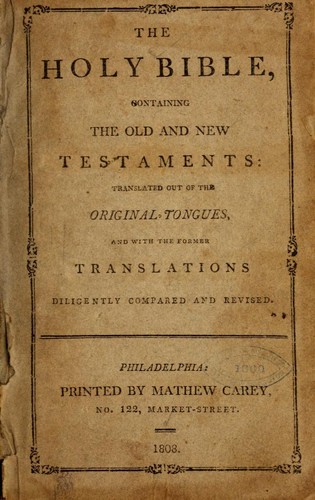
R.M. Ballantyne's 1857 adventure is the book Golding was answering, and he made sure you would know it: his characters Ralph and Jack take their names from Ballantyne's heroes, and the naval officer at the end of Lord of the Flies even name-checks The Coral Island. Three British boys are wrecked on a Pacific island and thrive, building shelter, hunting, and remaining brave, cheerful, and Christian throughout. The danger comes from outside, pirates and islanders, never from the boys themselves. That assumption, that well-raised English boys carry civilization with them, is precisely the target Golding set out to demolish.
Read on its own terms, it is a brisk Victorian boys' adventure with the attitudes of its era, including colonial and missionary views that have aged badly. Nobody descends into anything; the pleasure is competence and exotic peril. Pick it up as literary archaeology, to feel how radical Golding's reversal was, rather than for suspense. It is in the public domain, so it costs nothing to satisfy the curiosity.
Read this if you want the survival without the savagery.
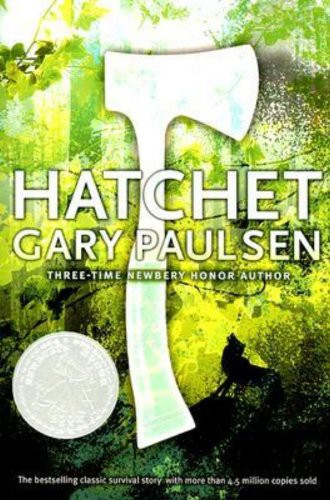
Gary Paulsen's 1987 classic keeps one half of Golding's premise, a boy alone in the wild with no adults coming, and discards the other. Thirteen-year-old Brian Robeson survives a plane crash in the Canadian wilderness with nothing but a hatchet, and the book lives in the concrete details Golding's readers also love: fire, shelter, food, mistakes that nearly kill him. Like Lord of the Flies, it strips a child down to essentials and asks what is actually inside him.
Paulsen's answer is the opposite of Golding's, which is the reason to read it. Alone, with no group to form tribes and no one to dominate, Brian gets more capable and more clear-eyed, not less human; the enemy is the wilderness and his own panic, never a beast within. It is a middle-grade novel, short and plainly written, perfect for readers around ten to thirteen or for adults who want the survival thread purified. If the hunt for Ralph is what you came for, this is too gentle; pick The Hunger Games instead.
Read this if the tribes interested you more than the island.
S.E. Hinton wrote The Outsiders at sixteen, and it transplants Golding's core social mechanics into 1960s Tulsa: boys sorted into rival packs, Greasers and Socs instead of Ralph's camp and Jack's hunters, loyalty enforced by the group, and violence that escalates past anyone's intention until kids are dead. Like Golding, Hinton is interested in how decent individuals, Ponyboy here, Ralph there, get carried by a group identity they never exactly chose.
The difference is sympathy. Golding watches his boys from above, almost clinically, while Hinton writes from inside the tribe, and her argument is nearly the reverse of his: the violence comes from class lines and circumstance, not from a beast in human nature, and the book keeps insisting on the tenderness inside its toughs. There is no survival element and no isolation; civilization is present and failing these boys anyway. It is short, direct, and the most emotionally warm book on this list.
Read this if you want kids forced to hunt kids, with the adults watching this time.
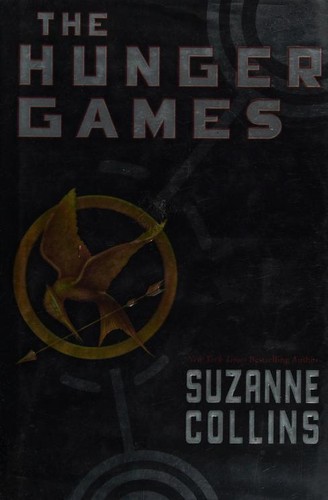
Suzanne Collins's 2008 novel is the modern heir to Golding's nightmare: children in a closed arena, killing each other while alliances form and break and the veneer of decency gets traded against survival. The moral core is the same question Ralph faces, how much of yourself you can keep when the choice is kill or die, and Katniss's struggle to stay human in the arena is Golding's theme run at thriller pace. The careers, trained tributes who hunt with relish, are Jack's tribe with sponsorship.
The crucial difference is the author of the violence. Golding's boys generate their savagery themselves; Collins's children are forced into it by the Capitol, which makes her book an indictment of the adults and the spectacle rather than of human nature. That shift makes it less bleak and more propulsive, a page-turner with a revolution attached. It is the easiest recommendation here: nearly everyone who liked Lord of the Flies and wants a faster, more hopeful descendant is happy with this one.
Read this for societal collapse and the question of who you can trust.
Rick Yancey's 2013 novel takes Golding's collapse and scales it to a planet. Alien attacks have come in waves, power, plague, drownings, infiltration, and by the time we meet Cassie Sullivan, civilization is gone and the survivors' problem is the same one the island produces: other people. The fourth wave is aliens indistinguishable from humans, so trust itself becomes lethal, and the book's darkest material, children turned into soldiers by adults exploiting their fear, is Jack's tribe built deliberately by someone with a plan.
It is the loosest fit on the list and the most commercial: a multi-viewpoint alien-invasion thriller with a romance thread, written for the YA market in the wake of The Hunger Games. The interest in human nature is real but shares space with action set pieces and a sequel hook, since it opens a trilogy. Pick it when you want the paranoia and breakdown in a fast modern package, not when you want Golding's concentration. Readers who need every thread resolved should know the first book does not stand fully alone.
The Hunger Games is the closest widely read match: children in an isolated arena, alliances, and the struggle to stay decent when survival is at stake, though Collins blames the adults running the games where Golding blames human nature itself. For the historical flip side, The Coral Island is the cheerful castaway story Golding wrote Lord of the Flies to refute.
Was Lord of the Flies based on a true story?
No, it is fiction, shaped by Golding's experience teaching boys and serving in World War II. Notably, the one real-life case resembling it ended the opposite way: six Tongan boys shipwrecked on the island of 'Ata in 1965 cooperated peacefully for about fifteen months until rescue, a story Rutger Bregman retold in his book Humankind as a counterargument to Golding's view.
Why do Lord of the Flies and The Coral Island share character names?
It is deliberate. Golding borrowed Ralph and Jack from Ballantyne's 1857 novel, in which shipwrecked British boys remain brave and virtuous, and wrote his own island story to argue the opposite: that the boys' savagery would come from within. The naval officer at the end of Lord of the Flies even mentions The Coral Island, making the rebuttal explicit.
Is Lord of the Flies appropriate for middle school readers?
It is usually taught in grades 8 to 10. The vocabulary and symbolism are denser than its reputation suggests, and the violence, including the deaths of Simon and Piggy, is genuinely disturbing. For younger or more sensitive readers, Hatchet covers wilderness survival without the cruelty, and The Outsiders handles group violence with far more warmth.
As an Amazon Associate, we earn from qualifying purchases. · About & methodology