9 books like Brave New World, from 1984 and We to Never Let Me Go: dystopias of control through pleasure, conformity, and engineered happiness.
Updated June 11, 2026
Brave New World earns its place next to 1984 by making the opposite bet about how freedom dies. Huxley's 1932 World State does not need telescreens or torture: citizens are decanted from bottles, conditioned from infancy into castes, kept docile with soma and casual sex, and trained to love their servitude. The horror is that almost nobody in it is unhappy. When John the Savage demands the right to suffer, to read Shakespeare, to feel anything real, the Controller's calm, reasonable rebuttal is the most chilling scene in the book. Huxley's question, whether comfort can be a cage, has only gotten sharper since.
Most readers come away wanting one of three things. If you want the other pillars of the dystopian canon, the books that map different routes to the same dead end, start with 1984, Fahrenheit 451, and We (the 1924 Russian novel Huxley's critics accused him of borrowing from). If the engineered-happiness angle gripped you, the societies that abolish pain at the price of being human, The Giver and Never Let Me Go carry that thread, along with Huxley's own utopian answer in Island. And if you want the themes pushed harder, A Clockwork Orange, The Handmaid's Tale, and The Dispossessed each take one strand (free will, reproductive control, the utopia question) further than Huxley did.
A reading note: these vary widely in difficulty. The Giver is a fast afternoon read written for younger readers; We and The Dispossessed ask real patience; A Clockwork Orange is written in an invented slang that takes thirty pages to click. Each entry below says which part of Brave New World it echoes so you can choose by what actually stuck with you.
Read this for the other half of the twentieth century's argument about how freedom ends.
Orwell's 1949 novel is the permanent companion piece to Brave New World, and reading them together is the whole point. Both imagine total states that have abolished the individual; both center a misfit (Winston Smith, like Bernard Marx and John) who senses something is wrong and is broken for it; both end with the dissenter's defeat rather than a revolution. Airstrip One's Ministry of Truth and the World State's hypnopaedia are aiming at the same target, a population that cannot think its way out.
The methods are opposites, which is why the comparison never gets old. Orwell's state rules by pain, scarcity, and surveillance; Huxley's rules by pleasure, abundance, and distraction. Neil Postman's famous summary holds up: Orwell feared the books would be banned, Huxley feared no one would want to read them. 1984 is the grimmer, more brutal read, with the most famous torture sequence in literature. If you have somehow read Huxley but not Orwell, fix that first.
Read this if the World State's contempt for books and depth was what disturbed you most.
Bradbury's 1953 novel sits closer to Brave New World than to 1984, though it is usually shelved with both. Its future America did not have books taken away by force; people abandoned them for wall-sized televisions and seashell radios, and the firemen who burn the remainder are just finishing a job the culture started voluntarily. That is Huxley's diagnosis exactly: distraction and comfort, not jackboots, hollow people out. Mildred, lost in her parlor walls and overdosing without noticing, could be a World State citizen on soma.
It is a faster, more lyrical, less systematic book than Brave New World. Bradbury was a poet of nostalgia more than a builder of worlds, so you get less social machinery and more atmosphere, burning houses at night, a girl who asks questions, book-people reciting texts in the woods. It also allows more hope than Huxley does. At under 200 pages it is the quickest read on this list, and a natural next stop if the Controller's argument that art must die for stability to live stuck with you.
Read this if the World State's control of reproduction and bodies is the thread you want pulled.
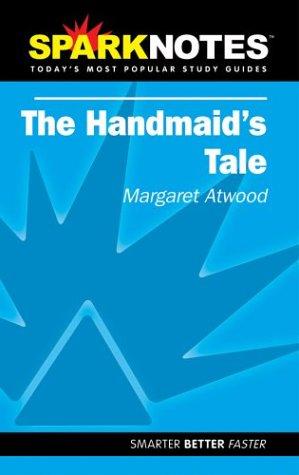
Brave New World begins in the Central London Hatchery for a reason: control reproduction and you control everything. Atwood's 1985 novel takes that insight in the opposite direction. Where Huxley's state abolished birth in favor of bottles and made sex meaningless recreation, Gilead makes fertility sacred and turns women into state property for it. Both books understand that a regime's first target is the body, and both feature protagonists narrating from inside a system they can see through but cannot escape.
Atwood's book is more intimate and more plausible than Huxley's. There is no exotic technology in Gilead, just theology, bureaucracy, and other people's compliance, which Atwood assembled entirely from things that have actually happened somewhere. The first-person voice gives it an emotional weight Brave New World, with its cool satirical distance, never reaches for. Read it when you want a dystopia that hurts rather than one that argues. The sequel, The Testaments, won the Booker in 2019.
Read this if the Controller's case against free will deserves a whole novel of its own.
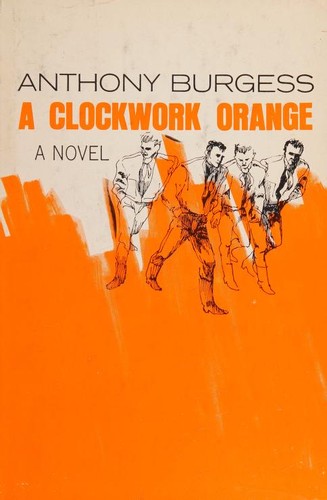
Burgess's 1962 novel is the free-will debate from Brave New World stripped of everything else. Alex is a vicious teenage criminal whom the state reconditions with the Ludovico Technique until violence makes him physically ill, and the book's question is whether a man forced to be good is good at all, or even still a man. That is Huxley's conditioning argument made flesh: the World State's citizens are Alex after treatment, chemically and psychologically incapable of choosing wrongly, and the prison chaplain's protest could be John the Savage's.
Two warnings. The first chapters contain genuinely brutal violence, narrated with relish. The second is Nadsat, the invented Russian-inflected slang Alex narrates in, which is disorienting at first and then becomes the book's great pleasure. It is also short, far shorter than its reputation. Seek out editions with the final twenty-first chapter, which the original American edition (and Kubrick's film) cut, because it changes the meaning of the whole book.
Read this for Huxley's own answer to Brave New World, written thirty years later.
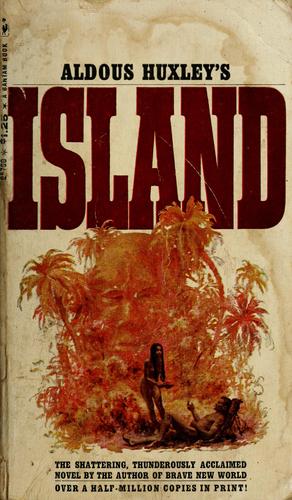
Island, published in 1962, a year before Huxley died, is his deliberate counterpoint to Brave New World, and that makes it unique on this list. The island of Pala uses many of the same tools as the World State, mind-altering substances, conscious child-rearing, frank sexuality, but pointed at awakening instead of sedation: the moksha-medicine is taken for insight rather than escape, and mynah birds trained to cry 'Attention!' remind people to actually inhabit their lives. A cynical journalist washes ashore and is slowly undone by the place. It answers the question Brave New World leaves open: what would Huxley actually want?
Be honest about what it is, though: a novel of ideas with the emphasis heavily on ideas. Characters deliver lectures on Buddhism, ecology, and education for pages at a time, and the plot is thin until the ending, which lands hard precisely because Huxley refuses to let utopia be safe. It is for readers who finished Brave New World interested in Huxley the thinker, not just the satirist. Pair it with his 1958 essay collection Brave New World Revisited if you go down that road.
Read this for the book that got there before Huxley and Orwell both.
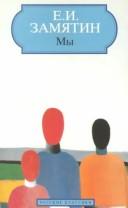
Zamyatin's We, written in Russia around 1921 and banned there for decades, is the source code of the modern dystopia. The One State houses its citizens in glass buildings, names them with numbers (the narrator is D-503, an engineer building a spaceship), schedules their hours and their sex by table, and treats imagination as a disease with a surgical cure. Orwell reviewed it and openly drew on it for 1984; Huxley denied having read it, but the parallels with Brave New World, engineered contentment, mathematical happiness, a rebellion through forbidden desire, are striking either way.
It is stranger and more modernist than either successor. D-503 narrates in feverish, fragmentary diary entries that mirror his breakdown as an unauthorized love affair infects him with a soul, and the prose (especially in newer translations) is jagged and poetic rather than plain. That makes it a slower read than its length suggests, but for anyone who cares about where Brave New World came from, it is the essential book, and its ending is as cold as anything Orwell wrote.
Read this for the gentlest, clearest version of the comfort-versus-humanity trade.
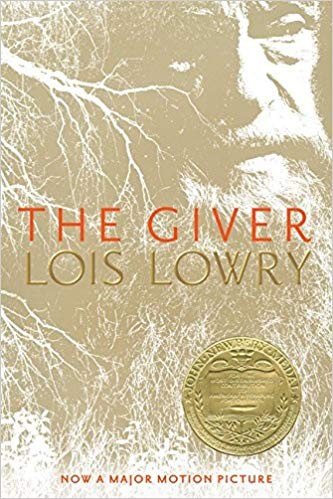
Lois Lowry's 1993 Newbery winner is Brave New World's central bargain rewritten for young readers, and it loses surprisingly little in translation. Jonas's community has achieved Sameness: no war, no pain, no color, no real choice, with emotions blunted by daily pills the way the World State blunts them with soma. When Jonas is chosen to receive the community's suppressed memories, he becomes John the Savage's mirror image, the one person who knows what was traded away. Even the community's quiet use of 'release' echoes Huxley's serene management of death.
It is a middle-grade novel, short, spare, and readable in an afternoon, so do not expect Huxley's satirical density or social machinery. What you get instead is the moral core delivered with total clarity, which is why it is many readers' first dystopia and why it still works for adults. It is also the rare book on this list with real ambiguity in its ending. If you are introducing a younger reader to these ideas, this is the door in.
Read this if the Hatchery, people manufactured for a purpose, is the image that haunts you.
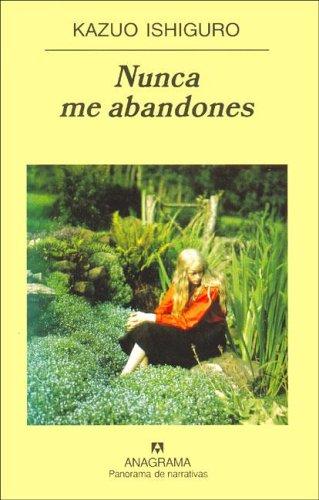
Ishiguro's 2005 novel takes Brave New World's opening conceit, human beings produced to specification for society's convenience, and asks what it feels like from the inside. Kathy, Ruth, and Tommy grow up at Hailsham, a sheltered English boarding school, and only gradually do they and the reader grasp what they are for. Like Huxley's conditioned castes, they have been raised to accept their function so completely that escape barely occurs to them, and that quiet acceptance is the book's real horror, far more than the science.
It could not be more different in texture: no world-building lectures, no satire, just Kathy's flat, careful, achingly restrained memoir of friendships and small betrayals. Ishiguro buries the dystopia so deep in the ordinary that some readers finish it angry the characters never fight back, which is precisely the point Huxley was making about conditioning. The most emotionally devastating book on this list, and the best written. Ishiguro won the Nobel Prize in 2017.
Read this if you want the utopia question taken seriously instead of satirized.
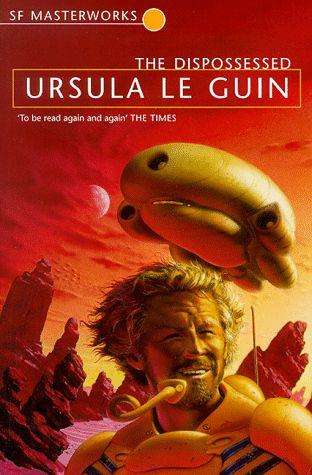
Le Guin's 1974 novel does something Brave New World only gestures at: it weighs two whole societies against each other honestly. Shevek, a brilliant physicist, leaves the anarchist moon Anarres for the wealthy capitalist world Urras it broke away from, and the novel alternates between his two lives. Urras, glittering, comfortable, and quietly coercive, is recognizably Huxley territory, a society where abundance does the work of repression. But Le Guin's real subject is Anarres, a utopia with dust, famine, and creeping bureaucracy, subtitled 'an ambiguous utopia' for a reason.
This is the most demanding book on the list, dense with political philosophy and structured as two interleaved timelines, and it is science fiction in the full sense, with alien worlds and invented physics. It is also the most adult treatment of the questions Huxley raised: not just how societies go wrong, but whether a right one is possible and what it would cost to keep it honest. It won both the Hugo and Nebula awards. Read it last, when you want the argument instead of the nightmare.
Should I read 1984 or Brave New World first, and how are they different?
Either order works since they share no characters or setting, only a subject. The difference is mechanism: Orwell's state controls through fear, surveillance, and pain, while Huxley's controls through pleasure, conditioning, and distraction. Reading both is the standard advice because they are two halves of one argument about how freedom is lost. Many readers find Huxley's version the more uncomfortable fit with modern life.
What is the closest book to Brave New World?
We by Yevgeny Zamyatin, written around 1921, is the closest ancestor: a regimented state that engineers happiness and treats imagination as an illness, with a rebellion sparked by forbidden desire. Huxley denied reading it, but the resemblance is strong. Among modern books, Never Let Me Go is the closest in spirit, following people manufactured for a purpose who have been raised to accept it.
Did Aldous Huxley write anything else like Brave New World?
Yes. Island (1962), included on this list, is his utopian counterpart, showing the same tools used for awakening instead of control. Brave New World Revisited (1958) is a nonfiction essay collection in which Huxley revisited his predictions and argued they were arriving faster than he expected. Ape and Essence (1948) is his other, darker dystopia, set after a nuclear war.
Is Brave New World still worth reading today?
Yes, and arguably more than when it was published. Its targets, engineered contentment, consumerism as social control, pharmaceutical mood management, and entertainment as sedation, map more directly onto modern life than the totalitarian machinery of 1984. The prose and some attitudes show their 1932 age, particularly the treatment of the Savage Reservation, but the central argument has not dated at all.
As an Amazon Associate, we earn from qualifying purchases. · About & methodology