8 books like A Separate Peace, from The Catcher in the Rye to Lord of the Flies: coming-of-age classics about friendship, envy, and lost innocence.
Updated June 10, 2026
John Knowles published A Separate Peace in 1959, and it has held its place on school reading lists ever since because it tells a small story that contains a large one. Gene Forrester looks back on a wartime year at Devon, a New England boarding school, and on his friendship with Phineas, the effortless athlete he loved, envied, and injured. The single act at the tree, whether Gene jounced the limb deliberately, half-deliberately, or not at all, is left just ambiguous enough that readers argue about it for life. The war is everywhere and nowhere: World War II hangs over the boys' final peaceful summer, and Gene's real enemy turns out to be something he carried in himself.
The books below are grouped around the three things readers usually want next. For more unreliable young narrators wrestling with guilt and identity, there are The Catcher in the Rye and The Bell Jar. For the darker thesis, that the capacity for cruelty lives inside ordinary boys, Lord of the Flies is the essential pairing, with The Great Gatsby supplying the adult version of a narrator undone by envy of a golden friend. And for warmer coming-of-age stories with a moral spine, To Kill a Mockingbird, A Tree Grows in Brooklyn, and The Perks of Being a Wallflower each carry a different piece of Devon forward, with Things Fall Apart widening the loss-of-innocence theme to an entire culture.
A practical note: most of these are short and assigned in schools for a reason, which means they reward slow reading more than speed. If you are choosing one, start with whichever thread of A Separate Peace actually got to you, the guilt, the friendship, or the war at the edge of the frame. Each entry below says plainly which one it serves.
Read this if Gene's guarded, self-deceiving voice was what held you.
Salinger's 1951 novel is the natural companion to A Separate Peace, and the two are often taught together. Holden Caulfield is another prep school boy from the same postwar East Coast world, narrating his own story in a voice that reveals more than he intends. Like Gene, he is processing a grief he can barely name (his brother Allie's death sits under everything), and like Gene he is an unreliable narrator whose harsh judgments of others keep deflecting attention from his own wounds. Both books are really about what their narrators cannot say.
The difference is energy. Knowles is restrained, retrospective, and formally tidy; Salinger pours everything into Holden's restless, slangy, digressive voice as he wanders New York for three days after being expelled from Pencey Prep. There is no single friendship at the center and no equivalent of the tree, just a boy unraveling in real time. Pick this if you want the interior monologue turned up and the plot turned down, and expect to either adopt Holden's voice for a week or find him insufferable. Few readers land in between.
Read this for the thesis Knowles only whispers, stated at full volume.
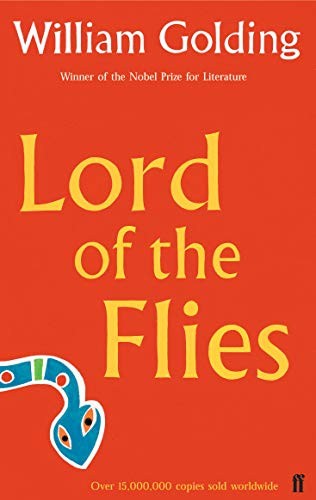
Golding's 1954 novel makes explicit what A Separate Peace implies: the savagery is in the boys, not the circumstances. A planeful of English schoolboys crashes on an uninhabited island during a war, and without adults their attempt at civilization collapses into tribalism, scapegoating, and killing. Gene's private realization, that wars are made by something ignorant in the human heart, is essentially Golding's whole argument. Both books also use a war offstage as the frame: the adult world destroying itself while the boys reenact it in miniature.
Where Knowles works through one ambiguous moment between two friends, Golding builds an allegory with the pieces labeled, Ralph for order, Jack for appetite, Piggy for reason, Simon for something like grace. It is more brutal, more plot-driven, and less psychologically intimate; you watch the boys from outside rather than living inside one boy's rationalizations. Choose it if the darkness under Devon's civility was what gripped you. Readers who loved the friendship and the elegy may find it cold, because coldness is the point.
Read this for the grown-up version of a narrator transfixed by a golden friend.
The pairing sounds odd until you see the structure. Nick Carraway, like Gene Forrester, narrates the story of a magnetic, gifted, doomed man he cannot stop watching, and the telling is as much confession as biography. Phineas and Jay Gatsby occupy the same slot: the charismatic figure who seems exempt from the rules, observed by a careful, envious, complicit narrator who survives him. Both novels are retrospective, both circle a single catastrophic event, and both end as elegies for someone the narrator partly failed.
The setting swap is total: Jazz Age Long Island money and parties instead of a wartime boarding school, adult longing instead of adolescent rivalry. Fitzgerald's prose is also showier and more lyrical than Knowles's plain style, and the moral target is the American Dream rather than the private heart. Pick it if the Gene-and-Finny dynamic, devotion laced with resentment, was the engine of the book for you. If what you wanted was more school-days atmosphere, this will feel like a different world, because it is.
Read this for a loss of innocence with a moral compass at the center.
Harper Lee's 1960 novel came out within a year of A Separate Peace, and the two share the same architecture: an adult narrator looks back on the childhood years when the world's capacity for harm first became visible. Scout Finch watches her father Atticus defend a Black man falsely accused in Depression-era Alabama, and the trial does for her what the tree and the war do for Gene, ending the illusion that her familiar world is safe or fair. Both books are about how knowledge of evil arrives.
The crucial difference is that Lee gives her story an anchor Knowles withholds. Devon has no Atticus; Gene must judge himself with no adult worth trusting, while Scout has a father who models conscience even in defeat. That makes Mockingbird warmer and more hopeful, and its concerns are public, race and justice in a Southern town, where Knowles's are almost entirely private. Choose it if you want the loss-of-innocence story with humor, community, and a moral center. It is the most readable book on this list.
Read this for the gentlest, most expansive coming-of-age on the list.
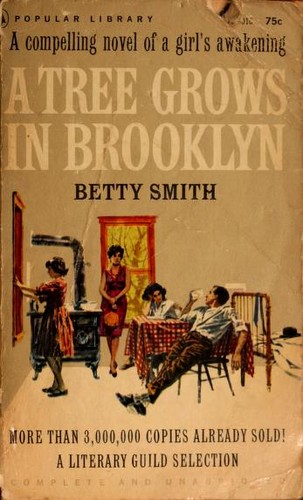
Betty Smith's 1943 novel follows Francie Nolan growing up poor in the tenements of Williamsburg, Brooklyn, in the 1910s, with a mother who scrubs floors to keep the family alive and a charming alcoholic father she adores. What it shares with A Separate Peace is the retrospective tenderness, the sense of an adult narrator handling childhood memories carefully because they contain both love and damage. Francie's clear-eyed reckoning with her father's failures rhymes with Gene's reckoning with what he did and felt at Devon.
Everything else is a contrast, and a useful one. This is a girl's story instead of a boy's, poverty instead of privilege, a sprawling family chronicle instead of a compressed single year, and World War I at the edges instead of World War II. There is no central crime and no ambiguity to debate; the hardship is ordinary and relentless, and the book's faith in education and persistence gives it a warmth Knowles never reaches for. Pick it when you want the coming-of-age feeling without the guilt, and have patience for a long, episodic novel.
Read this if you want Gene's interiority in a modern teenager's voice.
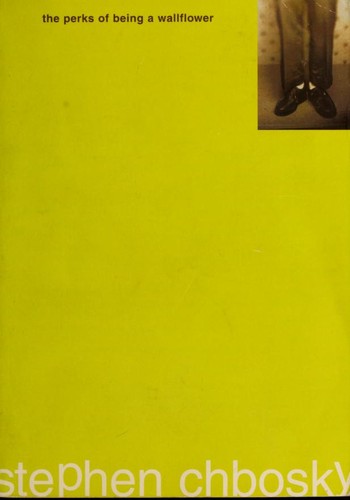
Stephen Chbosky's 1999 novel is the contemporary heir to the Devon books. Charlie, a freshman wallflower, narrates his year in letters to an anonymous stranger, and like Gene he is a watcher drawn into the orbit of more vivid friends, here the seniors Sam and Patrick. The themes map closely: intense friendship as the center of a young life, a buried trauma the narrator cannot face directly, and a final reckoning in which the truth about the past has to surface before he can move on.
The register is completely different. Chbosky writes in flat, earnest, confessional sentences rather than Knowles's polished retrospect, and the content is frankly modern, sexuality, drugs, abuse, and mental illness handled openly where Knowles works by implication. It is also a much faster read, and its emotional appeals are direct rather than withheld. Choose it if you want the same wounded-observer structure but felt A Separate Peace was too buttoned-up. Readers who prized Knowles's restraint may find Charlie's sincerity unguarded to a fault.
Read this for the descent that happens when the inner enemy wins.
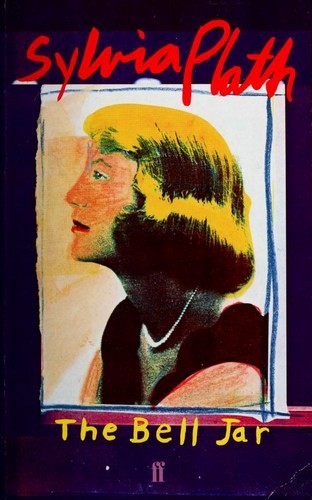
Sylvia Plath's only novel is the bleakest cousin of A Separate Peace: a semi-autobiographical account of Esther Greenwood, a brilliant college student whose glittering New York magazine internship gives way to paralysis, breakdown, and hospitalization in the early 1950s. The kinship is the enemy within. Gene's discovery that his real war was internal is Esther's entire story, told from inside the bell jar of her depression, and both books are narrated retrospectively by survivors of their own younger selves.
Be honest about what you are picking up. There is no friendship at the center, no school-year structure, and the pressures Esther faces are specifically those on a gifted young woman in the 1950s, expectations about marriage, purity, and ambition that Devon's boys never feel. It is also genuinely harrowing in its middle sections, with Plath's dry wit the only relief. Choose it if Gene's psychology interested you more than his world, and you want that thread followed to its darkest end.
Read this to see innocence lost by a whole culture, not just a boy.
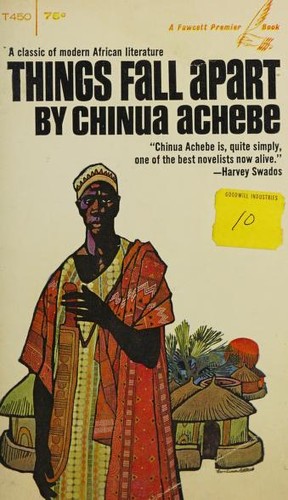
Chinua Achebe's 1958 novel widens the aperture. Okonkwo, a proud and fear-driven leader in an Igbo village in Nigeria, watches the world that made him come apart as British colonizers and missionaries arrive. The connection to Knowles is structural: a flawed protagonist whose private fear (for Okonkwo, of resembling his weak father; for Gene, of being lesser than Finny) drives him to a destructive act, set against a larger historical force that no individual can hold back. Both books end with an ordered world gone for good.
It asks more adjustment from the reader than anything else on this list. The setting is precolonial and colonial West Africa, the storytelling draws on Igbo proverb and oral tradition, and the scale is communal rather than psychological; you watch a society's undoing, not one boy's conscience. Pick it if A Separate Peace left you thinking about how violence and history break into sheltered worlds, and you want that idea at full historical scale. It is short, spare, and the most important book here.
The Catcher in the Rye is the closest match. Both are short postwar novels narrated by prep school boys whose guarded voices conceal grief and guilt, and they are frequently taught together. If you want the thematic core instead of the setting, Lord of the Flies is the other standard pairing, since it makes explicit Knowles's idea that the real enemy lives inside ordinary boys.
Did Gene deliberately make Finny fall in A Separate Peace?
Knowles leaves it deliberately ambiguous. Gene admits his knees bent and he jounced the limb, but the novel never settles whether it was conscious intent, a half-willed impulse born of envy, or an accident Gene retroactively claims out of guilt. That unresolved question is the engine of the book, and it is why the novel rewards rereading and argument.
Is A Separate Peace based on a true story?
It is autobiographical in setting. Knowles attended Phillips Exeter Academy, the model for Devon, and drew on his own wartime summer session there in 1943; the tree-jumping society was inspired by a real club he belonged to. The central injury and the character of Finny are inventions, though Knowles said Finny drew on a classmate. His later novel Peace Breaks Out returns to Devon just after the war.
Which of these books should a student read first?
To Kill a Mockingbird is the most accessible and the most rewarding starting point, with a warm narrator and a clear moral story. The Catcher in the Rye and Lord of the Flies are the two that deepen A Separate Peace most directly. The Bell Jar and Things Fall Apart are better second-wave picks, both excellent but tonally heavier and further from Devon's world.
As an Amazon Associate, we earn from qualifying purchases. · About & methodology