9 books like To Kill a Mockingbird, from The Secret Life of Bees to Of Mice and Men: Southern coming-of-age stories and classics about conscience.
Updated June 10, 2026
Harper Lee's To Kill a Mockingbird does two things at once, and that is why it has stayed on shelves since 1960. It is a warm, funny childhood story, with Scout, Jem, and Dill daring each other toward the Radley house over slow Alabama summers, and it is a hard look at racial injustice, as Atticus Finch defends Tom Robinson, a Black man falsely accused, in front of a town that has already decided. The child narrator is the trick: Scout reports the adult world before she fully understands it, which lets the moral weight land without a sermon.
Readers who want more usually want one of those two halves, so this list is sorted by which. If it was the South, the racial conscience, and the young girl figuring out her town, go to The Secret Life of Bees and The Help. If it was the child's-eye coming of age, A Tree Grows in Brooklyn, Bridge to Terabithia, and The Catcher in the Rye carry that thread to Brooklyn, rural Virginia, and New York. And if it was the moral seriousness inside an American classic, the Steinbecks, The Great Gatsby, and Fahrenheit 451 sit on the same high school shelf for a reason.
A practical note: several of these are short. Of Mice and Men and Bridge to Terabithia can each be read in a sitting, while The Grapes of Wrath and The Help ask for a week. Each pick below tells you which part of Mockingbird it echoes and where it parts ways, so choose by what actually stayed with you.
Read this if Scout's voice was the thing you loved.
J.D. Salinger's 1951 novel is the other defining young-narrator book of midcentury America, and the kinship with Mockingbird is the voice. Holden Caulfield, like Scout, tells you about an adult world he half understands and mostly distrusts, and both books get their power from the gap between what the narrator sees and what the reader grasps. Both are also, underneath everything, about protecting innocence: Holden's fantasy of catching children before they fall off a cliff is his version of the rule that it is a sin to kill a mockingbird.
The temperature is completely different. Holden is sixteen, alienated, and unreliable, wandering New York alone after being expelled, where Scout is six and anchored by Atticus and Maycomb. There is no trial, no racial reckoning, and no moral hero; the conflict is all inside Holden's head. Pick this if you want the coming-of-age thread turned inward and darker, and skip it if what you wanted was Mockingbird's warmth and its sense of justice.
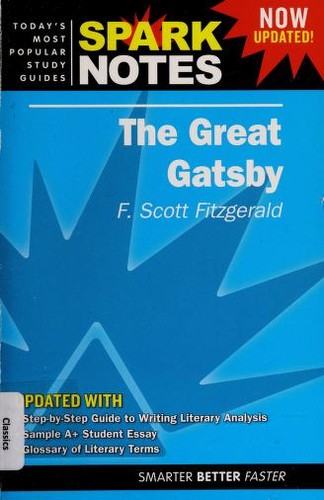
Read this for another American classic where a decent narrator watches a town's moral failure.
Fitzgerald's 1925 novel shares Mockingbird's structure more than its subject: a narrator on the edge of events, Nick Carraway, watches people with power and standing do real damage and walk away clean. Like Lee, Fitzgerald is writing about an American myth, here the self-made dream rather than the genteel South, and letting one observer's conscience carry the verdict. Both are short, endlessly taught, and built around a final act that turns a social world inside out.
The differences are obvious once you open it: Jazz Age Long Island instead of Depression-era Alabama, adultery and money instead of a courtroom, and no children anywhere. Nick is an adult, and the book's irony is dry where Mockingbird's is affectionate. Choose this if what you valued was the craft and the moral X-ray of a society, not the childhood. It is the least similar book on this list in setting and the most similar in seriousness.
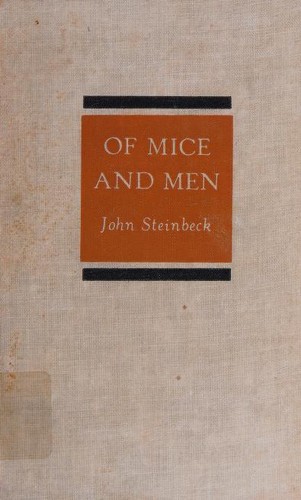
Read this if the trial of an innocent man is what broke your heart.
Steinbeck's short 1937 novel is the closest emotional match on this list to the Tom Robinson story. Lennie, a huge, gentle man with an intellectual disability, is doomed by forces he cannot understand, and George's attempt to protect him plays the role Atticus plays: a decent man standing between an innocent and a mob. The climactic scene, with men with guns closing in on someone who never meant harm, lands in exactly the place Mockingbird's verdict does.
It is leaner and bleaker than Lee. There is no child narrator and no humor to cushion anything; it is migrant workers, a California ranch, and about a hundred pages of tightening dread. Steinbeck writes it almost as a play, mostly dialogue and a few sets. Read it in one evening, and expect the ending to stay with you the way Tom Robinson's fate does. If you want the injustice theme at full strength with nothing softened, this is the pick.
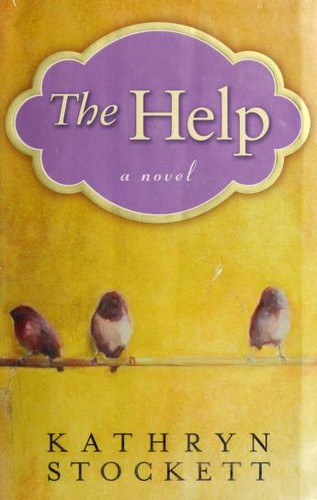
Read this if you want Mockingbird's South moved forward to the civil rights era.
Kathryn Stockett's 2009 bestseller is the most direct descendant of Mockingbird's subject here: race, complicity, and courage in a small Southern town, this time Jackson, Mississippi in the early 1960s. Where Lee gives you the trial through Scout, Stockett gives you the Black maids themselves, Aibileen and Minny, narrating alongside Skeeter, a young white woman who decides to write down their stories. The risk the three of them take is the book's version of Atticus standing up in court.
It is a much more commercial novel, faster, warmer, and tidier, and it has drawn real criticism for centering a white writer in a Black story and softening the era's danger, criticism worth knowing going in. But it is also the book most often handed to people who say Mockingbird is their favorite, and it earns the comparison on momentum and heart. Pick it for an absorbing, talkative read; pick Steinbeck if you want something sterner.
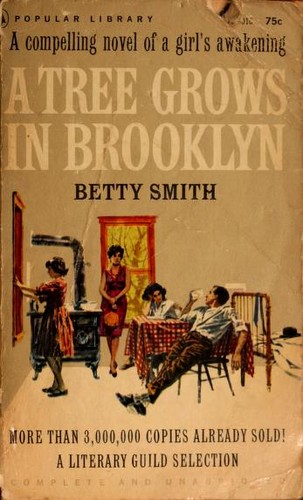
Read this if you loved watching a smart girl grow up page by page.
Betty Smith's 1943 classic is Mockingbird's nearest cousin in the coming-of-age half of the book. Francie Nolan, like Scout, is an observant, book-hungry girl narrating her childhood, and Smith gives her the same gift Lee gives Scout: a child's flat honesty about adults, money, drink, and unfairness, reported before she can fully judge it. The love between Francie and her flawed father sits where Scout's bond with Atticus sits, as the emotional spine of the book.
The setting trades small-town Alabama for tenement Brooklyn in the 1910s, and the subject trades racial injustice for poverty; there is no trial and no single dramatic crisis, just years accumulating. It is also longer and more episodic than Mockingbird, a book to live in rather than race through. If Scout's voice and the texture of childhood were what you loved, this is the strongest match on the list, and it is the one most likely to become a favorite in its own right.
Read this for the full-scale epic of dignity against injustice.
Steinbeck's 1939 Pulitzer winner shares Mockingbird's era and its moral engine: ordinary people holding on to decency while a system grinds them down. The Joads, driven off their Oklahoma land and west to California, meet the same mix of cruelty and unexpected kindness Scout learns to see in Maycomb, and Steinbeck, like Lee, is openly making an argument about conscience. Ma Joad and Tom Joad belong on the short list of American characters, with Atticus, who stand for doing right when it costs something.
This is the heavyweight on the list: long, angry, and structurally ambitious, with interchapters that zoom out from the family to the whole migration. The injustice is economic rather than racial, and there is no child narrator to soften it. Choose it when you are ready for a commitment, and expect a slow first hundred pages to pay off. Readers who want the same themes at one tenth the length should take Of Mice and Men instead.
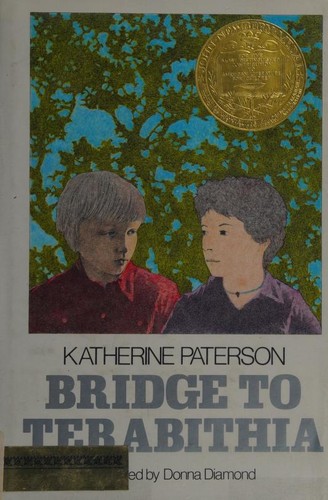
Read this if the childhood half of Mockingbird is what you want more of.
Katherine Paterson's 1977 Newbery winner is the purest childhood story here, and it overlaps with Mockingbird where Scout, Jem, and Dill invent their summer world. Jess and Leslie, two rural Virginia fifth graders, build an imaginary kingdom in the woods, and Paterson treats their friendship and their inner lives with the same seriousness Lee gives her children. Like Mockingbird, it is a book about innocence meeting something it cannot be protected from, and it does not flinch when that moment comes.
It is a middle-grade novel, short and plainly written, and the loss at its center is personal rather than social; there is no courtroom and no commentary on race or class. Adults who read it for the first time are usually surprised by how hard it hits anyway. Pick it to share with a young reader, or to revisit the feeling of Mockingbird's first half. It pairs naturally with the Boo Radley thread: both books are about learning what is real behind the story children tell.
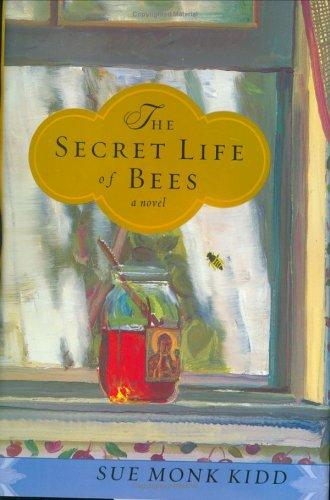
Read this if you want the closest overall match: a girl, the South, and race in 1964.
Sue Monk Kidd's 2002 novel is the book most readers are actually looking for after Mockingbird. Lily Owens is a motherless white girl in South Carolina in 1964, the summer of the Civil Rights Act, who runs away with Rosaleen, the Black woman who raised her, after Rosaleen is beaten for trying to register to vote. The pieces map almost one to one: the young girl narrator, the Southern town's racism seen through her eyes, the Black characters who teach her what her town never would, even an absent mother haunting the story the way Scout's does quietly.
Kidd is warmer and more openly healing than Lee; the beekeeping Boatwright sisters give Lily a refuge Maycomb never offers Scout, and the book leans toward comfort where Mockingbird leans toward verdict. Some readers find the ending generous to a fault. But as a next read it does exactly what you want: the same world and stakes, a new story. Start here if you only take one pick from this list.
Read this if the censorship of conscience is the thread you want to follow.
Bradbury's 1953 novel seems like the odd one out, but the connection is real and it is the reason the two books share so many school syllabi: both are about a society that protects its comfort by silencing what disturbs it, and about one person who decides to stop going along. Montag, the fireman who burns books and then begins to save them, makes the same kind of turn Atticus asks the jury to make, choosing conscience over the crowd. Mockingbird itself has been a frequent target of book bans, which gives the pairing an extra charge.
Everything else is different: a fast, strange dystopian future instead of a remembered Southern childhood, no children, no trial, and Bradbury's hot, image-heavy prose instead of Lee's easy storytelling. It is also very short. Pick it if the ideas in Mockingbird, conformity, courage, what a town refuses to hear, interest you as much as the people. If you want another childhood or another courtroom, take any other book on this list first.
What book is most similar to To Kill a Mockingbird?
The Secret Life of Bees by Sue Monk Kidd is the closest overall match: a young white girl in the 1960s South confronting her town's racism with the help of Black characters who become her real family. The Help covers the most similar subject matter, and A Tree Grows in Brooklyn is the closest match for Scout's coming-of-age voice.
Did Harper Lee write any other books?
One. Go Set a Watchman, published in 2015, was written before Mockingbird and features an adult Scout returning to Maycomb; its portrayal of an older, segregationist-leaning Atticus startled many readers. It is best approached as an early draft and a historical curiosity rather than a true sequel, which is why it is not on this list.
Is To Kill a Mockingbird based on a true story?
Not directly, but it draws heavily on Harper Lee's life. She grew up in Monroeville, Alabama, the model for Maycomb; her father was a lawyer who had defended Black clients; and the character Dill was based on her childhood friend Truman Capote. The trial is fictional, though it echoes real Southern cases of the era such as the Scottsboro trials.
Which of these books is best for a younger reader?
Bridge to Terabithia, which is written for middle-grade readers and shares Mockingbird's themes of friendship and lost innocence, though its central loss is heavy. A Tree Grows in Brooklyn works well for strong middle school readers. The Catcher in the Rye and The Grapes of Wrath are better saved for high school and up.
As an Amazon Associate, we earn from qualifying purchases. · About & methodology