8 books like the Tao Te Ching, from the Chuang Tzu to Meditations and the Dhammapada: ancient wisdom texts matched to what drew you to Laozi.
Updated June 10, 2026
The Tao Te Ching is about five thousand Chinese characters long, short enough to read in an hour, and people have spent twenty-five centuries arguing about what it means. Attributed to Laozi, a figure who may or may not have existed, its eighty-one brief chapters teach through paradox: the soft overcomes the hard, the usefulness of a pot is the emptiness inside it, the best ruler is one the people barely notice. The core idea, wu wei, acting without forcing, is less a doctrine than a posture toward life, which is why the book reads differently every time you return to it.
Where you go next depends on what drew you in. If it was Taoism itself, the two essential follow-ups are The Book of Chuang Tzu, the tradition's other founding text and its funniest, and Alan Watts's Tao: The Watercourse Way, the best modern explanation. If it was the form, compressed wisdom from an ancient tradition, the Dhammapada, The Upanishads, and Meditations offer the Buddhist, Hindu, and Stoic counterparts. The Art of War shows the same Chinese strategic worldview applied to conflict, Siddhartha turns the search into a novel, and Thich Nhat Hanh brings the contemplative life into modern practice.
A note on editions: with the Tao Te Ching and its companions here, the translator matters as much as the text. Stephen Mitchell and Ursula K. Le Guin offer free, poetic versions of Laozi, while D.C. Lau and Red Pine stay closer to the Chinese. Whatever you pick next, read it the way these texts were built to be read, a few lines at a time, not straight through.
Read this only if you want the Tao applied to conflict and strategy.
Sun Tzu's treatise comes from the same broad era and intellectual world as the Tao Te Ching, and the family resemblance is real: victory through positioning rather than force, the supreme excellence of winning without fighting, water as the model strategist, formless and adaptive. The Tao Te Ching itself contains chapters on warfare and statecraft, and many scholars read the two books as cousins, Taoist principles turned to the specific problem of conflict. The famous line that the skilled warrior subdues the enemy without battle could sit in Laozi unnoticed.
But be clear about what you are getting: a field manual, organized by topic (terrain, spies, fire attacks), with none of Laozi's spiritual or cosmic dimension. Its modern audience reads it for business and competition, which tells you the register. Pick it up if the strategic, advice-to-rulers side of the Tao Te Ching interested you; skip it if what you loved was the mysticism, because there is none here.
Read this if you want the Buddhist counterpart to Laozi's verses.
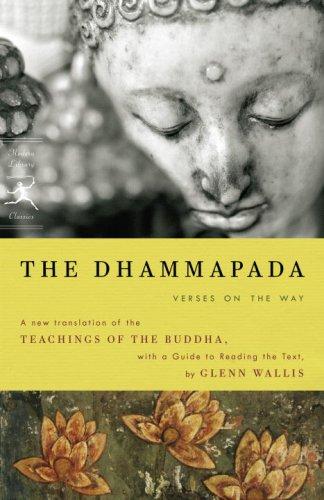
The Dhammapada is the closest thing Buddhism has to the Tao Te Ching: a short anthology of verses, traditionally attributed to the Buddha himself, that compresses an entire tradition into lines you can carry around. Its themes rhyme with Laozi's, the untrained mind as the source of suffering, the strength of gentleness, the praise of the sage who wants little, and like the Tao Te Ching it is a book to keep beside the bed rather than finish.
The difference is direction. Where Laozi is cosmic and elusive, pointing at a Way that cannot be named, the Dhammapada is practical and moral, a trainer's manual for the mind, with clear teachings on craving, anger, and discipline. There is less paradox and more instruction. Eknath Easwaran's translation is a good first edition for the same reason his Upanishads is, plain English with helpful introductions. Choose this when you want the contemplative register with more concrete guidance.
Read this if you want the other founding text of Taoism, with jokes.
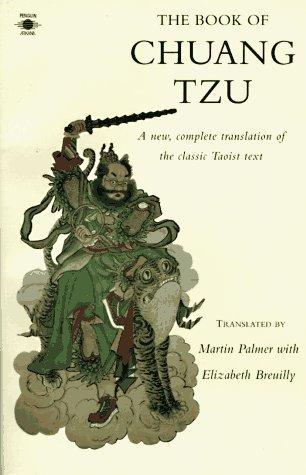
If the Tao Te Ching is Taoism's poem, the Chuang Tzu (also spelled Zhuangzi) is its storybook, and together they are the tradition's two foundations. Attributed to the philosopher Zhuang Zhou of the fourth century BC, it teaches the same vision, the futility of forcing life, the relativity of human categories, the wisdom of the useless, but through parables, dialogues, and deadpan comedy. This is the book with the butcher whose blade never dulls because he follows the spaces in the ox, and the philosopher who dreamed he was a butterfly and woke unsure which he was.
It is longer, looser, and stranger than the Tao Te Ching, an anthology of varying age and authorship rather than a tight sequence of chapters, and it cares nothing for the Tao Te Ching's advice to rulers; Chuang Tzu famously preferred dragging his tail in the mud to a court position. Readers who found Laozi too austere usually love it, and readers who wanted aphorisms to memorize may find it sprawling. Either way, you do not really know Taoism until you have read it.
Read this if you want the search for the Way told as a story.
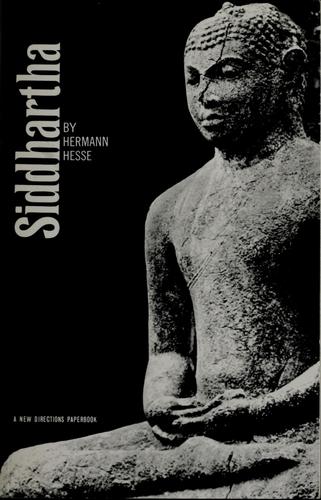
Hermann Hesse's 1922 novel is what happens when the themes of this list become a life you can follow. Siddhartha tries every path in turn, asceticism, the Buddha's own teaching, wealth and pleasure, despair, and finally learns from a river what no doctrine could give him: that wisdom is not transferable and that everything flows. That last lesson is almost a dramatization of the Tao Te Ching's opening line, the Tao that can be told is not the eternal Tao, and the river is as Taoist an image as Hesse could have chosen.
It is the only fiction here, and the easiest entry point on the list, a short lyrical novel you can read in two sittings. The trade-off is that it is a Western writer's twentieth-century synthesis of Indian and Chinese ideas rather than a primary text, and readers steeped in the originals sometimes find it sweetened. If you loved the Tao Te Ching's spirit but want characters, narrative, and an emotional arc, start here and circle back to the sources.
Read this for the Hindu tradition's deepest answer to the same questions.
The Upanishads are ancient Indian texts, the philosophical core of the Vedas, and they go after the same ultimate target as the Tao Te Ching: the unnameable reality behind appearances. Where Laozi calls it the Tao, the Upanishads call it Brahman, and their central teaching, that the self at your core (Atman) and that ultimate reality are one, is delivered through dialogues, images, and aphorisms with the same compressed, oracular power. Tat tvam asi, you are that, is as resonant a four words as anything in Laozi.
This edition is Eknath Easwaran's translation and selection, which is the right first one: clear modern English with introductions to each text, listed under his name because the originals are anonymous. Expect a more metaphysical and devotional book than the Tao Te Ching, concerned with the soul, death, and liberation rather than statecraft and conduct, and expect to read selectively; these are many texts of varying difficulty, not one short sequence. It rewards slow reading more than any other book on this list.
Read this if you want the contemplative path laid out as practice, not poetry.
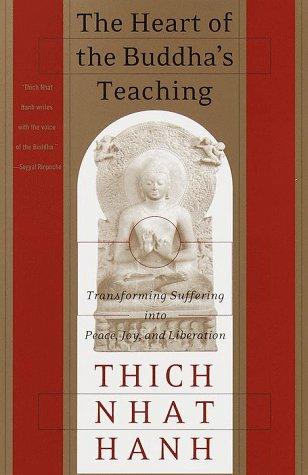
Thich Nhat Hanh, the Vietnamese Zen teacher, wrote this as a complete plain-language tour of Buddhist fundamentals: the Four Noble Truths, the Eightfold Path, mindfulness, and his signature idea of interbeing, the radical interdependence of all things. That last theme is where it touches the Tao Te Ching most directly, and Zen itself grew partly from the meeting of Buddhism and Taoism in China, so the gentle, non-forcing sensibility will feel familiar. Of everything on this list, it is the book most concerned with what you actually do tomorrow morning.
It is a teaching manual rather than a wisdom text, systematic where Laozi is elliptical, and it has none of the Tao Te Ching's mystery; everything is explained, often twice, with great patience. Readers who love the poetry of the older texts can find it plain. Choose it when admiration for the contemplative classics starts shading into wanting a practice, because that is precisely the gap it fills.
Read this if you want a Western mind working toward the same equanimity.
Marcus Aurelius wrote these notes to himself while running the Roman Empire and its wars in the second century, never intending publication, and the result is the West's great book of applied equanimity. The overlaps with the Tao Te Ching are striking: accept what nature brings, do not be ruled by praise or blame, observe the constant flow and transformation of all things, lead without grasping. Both are short books by (or attributed to) men with power, arguing that the way to wield it is lightly.
The flavor is entirely different. Stoicism is effortful where Taoism is effortless: Marcus grinds at his own discipline, repeating reminders, scolding himself out of bed, where Laozi counsels yielding like water. The Meditations is also personal and repetitive in a moving way, a man you can watch struggling, rather than an anonymous oracle. If the Tao Te Ching's serenity felt out of reach, Marcus is the companion who shows the work behind it. Gregory Hays's translation is the most readable.
Read this for the clearest modern explanation of what Laozi is actually saying.
Alan Watts spent his career translating Eastern thought for Western readers, and this, his final book, completed with the scholar Al Chung-liang Huang after Watts died in 1973, is his account of Taoism itself. It walks through the key ideas the Tao Te Ching delivers only in riddles, the Tao, wu wei, te, the water imagery, with Watts's gift for the unforced analogy, and it takes the Chinese language seriously, discussing how the written characters shape the thought. If you finished Laozi suspecting you had missed something, this is the book that tells you what.
It is commentary, not scripture, and that is the trade: you get clarity and warmth instead of the original's compression and mystery, plus a certain amount of Watts's own 1970s-flavored philosophizing, which charms most readers and dates the book for some. Scholars quibble with him; general readers rarely do. Read it alongside or just after the Tao Te Ching and the older text opens up considerably.
The Book of Chuang Tzu is the standard answer and the right one. It is the second founding text of Taoism, teaching the same ideas through parables and humor instead of verse, and the two books have been read together for over two thousand years. If you want a modern guide first, Alan Watts's Tao: The Watercourse Way explains the core concepts clearly before you go deeper into the primary texts.
Which translation of the Tao Te Ching is best?
It depends what you want. Stephen Mitchell's version is the most popular and very readable, though it is a free interpretation rather than a strict translation. Ursula K. Le Guin's rendition is similar in spirit and beautifully phrased. For accuracy, D.C. Lau's Penguin translation is the scholarly standard, and Red Pine's edition includes traditional Chinese commentaries. Many readers keep one poetic and one literal version side by side.
Is the Tao Te Ching a religious text?
Both yes and no. It is the foundational scripture of religious Taoism, which developed temples, rituals, and a priesthood around it centuries after it was written. But the text itself is philosophy and poetry, with no gods to worship or rules to follow, which is why it is read worldwide by people of every religion and none. You need no belief commitment to read it, or any book on this list.
Was Laozi a real person?
Probably not in the way tradition describes. Legend makes him an older contemporary of Confucius, an archivist who wrote the text in one sitting before vanishing into the west, but historians doubt the story, and the book itself shows signs of being compiled from oral tradition over time, reaching something like its current form around the fourth or third century BC. The uncertainty changes nothing about the text, which has always stood on its own.
As an Amazon Associate, we earn from qualifying purchases. · About & methodology