8 books like The Slight Edge by Jeff Olson, from Atomic Habits to The Compound Effect: small daily disciplines, habits, and mindset matched to what you loved.
Updated June 10, 2026
Jeff Olson's The Slight Edge makes one argument and makes it relentlessly: success is not the result of dramatic moves but of small, easy daily disciplines that compound over time, and failure is the result of equally small, easy errors in judgment repeated just as consistently. Reading ten pages of a good book, eating slightly better, saving a few dollars: each choice is trivially easy to do and trivially easy to skip, and Olson's whole philosophy is that the difference between those two is the entire difference between where people end up. It is less a system than a way of seeing, which is both its power and its limitation.
Readers who finish it usually want one of three things next, and this list covers all three. Some want the mechanics Olson deliberately leaves out, the actual how of building daily behaviors, which is where Atomic Habits and The Power of Habit come in. Some want the same compounding philosophy from a different angle, which The Compound Effect delivers almost exactly and Mindset and The 7 Habits of Highly Effective People deliver at the level of character and outlook. And some want the philosophy embodied rather than explained, through David Goggins's extremity in Can't Hurt Me or Santiago's quieter persistence in The Alchemist.
A practical note: there is heavy overlap in the ideas across these books, so reading all eight back to back will feel repetitive. Pick by the gap you want filled. If The Slight Edge convinced you but left you without a method, go straight to Atomic Habits. Each entry below tells you which part of Olson it echoes and where it goes further.
Read this if The Slight Edge convinced you but left you without a method.
James Clear's Atomic Habits is built on the identical premise as The Slight Edge: tiny improvements, repeated daily, compound into remarkable results. Clear even uses the same kind of math Olson does, the one percent better every day framing, and the same insistence that you will not notice the payoff for a long time. If Olson's philosophy of easy-to-do, easy-not-to-do choices rang true for you, Clear is making the same case from the same ground.
The difference is that Clear actually hands you the machinery. Where Olson stays at the level of worldview, Atomic Habits gives you a four-part model (cue, craving, response, reward) and concrete tactics like habit stacking, environment design, and the two-minute rule. It is the practical sequel The Slight Edge never wrote, and it is better organized and more rigorously sourced. The trade-off is that it has less of Olson's personal, motivational warmth. Most readers should make this their immediate next read.
Read this for the research behind why some people keep showing up daily and others quit.
Carol Dweck's Mindset supplies something The Slight Edge asserts but never proves: an explanation, grounded in decades of psychology research, for why some people sustain small daily efforts and others abandon them. Dweck's distinction between a fixed mindset (abilities are static, so effort is pointless) and a growth mindset (abilities are built, so effort is the whole game) maps directly onto Olson's divide between people who do the easy disciplines and people who skip them. Olson's slight edge only works for someone who believes improvement is possible, and Dweck explains where that belief comes from.
This is a different kind of book, though: a Stanford psychologist working through evidence and case studies from sports, business, parenting, and education, not a motivational philosophy delivered in a salesman's voice. It is slower and more repetitive in the middle chapters, a common criticism. Pick it if you want the why underneath the daily disciplines, or if you keep starting habit systems and quitting them, because the quitting is usually a mindset problem rather than a system problem.
Read this if you want The Slight Edge's exact argument with more worksheets and edges.
Darren Hardy's The Compound Effect is the closest book to The Slight Edge in existence, to the point that readers regularly debate which to read first. Both argue that small, smart choices repeated consistently over time produce radical results, both lean on the compounding metaphor, and both come out of the same success-and-personal-development world (Hardy was publisher of SUCCESS magazine). If you want to stay inside Olson's philosophy a little longer, this is the same sermon from a different pulpit.
Hardy is more tactical and more demanding. The Compound Effect pushes tracking, measuring every small behavior in writing, auditing your influences and associations, and includes worksheets and action steps where Olson mostly offers perspective. The tone is also harder edged, with more emphasis on personal responsibility and no-excuses ownership. Choose it over rereading Olson if you want accountability tools; skip it if one book of this exact philosophy was enough, because the overlap is genuinely large.
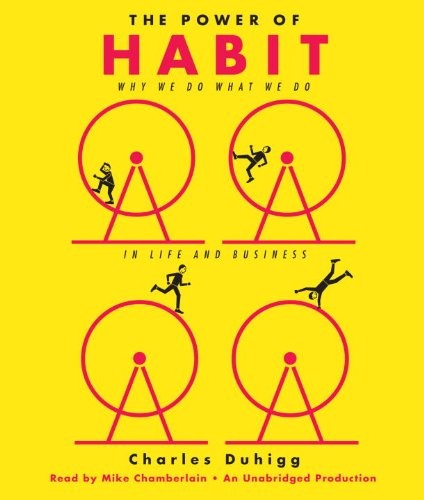
The Power of Habit: Why We Do What We Do in Life and Business
by Charles Duhigg
Read this if you want the science and stories behind why daily routines run your life.
Charles Duhigg's The Power of Habit covers the same territory as The Slight Edge, the outsized power of small repeated behaviors, but from a journalist's angle rather than a motivator's. Duhigg explains the habit loop of cue, routine, and reward, and shows it operating everywhere from Olympic swimmers to Alcoa's safety culture to how Target predicts customer behavior. It gives Olson's daily disciplines a neurological and organizational backbone: these small actions matter because the brain automates them, for you or against you.
The difference is purpose. Duhigg is telling you how habits work; he is much lighter on telling you what to do about it, which frustrated enough readers that he added an appendix on applying the framework. It is also a broader book, spending whole chapters on companies and social movements rather than personal success. Pick this if you enjoy narrative nonfiction in the Malcolm Gladwell vein and want understanding; pick Atomic Habits if you mainly want instructions.
Read this if you want the slight edge philosophy taken to its absolute extreme.
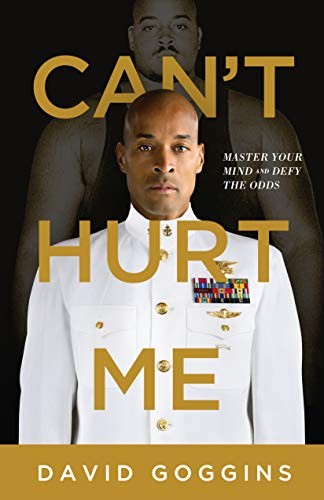
David Goggins's memoir is what The Slight Edge looks like with the volume turned all the way up. Goggins went from an abused childhood and a dead-end job to becoming a Navy SEAL and an ultra-endurance athlete through exactly the mechanism Olson describes: repeated, unglamorous daily choices to do the hard thing, made over years. His concepts like the 40 percent rule (when your mind says you are done, you have far more left) and the accountability mirror are slight-edge disciplines pushed to a level Olson never asks of anyone.
Be clear about what you are picking up, though. This is a raw, profanity-heavy memoir of suffering and self-punishment, not a friendly philosophy of reading ten pages a night. Goggins treats pain as the curriculum, and some readers find the approach inspiring while others find it a template for self-destruction. Choose it when you need fuel rather than framework, and when Olson's gentle compounding feels too comfortable to move you.
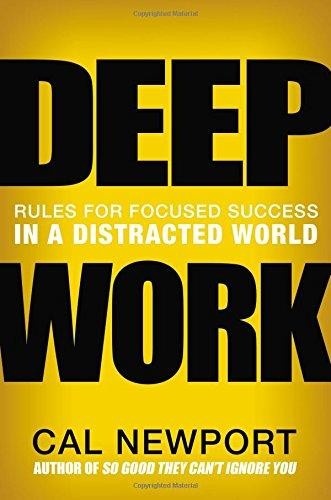
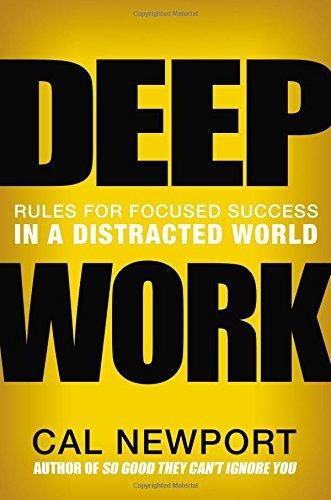
Deep Work: Rules for Focused Success in a Distracted World
by Cal Newport
Read this if your slight edge discipline should be focus itself.
Cal Newport's Deep Work shares The Slight Edge's core structure: a single high-leverage behavior, practiced consistently while everyone around you skips it, compounds into a rare and valuable advantage. For Newport that behavior is sustained, distraction-free concentration. His argument that deep work is becoming more valuable exactly as it becomes more rare is the slight edge logic applied to the modern knowledge economy, where the easy error in judgment is checking your phone and the easy discipline is a protected ninety-minute block.
Newport is a more demanding and more intellectual writer than Olson, a computer science professor who builds his case through research and profiles rather than motivational reframing, and the book includes concrete rules and schedules for structuring focused time. It is narrower than The Slight Edge on purpose: it is about your working hours, not your whole life. Pick it if your career runs on cognitive output and you suspect distraction is the specific place you are losing the compounding game.
Read this for the foundational text the whole genre, Olson included, builds on.
Stephen Covey's 1989 classic is the book that established the territory The Slight Edge works in: the idea that effectiveness comes from character and consistent practice rather than quick techniques. Covey's habits, from Be Proactive through Sharpen the Saw, are exactly the kind of ongoing daily disciplines Olson advocates, and his distinction between the clock and the compass, between managing time and living by principles, gives the slight edge philosophy a moral depth Olson gestures at but does not develop. Olson's debt to Covey is obvious on nearly every page.
It is also a denser, more demanding read than The Slight Edge, written in an earnest, sometimes dated corporate-seminar register, with frameworks (the maturity continuum, quadrants of urgency and importance, emotional bank accounts) that take real effort to absorb. Choose it if you want the sturdiest and most complete version of this genre, the one the others quote. Skip ahead to lighter books if Covey's seriousness reads as homework to you.
Read this if you want the philosophy as a story instead of a lecture.
Paulo Coelho's fable is the only fiction on this list, and its connection to The Slight Edge is real but loose: both insist that ordinary, persistent steps in the direction of what you want will, over time, carry you somewhere remarkable. Santiago the shepherd crosses from Spain toward the Egyptian pyramids one decision at a time, learning from setbacks, and the book's famous lesson that the journey itself does the transforming is a storyteller's version of Olson's claim that who you become through daily practice matters more than any single result.
Know what you are trading. There are no habits, no systems, and no action steps here, just a short parable about omens, destiny, and following your Personal Legend, told in a simple, almost scriptural register that readers find either luminous or thin. It works best as a palate cleanser between the nonfiction picks, something to restore the why when the how starts feeling mechanical. Read it in an afternoon when your motivation, not your method, is what has gone missing.
The Compound Effect by Darren Hardy is the closest match. Both argue that small choices repeated consistently compound into dramatic results over time, and they come out of the same personal-development world. Atomic Habits by James Clear is the other near neighbor, and it adds the practical system for building habits that The Slight Edge deliberately leaves out.
Should I read The Slight Edge or Atomic Habits first?
It depends on what you need. The Slight Edge is the philosophy: why small daily choices matter and how to see your life through that lens. Atomic Habits is the method: how to actually design, start, and keep the habits. Many readers find Olson best as motivation and Clear best as instruction, so reading Olson first and Clear second is a natural sequence.
Is The Slight Edge worth reading if I have already read Atomic Habits?
Only if you want reinforcement rather than new information. The core compounding idea is the same, and Clear's book is more systematic and better sourced. What Olson adds is a broader life philosophy, including his emphasis on how easy disciplines are to skip and his focus on attitude and personal responsibility, delivered in a warmer motivational voice. There is no new mechanism you will be missing.
What is the main idea of The Slight Edge?
That success and failure both come from small, mundane choices repeated daily, not from big dramatic moments. Actions that are easy to do, like reading ten pages or saving a little money, are also easy not to do, and the compounding difference between doing them and skipping them, sustained over years, is what separates outcomes. Olson argues the results are invisible at first, which is why most people quit before the curve bends.
As an Amazon Associate, we earn from qualifying purchases. · About & methodology