8 books like The Pretender by Jo Harkin, from The Talented Mr. Ripley to The Secret History: novels of invented identity, deception, and the cost of the lie.
Updated June 10, 2026
Jo Harkin's The Pretender takes one of the strangest footnotes in English history, the boy known as Lambert Simnel who was put forward as a claimant to Henry VII's throne in 1487, and turns it into a novel about what happens to a person who is taught to be someone else. A peasant boy is plucked from a farm, drilled in the manners and memories of a nobleman, and paraded as the rightful heir, and Harkin's interest is less in the battle plans than in the boy's head: once you have performed an identity convincingly enough, which self is the real one? It is historical fiction with the psychology of a con novel, told with wit and an earthy, unromantic view of Tudor power.
Fair warning about this list: it follows the identity-and-deception thread rather than the Tudor one. If you finished The Pretender wanting more people who build false selves and live inside them, The Talented Mr. Ripley and Fight Club are the strongest matches. If what hooked you was a closed world of clever people justifying something terrible, The Secret History sits closest. And if you want the twisty, secrets-coming-out side of the experience, Gone Girl, Big Little Lies, and We Were Liars carry it into the modern domestic thriller.
A practical note: these books range from literary classics to fast commercial thrillers, so match the pick to your mood. None of them is set in the fifteenth century, but the question Harkin asks, what a performed life does to the performer, runs through every one of them.
Read this if the imposture itself was what gripped you.
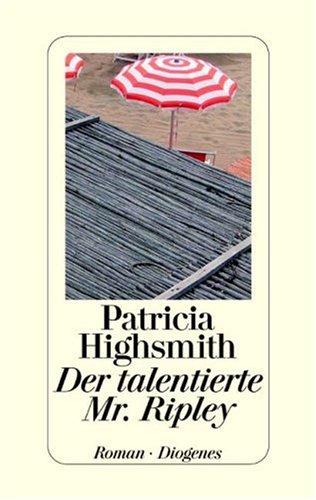
Patricia Highsmith's 1955 novel is the definitive book about becoming someone else, which makes it the natural next stop after The Pretender. Tom Ripley, a young nobody, attaches himself to the wealthy Dickie Greenleaf, studies his clothes, voice, and signature, and eventually steps into his life entirely. Like Harkin's boy king, Ripley discovers that the borrowed identity fits better than the original, and Highsmith puts you so deep inside his rationalizations that the deception starts to feel like self-realization.
The difference is moral temperature. Harkin's pretender is largely a pawn, a boy used by powerful men, and the novel keeps a vein of sympathy and humor running through it. Ripley is the author of his own crimes, including murder, and Highsmith refuses to punish or even judge him. It is colder, leaner, and genuinely unsettling. Pick it if you want the psychology of impersonation pushed to its amoral conclusion, and know there are four sequels waiting if it takes.
Read this if you want performed identity inside a propulsive modern thriller.
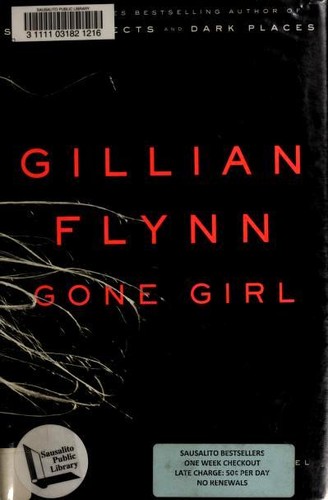
Gillian Flynn's 2012 bestseller shares The Pretender's core insight: that a self can be constructed, rehearsed, and deployed on an audience. When Amy Dunne disappears on her fifth wedding anniversary, the novel becomes a study of the versions of themselves that she and her husband Nick have performed, for each other, for the media, and for us. The famous midpoint turn lands precisely because Flynn, like Harkin, has been showing you a fabricated person and daring you to believe it.
This is a contemporary domestic thriller, not historical fiction, and it moves at twice the speed. Flynn's tone is acid where Harkin's is wry, and the marriage at the center is a battlefield rather than a court. If you came to The Pretender for texture and period detail, this will feel like a different sport. But if the unreliable selves and the slow reveal of who is conning whom were the draw, this is the most efficient delivery system on the list.
Read this for the young narrator who sees everyone else as the phony.
The connection here is the word Holden Caulfield made famous: phonies. Salinger's 1951 novel is narrated by a teenager convinced that nearly every adult he meets is performing a false self, and his weekend adrift in New York is one long catalogue of the poses people strike. Harkin's pretender is a boy forced into the most extreme performance imaginable, and Holden is his inverse, a boy who would rather fall apart than perform at all. Both novels live inside a young narrator's voice and both are really about the gap between the self you show and the self you are.
Everything else differs. There is no plot to speak of, no deception scheme, no stakes beyond one boy's unraveling, and Holden's voice, slangy and circling, is a thing readers either love or find exhausting. Pick this up if the coming-of-age strand of The Pretender mattered to you, the boy trying to locate a real self under the costume, rather than the intrigue.
Read this if you want clever insiders, a closed world, and a crime everyone helps conceal.
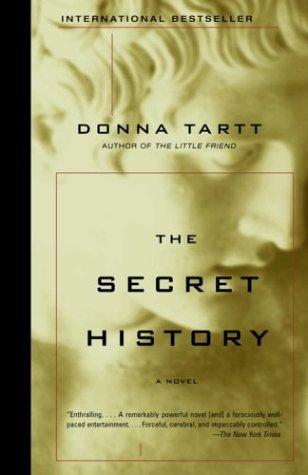
Donna Tartt's 1992 novel is the strongest literary pairing here. Richard Papen, a scholarship kid, talks his way into an elite circle of classics students at a Vermont college partly by inventing a more glamorous past for himself, a small act of pretending that pulls him into the group's much larger crime. Like The Pretender, it is about an outsider performing his way into a world of privilege and discovering what the privileged will do to protect themselves, and like Harkin, Tartt cares about atmosphere, learning, and the seductions of belonging.
It is slower and more immersive than anything else on this list, an inverted murder mystery where you know the killing from page one and watch the moral consequences unspool over 500 pages. There is no royal plot and no historical setting, but the machinery of complicity, the way ordinary people talk themselves into the indefensible, is the same machinery that moves Harkin's nobles. The best choice if you want a novel you can live inside for a week.
Read this if you want the family-myth version of the theme, told as memoir.
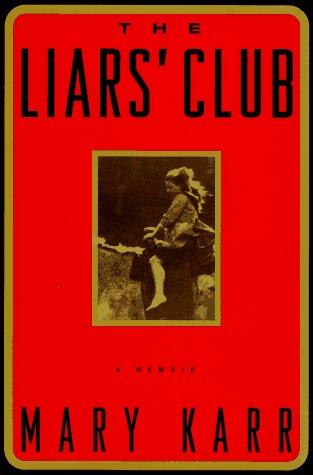
Mary Karr's 1995 memoir of her childhood in a Texas oil town takes its title from the circle of men, her father among them, who swapped tall tales at the local bar. It belongs on this list because it is about the stories families tell to survive: the polished versions, the omissions, the secrets that surface decades later. Karr grew up inside a household of brilliant, unstable mythmakers, and her project is the same one Harkin gives her pretender, sorting the true self and the true history out from the performances.
It is the only nonfiction on the list, and the register is completely different: no court intrigue, no plot twists, just a ferociously well-written account of a hard childhood, with real darkness handled without self-pity. Karr's voice, funny and exact, is the reason the book became a landmark of the modern memoir. Choose it when you want truth-and-lies as lived experience rather than as a thriller mechanism.
Read this for facades maintained in public and the damage behind them.
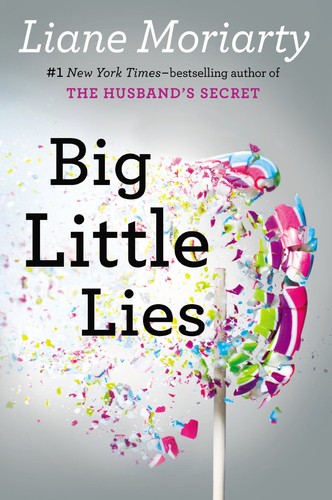
Liane Moriarty's novel is about pretending as a social survival skill. Three mothers in an Australian beach town curate flawless public selves, perfect marriage, perfect house, perfect calm, while the truth underneath (abuse, secrets, old wounds) builds toward a death at a school trivia night. The kinship with The Pretender is the gap between performance and reality: everyone in Moriarty's town is playing a part for an audience, and the novel's engine is watching the parts slip.
This is the warmest and most commercial book on the list. Moriarty writes with humor and real sympathy, and the structure, counting down to the fatal night with a chorus of gossiping witnesses, makes it extremely easy to read fast. It has none of Harkin's historical texture or political stakes, and the lies here are domestic rather than dynastic. Pick it when you want the deception theme in a comfortable, page-turning package with a sharp edge of social observation.
Read this if you want identity invention taken to its most extreme conclusion.
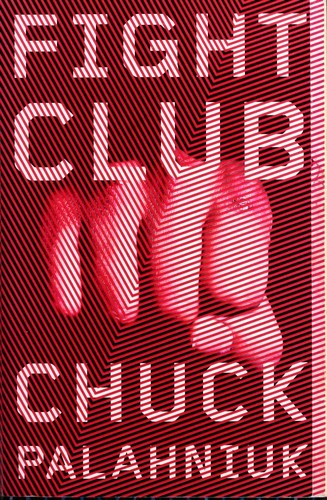
Chuck Palahniuk's 1996 novel pushes The Pretender's question, what happens when you build a second self, into outright rupture. An insomniac office worker meets the charismatic soap salesman Tyler Durden, founds an underground fight club with him, and watches his life be taken over by a persona more vivid and more dangerous than his own. The famous twist makes it the purest case study here of a constructed identity escaping its maker's control, which is exactly the fear that shadows Harkin's boy as he is rebuilt into a prince.
The packaging could not be less Tudor: transgressive satire of consumer culture and masculinity, told in clipped, aggressive prose, with violence on nearly every page. It is a short, fast, deliberately abrasive book, and readers who wanted Harkin's warmth and period detail may bounce off it. Choose it if the identity-splitting psychology was your hook and you want it loud.
Read this for a privileged family's myth and the twist that demolishes it.
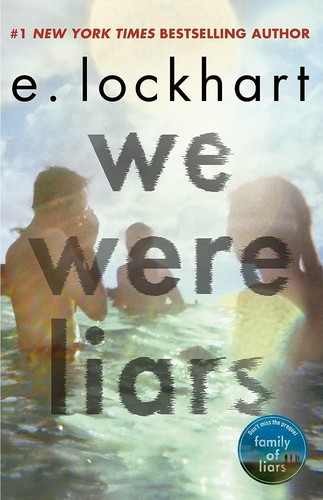
E. Lockhart's novel is set among the Sinclairs, an old-money family who summer on a private island and maintain a gleaming collective story about themselves, no failures, no addiction, no rot. The narrator, Cadence, has lost her memory of one summer, and the book is her excavation of what the family's pretending has buried. Like The Pretender, it is about a young person trapped inside a fiction that powerful adults need to be true, and about the moment the fiction breaks.
It is a young adult novel, short and stylized, written in fragmented, sometimes deliberately overwrought prose, and built almost entirely around its final reveal. That makes it the quickest read here, an evening at most, and also the most divisive: the twist lands hard for most readers and feels manipulative to a few. A good fit for a fast palate cleanser after Harkin, or for sharing with a teenage reader who liked the themes.
It is a historical novel based on Lambert Simnel, the boy put forward in 1487 as a Yorkist claimant to Henry VII's English throne. Harkin imagines the peasant child taken from his family, trained to impersonate a nobleman, and used as a figurehead in a rebellion. The novel focuses on what that manufactured identity does to the boy himself, told with humor and rich period detail.
What should I read if I want more historical fiction like The Pretender?
This list follows the identity-and-deception thread rather than the period one, so for the Tudor angle look beyond it to Hilary Mantel's Wolf Hall trilogy, the closest match in seriousness and court politics, or Maggie O'Farrell's Hamnet for literary historical fiction with a similar emotional core. On this list, The Secret History comes closest to Harkin's literary register.
What book is most similar to The Pretender?
The Talented Mr. Ripley is the strongest single match. Both books follow a young man of low status who is trained, or trains himself, to pass as someone of high status, and both are more interested in the psychology of the imposture than the mechanics. Ripley is darker and more amoral, while Harkin keeps more sympathy and humor in the mix.
Was Lambert Simnel a real person?
Yes. Lambert Simnel was a real boy crowned in Dublin in 1487 as a pretender to the English crown, with his backers claiming he was Edward, Earl of Warwick. After the rebellion was crushed at the Battle of Stoke Field, Henry VII spared him and famously put him to work in the royal kitchens. Harkin's novel invents his inner life but builds on that documented history.
As an Amazon Associate, we earn from qualifying purchases. · About & methodology