7 books like The Secret History by Donna Tartt: dark academia from If We Were Villains to The Likeness, matched to what hooked you in Tartt.
Updated June 10, 2026
Donna Tartt's The Secret History did something unusual for a murder story: it told you who died and who did it on the first page, then made the next five hundred pages riveting anyway. Richard Papen falls in with five Greek students at an elite Vermont college, and the novel is less a whodunit than a whydunit, a slow study of how beauty worship, snobbery, and group loyalty curdle into killing. It effectively invented the genre readers now call dark academia, and thirty years on it is still the book every campus novel gets measured against.
Readers who finish it tend to want one of three things, and this list covers all of them. If you want the campus-clique-with-a-body formula done again, If We Were Villains and The Likeness are the two books most often handed to Tartt fans, with Special Topics in Calamity Physics close behind. If you want more of Tartt herself, The Goldfinch is her biggest novel since. And if what stayed with you was the psychology, the dark interior of a young person at an elite school, The Bell Jar and A Separate Peace are the older books standing behind the genre, with The Secret Keeper here for readers who mainly want long-buried secrets unearthed.
A practical note: none of these are quick reads in the thriller sense. Tartt readers tend to like immersion, and most of these reward it. Each entry below says which part of The Secret History it echoes, the clique, the crime, or the prose, so you can pick by what actually hooked you.
Read this if you want The Secret History's exact formula with Shakespeare instead of Greek.
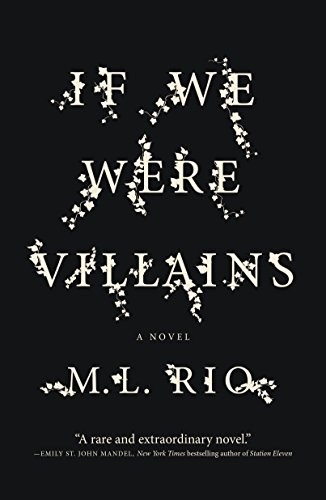
M.L. Rio's novel is the closest match on this list, and it knows it. Seven theater students at an elite conservatory live and breathe Shakespeare the way Tartt's students live and breathe Greek, casting each other in fixed roles (the hero, the tyrant, the ingenue) until one of them turns up dead. Like Tartt, Rio opens with the aftermath, an ex-student leaving prison, and works backward into how a closed circle of brilliant, theatrical young people talked themselves into the unthinkable. The obsessive devotion to a classical canon, the charismatic teacher, the group guilt: every load-bearing beam from The Secret History is here.
The difference is temperature. Rio's students quote Shakespeare at each other constantly, sometimes whole exchanges of it, which readers find either intoxicating or precious; Tartt wore her erudition more lightly. It is also shorter, faster, and more openly romantic than The Secret History, with an emotional ending where Tartt stays cold. If you want the formula replayed with real feeling, start here. If you found Richard's detachment essential to the book, know that Rio trades it for ardor.
Read this for the dark interior life behind the polished collegiate surface.
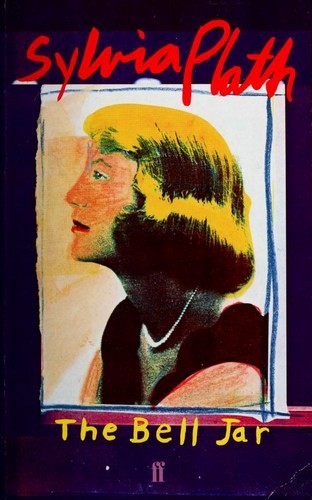
Sylvia Plath's only novel shares The Secret History's real subject, which was never the murder: it is what happens inside a gifted young person whose elite, glittering world stops making sense. Esther Greenwood wins a magazine internship in New York, the kind of prize everyone tells her to be grateful for, and narrates her own unraveling with the same lucid, slightly removed precision Richard Papen uses. Both books are studies in performance, a narrator maintaining a flawless front while something underneath gives way.
There is no clique and no crime here; this is a 1963 semi-autobiographical novel about depression and the impossible expectations placed on a young woman in the 1950s, and it is the most emotionally direct book on this list. It is also short, under 250 pages to Tartt's 550-plus. Pick it if the psychology of The Secret History gripped you more than the plot. Skip it for now if you mainly want another murder, because it offers something heavier instead.
Read this if you want Tartt's closed circle of friends investigated from the inside.
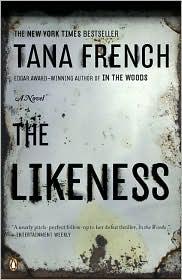
Tana French has said openly that The Secret History influenced her, and The Likeness is the book where it shows. Detective Cassie Maddox goes undercover as a murdered woman who looked exactly like her, moving into Whitethorn House with the victim's four housemates, a sealed, brilliant, faintly aristocratic circle of postgraduate students who have opted out of the ordinary world. The pull of the book is the same pull Richard felt: the seduction of belonging to a beautiful, closed group, and the dawning sense of what that group is capable of protecting.
The frame is different, a police procedural told from outside the clique rather than a confession from within it, and you do have to accept a premise (an undercover cop passing as a dead double) that asks for real suspension of disbelief. French's prose is lush and her pacing patient, much closer to literary fiction than to a standard thriller. It is the second Dublin Murder Squad book but works fine on its own. For most Tartt readers this is the strongest single recommendation in crime fiction.
Read this if you loved the erudition and want it played with a wink.
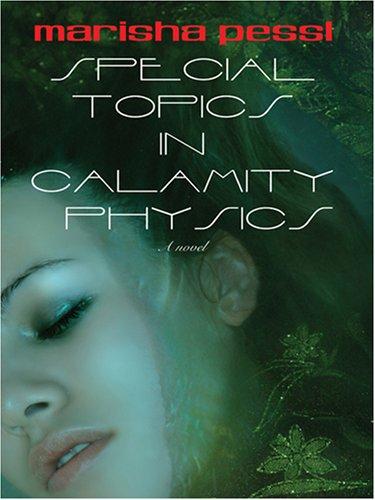
Marisha Pessl's debut is built on the same chassis as The Secret History: a clever outsider narrator, Blue van Meer, is absorbed into a select group of students orbiting a magnetic teacher, and a death cracks the group open. Pessl makes the bookishness literal, structuring the novel as a syllabus with chapters named for Great Books and the text studded with citations, some real and some invented. If the pleasure of Tartt for you was a narrator who reads everything and notices everything, Blue is that narrator turned up to eleven.
It is a much showier book. Where Tartt's style is controlled and classical, Pessl's is dense with similes and footnotes, and readers split on whether the cleverness delights or exhausts. The mystery also swerves in its final third toward outright conspiracy in a way The Secret History never does, trading Tartt's moral weight for puzzle-box momentum. Pick it when you want dark academia with more play and more plot, and accept that it is a high-wire act rather than a marble temple.
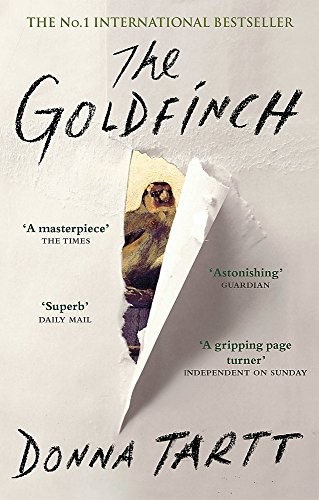
If what you loved was Tartt herself, the long sentences, the obsession with beauty, the guilt that compounds over years, The Goldfinch is the obvious next stop and it won the 2014 Pulitzer Prize for fiction. Theo Decker survives a terrorist bombing at the Metropolitan Museum that kills his mother and walks out with a small Dutch masterpiece, and the stolen painting shadows him from New York to Las Vegas to Amsterdam across more than a decade. Like Richard Papen, Theo narrates his own moral corrosion with terrible clarity, and the novel circles the same question as The Secret History: what people will do, and become, in the service of something beautiful.
It is a bigger, baggier book, nearly 800 pages, with a long Las Vegas middle section that some readers adore and others find slack; The Secret History is the tighter machine. There is no clique and no campus, and the crime is theft rather than murder, so the dark academia trappings are gone even though the moral architecture is identical. Come to it for the voice and the patience, not the formula.
Read this only if buried secrets, not campus cliques, were what held you.
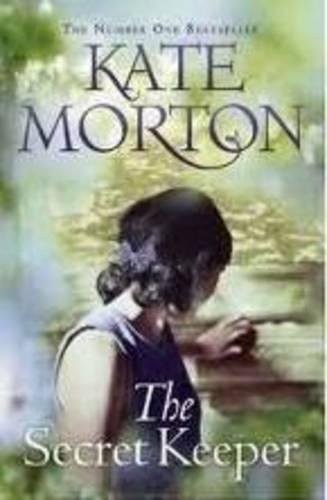
Honesty first: this is the outlier on the list, here for readers whose favorite part of The Secret History was the long shadow of a hidden crime rather than the academic setting. Kate Morton's novel opens with sixteen-year-old Laurel witnessing her mother commit a shocking act of violence at a 1961 family picnic, then jumps to Laurel decades later, finally pulling the thread. The story moves between wartime London in the Blitz and the present as the truth about her mother's past assembles itself piece by piece, and the final reveal genuinely reorders everything you have read.
Everything else is different. Morton writes warm, plot-forward historical family sagas, not cool literary studies in guilt; there is no clique, no campus, and no moral ambiguity about the narrator. The prose is comfortable rather than chiseled. Pick this when you want the pleasure of a decades-old secret expertly unearthed and a twist that lands, and save it for a reading mood that wants comfort with its mystery rather than dread.
Read this for the original campus novel about friendship that turns fatal.
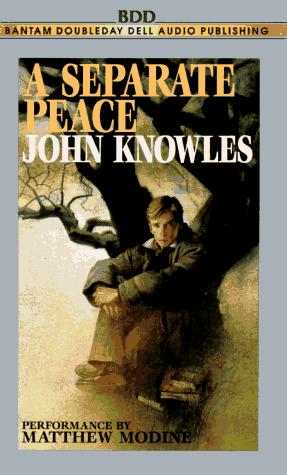
John Knowles's 1959 novel is one of the books standing directly behind The Secret History, and Tartt's debt to it is easy to see. At Devon, a New England boarding school in the shadow of World War II, the studious Gene becomes consumed by envy of his charismatic, athletic best friend Finny, and a single impulsive act on a tree branch sets a tragedy in motion. Like Tartt, Knowles is interested in the aftermath more than the act: an unreliable narrator looking back years later, picking through his own guilt and never quite able to say what he intended in the crucial moment.
It is a leaner and quieter book, under 200 pages, with two boys at its center rather than an ensemble, and the violence is ambiguous where Tartt's is premeditated. It is also a standard of American high school syllabi, so the register is more restrained than anything else here. Read it as the genre's ancestor: the elite school, the magnetic friend, the narrator who cannot be trusted with his own story. It pairs naturally with The Secret History as a before-and-after of the same idea.
If We Were Villains by M.L. Rio is the most common answer, and for good reason: it repeats the structure almost beat for beat, with an elite arts college, a closed clique devoted to a classical canon, a death revealed up front, and a narrator confessing years later. The Likeness by Tana French is the strongest pick for readers who want the same closed-circle seduction inside a crime novel, and French has acknowledged Tartt's influence.
What is dark academia, and did The Secret History start it?
Dark academia describes fiction set in elite academic worlds where the love of beauty, knowledge, and belonging turns obsessive or deadly. The Secret History, published in 1992, is widely treated as the founding text of the genre, though older books like A Separate Peace supplied many of its parts. If We Were Villains and Special Topics in Calamity Physics are two of its best-known descendants.
Should I read The Goldfinch or The Little Friend next if I want more Donna Tartt?
Most readers should go to The Goldfinch, which won the Pulitzer Prize and shares The Secret History's first-person voice, moral weight, and obsession with beauty and guilt. The Little Friend, her 2002 second novel, is a slower Mississippi-set story about a girl investigating her brother's death; it is admired but divides readers and feels less like The Secret History than either of her other books.
Is The Secret History a murder mystery?
Not in the usual sense. The prologue tells you the victim and the killers immediately, so there is nothing to solve. It is sometimes called a whydunit: the suspense comes from watching how a group of classics students arrive at murder and what the secret does to them afterward. Readers who want an actual investigation should look at The Likeness, which wraps similar themes in a true detective plot.
As an Amazon Associate, we earn from qualifying purchases. · About & methodology