6 books like The Picture of Dorian Gray, from Dr Jekyll and Mr Hyde to The Secret History: gothic doubles, beauty, and moral decay.
Updated June 11, 2026
Oscar Wilde's only novel (1890) is a gothic story wearing a drawing-room comedy's clothes. Dorian Gray wishes his portrait would age in his place, and it does: the painting accumulates every cruelty and excess while his face stays untouched, a literal ledger of the soul hidden in the attic. What makes the book singular is the tension between its machinery and its voice. The plot is pure moral horror, corruption, blackmail, murder, but the surface is Lord Henry Wotton's glittering epigrams about beauty, youth, and pleasure, paradoxes Wilde half believed and the novel quietly punishes. You come for the wit and leave with the dread.
No other book has both halves in equal measure, so the list below splits them. For the gothic double and the hidden self, the closest kin are The Strange Case of Dr Jekyll and Mr Hyde, published four years before Dorian and clearly in its bloodstream, and Frankenstein, the original story of a creation that becomes its maker's indictment. For the moral and psychological weight of a crime that cannot be outrun, Crime and Punishment is the heavyweight pick. The Secret History carries Wilde's aestheticism, beauty as a justification for anything, into a modern campus, The Master and Margarita supplies the devilish wit, and The Bell Jar is the outlier, a psychological portrait rather than a gothic one.
A practical note: if you have only read one edition of Dorian Gray, be aware there are two, the shorter 1890 magazine version and the revised 1891 book with the preface and six added chapters; the uncensored typescript was also published in 2011. The picks below note length and difficulty, since this list runs from a one-evening novella (Jekyll and Hyde) to Dostoevsky.
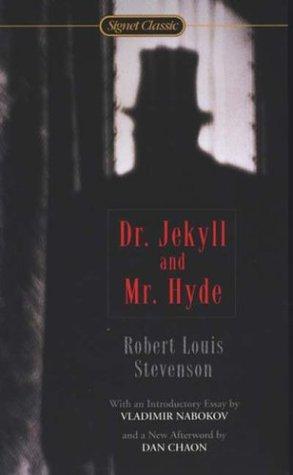
Read this for the other great Victorian story of a respectable man's hidden self.
Robert Louis Stevenson's 1886 novella is Dorian Gray's nearest relative, and Wilde knew it; both books come out of the same late-Victorian fascination with the double, the idea that a respectable gentleman's polished surface conceals something monstrous that only needs a mechanism to get loose. Jekyll's potion does exactly what Dorian's portrait does: it separates the sinning self from the social self so that pleasure can be taken without consequence, until the arrangement stops being voluntary. Both end with the hidden self exposed in a locked room.
Stevenson's book is leaner and more purely a thriller, told largely through the lawyer Utterson's investigation, with none of Wilde's epigrams or aesthetic philosophy; the horror is moral and physical rather than draped in beauty. It is also very short, readable in an evening, which makes it the easiest next step on this list. If the portrait in the attic was the image that stayed with you, this is the book to read next, and the two are natural companions on a shelf.
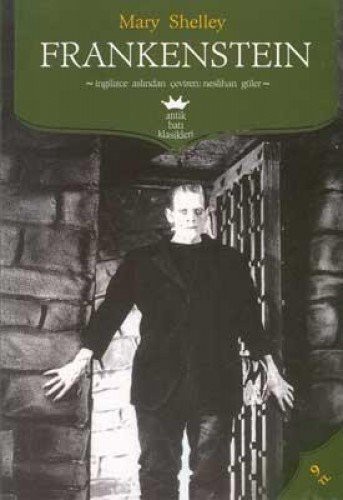
Read this for the original story of a creation that mirrors its maker's guilt.
Mary Shelley's 1818 novel is the foundation under all of this. Like Dorian and his portrait, Victor Frankenstein and his creature are a pair in which one bears the visible consequences of the other's choices: Victor pursues a transgressive desire, refuses responsibility for what it produces, and watches the evidence of his guilt take on a life of its own and start destroying the people around him. Both novels are gothic moral fables about wanting something nature does not permit, eternal youth in one, mastery over life in the other, and paying compound interest on it.
The reading experience is quite different. Frankenstein is a Romantic novel of letters and nested narrators, with arctic frames, alpine sublimity, and long passages of anguished self-examination; the creature gets to tell his own story, which is the book's moral center, where Dorian's portrait stays silent. There is no wit here and no society comedy, just grief and grandeur. Pick it if you want the gothic register at full Romantic scale, and be patient with the pacing of its first fifty pages.
Read this if what gripped you was the psychology, a self splitting under a polished surface.
Sylvia Plath's 1963 novel is the unexpected pick here, but the connection is real: it is about the gap between a flawless public performance and a deteriorating inner life. Esther Greenwood, a brilliant student with a magazine internship in New York, maintains the image of the successful young woman while her actual self detaches and sinks, and Plath's bell jar, the airless glass that descends and distorts everything, works as the same kind of central image the portrait does, a private symbol of what is happening where no one can see. Both books are also sharp about the worlds that reward surfaces, Wilde's society drawing rooms and Plath's 1950s magazine culture.
Everything else is different. There is nothing supernatural, no gothic plot, and no Lord Henry; the voice is dry, modern, precise, and often blackly funny, and the suffering is clinical depression rather than moral corruption. Readers should know it is semi-autobiographical and deals frankly with suicide. Choose it if Dorian read to you as a study of a disintegrating self rather than a ghost story; skip it if you wanted the velvet and the candlelight.
Read this for the full-length anatomy of guilt that Dorian compresses into a portrait.
Fyodor Dostoevsky's 1866 novel is what happens when the moral mechanics of Dorian Gray are run without the supernatural shortcut. Raskolnikov, like Dorian, talks himself into believing that an extraordinary person stands above ordinary morality, commits a murder under cover of that theory, and then discovers that the consequence he thought he had reasoned away is living inside him. The portrait does Dorian's suffering for him until the very end; Raskolnikov has no portrait, so the book is five hundred pages of the suffering itself, fever, paranoia, confession circling closer. Both novels also feature a tempter figure whose ideas the protagonist fatally takes literally, Lord Henry in one, Raskolnikov's own published article in the other.
This is the longest and most demanding book on the list, a 19th-century Russian novel dense with names, ideology, and Petersburg squalor, and its Christian arc toward confession and redemption is the opposite of Wilde's ironic ending. Pick it when you want the moral question taken with total seriousness and have the time to give it. The payoff is proportionate.
Read this if Lord Henry's devilish wit was your favorite character in the book.
Mikhail Bulgakov's novel, written in the 1930s under Stalin and unpublishable until 1966-67, gives you what Wilde only gestures at: the devil actually arriving in polite society and taking it apart. Woland and his retinue (including a giant gun-toting black cat) descend on officially atheist Moscow and expose the vanity, greed, and cowardice of everyone they meet, in set pieces that have exactly the quality Dorian Gray readers love, wickedness delivered with perfect manners and better lines. Like Wilde, Bulgakov writes moral seriousness disguised as glittering mischief, and both books circle the question of what a soul costs.
It is a much wilder ride structurally: the Moscow satire alternates with a grave, beautiful retelling of Pontius Pilate's encounter with Yeshua, and the two strands braid together at the end. The Faust echoes are explicit where Wilde's are atmospheric. It is also Russian, mid-length, and occasionally chaotic, so pick a good translation (Burgin and O'Connor, or Pevear and Volokhonsky, are common choices). Choose it for the wit and the devilry; it is the most purely enjoyable book on this list.
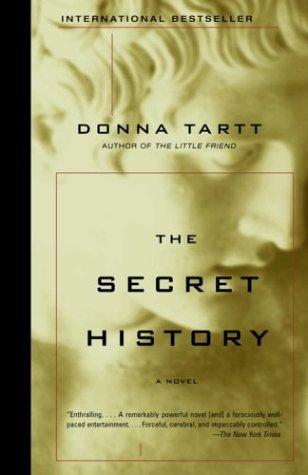
Read this for Wilde's dangerous aestheticism transplanted to a modern campus.
Donna Tartt's 1992 novel is the most direct modern descendant of Dorian Gray's central idea: that the worship of beauty can be used to excuse anything. Her clique of classics students at a Vermont college, presided over by the charismatic professor Julian, pursue an aesthetic ideal until it leads, step by rationalized step, to murder, and then the book becomes a study of how educated, charming people live with what they have done. Julian plays the Lord Henry role almost exactly, the brilliant talker whose philosophy his students take fatally literally, and Tartt opens the book with the killing so that, as in Wilde, the question is never whodunit but what it costs.
The differences are scale and century. This is a long, immersive, realist novel, no supernatural portrait, told in Richard Papen's retrospective confession, with the texture of campus life standing in for Wilde's drawing rooms. The prose is lush but American, and the guilt is distributed across a group rather than concentrated in one beautiful monster. If you want a contemporary book that takes beauty as seriously, and as suspiciously, as Wilde did, this is the one, and it is the easiest long book here to disappear into.
What book is most similar to The Picture of Dorian Gray?
The Strange Case of Dr Jekyll and Mr Hyde is the closest match. Published four years earlier, it is the other defining Victorian story of a respectable man who finds a mechanism for separating his sins from his social self, and both end with the hidden self exposed. For a modern equivalent, The Secret History by Donna Tartt carries the same idea, beauty and philosophy used to justify crime, onto a contemporary campus.
Is The Picture of Dorian Gray gothic or philosophical?
Both, which is why it is hard to match with a single book. The plot machinery (the cursed portrait, the attic, the murder) is gothic horror in the line of Frankenstein and Jekyll and Hyde, while the dialogue carries Wilde's aesthetic philosophy through Lord Henry's epigrams about youth, pleasure, and art. Readers drawn to the first half should pick Stevenson or Shelley; readers drawn to the second should pick The Secret History or The Master and Margarita.
Did Oscar Wilde write any other novels?
No, Dorian Gray is his only novel. If you want more Wilde, the next stops are his plays, especially The Importance of Being Earnest and An Ideal Husband, which deliver the epigrammatic wit at full strength, his short fiction such as Lord Arthur Savile's Crime, and De Profundis, the long letter he wrote from prison, which reads as a dark companion piece to Dorian's themes of pleasure and consequence.
Which version of The Picture of Dorian Gray should I read?
There are three. The 1890 Lippincott's magazine version is shorter and blunter; the 1891 book version, which most editions reprint, adds the famous preface and six chapters, including the James Vane subplot, after Wilde revised it under pressure; and an uncensored version of the original typescript was published by Harvard in 2011. The 1891 text is the standard choice, but the 1890 or uncensored texts are worth seeking out for what was toned down.
As an Amazon Associate, we earn from qualifying purchases. · About & methodology