7 books like The Giving Tree, from The Velveteen Rabbit to Love You Forever: tender, tear-jerking picture books and classics about love and sacrifice.
Updated June 10, 2026
Shel Silverstein's The Giving Tree does an enormous amount with almost nothing: a few hundred words, loose black-and-white line drawings, and a single relationship that spans a lifetime. A tree gives a boy her apples, her branches, her trunk, and finally her stump, and the spare text leaves a silence around each gift that readers fill with their own feelings. That silence is exactly why the book divides people. Some finish it moved by an image of selfless, unconditional love; others close it uneasy about a relationship in which one side only takes. Both readings are right, and that tension is the whole point.
Which means there isn't one kind of book that scratches the same itch. Some readers want more tear-jerker picture books to give as gifts. Some want more of Silverstein's particular voice. And some want a classic that a child can grow into, the way The Giving Tree keeps revealing new meaning at every age. The list below is sorted along those lines, so you can move toward what you actually loved: the love and sacrifice, the spare fable form, or the lifelong companionship between two characters. Each entry says plainly what it shares with The Giving Tree and where it pulls in a different direction.
A practical note before you choose: most of these are gift books first and bedtime books second. Several (The Little Prince, Love You Forever, Guess How Much I Love You) are go-to presents for graduations, weddings, baby showers, and new parents, so it's worth picking with the occasion and the recipient's age in mind rather than grabbing whatever sits nearest on the shelf.
Read this if the giving and sharing theme is what you want, for a younger reader.
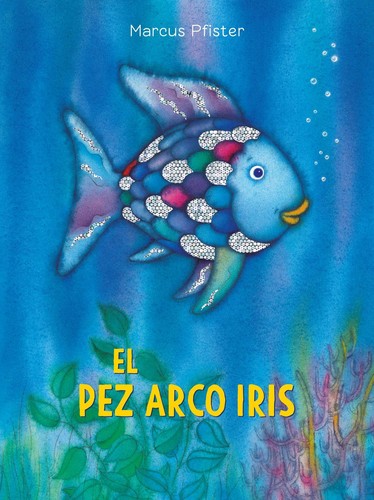
Marcus Pfister's book takes the idea of giving to a child and makes it literal and bright. A beautiful fish with shimmering scales is lonely until he learns to give his prized scales away, and friendship follows. The shared DNA with The Giving Tree is the act of giving as the route to love and belonging, rendered in a way a toddler can grasp on the first read, with foil-stamped scales that make it a sensory object too.
The contrast is in the tidiness. Where Silverstein leaves the ethics deliberately ambiguous, The Rainbow Fish delivers a clear, even insistent moral about sharing, and some parents find it a touch heavy-handed about conformity. It's a teaching book more than a tear-jerker, best for ages 3 to 6 and for the specific moment when a child is learning to share rather than for the adult who wants to be moved.
Read this if you loved Silverstein's spare, child's-eye storytelling more than the sad ending.
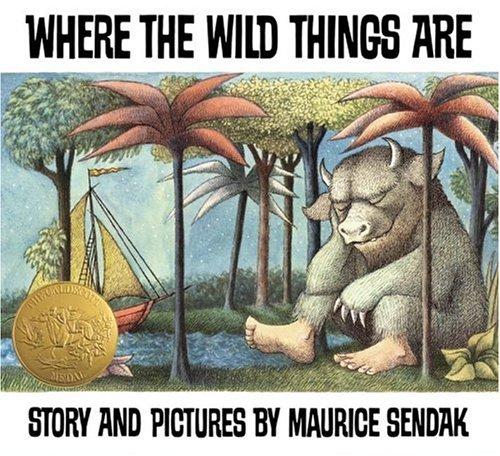
Maurice Sendak's masterpiece shares The Giving Tree's economy: very few words, indelible pictures, and a deep trust that a child will feel what the page leaves unsaid. Max sails off to where the wild things are and is crowned their king, then chooses to come home to where someone loves him best of all. That final return, and the supper still warm, carries the same quiet message about unconditional love that anchors Silverstein.
Tonally it's the outlier here: wild, a little fierce, and ultimately reassuring rather than bittersweet. There's no sacrifice and no loss, and it ends in comfort rather than an ache. Include it if what you valued in The Giving Tree was the minimalist art and the emotional honesty, and you'd happily trade the heartbreak for something a child can revisit endlessly without a tear.
Read this if you want the same ache about love and being worn down by it.
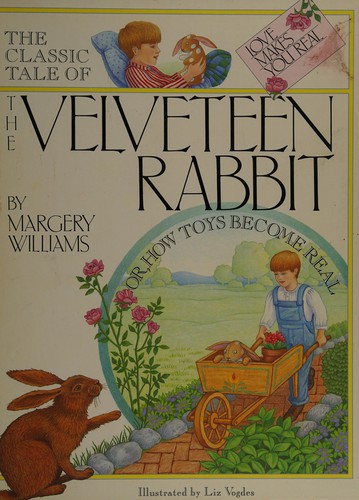
Margery Williams's 1922 classic is the closest match here for The Giving Tree's central feeling: love that costs something. A stuffed rabbit longs to become Real, and the wise old Skin Horse explains that Real only happens to toys who are loved so hard their fur is rubbed off and their eyes fall out. That idea, that being truly loved means being worn down to almost nothing, is the same bittersweet bargain at the heart of the tree's lifelong giving.
The differences are gentle ones. Williams writes in fuller, more old-fashioned prose, and her story ends with a turn toward transformation and hope that Silverstein withholds. It's a quieter, warmer book, less likely to spark an argument and more likely to simply make you cry. Good across a wide age range and a reliable gift for a child, a new parent, or a sentimental adult.
Read this for the warm, simple expression of parent-and-child love, minus the heartbreak.
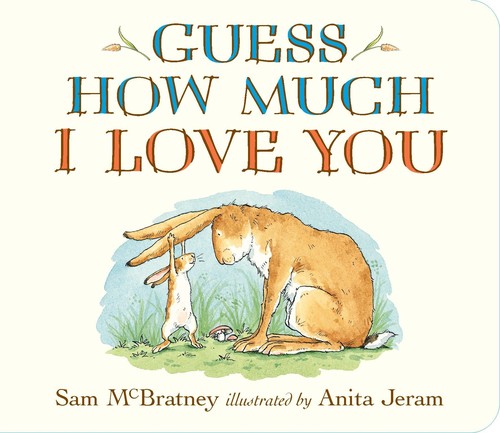
Sam McBratney's bedtime classic captures The Giving Tree's tenderness between a small one and a devoted elder, here Little Nutbrown Hare and Big Nutbrown Hare trying to out-measure each other's love. It's the same current of boundless, asymmetrical affection that runs through Silverstein, distilled into a single gentle competition: I love you to the moon, and back.
What it deliberately leaves out is the cost. There's no sacrifice, no loss, no lump in the throat, just a soft, reassuring close to the day, which is exactly why many parents prefer it for actual bedtimes. If The Giving Tree's ending is too much for a sensitive small child, this is the safe, sweet alternative on the same theme. Best for ages 2 to 5 and an easy, can't-miss baby gift.
Read this for the lifelong, one-directional parent love, taken to the very end of a life.
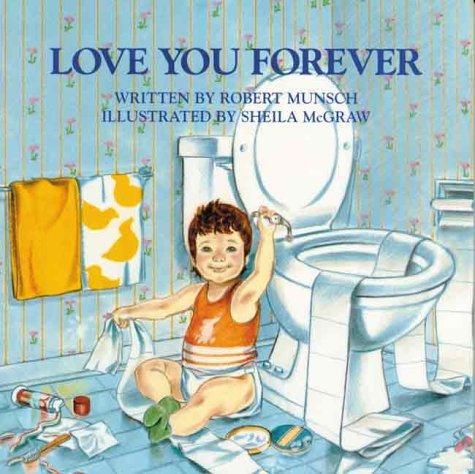
Robert Munsch's book may be the single most direct emotional sibling to The Giving Tree. A mother rocks her son and sings the same refrain through every stage of his life, and in the famous closing scene she is old and frail and he drives across town to rock her instead. Like Silverstein, Munsch is tracing one relationship from childhood to the end of a life, and like Silverstein he leaves readers either deeply moved or quietly unsettled by how much one figure gives.
It wears its sentiment far more openly than The Giving Tree's spare restraint, and it can tip into the maudlin for some adults, even as it reliably reduces others to tears. It's a baby-shower and new-parent staple for a reason. Read it first yourself before gifting it, so the ending doesn't ambush you in front of an audience.
Read this if you want a tender fable that keeps revealing new meaning as the reader ages.
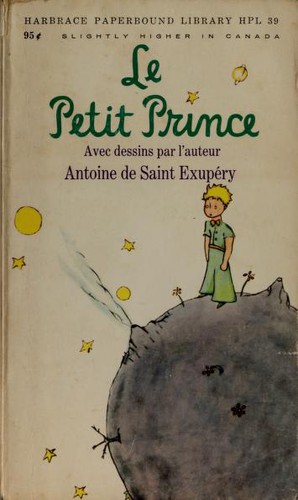
Antoine de Saint-Exupéry's fable shares The Giving Tree's rarest quality: it works as a simple, gentle picture story for a small child and as a piece of quiet philosophy for an adult, with the meaning shifting at every reading. A pilot stranded in the desert meets a small prince who tells him about the rose he loves and tends, and the book turns, like Silverstein's, on love, attachment, and what it costs to care for something.
It is longer and more discursive than a one-sitting picture book, with chapters and a wandering, dreamlike structure, so the youngest listeners may drift. But that's also why it's the classic graduation and milestone gift on this list: a child can grow into it for years. Where The Giving Tree leaves you with a stump, The Little Prince leaves you with the rose, and the line that you become responsible, forever, for what you have tamed.
Read this if you want the giving relationship made gently mutual instead of one-sided.
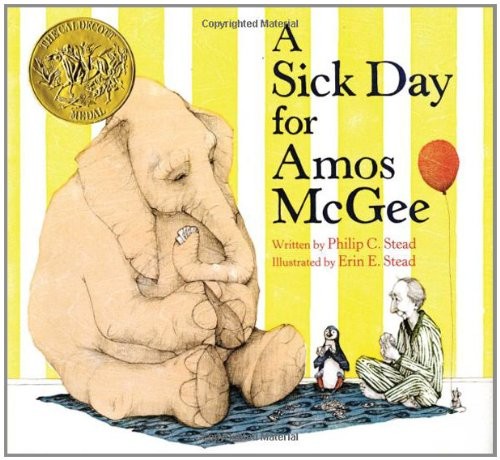
Philip C. Stead's Caldecott winner is, in a sense, the answer some readers wish The Giving Tree had given. Amos, a zookeeper, spends his days quietly caring for his animal friends, and when he falls ill, the animals make the long trip across town to care for him in return. The slow, tender attention between Amos and his friends has the same warmth as the tree and the boy, drawn in Erin Stead's soft, spare woodblock illustrations.
The crucial difference is reciprocity. Where Silverstein gives us love that flows in one direction until there's nothing left, this is love that comes back around, which makes it the calmest, least debatable book on the list. There's no controversy to argue and no real heartbreak, just a kind, unhurried story. Lovely for ages 3 to 7 and a soothing bedtime read.
The debate is about what the book is teaching. Some readers see the tree as a model of selfless, unconditional love (often read as parental). Others see a one-sided relationship in which the boy takes and takes while the tree is left a stump, and read it as a caution rather than an ideal. Shel Silverstein never settled the argument, which is part of why the book has stayed in print and in conversation since 1964.
What age is The Giving Tree for?
It's a picture book, simple enough to read aloud to a 3- or 4-year-old, but its real emotional weight lands later. Many people gift it to graduates, new parents, and adults precisely because the meaning deepens with age. On this list, Guess How Much I Love You and The Rainbow Fish skew youngest; The Little Prince reads best from about age 8 up and rewards adult rereading.
Are there other books by Shel Silverstein like The Giving Tree?
The Giving Tree is unusually tender for Silverstein. His better-known work is comic poetry: Where the Sidewalk Ends, A Light in the Attic, and Falling Up are the classics, full of mischief rather than sentiment. His closest companion in spirit is The Missing Piece, a spare fable about searching for completeness, which is the title to reach for if it was Silverstein's voice and line art you loved most.
Which of these books makes the best gift?
For a graduation or a milestone, The Little Prince is the classic pairing because it grows with the reader. For a new parent or a baby shower, Guess How Much I Love You and Love You Forever are the standard picks. For a child learning to share, The Rainbow Fish does the job most directly. Match the book to the occasion rather than reaching for the same one twice.
As an Amazon Associate, we earn from qualifying purchases. · About & methodology