7 books like Guess How Much I Love You, from Love You Forever to I Love You to the Moon and Back: tender parent-child picture books for bedtime.
Updated June 10, 2026
Guess How Much I Love You has been a bedtime fixture since 1994 for a simple reason: it turns a child's competitive instinct into a love story. Little Nutbrown Hare keeps trying to out-love Big Nutbrown Hare, stretching his arms wider, hopping higher, reaching for the moon, and losing every round, until the famous closing line, loved to the moon and back, settles the contest gently in the child's favor while they sleep. Sam McBratney's spare text and Anita Jeram's soft watercolor hares make it almost impossible to read aloud without slowing down at the end.
The books below cover the three things parents usually want after it. For the same I-love-you-this-much declaration, there are I Love You to the Moon and Back (which borrows the famous phrase outright), Love You Forever, and On the Night You Were Born. For love expressed through warmth and silliness rather than sentiment, there is Hug Machine. And for the classic picture books that belong on the same shelf even though love is not their stated subject, there are Where the Wild Things Are and The Very Hungry Caterpillar, both of which carry their tenderness more quietly.
A practical note: these all sit in roughly the same toddler-to-preschool range, but they read very differently aloud. The Tillman and Munsch books are openly emotional and can make the adult cry before the child notices; Sendak and Carle leave the feelings for the pictures. Each entry below says which kind of bedtime it makes.
Books to Read If You Like Guess How Much I Love You
I Love You to the Moon and Back
by Amelia Hepworth
Read this if the moon-and-back line is the part your child asks for.
Amelia Hepworth's board book takes its title from the most famous phrase in Guess How Much I Love You and builds a whole book around the same idea: a parent and child, here a big bear and a little cub, spending a day together while the text declares love in expanding, concrete images. The rhythm of affection escalating through the day mirrors the Nutbrown Hares' contest closely, and Tim Warnes's warm illustrations sit in the same gentle register as Anita Jeram's watercolors. Of everything on this list, it is the most direct substitute.
It is also a simpler book. The text is shorter and rhyming, there is no back-and-forth game between parent and child, and as a sturdy board book it is aimed slightly younger, at babies and toddlers rather than preschoolers who can follow Little Nutbrown Hare's one-upmanship. Pick it for a younger sibling, a baby shower, or a child who wants the moon-and-back feeling in a two-minute read. It will not surprise you, and it is not trying to.
Read this for the other essential book on the same first bookshelf.
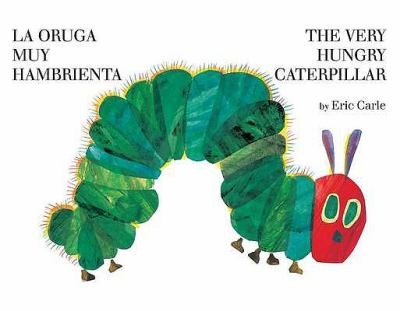
Eric Carle's 1969 classic shares almost nothing with Guess How Much I Love You thematically, and everything practically: it is the other book nearly every family of a toddler owns, reads nightly, and wears out. The connection is the experience, a short, perfectly paced read-aloud with a satisfying ending, built from simple repeated patterns a small child can anticipate and join in on. Where McBratney's repetition is the love contest, Carle's is the caterpillar eating through one apple, two pears, three plums, with real holes punched through the pages.
This is the pick when you want variety rather than more sentiment. There is no parent, no child, and no declaration of love, just appetite, a stomachache, and one of the most famous transformations in children's literature. The die-cut pages and counting and days-of-the-week structure make it more interactive and more obviously educational than Guess How Much I Love You. Choose it to balance a bedtime rotation that is getting heavy on tenderness.
Read this if your child loves rhythm and a refrain they can shout along with.
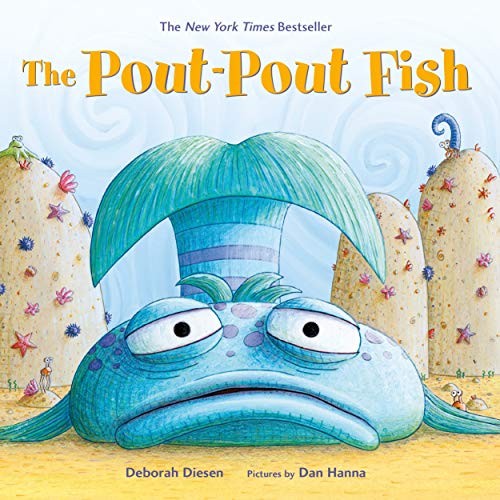
Deborah Diesen's story of a gloomy fish who believes he is doomed to spread the dreary-wearies shares the bones of Guess How Much I Love You: a repeated verbal game that builds through the book toward a warm resolution, here a kiss that turns the pout-pout fish into a kiss-kiss fish. The blub, bluuub, bluuuuub refrain plays the same role as Little Nutbrown Hare's escalating boasts, giving a small child something to anticipate and perform on every spread, and the ending lands on affection just as the hares do.
The temperature is different, though. This is a bouncy, rhyming, slightly silly book about feelings and how one good moment can change them, not a quiet duet between parent and child, and Dan Hanna's bright cartoon ocean is a long way from Jeram's misty meadow. It runs longer than it needs to, a common complaint from parents on the hundredth read. Pick it for the early-evening slot, when you want engagement and giggles, and save the hares for lights-out.
Read this if you want the love left unspoken and the imagination turned all the way up.
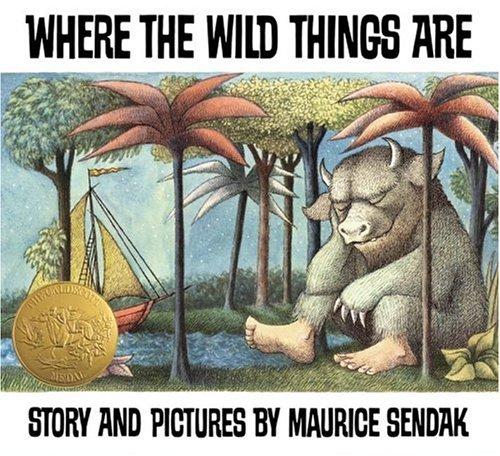
Maurice Sendak's 1963 masterpiece connects to Guess How Much I Love You at the ending. Max, having sailed to where the wild things are, roared his terrible roars, and ruled as king, gives it all up because he wants to be where someone loves him best of all, and he comes home to find his supper waiting, still hot. That closing image does silently what McBratney's hares do out loud: it assures a child that the parent's love is there, larger than any contest and waiting after any tantrum.
Everything before that ending is a different kind of book entirely. There is anger in it, Max is sent to bed without supper for misbehaving, and the wild rumpus has a toothy, slightly dangerous energy that some toddlers find thrilling and a few find too much. It rewards a child who is ready for a real story with a real arc rather than a lullaby. Choose it as the step up from Guess How Much I Love You, usually around age three or four, and let the last page do the reassuring.
Read this if you want the parent-child love story carried across a whole lifetime.
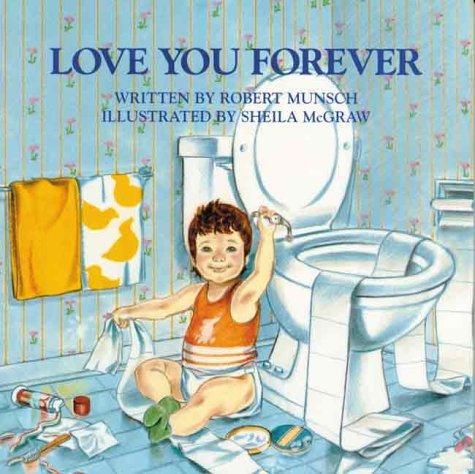
Robert Munsch's 1986 book is the other great I-love-you picture book, and the most natural companion to Guess How Much I Love You. Its engine is also a repeated declaration, the mother's sung refrain that she will love her child forever and like him for always, returning at every stage as the boy grows from baby to toddler to teenager to man. Where McBratney captures one bedtime, Munsch compresses an entire life of bedtimes, ending with the grown son rocking his aging mother and then singing the song to his own newborn daughter.
Be warned that it hits much harder. Munsch wrote the refrain as a private memorial after he and his wife had two stillborn babies, and the final pages routinely make adults cry mid-read. Some readers also find the mother sneaking into her adult son's room to rock him odd rather than touching; it is a book people either treasure or tease. Choose it when you want the full-hearted version, and maybe practice the last pages once before reading them aloud.
Read this for the same tenderness aimed straight at how singular your child is.
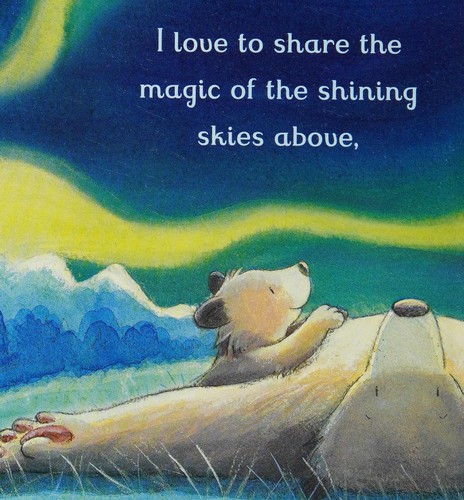
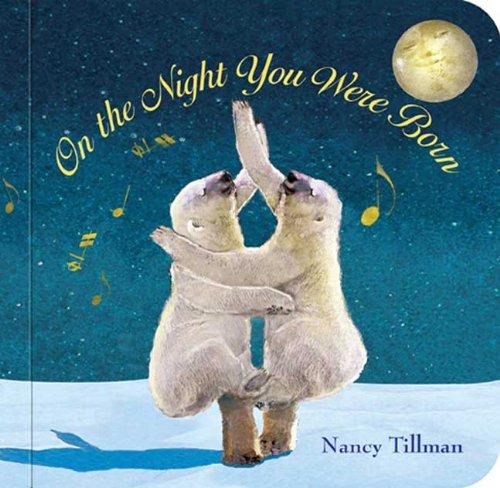
Nancy Tillman's book belongs to the same bedtime species as Guess How Much I Love You: a quiet, second-person reassurance of how deeply a child is loved, made for reading in a low voice with the lights going down. Where McBratney dramatizes the love as a game between two hares, Tillman addresses the child directly, telling them that on the night they were born the moon smiled and the wind whispered their name, that there has never been and never will be anyone quite like them. The moon even features in both books' emotional climaxes.
The differences are texture and audience. Tillman's text is lusher and more sentimental, closer to a lullaby or a blessing than a story, and her painterly illustrations of polar bears and geese under starlight are dreamy where Jeram's hares are homely. There are no characters and no plot, so children who want something to happen may drift. It shines as a new-baby gift, a birthday-eve tradition, and a book for the parent as much as the child.
Read this if you want the love played for laughs instead of lumps in the throat.
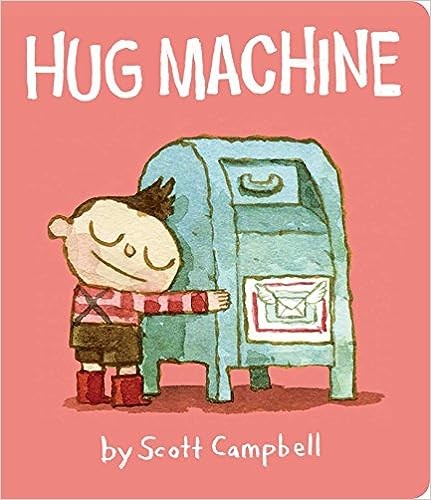
Scott Campbell's Hug Machine takes the subject of Guess How Much I Love You, affection that wants to be bigger than everything, and turns it into comedy. A small boy declares himself the Hug Machine and sets out to hug everyone and everything: his family, strangers, a mailbox, a porcupine (he wears protective gear), and a whale. The boast-and-escalation structure is recognizably the same game Little Nutbrown Hare plays, except the boy is competing against the whole world rather than one parent, and winning.
This is the pick when bedtime needs to end in giggles rather than a hush. Campbell's loose watercolor cartoons and deadpan humor make it a performance book, great for animated read-alouds, and its message that affection is something you give away generously is a nice complement to McBratney's portrait of love between two people. It has less emotional weight on purpose. Children who like it tend to start hugging furniture, so consider yourself warned.
What book is most similar to Guess How Much I Love You?
Love You Forever by Robert Munsch is the closest in feeling: both are built on a repeated declaration of a parent's boundless love, made for bedtime reading. For the closest match in format and the same moon-and-back idea, I Love You to the Moon and Back by Amelia Hepworth is essentially a board-book cousin of the original, with a bear and cub in place of the hares.
What age is Guess How Much I Love You for?
It works from infancy, especially in board book form, through about age five. Babies and young toddlers respond to the rhythm and soft pictures, while two- to four-year-olds can follow and join the back-and-forth game between Little and Big Nutbrown Hare. Most of the books on this list cover the same range, with Where the Wild Things Are skewing slightly older and I Love You to the Moon and Back slightly younger.
Are there more books about Little Nutbrown Hare?
Yes. Sam McBratney and Anita Jeram returned to the characters, most notably in Will You Be My Friend?, published in 2020 shortly before McBratney died, in which Little Nutbrown Hare makes a new friend. There are also seasonal spin-off editions featuring the hares. None has the stature of the original, but they are the natural choice for a child attached specifically to these characters.
Which of these books will not make the parent cry?
Hug Machine, The Pout-Pout Fish, and The Very Hungry Caterpillar are safe: funny or matter-of-fact rather than sentimental. Where the Wild Things Are ends warmly but not tearfully. The criers are Love You Forever, which is famous for it, and On the Night You Were Born, which is openly sentimental. Guess How Much I Love You itself sits in the middle, tender but composed.
As an Amazon Associate, we earn from qualifying purchases. · About & methodology