Books Like The First Fifteen Lives of Harry August
7 books like The First Fifteen Lives of Harry August, from Life After Life to Recursion: time loops, repeated lives, and memory across centuries.
Updated June 10, 2026
Claire North's The First Fifteen Lives of Harry August takes the reborn-into-the-same-life premise and does something unusual with it: it builds a thriller on top. Harry is a kalachakra, born in 1919 over and over with all his memories intact, and the novel's best invention is the Cronus Club, a secret network of people like him passing messages up and down the centuries. When a warning arrives from the future that the world is ending faster each time, the book becomes a duel between Harry and another of his kind played out across repeated twentieth centuries. It is cerebral, melancholy, and genuinely suspenseful at once, which is a rare mix.
What readers want next usually splits three ways, and the list below covers each. If the repeated-lives structure itself is the draw, Life After Life is the literary sibling, following Ursula Todd through the same reborn premise without the thriller plot. If you want the cat-and-mouse and the mind-bending mechanics, Recursion and The Seven Deaths of Evelyn Hardcastle deliver the puzzle-box momentum. And if it was the long-lived outsider watching history pass, The Invisible Life of Addie LaRue and The Time Traveler's Wife carry that emotional thread. Two wilder cards, Chronicle of a Death Foretold and The First Book of Swords, round things out for readers chasing the themes of fate and recurrence in different genres.
A practical note: none of these requires the others, and they vary a lot in tone, from Atkinson's literary fiction to Crouch's airport-thriller pacing. Each entry below says which side of Harry August it matches, the structure, the chase, or the loneliness, so pick by what you actually want more of.
Read this if you want the loop mechanics turned into a pure whodunit.
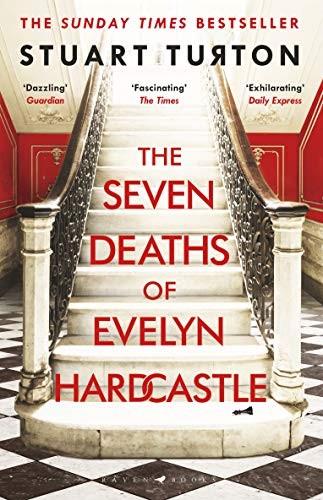
Stuart Turton's debut (published in the US as The 7 1/2 Deaths of Evelyn Hardcastle) shares Harry August's central pleasure: a repeating structure with strict rules that the protagonist must learn to exploit. The narrator relives the same day at a crumbling English country house, waking each loop in the body of a different guest, and must solve Evelyn Hardcastle's murder before his attempts run out. Like North, Turton treats the speculative premise as a machine for suspense, and the gradual reveal of how and why the loop exists scratches the same itch as the Cronus Club's slow unveiling.
It is a very different flavor around that core, though: Agatha Christie rather than speculative fiction, confined to one day and one estate rather than sprawling across a century, and driven by plot mechanics more than character. Some readers find the body-hopping cast hard to track in the early chapters, and the emotional register is cooler than Harry's elegiac voice. Choose it when you want the puzzle, fair-play clues, and a genuinely surprising solution rather than meditations on memory and time.
Read this if the reborn-into-the-same-life premise was the part you loved.
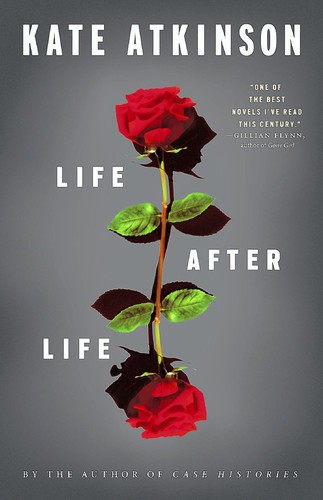
Kate Atkinson's Life After Life is the book most often shelved next to Harry August, and for good reason: they were published within a year of each other (2013 and 2014) and share the exact same core conceit. Ursula Todd is born in England in 1910, dies, and is born again into the same life, over and over, with the great catastrophes of the twentieth century, the Blitz above all, waiting for her each time. Like North, Atkinson is interested in how small choices compound and in what a person slowly carries forward from lives they cannot quite remember.
The difference is what each author builds on the premise. North builds a plot, a centuries-spanning duel with rules and stakes; Atkinson builds a literary novel about family, England, and chance, where the repetition is the meaning rather than the engine. Ursula's awareness of her past lives is far hazier than Harry's crisp recall, and there is no Cronus Club, no antagonist, no race. Pick it if you want the premise explored with more emotional depth and are happy to trade suspense for craft. There is also a companion novel, A God in Ruins, about Ursula's brother Teddy.
Read this if you want the timeline-resetting duel at thriller velocity.
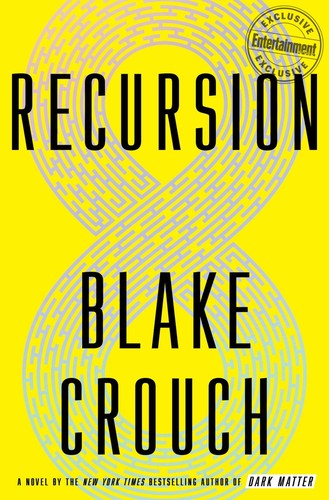
Blake Crouch's Recursion is the closest thing on this list to Harry August's back half, where the book becomes a war fought across repeated timelines between two people who remember everything. Crouch's version runs on technology rather than rebirth: a chair that can send a person back into a vivid memory, with reality rewriting itself around each return. Like North, he is fascinated by what accumulated lifetimes of memory do to a mind, and by the arms-race logic of opponents who can each undo the other's moves.
The trade-off is depth for speed. Crouch writes short chapters and relentless escalation; the science is hand-waved, the prose is functional, and the apocalyptic stakes arrive much faster and louder than North's slow-burn warning from the future. Harry August feels like a literary novel wearing a thriller's skeleton, while Recursion is a thriller to its bones. Pick it for a two-sitting read when you want the concept's adrenaline. Crouch's Dark Matter is the natural follow-up if it lands.
Read this if Harry's centuries of solitude moved you more than the plot did.
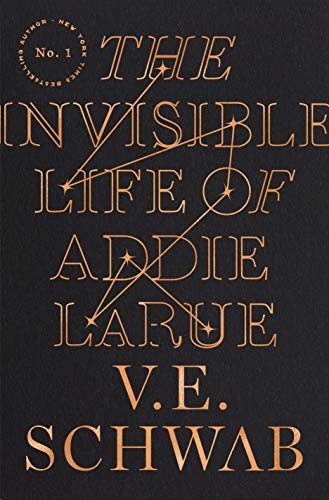
V.E. Schwab's novel swaps the time loop for a different curse with the same emotional consequence. In 1714 France, Addie LaRue bargains with a dark god for freedom and immortality, and the price is that everyone who meets her forgets her the moment she leaves. Three hundred years of being unrememberable produce the same ache that runs under Harry August: a person who accumulates centuries of experience while the world resets around them, who learns every language and art and still cannot hold on to a single relationship. The hinge of both books is the arrival of someone who finally remembers.
Structurally it is nothing like North's book: linear immortality rather than repeated lives, romance and longing rather than espionage and stakes, and a much more lyrical, interior style that some readers find gorgeous and others find slow. There is no Cronus Club equivalent and no world-ending clock. Choose it if the scenes of Harry quietly outliving everything were your favorites; skip it if you mostly came for the duel with Vincent.
Read this if you want time as an emotional force in one relationship.
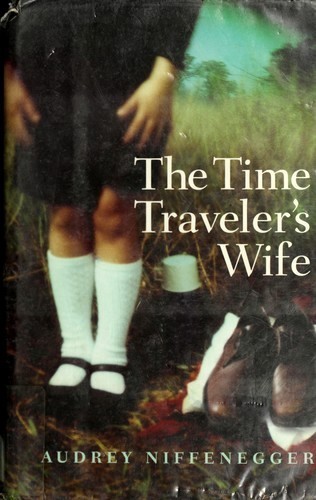
Audrey Niffenegger's novel shares with Harry August the conviction that time-bending premises work best when grounded in ordinary human attachments. Henry DeTamble involuntarily slips through time to moments of emotional weight in his own life, repeatedly visiting Clare, who experiences their love story in order while he lives it shuffled. Like North, Niffenegger plays fair with her rules and uses them to generate real poignancy: knowing what is coming and being unable to change it is the engine of both books' saddest passages.
The scope is the big difference. Harry August spans world wars, the Soviet Union, and the fate of the world; The Time Traveler's Wife rarely leaves Chicago and is, at heart, a love story and a marriage examined from two angles. There is no antagonist and no mystery to solve. It is also franker and more domestic than North's chilly elegance. Pick it if you want the time-warped intimacy; readers who valued Harry August primarily as speculative fiction sometimes find it too much romance, too little consequence.
Read this for fate and foreknowledge handled by a Nobel laureate, in under 150 pages.
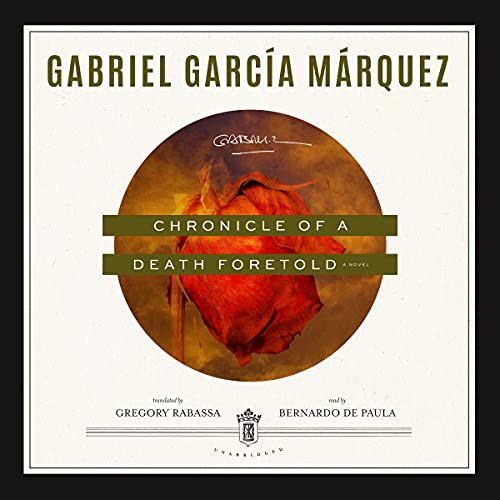
This is the literary wild card, and the connection is thematic rather than structural. García Márquez opens by telling you that Santiago Nasar will be murdered, then circles the event again and again from different witnesses' memories, reconstructing a death the whole town saw coming and no one prevented. That is Harry August's deepest question, whether knowing the future obligates you to change it, stripped of any speculative machinery and examined as pure fatalism. The recursive, looping narration even mimics the experience of reliving an event.
Everything else is different: no time travel, no rebirth, a single afternoon in a Colombian river town rather than a century of history, and a journalistic, faintly hallucinatory style that rewards slow reading. It is based on a real 1951 killing. Pick it up if you like the idea of the same themes in literary miniature, or as a one-evening palate cleanser between the doorstoppers on this list. Skip it if you want genre pleasures; it offers none, deliberately.
Read this only if you want fate and power games in classic fantasy form.
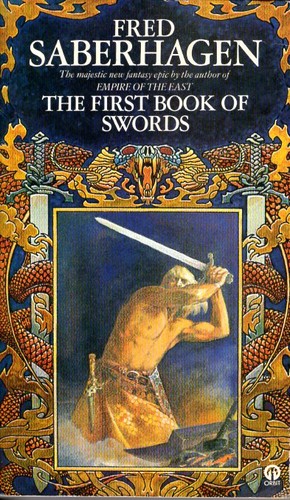
Fred Saberhagen's 1983 novel is the loosest fit here, and honesty requires saying so. The premise: the gods forge twelve swords, each carrying a distinct power, and scatter them among humanity as pieces in a game, with mortals' destinies bending around whoever holds them. What it shares with Harry August is the chessboard feeling, individuals caught in a vast game whose rules they only gradually learn, and the question of whether people are players or pieces. Saberhagen, best known for his Berserker series, blends fantasy with buried science-fiction underpinnings in a way genre readers of the era loved.
But there are no time loops, no repeated lives, and no twentieth century; this is quest fantasy with forges, gods, and a young hero, the opening of a long series. The prose and characterization are workmanlike by modern standards. Choose it if you are a fantasy reader who enjoyed Harry August's fatalism and wants an older, pulpier take on destiny as a game. Most readers who came for North's structure should pick almost anything else on this list first.
What book is most similar to The First Fifteen Lives of Harry August?
Life After Life by Kate Atkinson is the standard answer: the same premise of a person repeatedly reborn into the same twentieth-century life, published just a year earlier. Atkinson's book is literary fiction without North's thriller plot, so if you specifically want the duel-across-timelines momentum, Recursion by Blake Crouch is the closer match in feel.
Has Claire North written other books like Harry August?
Yes. Claire North is a pen name of Catherine Webb, and her follow-ups work similar territory: Touch (2015) features a being who jumps between bodies by skin contact, and The Sudden Appearance of Hope (2016) follows a woman everyone forgets, a premise close to Addie LaRue's. Both share Harry August's blend of speculative conceit, globe-trotting plot, and melancholy first-person voice.
Do I need to like science fiction to enjoy these books?
No. The list deliberately spans genres: Life After Life and Chronicle of a Death Foretold are literary fiction, The Seven Deaths of Evelyn Hardcastle is a murder mystery, Addie LaRue is fantasy-romance, and The Time Traveler's Wife is at heart a love story. Only Recursion reads as straight science fiction thriller, and even it explains its technology lightly.
Is Harry August part of a series?
No, it is a standalone novel and resolves fully. The closest things to a continuation are Claire North's other standalones, especially Touch, which shares its tone and structure of a long-lived narrator pursued across the world. The book won the John W. Campbell Memorial Award in 2015 and was a BBC Radio 2 Book Club pick, which helped make it her breakout.
As an Amazon Associate, we earn from qualifying purchases. · About & methodology