5 books like The Invisible Life of Addie LaRue: The Night Circus, Piranesi, The Ten Thousand Doors of January, and more lush, melancholy fantasy.
Updated June 11, 2026
V.E. Schwab's The Invisible Life of Addie LaRue runs on one devastating premise: in 1714 France, a young woman desperate to escape a forced marriage makes a deal with a dark god, gaining immortality at the cost of being forgotten by everyone she meets the moment she leaves their sight. The novel moves between three hundred years of Addie scraping out an existence in the margins of art and history and present-day New York, where a bookseller named Henry says the impossible words: I remember you. It is less an adventure than a slow meditation on loneliness, legacy, and what it means to leave a mark, told in Schwab's lush, melancholy prose.
Nothing replicates that exact premise, so this list is organized around the feelings readers want back. If it was the dreamy atmosphere and doomed-deal romance, Erin Morgenstern is the closest match, The Night Circus for the magic and the slow-burn love story, The Starless Sea for the prose and the devotion to stories themselves. If it was Addie's profound solitude and the question of identity, Piranesi is the sharpest companion. The Ten Thousand Doors of January shares the historical sweep and a girl writing herself out of confinement, and The Priory of the Orange Tree is here for readers who simply want another big, immersive fantasy world to live in.
A practical note: most of these are slow books, heavy on atmosphere and light on plot momentum, which is exactly the register Addie LaRue works in. Piranesi is the shortest at around 250 pages and Priory the longest at over 800, so check the entries below for pacing warnings before committing.
Read this if you want another atmospheric, decades-spanning romance built on a dangerous magical bargain.
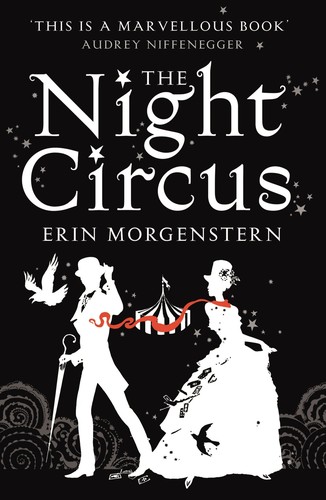
Erin Morgenstern's debut is the book most often shelved beside Addie LaRue, and the kinship is structural as well as tonal. Two young illusionists, Celia and Marco, are bound from childhood into a mysterious competition by their teachers, a contest staged inside a black-and-white circus that appears only at night, and neither fully understands the rules or the stakes of the game they were entered into. Like Addie, they are trapped by a bargain made over their lives, and like Addie and Henry, they fall in love across the board of that game. The prose has the same rich, sensory, slightly dreamlike quality Schwab readers tend to crave.
The difference is temperature. The Night Circus is more ornate and less melancholy; it luxuriates in spectacle, ice gardens, clockwork, caramel on the air, where Addie LaRue dwells in absence and grief. The structure is also more demanding, hopping across timelines and viewpoints, and readers who need plot momentum sometimes stall in the middle. Pick it for immersion and romance rather than for Addie's existential ache. If you finish it wanting more Morgenstern, The Starless Sea is below.
Read this if Schwab's prose and the love of stories themselves were what held you.
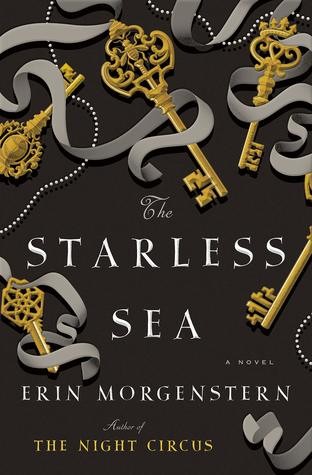
Morgenstern's second novel is for the reader who underlined sentences in Addie LaRue. Zachary Ezra Rollins, a graduate student, finds a mysterious book that contains a scene from his own childhood, and the trail leads him to a vast underground library-harbor where stories are kept, tended, and lived. The novel is built from nested fables, doors, keys, bees, and swords, and it shares Addie LaRue's central devotion: the belief that being remembered, being storied, is the closest thing to immortality. There is also a tender queer romance at its heart, which readers who loved Henry's bookstore world tend to appreciate.
Be honest with yourself about what you are signing up for, though. This is the most plot-diffuse book on the list; it wanders, doubles back, and trusts atmosphere to carry you for long stretches, and reviews split sharply between readers who found it enchanting and readers who found it shapeless. Addie LaRue, for all its quietness, has a clear engine (the deal, Henry, the confrontation with Luc). The Starless Sea mostly does not. Choose it as a mood to sink into, not a story to race through.
Read this if you loved a young woman writing her way out of a confined life across decades of history.
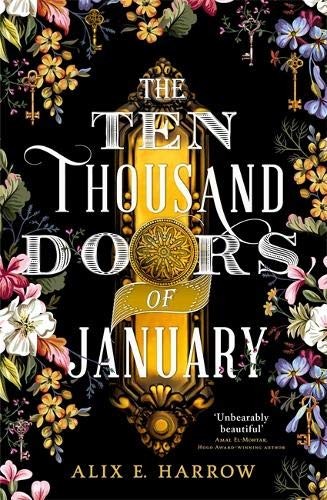
Alix E. Harrow's debut shares Addie LaRue's spine: a girl whose world is decided for her, and who claws back authorship of her own life. January Scaller grows up in the early 1900s as the curious ward of a wealthy collector, until she finds a book describing doors that open between worlds, and her tidy, controlled existence starts to unravel. Like Schwab, Harrow writes in lyrical, deliberate prose, moves across decades, and cares deeply about who gets recorded and who gets erased; January, like Addie, is fighting to exist on her own terms in a world that keeps closing over her.
It differs in shape and warmth. This is a portal fantasy with a book-within-a-book structure, more adventurous and ultimately more hopeful than Addie's three centuries of loss, and its antagonists are human institutions, collectors and gatekeepers, rather than a seductive god of darkness. There is romance, but it is not the novel's center the way Henry and Luc are. Pick it if you want Addie's themes with a faster pulse and a kinder ending; the first third is slow, then it moves.
Read this if Addie's solitude, and the question of who you are when no one remembers you, cut deepest.
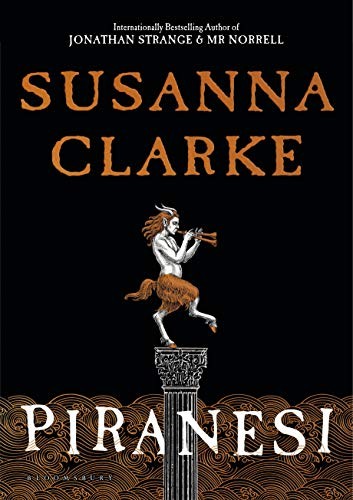
Susanna Clarke's short novel is the most distilled treatment on this list of what Addie LaRue is actually about: identity persisting in total isolation. Piranesi lives alone in an infinite house of halls, tides, and statues, keeping meticulous journals, greeting the bones of the dead, content in a world that contains one other living person. Like Addie, he is a person the world has essentially misplaced, and the slow revelation of how he came to be there turns on memory, erasure, and what survives of a self when its history is taken. It won the Women's Prize for Fiction in 2021, and its strange serenity stays with people for years.
It is also the least similar in furniture: no romance, no devil's bargain, no centuries of European history, and the lush sensory writing of Schwab and Morgenstern is replaced by Piranesi's plain, earnest journal voice, which is its own quiet achievement. The book reads partly as a mystery, and saying much more spoils it. At roughly 250 pages it is the shortest and most complete-feeling pick here. Choose it for the ache, not the aesthetic.
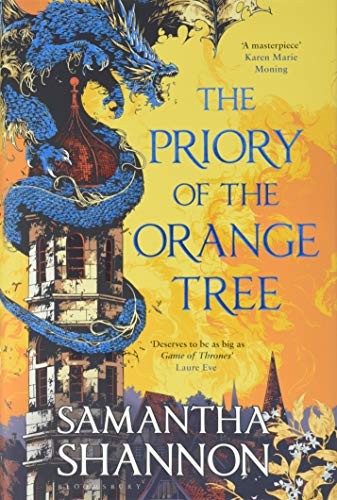
Read this only if what you want next is a huge, immersive fantasy world rather than Addie's intimate premise.
Samantha Shannon's standalone epic is the loosest match on this list, and it is worth being upfront about that. What it shares with Addie LaRue: women at the center fighting fates arranged for them, a sapphic romance that readers of Schwab's queer-inclusive cast tend to love (Ead, a secret mage guarding a queen, and Sabran, the queen herself), long sweeps of history and memory, and a few characters whose unnaturally extended lives raise the cost of love and secrecy. If part of Addie LaRue's appeal was simply living inside a fully imagined world with mythic stakes, Priory delivers that at scale, with dragons on both sides of an ancient divide.
Everything else is different. This is epic fantasy with four point-of-view characters, court politics, sea voyages, and a world-ending enemy, over 800 pages of it, where Addie LaRue is intimate, interior, and essentially a two-hander plus a devil. The prose is solid rather than lyrical, and the pacing is stately for the first few hundred pages. Pick it when you want your next long residence in a fantasy world; skip it if you specifically want another melancholy, premise-driven love story.
What is the closest book to The Invisible Life of Addie LaRue?
No book matches the premise exactly, but The Night Circus by Erin Morgenstern is the most common recommendation: both are atmospheric, decades-spanning stories about people bound by a magical bargain they did not fully choose, with a love story at the center. For the specific themes of being forgotten and surviving in solitude, Piranesi by Susanna Clarke is the sharpest match, though it looks nothing like Addie LaRue on the surface.
Should I read more V.E. Schwab if I loved Addie LaRue?
Yes, with adjusted expectations. Her Shades of Magic trilogy (starting with A Darker Shade of Magic) and Vicious are faster, plottier fantasy without Addie's slow melancholy, though the prose and morally gray charm carry over. Her 2024 novel The Fragile Threads of Power returns to the Shades of Magic world, and Bury Our Bones in the Midnight Soil (2025) is closer to Addie's register, following women across centuries.
Is The Invisible Life of Addie LaRue a romance?
Partly. The relationships with Henry, the man who remembers her, and with Luc, the darkness she made her deal with, drive the second half of the novel. But it is better described as literary-leaning fantasy about loneliness, art, and legacy, with romance as one thread. Readers who come to it expecting a conventional romance arc are often surprised by how quiet and bittersweet it is.
Which of these books should I pick if Addie LaRue felt too slow?
The Ten Thousand Doors of January has the most forward momentum once it gets going, and Piranesi is short enough that its slowness never wears. Avoid The Starless Sea in that case, since it is the most meandering book on the list, and approach The Night Circus and The Priory of the Orange Tree knowing both take their time.
As an Amazon Associate, we earn from qualifying purchases. · About & methodology