8 books like The Daily Stoic, from Meditations to Letters from a Stoic: original Stoic texts and practical philosophy for daily practice.
Updated June 10, 2026
The Daily Stoic is built on a simple format that turned out to be exactly how most people actually absorb philosophy: 366 entries, one per day, each pairing a short passage from Marcus Aurelius, Seneca, or Epictetus with a page of plain-English commentary from Ryan Holiday and Stephen Hanselman. It is not a book you read so much as a practice you keep, and its success comes from removing every barrier between a busy modern reader and two-thousand-year-old ideas about controlling what you can and accepting what you cannot. The trade-off is depth; each idea gets one page, then the calendar moves on.
Where you go next depends on which direction you want to push. If you want the sources themselves, Meditations and Letters from a Stoic are the two texts The Daily Stoic quotes most, and both are far more readable than their age suggests. If you want more Holiday, The Obstacle Is the Way and Ego Is the Enemy each take one Stoic theme and run it through a full book of historical case studies. And if you want the same territory (suffering, contentment, self-command) from outside Stoicism, Man's Search for Meaning, The Art of Happiness, The Tao of Pooh, and Awaken the Giant Within approach it from psychiatry, Buddhism, Taoism, and motivational self-help respectively.
A practical note: several of these reward the same one-passage-a-day habit The Daily Stoic trained you in. Meditations and Letters from a Stoic in particular were written as fragments and letters, not arguments to read straight through, so keep them on the nightstand and take them a few pages at a time. Translation matters too; Gregory Hays's Meditations is the version most Daily Stoic readers find easiest.
Read this if you want the source The Daily Stoic quotes more than any other.
If The Daily Stoic is the commentary, this is the text. Marcus Aurelius wrote these private notes to himself while running the Roman Empire and fighting wars on the Danube, never intending publication, which is exactly why they still land: there is no performance in them, just a powerful man reminding himself daily to be patient, to expect difficult people, to do the task in front of him, and to stop fearing death. Whole stretches will feel familiar because Holiday and Hanselman quote Marcus constantly; reading him whole shows you the repetitions and struggles the excerpts smooth over.
Know what you are picking up. It has no structure, no argument, and plenty of repetition, because it is a journal, and some entries are obscure without context. The fix is twofold: get a modern translation (Gregory Hays is the usual recommendation for readability) and read it the way you read The Daily Stoic, a page or two at a time rather than cover to cover. Done that way, it is the single most natural next step from Holiday's book, and the one most likely to become a lifelong habit.
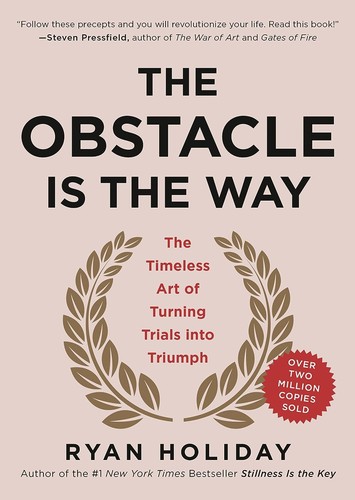
The Obstacle Is the Way: The Timeless Art of Turning Trials into Triumph
by Ryan Holiday
Read this if you want one Stoic idea developed at full book length.
This is Holiday's breakout book, published two years before The Daily Stoic, and it expands the single idea that anchors many of the daily entries: Marcus Aurelius's line that the impediment to action advances action, that what stands in the way becomes the way. Holiday organizes it into three disciplines (perception, action, will) and illustrates each with historical figures, from John D. Rockefeller to Amelia Earhart to Ulysses S. Grant, showing how each treated an obstacle as raw material. If you ever wished a Daily Stoic entry kept going for another thirty pages, this is that book.
The differences from the daily format are worth noting. It is a continuous argument rather than a calendar, the ancient quotations recede and Holiday's own voice and case studies carry the weight, and the framing leans toward achievement and competition, which is why it became a locker-room staple in professional sports. Readers who prefer the contemplative side of Stoicism sometimes find it too success-oriented. Pick it when you want the philosophy applied, aggressively, to a problem you are facing right now.
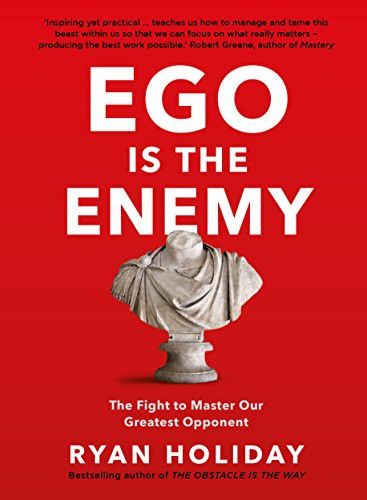
Read this for the Stoic discipline The Daily Stoic can only gesture at: humility.
Holiday's follow-up to The Obstacle Is the Way turns the lens inward. Its argument is that ego, the need to be recognized, to be right, to be special, sabotages people at every stage of life, and it is organized accordingly into Aspire, Success, and Failure. The method is the same one Daily Stoic readers know: short chapters, each built around a historical example, from William Tecumseh Sherman's deliberate self-effacement to Howard Hughes's self-destruction. The Stoic machinery is all here, focusing on what you control, doing the work without craving credit, treating setbacks as instruction.
It is the more uncomfortable of Holiday's two early books, and deliberately so; where The Obstacle Is the Way flatters your ambition, this one questions it. Some readers find the historical anecdotes selective, chosen to fit the thesis, which is a fair criticism of the genre generally. Read it second, after The Obstacle Is the Way, or read it first if you suspect your problem is not the obstacles in your path but the person walking it.
Read this for the hardest possible test of everything Stoicism claims.
Viktor Frankl was a Viennese psychiatrist imprisoned in Auschwitz and other camps, and the first half of this short book recounts what he observed there: that prisoners who held onto a reason to live, a person, a task, a future, survived in ways that defied their circumstances. His famous conclusion, that everything can be taken from a man but the freedom to choose his attitude in any given set of circumstances, is the Stoic dichotomy of control stated from inside the worst conditions of the twentieth century. The Daily Stoic cites Frankl's territory often; this is the primary source.
It is not a Stoic book, and the second half lays out logotherapy, Frankl's school of psychotherapy built on the human need for meaning, which reads more clinically than the memoir section. Where Holiday offers daily maintenance, Frankl offers a single, permanent recalibration; most readers report it changes how they think about complaint and adversity in one sitting. It is around 160 pages. If you read only one non-Holiday book on this list, make it this one.
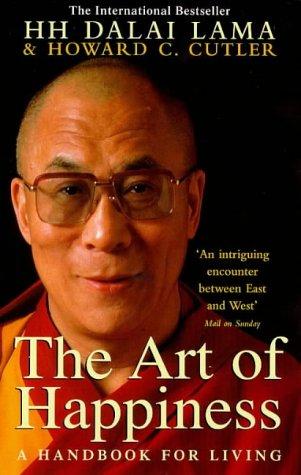
Read this if you want the Buddhist answer to the questions Stoicism asks.
This book is a series of conversations between the Dalai Lama and Howard Cutler, an American psychiatrist who presses him on everyday problems: anger, envy, suffering, loneliness. The overlap with Stoicism is genuine and frequently noted, since both traditions hold that suffering comes from our judgments and attachments rather than from events, and both prescribe deliberate mental training. Daily Stoic readers will recognize the project immediately: ancient contemplative practice translated into modern, practical terms, with Cutler playing the Holiday role of accessible interpreter.
The differences matter, though. Buddhism aims at compassion and the loosening of attachment where Stoicism aims at virtue and duty, so the flavor here is warmer and less martial; there is little of Holiday's talk of obstacles and enemies. Cutler's psychiatric framing and case studies also date the book somewhat, and some readers wish there were more Dalai Lama and less Cutler. Pick it when the Stoic register starts to feel grim and you want the same discipline with more warmth in it.
Read this if striving itself is the habit you want to examine.
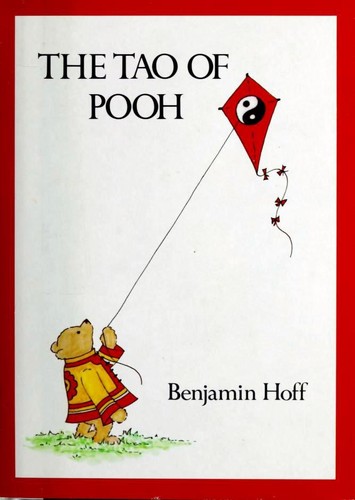
Benjamin Hoff explains Taoism through Winnie the Pooh, and the pairing with The Daily Stoic is more pointed than it looks. Both books distill an ancient philosophy into something a modern reader can use in an afternoon, and both prize equanimity, simplicity, and acceptance of what is. Pooh, in Hoff's telling, is the uncarved block, effortlessly content because he does not overthink or force anything, while clever Rabbit and gloomy Eeyore illustrate the ways busy minds defeat themselves. As a portrait of the calm The Daily Stoic is reaching for, it is surprisingly effective.
The philosophical direction, though, is nearly opposite to Holiday's. Stoicism, at least in its modern packaging, is a philosophy of disciplined effort; Taoism counsels wu wei, not forcing, letting things take their course. There are no exercises here, no historical case studies, just a gentle, sometimes whimsical argument that you are trying too hard. Read it as a counterweight when the relentless self-improvement of the Stoic shelf starts to feel like another form of striving. It takes about two hours.
Read this for the most readable and practical of the original Stoics.
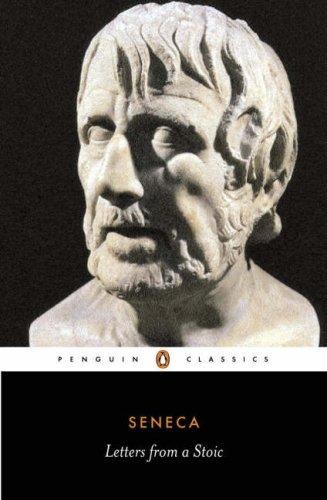
Seneca is the second pillar of The Daily Stoic, and his letters to his friend Lucilius are the most accessible entry point to ancient Stoicism, more so than Marcus Aurelius for many readers. Each letter takes a concrete topic, the fear of death, the use of time, crowds, friendship, wealth, and works it through in a conversational, often witty voice that feels startlingly modern. The format is also the direct ancestor of The Daily Stoic itself: short, self-contained pieces meant to be taken one at a time as a kind of correspondence course in living.
Two things to know. First, Seneca was one of the richest men in Rome and an advisor to Nero, and the gap between his preaching and his life is a long-running argument; he addresses the charge himself, and watching him do so is part of the interest. Second, most editions (the common Penguin translation included) are selections rather than all 124 letters, which is fine, since the best ones are always included. If Meditations feels too inward, start your primary-source reading here instead.
Read this only if you want maximum practical intensity and can forgive the salesmanship.
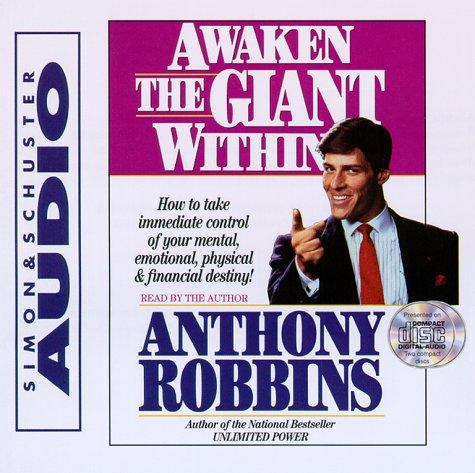
The honest connection first: Tony Robbins is not a Stoic, but the core mechanism he teaches is recognizably the same one. His central claim is that it is not events that shape us but the meaning we assign to them, which is Epictetus's famous line about being disturbed not by things but by our opinions of things, rebuilt as a self-help technology. The chapters on taking absolute responsibility for your responses, controlling your focus, and changing the questions you ask yourself will feel like Daily Stoic themes turned up to full volume.
Everything around that core is a different world. The book is long, repetitive, and unmistakably a product of early-1990s motivational culture, complete with NLP techniques, exclamation points, and plugs for Robbins's seminars; the calm, classical register of Holiday's book is entirely absent, and parts have not aged well. Readers who came to Stoicism precisely to escape hype should skip it. Readers who want energy and concrete exercises, and can take the useful 20 percent and leave the rest, will find that 20 percent genuinely useful.
Should I read Meditations or Letters from a Stoic first?
Either works, but they suit different readers. Meditations is a private journal, fragmentary and inward, best taken a page at a time; Letters from a Stoic is conversational and topic-driven, and most people find Seneca the easier first read. If you want the closest experience to The Daily Stoic's format, start with Seneca. If you want the book Holiday quotes most, start with Marcus Aurelius in the Gregory Hays translation.
What other books has Ryan Holiday written like The Daily Stoic?
The Obstacle Is the Way and Ego Is the Enemy, both on this list, are his core Stoic books, later joined by Stillness Is the Key to form a trilogy. He and Stephen Hanselman also wrote Lives of the Stoics, short biographies of the ancient philosophers, and The Daily Dad applies the daily-page format to parenting. He has since begun a series on the four cardinal virtues, starting with Courage Is Calling and Discipline Is Destiny.
Is The Daily Stoic a substitute for reading the original Stoics?
It is a good gateway but not a substitute. Each entry excerpts a few lines and adds a page of commentary, which is excellent for building a daily habit and a working vocabulary, but the originals contain the reasoning behind the maxims. The good news is that the main sources, Meditations, Seneca's letters, and Epictetus's Enchiridion, are all short, inexpensive, and far more readable than most people expect.
Do I need to read The Daily Stoic in calendar order?
No. The entries are grouped by theme into months (perception, action, and will across the year), but each page stands alone, so you can start on today's date, jump to a theme you need, or read several at a sitting. The one-per-day pace is a feature, though; the book works best as a recurring prompt for reflection rather than something to finish.
As an Amazon Associate, we earn from qualifying purchases. · About & methodology