Books Like The Absolutely True Diary of a Part-Time Indian
6 books like The Absolutely True Diary of a Part-Time Indian, from The Hate U Give to Everything Sad Is Untrue: funny, honest YA about living between two worlds.
Updated June 10, 2026
Sherman Alexie's 2007 novel earned its place on a generation of school reading lists by doing two things at once that almost never coexist. It is genuinely funny, narrated by fourteen-year-old Junior in wisecracks and Ellen Forney's cartoons, and it is genuinely devastating, packed with poverty, alcoholism, and an astonishing number of funerals for a book this short. Junior leaves the school on the Spokane reservation for the all-white farm town of Reardan, becoming a traitor at home and a curiosity at school, and the book's real subject is that in-between state: belonging to two worlds and fully to neither. It won the National Book Award for Young People's Literature and remains one of the most banned books in America, which tells you it never softened anything.
The books below are organized around the three things readers tend to want next. For the same living-between-cultures story, Erika L. Sánchez's I Am Not Your Perfect Mexican Daughter and Daniel Nayeri's Everything Sad Is Untrue are the closest matches, the second of which also shares Alexie's trick of telling true, terrible stories as if they were jokes and legends. For more YA that confronts injustice head-on, there is The Hate U Give and Speak. And for the outsider-kid voice itself, the funny, wounded first-person narrator, The Perks of Being a Wallflower and A Monster Calls carry that forward in different directions.
Two notes before you choose. Most of these deal frankly with heavy material (sexual assault in Speak, a police shooting in The Hate U Give, a parent's terminal illness in A Monster Calls), so check content if you are handing one to a younger reader. And nothing here replicates the cartoons; Forney's illustrations are half of what makes Junior's voice work, and A Monster Calls, with Jim Kay's illustrations in the original edition, is the only pick that uses art the same way.
Read this for another funny-sad freshman year told straight into your ear.
Stephen Chbosky's novel shares Alexie's format and his year: a first-person account of ninth grade, told in an intimate confessional register, this time as anonymous letters rather than a diary with cartoons. Charlie is, like Junior, the smart, damaged kid on the social margins who gets adopted by people who see him, and both books understand that a freshman year contains whole lifetimes: first parties, first love, books that crack you open, and grief that has arrived before the story even starts. The voices are different flavors of the same thing, Junior wisecracking, Charlie achingly sincere.
What it lacks is everything cultural. Charlie is a white suburban kid; there is no reservation, no poverty, no question of betraying a community by leaving it, so the book speaks only to the coming-of-age half of Alexie's novel. Its darkness is interior instead, mental illness and a slowly surfacing memory of abuse. Choose it if Junior's loneliness and tenderness were what kept you reading, and be ready for a heavier final act than the mixtape-sweet middle suggests.
Read this if the grief under Junior's jokes is what stayed with you, and you want the illustrated form again.
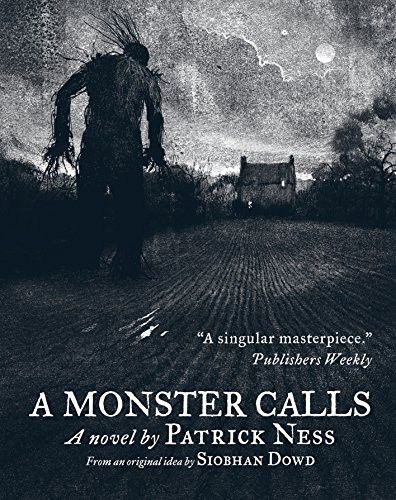
Patrick Ness's novel, from an idea by Siobhan Dowd, who died before she could write it, is the pick for the part of Alexie's book nobody warns you about: the funerals. Thirteen-year-old Conor's mother is dying of cancer, and a yew-tree monster arrives at 12:07 each night to tell him three tales and demand his one true story in return, the unbearable thing he cannot admit he feels. Like Diary, it is a book about a boy learning that you can hold two contradictory truths at once, and in its original edition it is the only book here that, like Forney's cartoons, makes illustration (Jim Kay's ink work) essential to the storytelling.
It is otherwise a very different machine: a short, fable-shaped novel with a fantasy frame, no school-year structure, no cultural identity thread, and almost no comedy beyond gallows flickers. It reads slightly younger on the surface and hits adults at least as hard as teenagers. Choose it when you want catharsis rather than company; it does in 200 pages what most grief novels cannot do at twice the length.
Read this if the code-switching between the neighborhood and the white school hit hardest.
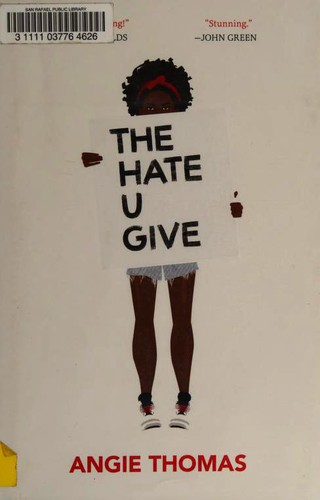
Angie Thomas's debut takes the exact social geometry of Alexie's novel, a teenager commuting daily between a poor community everyone else writes off and a wealthy white school, and raises the stakes. Starr Carter has spent years keeping her Garden Heights self and her Williamson Prep self separate; the wall collapses when she witnesses a police officer shoot her unarmed best friend Khalil. The book's sharpest material is the same as Alexie's sharpest material: the small daily negotiations of being the only one, what you let slide, what your friends say when they think it is harmless, who you get to be in each place.
It is a more plot-driven and more explicitly political novel, organized around the aftermath of the shooting, the grand jury, and Starr's decision about speaking out, with the humor carrying less of the load. It is also longer and reads slightly older. Pick this when you want the two-worlds story pointed directly at injustice in the present tense; it became the defining YA novel of its moment for a reason.
Read this for the outcast year told with the same dark wit and a harder silence at its center.
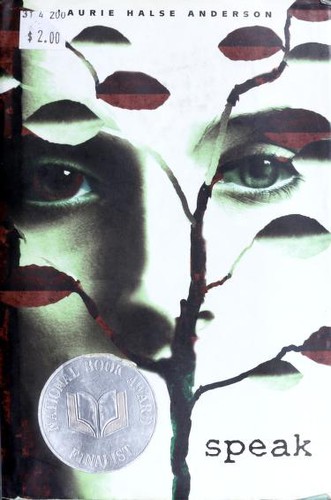
Laurie Halse Anderson's 1999 novel is one of the foundations Alexie's book stands on: the modern YA template of a wounded ninth grader narrating a hostile school year in short, sardonic bursts. Melinda starts high school as a pariah for calling the police on a summer party, and what nobody knows is why: she was raped there. Her voice is the connection to Junior, bitterly funny marginal commentary on cafeteria politics and clueless adults, and like Alexie, Anderson uses art (Melinda's art class tree project) as the place a silenced kid learns to say true things.
It is a more claustrophobic book. Where Junior talks constantly, to the reader, to Rowdy, to anyone, Melinda is going mute, and the novel is about the cost of not speaking, building to her finally naming what happened. There is no two-worlds or cultural dimension, and the subject matter is the heaviest on this list, handled without graphic detail but without flinching either. Frequently banned, like Alexie's book, and for similarly bad reasons.
Read this if Junior's fight between family loyalty and his own future was the heart of the book for you.
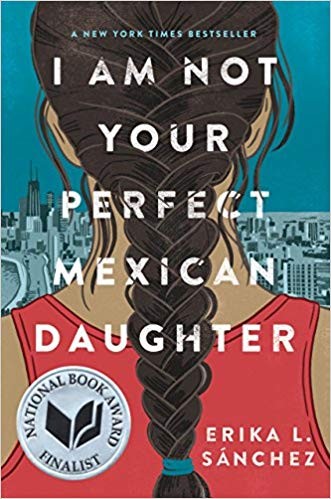
Erika L. Sánchez's National Book Award finalist is the closest structural match on this list. Julia is a Mexican American teenager in Chicago who wants college, writing, and a life beyond her neighborhood, and her ambitions read to her family the way Junior's transfer to Reardan reads to the rez: as betrayal. After her seemingly perfect sister Olga dies, Julia has to carry her parents' grief and expectations while uncovering who Olga really was. Like Alexie, Sánchez writes a first-person narrator who is sarcastic, observant, and angrier than she is allowed to show, and treats poverty and family obligation as daily texture rather than message.
It runs darker on the inside than Alexie's book: Julia's depression is depicted clinically and at length, including a crisis and treatment, where Junior's grief stays wrapped in jokes and cartoons. There are no illustrations and less comic relief, and it skews slightly older. Pick this if you want the bicultural coming-of-age story given full emotional weight; the humor is there, but it bites rather than bounces.
Read this for the same alchemy of true family pain turned into funny, winding stories.
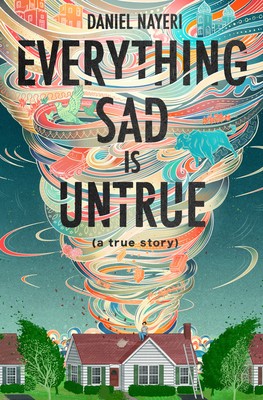
Daniel Nayeri's book is the spiritual sibling of Alexie's. It is also barely fictionalized autobiography: Khosrou, called Daniel, is an Iranian refugee kid in Oklahoma, the poor outsider in a classroom of skeptical Americans, telling his family's history like Scheherazade to an audience that does not believe him. The mix is exactly the one Alexie perfected, real loss and dislocation narrated with jokes, digressions, and legends, and both books are about a boy whose stories are the only thing he gets to keep when he leaves one world for another. It won the Printz Award in 2021.
The difference is form. Where Junior's diary moves in a straight line through a school year, Nayeri's narrator spirals, jumping between Persian myth, family memory, and Oklahoma humiliations in a deliberately tangled weave that some readers find magical and others find slow. It is gentler about adolescence (no basketball season, no romance to speak of) and more openly about faith, since his mother's conversion to Christianity is what forced the family to flee. Choose it for voice and storytelling over plot.
What is the closest book to The Absolutely True Diary of a Part-Time Indian?
From this list, I Am Not Your Perfect Mexican Daughter is closest in structure, a first-generation teenager torn between family loyalty and her own ambitions, and Everything Sad Is Untrue is closest in voice, true family hardship narrated with humor and storytelling flair. If you specifically want more Native American coming-of-age writing, Alexie's own story collection The Lone Ranger and Tonto Fistfight in Heaven covers the same Spokane reservation world for adult readers.
Why is The Absolutely True Diary of a Part-Time Indian banned in some schools?
It has appeared near the top of the American Library Association's most-challenged lists for years, usually cited for profanity, sexual references, and depictions of alcoholism and violence. Defenders, including many teachers, argue those elements are exactly what make Junior's account of reservation poverty honest. Several books on this list, including Speak and The Hate U Give, are frequent targets of the same challenges.
Is the book really autobiographical?
Substantially, yes. Like Junior, Sherman Alexie was born hydrocephalic, grew up on the Spokane reservation in Wellpinit, Washington, and transferred to the mostly white school in nearby Reardan, where he played basketball. He has described the novel as semi-autobiographical, with real events reshaped for the story. Readers should also know that in 2018 multiple women accused Alexie of sexual harassment, which has complicated how the book is taught and discussed.
What age is this book and these recommendations appropriate for?
Diary is generally recommended for about ages 12 to 14 and up, with frank talk about poverty, alcohol, and death. Of the books here, A Monster Calls reads youngest, The Perks of Being a Wallflower and Speak deal with sexual abuse and assault, and The Hate U Give and I Am Not Your Perfect Mexican Daughter sit at the older end of YA. All are commonly taught in middle and high schools, but check the specific content if buying for a younger reader.
As an Amazon Associate, we earn from qualifying purchases. · About & methodology