Find books like Paradise Lost with epic stakes, mythic language, theology, rebellion, and classic stories of ambition and fall.
Updated June 10, 2026
Paradise Lost casts the longest shadow in English poetry, and people come to it (and away from it) for different reasons. Some readers want more of the cosmic theater: Heaven, Hell, and the war between them, staged in language that earns the word sublime. Some are haunted by Satan, literature's first great antihero, magnetic and self-damning, and want to trace his descendants. And some simply want another epic poem that rewards slow reading the way Milton's blank verse does.
The list below covers all three paths. The verse epics that stand beside Paradise Lost (Dante, Spenser, Homer) each get an honest note about how their flavor differs from Milton's, because 'also an epic poem' undersells how differently these books feel. And two prose works are here on merit: novels that inherited Milton's themes of pride, rebellion, and a universe with stakes, for readers who want the grandeur without the line breaks.
A practical note: translations and editions matter enormously with these. Where it changes the experience, we've said so.
Read this to discover the rest of Milton. Lycidas alone is worth the price.
Before and after the epic, Milton wrote a body of shorter work that would have made him immortal on its own: Lycidas, possibly the greatest elegy in English; the companion poems L'Allegro and Il Penseroso; the masque Comus, a dry run for Satan's seductive rhetoric; and the late sonnets, including the devastating one on his blindness ('They also serve who only stand and wait'). If Paradise Lost gave you a taste for Milton's voice, this is where you hear its full range.
Dip rather than march: the shorter poems reward individual attention, and Paradise Regained and Samson Agonistes are usually included, making a complete-poems edition the best-value single volume of Milton there is.
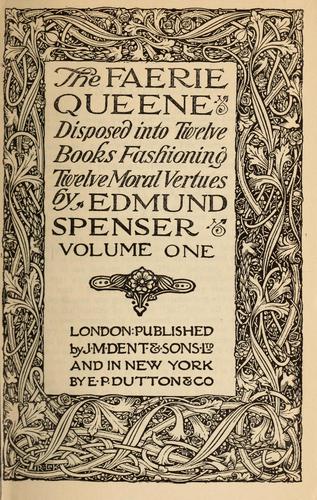
Read this for the epic Milton grew up on, England's other monumental poem.
Milton called Spenser 'a better teacher than Aquinas,' and Paradise Lost is steeped in The Faerie Queene: the serpentine deceivers, the allegorical set-pieces, the conviction that a poem can be a moral education. Spenser gives you knights errant (Holiness, Temperance, Chastity, each book testing one virtue) wandering a dream-England of enchanters, false duplicates, and gardens that are never just gardens.
Know what you're signing up for: it's longer than Paradise Lost, unfinished, and written in a deliberately archaic English that was old-fashioned even in 1590. The right approach is unhurried, an episode at a time, in an annotated edition (Hamilton's is standard). Readers who loved Milton's moral architecture more than his plot tend to love it most.
Read this for the other great Christian epic, the one Milton was answering.
Dante's poem is the obvious and correct first stop: the only other work in the Western canon that builds the entire Christian cosmos (Hell, Purgatory, Paradise) into poetry of equal ambition. Where Milton dramatizes the Fall as cosmic theater, Dante makes the afterlife a personal journey. He is his own protagonist, walking through the consequences of sin one circle at a time, settling scores with real Florentines as he goes. The Inferno's sinners, like Milton's Satan, are vivid precisely because damnation hasn't flattened their personalities.
The texture is very different: Dante is concrete, local, and gossipy where Milton is abstract and orchestral, and tercets move faster than Miltonic blank verse. For a first read, a translation with strong notes matters more than anything. Hollander or Musa for accuracy, Ciardi for momentum.
Read this for the other pillar of English poetry: human comedy instead of cosmic tragedy.
Chaucer is here as Milton's great counterweight. The Canterbury Tales is the other indispensable long poem in English, but it points the opposite direction: instead of God, Satan, and the Fall, you get a knight, a miller, a much-married wife, and two dozen other pilgrims telling stories that run from chivalric romance to outright filth, the full human range Milton deliberately left out. Reading both is how you triangulate English literature.
In Middle English it's more approachable than its reputation (and funnier); Nevill Coghill's modern verse translation is the painless way in. Best for readers who want to keep exploring the canon's foundations rather than chase Paradise Lost's particular sublime.
Read this if you want Milton's own next chapter: quieter, stranger, shorter.
Milton's actual sequel is the most underread item on this list. In four brief books, Satan returns to tempt Christ in the wilderness, and where Paradise Lost is a war epic, Paradise Regained is a duel of pure argument: two intelligences contending over what power, glory, and obedience mean. The Satan who swaggered through Pandemonium is here subtler, wearier, and in some ways more dangerous.
Readers expecting the sensory grandeur of the first epic are sometimes thrown by its austerity. Milton strips his style deliberately, to match a hero who conquers by refusing. Read it as a chamber piece after the symphony, ideally in an edition bundled with Samson Agonistes, the other great late Milton.
Read this for Milton's themes in prose: pride, blasphemy, and a magnificent doomed rebel.
Melville read Milton closely, and it shows. Ahab is Satan's great American descendant, a 'grand, ungodly, god-like man' hurling defiance at the heavens from the deck of the Pequod, dragging his world down with him in full knowledge. The novel even sounds Miltonic, with those rolling, clause-stacked sentences that rise into sermon, and its questions are Milton's questions: where defiance of God shades from heroism into damnation, and whether the universe's silence is malice or indifference.
It is, famously, also a book where the plot pauses for cetology. The digressions are the point; the novel is thinking out loud. Readers who finished Paradise Lost wishing novels still aimed at everything generally find this is the one that does.
Every convention Milton adopts and subverts comes from Homer, and Paradise Lost expects you to notice: the invocation of the muse, the epic catalogues, the councils of war, gods intervening in battle. The Iliad's war in heaven is literal, with Olympians taking sides over Troy while Achilles' rage burns through the human story. Reading it after Milton is like hearing the theme after the variations; you see exactly what Milton meant his 'higher argument' to surpass.
Homer's worldview is the real contrast: no redemption arc, no providence. Glory and mortality are the whole game, and the poem is more brutal and more humane for it. Translation choice shapes everything: Lattimore for epic formality, Fagles for fire, Emily Wilson for clarity and pace.
Read this for tragic grandeur with warmth, the gentlest epic here.
T.H. White's Arthurian cycle is this list's change of pace: a twentieth-century retelling that begins as comedy (young Arthur tutored by a time-scrambled Merlyn, transformed into fish and ants and geese) and darkens, movement by movement, into genuine tragedy. Its kinship with Milton is the long fall. Like Paradise Lost, it's the story of an attempt to build something good, the Round Table as Camelot's Eden, undone from inside by human nature, watched by an author who loves what's being lost.
There's no verse and no cosmology; the grandeur is moral and elegiac rather than sublime. Read it when you want Milton's sense of magnificent loss in a book that also makes you laugh.
The Divine Comedy is the strongest overall next read: the only other epic that builds the full Christian cosmos into poetry of equal ambition. If you want Milton specifically, his sequel Paradise Regained is short, strange, and underrated.
Are there modern novels like Paradise Lost?
Yes. Moby Dick is the great prose heir, with Ahab as Satan's American descendant. Beyond this list, Philip Pullman's His Dark Materials trilogy takes its title from Paradise Lost and retells the rebellion sympathetically, and Mikhail Bulgakov's The Master and Margarita gives the devil the best lines in twentieth-century fiction.
Is Paradise Regained worth reading?
Yes, with calibrated expectations. It trades the war-in-heaven spectacle for a tense battle of arguments between Satan and Christ in the wilderness, in a deliberately stripped-down style. Read it as a chamber piece after the symphony, not as Paradise Lost part two.
Which translation of the Divine Comedy or the Iliad should I choose?
For Dante: Hollander or Musa for accuracy with strong notes, Ciardi for momentum. For Homer: Lattimore for epic formality, Fagles for fire, Emily Wilson for clarity and pace. Paradise Lost itself needs no translation, but an annotated edition (Fowler or the Norton) pays for itself.
As an Amazon Associate, we earn from qualifying purchases. · About & methodology