7 books like Moby Dick, from Heart of Darkness to The Sea-Wolf: sea stories, obsession, and man against nature matched to what gripped you in Melville.
Updated June 11, 2026
Moby Dick is really two books wearing one cover, which is why readers come away from it wanting such different things. One book is the greatest sea adventure in American literature: Ahab's monomaniacal hunt for the white whale that took his leg, told by Ishmael from the deck of the Pequod. The other is everything Melville stuffed around the hunt, chapters on cetology and whale anatomy, sermons, metaphysics, the whiteness of the whale as a meditation on meaning itself. The plot is a thriller; the texture is a cathedral. Which of those two books you loved should decide what you read next.
This list covers both. If it was obsession and the darkness in men's souls, Heart of Darkness is the closest literary kin, and Extraordinary Popular Delusions and the Madness of Crowds gives you Ahab's madness multiplied across whole societies. If it was the sea itself and the contest between man and nature, The Old Man and the Sea distills that contest to its purest form, while The Sea-Wolf and The Call of the Wild give you Jack London's brutal, philosophical wilderness, and Robinson Crusoe goes back to the ancestor of every survival story. And if you want more Melville, Billy Budd, Sailor is his other masterpiece of life aboard ship.
A practical note: nothing here matches Moby Dick's bulk. Most of these are short, several under two hundred pages, so they make good decompression reads after Melville's six hundred. Each entry below says which side of Moby Dick it continues and what it will not give you.
Read this if Ahab's obsession was the part that haunted you.
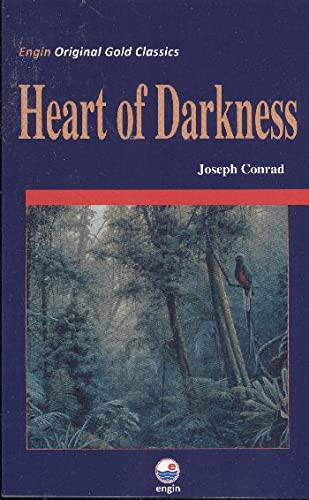
Joseph Conrad's 1899 novella is the book most often shelved next to Moby Dick, and the kinship is structural. Both are voyage narratives told by a thoughtful observer (Marlow up the Congo River, Ishmael aboard the Pequod) drawn into the orbit of a charismatic man who has gone past the edge of ordinary morality. Kurtz, the ivory trader Marlow travels to find, is Ahab's closest cousin in literature: a figure of immense will whom the wilderness has hollowed out. Conrad, like Melville, was a working sailor before he was a writer, and the authority of lived experience is in every page.
The differences matter. Heart of Darkness is barely a hundred pages, dense and oppressive where Moby Dick is sprawling and often funny, and its subject is colonialism in Africa rather than whaling, which has made it the center of a long critical argument, most famously Chinua Achebe's, about its portrayal of Africans. There are no digressive chapters and no encyclopedia; every sentence pulls toward the dark center. Pick it for the obsession and the moral abyss, not for the sea.
Read this for the hunt itself, stripped of everything else.
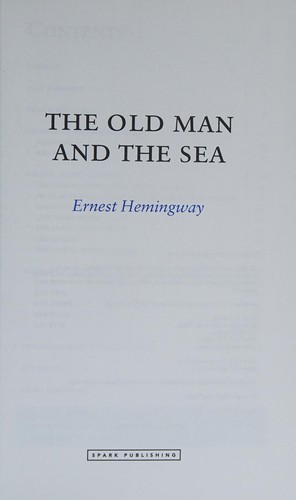
Hemingway's 1952 novella is Moby Dick's central situation reduced to its essence: one fisherman, one enormous fish, and days of struggle far from land. Santiago, the old Cuban fisherman who hooks a giant marlin after eighty-four days without a catch, faces the same questions Ahab does about pride, endurance, and what a man owes the creature he is trying to kill. The sea is rendered with the same intimate, professional knowledge Melville brought to whaling. It won the Pulitzer Prize and was cited when Hemingway won the Nobel in 1954.
The crucial difference is the heart of the protagonist. Ahab hates the whale; Santiago loves the marlin even as he fights it, calling it his brother, and the book is tender where Moby Dick is volcanic. Hemingway's prose is also the opposite of Melville's, short declarative sentences with nothing ornamental. At well under 150 pages it can be read in an evening. Choose it if you want the man-versus-sea contest with the metaphysics carried silently underneath rather than argued aloud.
Read this if you want more Melville without committing to another whale.
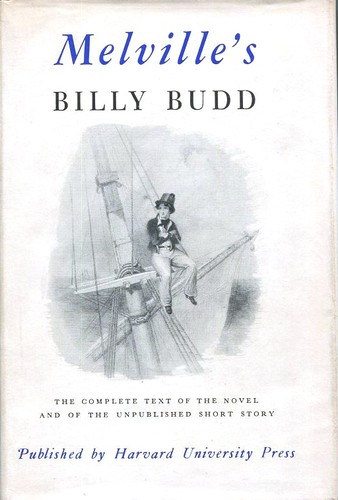
This is Melville's last work, found unfinished in manuscript at his death in 1891 and not published until 1924. It returns to the world he knew best, the wooden warship, and tells the story of Billy Budd, a handsome and innocent young sailor falsely accused of mutiny by the master-at-arms Claggart, and of Captain Vere, who must judge the consequences. The great Melville themes are all here: good and evil embodied in single men, the crushing machinery of law and authority, and the sea as a closed world where moral questions cannot be escaped.
It is a very different reading experience from Moby Dick: short, concentrated, and almost classical in shape, a tragedy in miniature rather than an epic. There are no cetology chapters and little adventure; the drama is moral and legal, building to a court-martial rather than a chase. Because Melville never finalized the manuscript, editions vary in details. Read it to see what Melville's mind was still wrestling with forty years after the Pequod sank.
Read this for nature stripping civilization away, fast and without mercy.
Jack London's 1903 classic shares Moby Dick's deepest subject: what the wild does to the creatures who enter it. Buck, a pampered California dog stolen and sold as a sled dog in the Klondike Gold Rush, is progressively stripped of his domestic self until something older and harder takes over. London writes the brutal North the way Melville writes the ocean, as a vast indifferent force that reveals what its inhabitants are actually made of, and the book carries a similar undercurrent of philosophy beneath the adventure.
It is the most accessible book on this list, often handed to younger readers, though its violence is unsentimental and its view of existence is bleak in a way childhood editions tend to soften. The perspective is a dog's, not a man's, there is no sea, and at around a hundred pages it moves at a sprint. Choose it when you want the man-against-nature (or creature-against-nature) thread of Moby Dick in its leanest, most propulsive form.
Read this if you want another dark captain ruling a ship like a small kingdom.
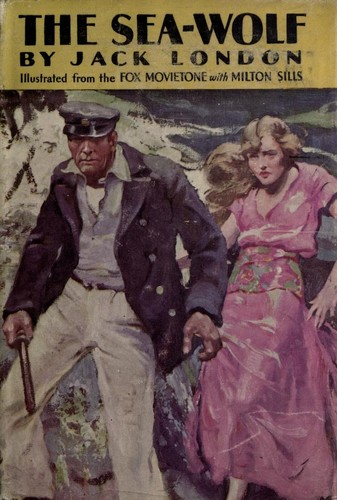
London's 1904 novel gives you the closest thing in American literature to another Ahab: Wolf Larsen, the brutal, self-educated captain of the sealing schooner Ghost, who rescues the soft literary critic Humphrey van Weyden from a ferry accident and then refuses to let him leave. Like Moby Dick, it is a shipboard novel where the captain's overwhelming personality is the weather everyone else lives under, and like Melville, London uses the voyage to stage real philosophical argument, with Larsen defending a savage materialism against van Weyden's idealism between bouts of violence.
The differences: the hunt here is for seals, not a single mythic animal, and the book swerves in its second half toward romance and survival plotting that most readers find weaker than the electric first half. London's prose is plainer and faster than Melville's, with no encyclopedic digressions. Pick it for Larsen, who is worth the price of admission on his own, and for the rare pleasure of a sea novel that takes ideas as seriously as storms.
Read this for the ancestor of every sea survival story, Moby Dick included.
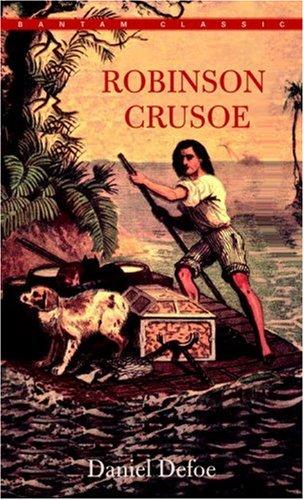
Daniel Defoe's 1719 novel is where the English-language sea narrative begins, and Melville knew it well; the lineage from Crusoe's shipwreck to Ishmael's survival is direct. Crusoe, the sole survivor of a wreck, spends decades on a deserted island methodically rebuilding civilization from salvage and will, and the book shares Moby Dick's fascination with the practical detail of survival at sea's mercy, the inventories, the labor, the craft. It is also, like Melville's, a deeply religious book underneath the adventure, with Crusoe reading his fate as providence.
Expect an older, slower kind of novel. The prose is early eighteenth century, the pacing is journal-like, and the colonial attitudes, particularly around Friday, the man Crusoe rescues and makes his servant, are of their time and have drawn centuries of criticism and response. There is no Ahab figure and no obsession; the drama is patience versus isolation. Read it for the foundations of the genre and for the strange comfort of watching order built from wreckage.
Read this if the madness interested you more than the whale.
This is the wild card on the list, and the only nonfiction. Charles Mackay's 1841 survey of mass manias, from the Dutch tulip bubble and the South Sea Company to alchemy, witch hunts, and the Crusades, is about the same disease Melville diagnosed in Ahab: the human capacity to fix on an idea and follow it past all reason. Where Moby Dick studies one man's monomania dragging a crew to destruction, Mackay studies whole societies doing it together, and the Pequod's doomed company looks different once you have read him.
Be honest about what this is: a Victorian compendium, anecdotal and entertaining rather than rigorous, and modern historians have corrected details, including how severe the tulip mania actually was. It is also long, though built for dipping into rather than reading straight through; the financial chapters have kept it a cult favorite among investors for over a century. Choose it only if Moby Dick's psychology of obsession is the thread you want to pull, because there is not a wave or a sail in it.
Heart of Darkness by Joseph Conrad is the most common answer, and for good reason. Both are voyage narratives told by a reflective observer drawn toward a man consumed by obsession, and both use the journey to ask large questions about evil and meaning. For the sea-hunt element specifically, The Old Man and the Sea is the closest match, one man against one great creature.
Is Moby Dick worth finishing if I stalled in the whaling chapters?
Many readers stall in the cetology chapters, and it is common advice that you can skim them without losing the story; the narrative chapters carry the plot. That said, the digressions are where much of the book's strangeness and humor live, and they pay off in the final chase. If Melville's density defeats you, The Old Man and the Sea or The Sea-Wolf deliver the core experience at a fraction of the length.
What else did Herman Melville write?
Billy Budd, Sailor, on this list, is his other acknowledged masterpiece, published posthumously in 1924. Beyond it, Typee (1846) was his bestselling book in his lifetime, drawn from his time in the Marquesas, and the short story Bartleby, the Scrivener is his most famous shorter work. Moby Dick itself sold poorly in 1851 and was only recognized as a classic decades after his death.
Which of these books is the quickest read?
The Old Man and the Sea, Heart of Darkness, The Call of the Wild, and Billy Budd are all novellas readable in one or two sittings, a deliberate contrast to Moby Dick's length. The Sea-Wolf and Robinson Crusoe are full-length novels, and Extraordinary Popular Delusions is a long reference-style book best dipped into a chapter at a time.
As an Amazon Associate, we earn from qualifying purchases. · About & methodology