6 books like The Canterbury Tales, from The Decameron to The Arabian Nights: frame narratives, story collections, and medieval classics worth reading next.
Updated June 10, 2026
Geoffrey Chaucer's The Canterbury Tales, written in the late 1300s and left unfinished at his death in 1400, is the founding story collection of English literature. Around thirty pilgrims, from a knight and a prioress to a miller, a pardoner, and the unforgettable Wife of Bath, ride from a Southwark tavern toward Becket's shrine at Canterbury, telling tales to pass the road. The genius is in the friction: each tale suits its teller, the tellers needle each other between stories, and the result is a portrait of an entire society, bawdy and pious and corrupt and noble all at once, in Middle English verse that still lands its jokes six centuries on.
What you read next depends on which half of that pleasure you want more of. If it is the frame narrative itself, a group passing time with stories, the direct family line runs through The Decameron, which Chaucer almost certainly knew, The Heptameron, which imitates Boccaccio in turn, and The Arabian Nights, where the frame is a matter of life and death. If it is the social satire, the skewering of friars, summoners, and human vanity, Juvenal's Satires is the Roman ancestor of that whole mode. The Divine Comedy and The Tales of Beedle the Bard sit at the edges, one a medieval pilgrimage of a very different kind, one a modern miniature of the moral-tale tradition.
A practical note: translation matters more here than on most lists. Chaucer is readable in the original with footnotes, but good modern versions exist (Nevill Coghill's verse translation is the classic gateway). The same goes for the others: pick a recent translation of The Decameron (Wayne Rebhorn) or the Comedy and these books open right up. None need to be read cover to cover; dipping in is historically how all of them were read.
Read this first, it is the book Chaucer himself was answering.
Boccaccio finished The Decameron around 1353, a few decades before Chaucer wrote, and the kinship is direct: ten young Florentines flee the Black Death of 1348 to a country villa and tell a hundred stories in ten days. Several Canterbury tales share plots with Boccaccio's (the Clerk's tale of patient Griselda is the clearest case), and the mix is the same one Chaucer perfected, courtly romance next to outrageous bedroom farce, pious legend next to anticlerical mockery. If you loved the variety and the earthiness, this is the source spring.
The difference is the frame. Boccaccio's ten storytellers are all young, rich, and polite, so the stories do not collide the way Chaucer's do; there is no Miller drunkenly interrupting, no Wife of Bath turning her prologue into a confession longer than her tale. What you gain is completeness (a hundred finished stories against Chaucer's two dozen) and prose instead of verse, which makes it the easier read in translation. The plague setting of the opening pages is also genuinely harrowing and worth the price of entry alone.
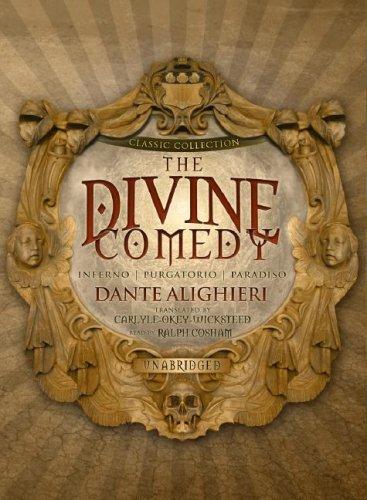
Read this for the other great medieval journey, with the comedy turned cosmic.
Dante completed the Comedy shortly before his death in 1321, and it is the other summit of medieval literature, a pilgrimage like Chaucer's but vertical: down through Hell, up Mount Purgatory, and into Paradise, guided first by Virgil. What it shares with The Canterbury Tales is the census of humanity. Dante fills his afterlife with popes, lovers, traitors, and neighbors from Florence, each judged and vividly characterized, exactly the sort of full-spectrum social portrait Chaucer draws in the General Prologue, and both poets are unsparing about corrupt clergy.
But this is not a story collection and it is not funny in Chaucer's way; the title means a story that ends well, not a comic one. It is a single sustained theological poem, dense with politics and doctrine, and it asks more of the reader than anything else on this list. Take it on when you want the medieval mind at full seriousness. Inferno is the gripping part and a fair test; if it takes, Purgatorio is many readers' favorite.
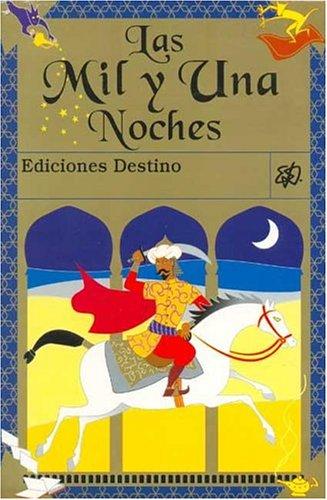
Read this if the frame story is the part you love, raised to life-or-death stakes.
The Thousand and One Nights is the great non-European frame narrative, compiled in Arabic over centuries from Indian, Persian, and Arab sources. Scheherazade, married to a king who kills each wife at dawn, survives by leaving a story unfinished every night, and the tales nest inside each other, stories within stories within stories, with a structural daring that makes even Chaucer look tidy. The famous pieces (Aladdin, Ali Baba, Sindbad, some of them later additions) sit alongside merchant tales, jinn stories, and comic anecdotes with the same high-low range as the Canterbury pilgrims' repertoire.
It differs in almost everything else: prose, not verse; a single teller with her life on the line rather than a sociable competition; and the worldview of the medieval Islamic city rather than Christian England. Editions vary enormously, from children's selections to Richard Burton's ornate Victorian version to modern scholarly translations, so choose deliberately. A good modern selection (the Penguin translation by Malcolm and Ursula Lyons) is the sensible way in.
Read this for the Decameron formula with the arguments after each story included.
Marguerite de Navarre, sister of King Francis I of France, wrote the Heptameron in the 1540s as a deliberate French answer to Boccaccio: travelers stranded by floods in the Pyrenees tell stories, mostly of love, seduction, and deceit, to pass the days. Her addition is the part Chaucer readers will recognize at once. After every tale the storytellers debate it, men against women, cynics against idealists, so the collection carries the between-tales sparring that makes the Canterbury links so alive, here expanded into real arguments about marriage, fidelity, and faith.
It is unfinished, like the Tales themselves, breaking off in the eighth day at seventy-two stories. The tone is more uneven than Boccaccio, swinging between bawdy anecdote and earnest religious moralizing, which reflects Marguerite's own evangelical piety. This is the deepest cut on the list and the right pick once you have read The Decameron and want to see where the tradition went next, with a woman's voice steering it.
Read this for the ancestor of Chaucer's satire, with all the warmth removed.
Juvenal wrote his verse satires in Rome in the late first and early second century, and they are the classical root of the satirical tradition Chaucer worked in; medieval writers knew and quoted him. The territory is recognizably the General Prologue's: hypocritical moralists, legacy hunters, bad marriages, the corruption of money, the noise and danger of the big city. Famous coinages like bread and circuses and who watches the watchmen come from these poems, and the third satire, on why the poet's friend is quitting Rome, is one of the great rants in literature.
What Juvenal lacks is Chaucer's affection. Chaucer mocks his pilgrims and plainly enjoys their company; Juvenal's indignation is scorched earth, and his sixth satire, against women, is notoriously vicious in a way the Wife of Bath gets to talk back to. There is also no frame and no storytelling, just the satirist's voice. Read it in a modern translation of the Satires (Peter Green's Penguin version is standard) to see how old, and how Roman, Chaucer's targets really are.
Read this for a light, modern echo of the medieval moral tale, in an afternoon.
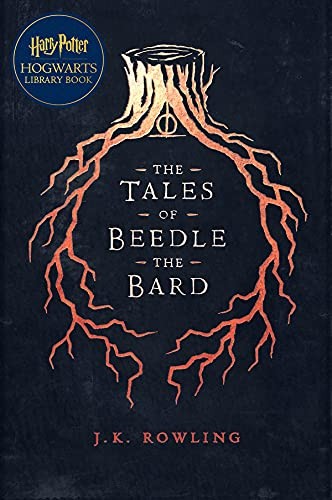
J.K. Rowling's 2008 collection is five wizarding fairy tales, the book bequeathed to Hermione in the final Harry Potter novel, presented with mock-scholarly commentary by Albus Dumbledore. The connection to Chaucer is the tradition it imitates: short moral tales like The Tale of the Three Brothers work exactly the way the Pardoner's Tale does, three men set out to cheat Death and are undone by their own greed, and the two stories are close enough that the resemblance is widely noted. Dumbledore's wry notes between tales even supply a faint version of Chaucer's frame, a commentator arguing with his material.
Be clear that this is a slim children's book, well under a hundred pages, not a classic on the level of anything else here, and readers without Harry Potter attachment will find it thin. Its real use on this list is as a reminder that the form Chaucer mastered, the brief tale that carries a moral sting, is still alive. Pleasant for an afternoon, ideal to hand to a young reader as a bridge toward the older books.
What is the most similar book to The Canterbury Tales?
The Decameron, without much competition. Boccaccio's collection predates Chaucer by a few decades, uses the same frame device of a group telling stories, mixes bawdy comedy with romance and moral tales in the same proportions, and supplied plots that Chaucer reworked, most famously the Griselda story in the Clerk's Tale. John Gower's Confessio Amantis, written by Chaucer's friend in the same years, is the closest English contemporary.
Do I need to read The Canterbury Tales in Middle English?
No. Nevill Coghill's verse translation for Penguin is the standard modern English version and keeps the rhythm and the jokes, and there are good interlinear and facing-page editions if you want the original alongside. That said, Chaucer's Middle English is far closer to ours than it first looks, and many readers manage the original with a glossed student edition. The General Prologue, the Miller's Tale, the Wife of Bath's Prologue and Tale, and the Pardoner's Tale are the usual starting set.
Did Chaucer finish The Canterbury Tales?
No. The plan announced in the General Prologue calls for each pilgrim to tell tales on the way to Canterbury and back, which would have meant well over a hundred stories, but Chaucer died in 1400 having completed around 24, and the pilgrims never reach the shrine. The surviving manuscripts even disagree about the order of the fragments. The Heptameron on this list is likewise unfinished, breaking off at 72 of a planned 100 stories.
What is a frame narrative, and what are other famous examples?
A frame narrative is a story that contains and motivates other stories, like the pilgrimage contest in The Canterbury Tales. The classic examples are The Decameron (ten Florentines fleeing the plague), The Arabian Nights (Scheherazade telling tales to delay her execution), and The Heptameron (travelers stranded by floods), all on this list. Later literature kept the device alive, from Wuthering Heights and Frankenstein to Cloud Atlas.
As an Amazon Associate, we earn from qualifying purchases. · About & methodology