8 books like Neuromancer, from Snow Crash to Altered Carbon: cyberpunk classics and successors matched to what you loved in William Gibson's original.
Updated June 10, 2026
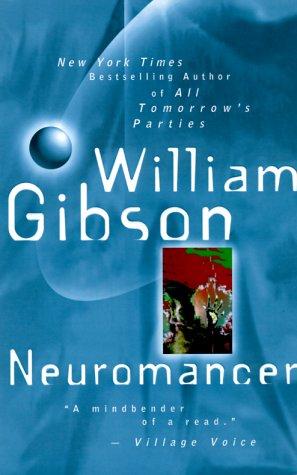
Neuromancer is the book that named cyberspace before the web existed. William Gibson's 1984 debut swept the Hugo, Nebula, and Philip K. Dick awards with the story of Case, a burned-out hacker hired by a mysterious employer for one last run, alongside Molly, a mercenary with mirrored lenses sealed over her eyes and blades under her fingernails. What still sets it apart is the prose: dense, fast, sensory, famously opening with a sky the color of television tuned to a dead channel. Gibson explains almost nothing, and the disorientation is part of the design. Forty years on, half of science fiction still lives in the world this book sketched.
Readers who finish it tend to want one of three things. If you want more of Gibson's own Sprawl, Count Zero continues the trilogy directly, and the graphic novel adaptation revisits Neuromancer itself in visual form. If you want cyberpunk's other landmark voices, Snow Crash, Altered Carbon, and Ghost in the Shell each took Gibson's raw material (virtual worlds, body modification, machine consciousness) somewhere distinct. And if you want the ideas with a lighter touch, The Diamond Age, Ready Player One, and Down and Out in the Magic Kingdom play the same themes in friendlier registers.
A practical note: nothing here matches Neuromancer's prose, because nothing does. Snow Crash is the easiest entry point, Altered Carbon the most violent, The Diamond Age the most demanding. Each pick below tells you which part of Neuromancer it echoes so you can choose by what actually hooked you.
Read this if you want cyberpunk's other foundational novel, played faster and funnier.
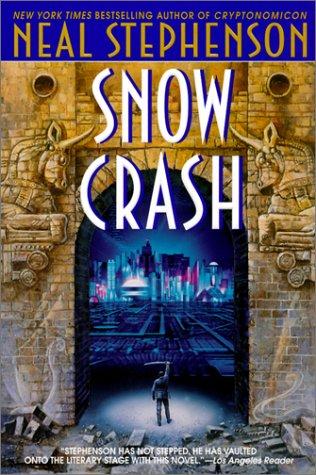
Neal Stephenson's 1992 novel is the book most often shelved beside Neuromancer, and it covers the same ground: a hacker hero, a fully realized virtual world (Stephenson's Metaverse, the term the tech industry later borrowed), corporate states that have swallowed government, and a plot that races between meatspace and the net. Hiro Protagonist, pizza deliveryman for the Mafia and greatest swordfighter in the Metaverse, chases a virus that crashes hackers' minds, and the ideas about language and ancient Sumer that drive the plot are genuinely ambitious.
The temperature is completely different. Where Gibson is noir, terse and cool, Stephenson is satirical and maximalist, opening with a thirty-page pizza delivery played as action comedy, and he happily stops the plot to lecture you on Babylonian mythology. Some readers find the ending abrupt. If Neuromancer's atmosphere was the draw, this will feel loud; if the worldbuilding and the hacking were the draw, this is the essential next book.
Read this if you want Neuromancer's noir served harder and bloodier.
Richard K. Morgan's 2002 debut is the most direct heir to Neuromancer's hardboiled side. Takeshi Kovacs, an ex-elite-soldier turned criminal, is downloaded into a stranger's body on Earth to solve a billionaire's apparent suicide, and the detective framework gives Morgan the same excuse Gibson used: a damaged professional descending through every layer of a corrupt future city. The central technology, consciousness stored in cortical stacks and resleeved into new bodies, pushes the questions Neuromancer raised about minds, memory, and what survives digitization.
Morgan is a far more conventional plotter than Gibson, which is both the appeal and the tradeoff: you get a clean mystery with answers, but none of Gibson's elliptical style. It is also much more graphic, with extended torture and sex scenes that earn the book its reputation. Pick it if you wanted Neuromancer to be a page-turner; the Netflix adaptation diverges enough that the book still surprises.
Read this only if you want to revisit Neuromancer itself in panels rather than prose.
This is not a similar book; it is the same story translated into comics form. For readers who struggled to picture Gibson's world (a common and fair complaint, since he describes everything obliquely), a visual adaptation does real work: Chiba City, the Sprawl, Molly's lenses, and the matrix get rendered concretely instead of implied. It also makes a natural reread, since Neuromancer is a book famous for making more sense the second time through.
Be honest about what you are getting: an adaptation compresses, and Neuromancer's greatest asset, the prose itself, is exactly what gets cut down in the translation. If you have just finished the novel, the other seven books here will give you something new, and this is better saved for later as a companion piece. It is the right pick mainly for visual readers, collectors, or anyone wanting a fast refresher before continuing the trilogy.
Read this if you want the virtual-world quest with all the grime sanded off.
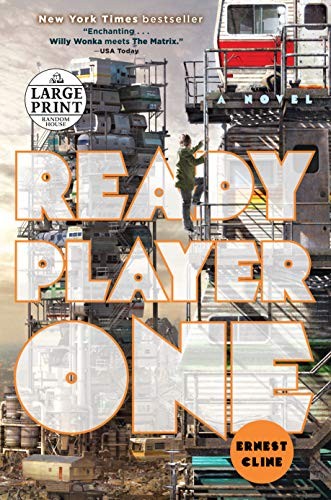
Ernest Cline's 2011 bestseller is the pop descendant of Neuromancer's central idea: a poor kid in a collapsing real world who only fully exists inside a planet-spanning virtual reality. Wade Watts hunts an Easter egg hidden in the OASIS by its dead creator, racing a predatory corporation that wants to own the simulation, and the corporate-villain stakes, the avatar identities, and the question of where real life actually happens all trace straight back to Gibson.
Everything else is opposite. Cline writes in plain, breezy prose stuffed with 1980s pop-culture references (ironically, the decade Neuromancer comes from), the tone is an upbeat treasure hunt rather than noir, and the moral universe is simple: good gamers, evil suits. Critics have been rough on it for exactly these reasons. Take it as a fast, nostalgic beach read that shares Neuromancer's geography but none of its edge, best for when you want fun rather than atmosphere.
Read this if you want to see what comes after cyberpunk.
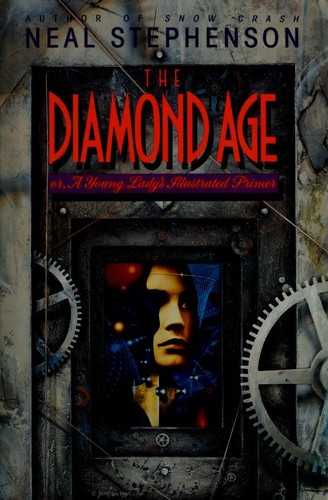
Stephenson's 1995 follow-up to Snow Crash is set in a future of nanotechnology and neo-Victorian enclaves, where a stolen interactive book, the Young Lady's Illustrated Primer, falls into the hands of Nell, a poor girl it begins to educate and raise. It shares Neuromancer's deep interest in how technology reshapes class and culture, and its street-level chapters, set among thetes and criminal gangs, are recognizably cyberpunk terrain. It won the Hugo, as Neuromancer did.
This is the most demanding book on the list. The plot sprawls, the final act divides readers, and Stephenson is more interested in education, tribes, and societies than in any heist or chase. It is post-cyberpunk in the literal sense: the rebellious hacker fantasy is over and the question is what civilization gets built next. Choose it if Neuromancer's ideas mattered more to you than its momentum; skip it if you want another tight thriller.
Read this if you simply want to go back to the Sprawl.
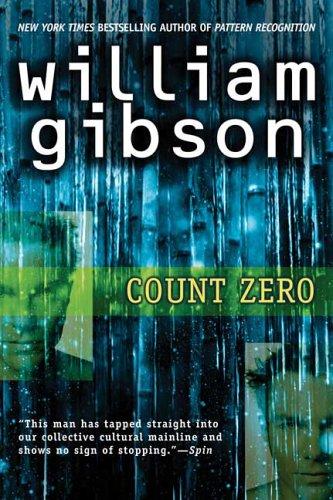
Count Zero is Gibson's direct sequel, set seven years after Neuromancer in the same world, and it is the obvious next book for anyone who wants more of the real thing: the same dense prose, the same matrix, and the aftermath of what Case's run set loose, with strange entities now haunting cyberspace in the guise of voodoo gods. Gibson braids three storylines, a teenage wannabe hacker called Count Zero, a mercenary extracting a defecting scientist, and an art dealer chasing mysterious boxes, into one converging plot.
It is a different shape of book: ensemble rather than single-protagonist, more controlled and arguably better constructed than Neuromancer, but without the first book's shock of the new. None of the original characters return in a central role, which surprises some readers. Read it (and Mona Lisa Overdrive, which completes the Sprawl trilogy) when what you miss is Gibson's voice specifically, because nobody else on this list writes like him.
Read this if the AI and the question of what counts as a mind hooked you.
Masamune Shirow's manga, first serialized in Japan in 1989, is cyberpunk's other great founding text and the closest match for Neuromancer's deepest theme: minds and machines merging until the boundary stops mattering. Major Motoko Kusanagi, a full-body cyborg leading the security unit Section 9, hunts hackers who rewrite human memories, and the storyline builds toward an encounter with a self-aware program that echoes Wintermute's trajectory in Neuromancer, an artificial intelligence pursuing its own becoming.
It is a different medium with a different temperament: procedural police action laced with dense philosophical asides, technical footnotes, and more comedy than the famous 1995 anime film suggests. Shirow's detailed, sometimes cheesecake-heavy art is of its era. If you would rather start with the distilled version, watch Mamoru Oshii's film first; if you want the source, the manga rewards the effort and clearly fed back into the same stream Gibson started.
Read this for post-scarcity cyberpunk where the only currency is reputation.
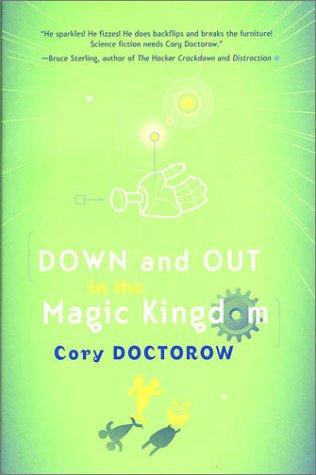
Cory Doctorow's 2003 debut takes Neuromancer's furniture, uploaded consciousness, casual body-swapping, a networked society, and asks what happens when the struggle is removed: death is reversible via backup, scarcity is over, and status is measured in Whuffie, a reputation score updated in real time by everyone around you. The hero fights a hostile takeover of Disney World's Haunted Mansion by rivals with better crowd metrics. As a thought experiment about identity and digitized selves, it is squarely in Neuromancer's lineage, and Doctorow released it free online, a very Gibson-hero move.
It is also short, light, and deliberately low-stakes compared to everything else here; no noir, no street, no menace. The interest is the economic idea, which proved prophetic about social-media clout, rather than plot or prose. Read it in an afternoon as a chaser, the utopian inversion of Gibson's dystopia, not as a main course.
If you want more Gibson, go straight to Count Zero and then Mona Lisa Overdrive, which complete the Sprawl trilogy, or his Burning Chrome story collection, which contains the original Sprawl short stories. If you want the genre's other pillars, Snow Crash by Neal Stephenson is the standard next stop, with Altered Carbon for a harder noir take.
Is Snow Crash or Neuromancer better to start with?
Neuromancer came first (1984) and defined the genre, but Snow Crash (1992) is the easier read: faster, funnier, and written in plain prose where Gibson is dense and elliptical. Most readers find Snow Crash more immediately fun and Neuromancer more rewarding on atmosphere and influence. Reading them in publication order shows you the genre inventing itself and then satirizing itself.
Why is Neuromancer considered so important?
It was the first novel to win science fiction's three major awards (Hugo, Nebula, and Philip K. Dick) in the same year, and it effectively codified cyberpunk: the word cyberspace, the hacker antihero, the megacorporation-dominated future, and the matrix as a visualized data world all entered the mainstream through it. Its fingerprints are on The Matrix, modern techno-thrillers, and how the tech industry itself talks about virtual worlds.
Is Neuromancer hard to read, and does that affect what I should pick next?
Yes, it is famously disorienting; Gibson drops you into slang and technology he never explains, and many readers say it improves on a second pass. If you enjoyed that density, Gibson's own Count Zero and Stephenson's The Diamond Age will suit you. If you fought through it, Altered Carbon and Ready Player One deliver related ideas in much more conventional, plot-forward prose.
As an Amazon Associate, we earn from qualifying purchases. · About & methodology