7 books like Ready Player One: virtual-reality quests and puzzle-hunt sci-fi from Snow Crash to Warcross and Project Hail Mary, matched by what you loved most.
Updated June 10, 2026
Ready Player One works because it stacks several distinct pleasures on top of each other. There is the OASIS, a fully realized virtual world you would happily live inside; there is the Easter-egg hunt, a puzzle-chase that doles out clues, keys, and gates with relentless momentum; there is Wade Watts, a broke teenage underdog whose only edge is how much trivia he has memorized; and there is the wall-to-wall 1980s nostalgia, where knowing your Pac-Man patterns and John Hughes movies is literally a survival skill. Few books try to be all of those things at once, which is exactly why finding a true read-alike is tricky.
Most readers who finish it want one of those itches scratched harder than the others. Some want more virtual reality and LitRPG-flavored gaming. Some chase the puzzle-hunt momentum, that clue-by-clue pull that makes you read past midnight. Some loved the underdog-hero wish fulfillment. And a few, having noticed Cline's prose is functional at best, quietly want the same fun delivered by a sharper writer. The seven books below are organized around those itches. Each entry tells you which part of Ready Player One it delivers and where it goes its own way, so you can pick by what you actually loved.
One honest note up front: nothing here replicates the sheer density of 80s references. That trick is mostly Cline's own (and his sequel Armada's). If the nostalgia catalogue was the whole appeal, manage expectations; if it was the gaming, the quest, or the hero, you are in great shape.
Read this if you simply want more of exactly Ernest Cline's style.
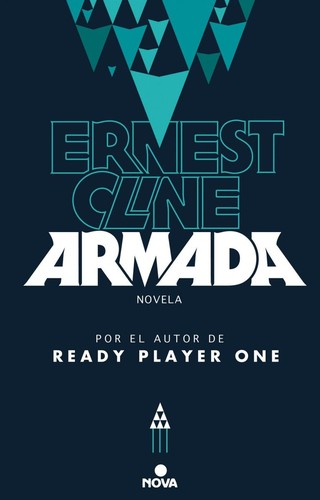
If what you loved was Cline's specific voice, the gamer wish fulfillment, the dense 80s and 90s references, the regular kid who turns out to be special, Armada is the obvious next stop because it is by the same author doing the same thing. Zack Lightman discovers that the alien-invasion video game he has mastered is secretly a training simulator for a real coming war, and suddenly his gaming skills make him humanity's hope. The nostalgia-soaked, underdog-saves-the-world DNA is identical to Ready Player One.
Honesty compels the caveat: Armada is widely considered the weaker book. The premise (a riff on The Last Starfighter and Ender's Game) is more predictable, and some readers feel the reference-dropping tips from fun into filler. It is a fast, breezy read that scratches the same itch on a smaller scale. Go in expecting comfort food rather than a step up, and you will likely have a good time.
Read this if you want the brilliant cyberpunk novel that made Cline's world possible.
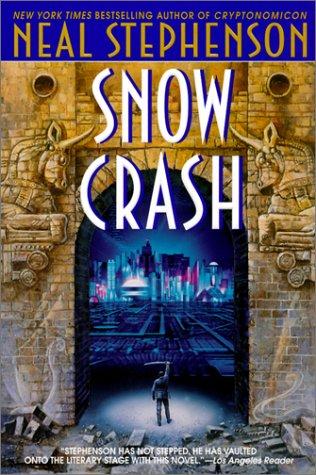
Neal Stephenson's Snow Crash basically invented the literary version of the OASIS: its 'Metaverse' is the direct ancestor of every shared virtual world that followed, Cline's included. You get a hacker-swordsman hero (named, with a straight face, Hiro Protagonist), a corporatized dystopian America, and a plot that fuses ancient mythology with computer-virus thriller mechanics. If the appeal of Ready Player One was a richly built digital reality you could lose yourself in, this is the smarter, stranger source code.
Be warned that Stephenson is a far more demanding writer. Snow Crash is denser, funnier in a satirical register, and prone to long info-dumps about Sumerian linguistics that some readers devour and others skim. It is also from 1992 and adult in tone, not a breezy YA romp. Choose it if you want substance and ideas over wish fulfillment, and do not mind working a little harder for the payoff.
Read this if the OASIS and the high-stakes tournament were what hooked you.
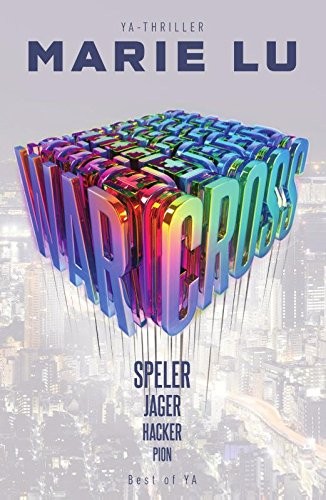
Marie Lu's Warcross is the most direct heir to Ready Player One's core fantasy: a globe-spanning virtual-reality game that everyone plays, a glamorous championship tournament, and a scrappy young outsider who hacks her way into the spotlight. Emika Chen is a teenage bounty hunter who glitches into the opening match of the Warcross championships and gets recruited by the game's billionaire creator to investigate a threat from inside. The immersive gaming, the conspiracy at the top levels, and the underdog-makes-good arc all map straight onto Cline's blueprint.
The differences are real. This is young-adult fiction with a romance subplot and a faster, lighter touch, and it swaps Cline's 80s nostalgia for a sleek near-future Tokyo aesthetic. It is also the first of a duology, so the story does not fully resolve in one book. Hand it to a reader who wanted more virtual reality and gaming thrill and does not mind a YA register or waiting for book two.
Read this if you want gaming culture inside a globe-trotting thriller.
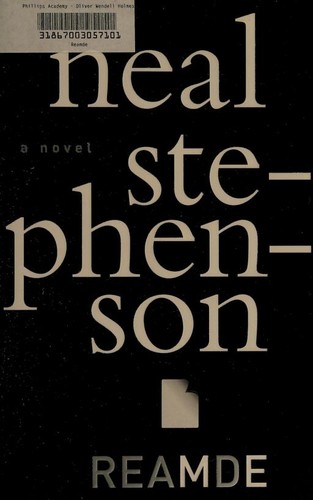
Neal Stephenson's Reamde is built around a massively multiplayer online game called T'Rain, and the way real money, hackers, and obsessive players swirl around it will feel familiar to anyone who loved the economy and culture of the OASIS. When a piece of malware spawned inside the game triggers a real-world ransom crisis, the plot explodes outward into a sprawling international thriller of gold farmers, cybercriminals, and gunfights. The gaming-meets-real-stakes premise is squarely in Ready Player One territory.
Temper your expectations on length and focus. Reamde is a doorstop (over a thousand pages) and spends far more time on guns, spies, and border-crossing chases than on virtual worlds, so it is more action-thriller than gamer fantasy. It is adult, intricate, and slow to start. Best for patient readers who want the gaming hook embedded in a big, meaty, grown-up thriller rather than a fast quest.
Read this if the deadly-competition stakes and underdog hero mattered most.
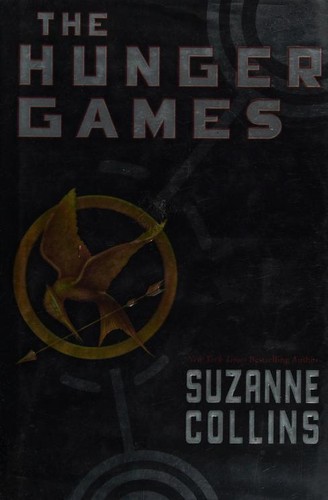
Suzanne Collins's The Hunger Games shares Ready Player One's most propulsive idea: an ordinary young person from the bottom of a stratified society is thrown into a high-stakes contest watched by the whole world, where wits and skill mean survival. Katniss, like Wade, is an underdog whose grit and quick thinking make her a folk hero, and the book has the same can't-stop-turning-pages, life-or-death competition momentum that drives Cline's egg hunt toward its finale.
The obvious difference is that there is no virtual reality, no gaming, and no nostalgia here; the arena is brutally physical and the tone is far darker, grappling with violence, inequality, and trauma rather than pop-culture joy. It is YA dystopia, not gamer wish fulfillment. Reach for it if the underdog-versus-the-system stakes and the relentless pacing were the real draw, and you want more weight behind them.
Read this if you loved the puzzle-solving momentum more than the gaming.
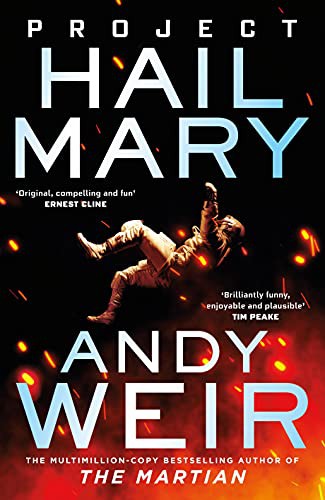
Andy Weir's Project Hail Mary delivers the exact reading experience that made Ready Player One a page-turner: a relentless chain of problems to solve, each cracked clue unlocking the next, with a lovable everyman hero whose cleverness is the whole point. Ryland Grace wakes alone on a spaceship with no memory and has to reason his way to saving humanity, one improvised experiment at a time. The clue-by-clue, just-one-more-chapter pull is even stronger here than in Cline.
What is missing is the virtual reality and the nostalgia. This is a science-forward survival story set in space, not a digital playground, and the puzzles are scientific rather than pop-culture trivia. But it shares Cline's optimism, humor, and underdog charm, plus a friendship at its center that readers adore. It is also simply better written. The ideal pick if the momentum and the hero, not the 80s, were what you came for.
Read this if Wade's grit and problem-solving were the appeal.
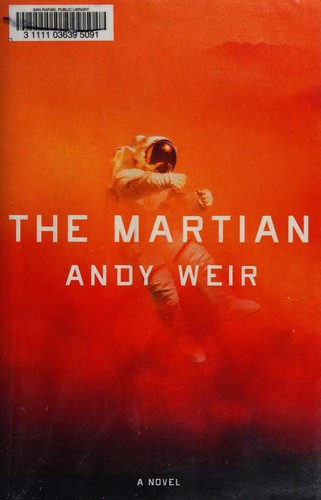
Before Project Hail Mary, Andy Weir wrote The Martian, and it runs on the same engine that powers Ready Player One's best stretches: a resourceful, wisecracking hero facing one solvable crisis after another, narrating his fixes with infectious humor. Astronaut Mark Watney is stranded on Mars and has to science his way to survival, and the reader gets the same satisfaction Cline delivers when Wade outsmarts a gate. The voice is funny, the stakes are high, the brain-teasers keep coming.
There is no game, no virtual world, and no nostalgia, so this is the furthest from Cline's surface trappings while staying close to his spirit of optimistic, competence-driven adventure. The technical detail is heavier (expect real chemistry and orbital mechanics), which most fans find thrilling and a few find dry. Pick it if you loved the underdog ingenuity and humor and are happy to trade the OASIS for the surface of Mars.
Yes. Ernest Cline published Ready Player Two in 2020, picking up shortly after the first book ends. Reception was decidedly mixed: fans who wanted more OASIS and more 80s and 90s references got them, but many reviewers found the nostalgia heavier and the new quest less charming than the original. If you loved book one without reservation, try it; if the pop-culture name-checking already felt like a lot, you may want to start elsewhere on this list.
What should I read first from this list?
Read Warcross if you want the closest match to the virtual-reality gaming thrill, Snow Crash if you want the smarter cyberpunk ancestor that inspired the whole genre, or Project Hail Mary if what you really loved was Cline's puzzle-solving momentum and underdog hero rather than the 80s nostalgia specifically.
Are these books as full of 80s references as Ready Player One?
No, and that is worth setting expectations on. The wall-to-wall 80s and 90s pop-culture cataloguing is fairly unique to Cline (Armada repeats the formula). The other books here deliver the gaming, virtual reality, puzzle-hunt, or fast sci-fi thrills you came for, but with their own settings and far fewer (or zero) nostalgia name-drops. Most readers find that a feature, not a bug.
Should I read Armada by Ernest Cline?
Armada (2015) is Cline's follow-up and the most direct tonal match here: same voice, same gamer-hero wish fulfillment, same dense 80s references. But it is widely considered the weaker book, leaning on a more predictable story (a teen's favorite game turns out to be alien-invasion training, in the vein of The Last Starfighter). Read it if you want more of exactly Cline's style and can forgive a thinner plot.
As an Amazon Associate, we earn from qualifying purchases. · About & methodology