7 books like Eragon, from Dragonflight to Pawn of Prophecy and The Name of the Wind: dragon riders, farm-boy heroes, and epic fantasy worth reading next.
Updated June 10, 2026
Eragon is the farm-boy fantasy template executed with total sincerity and one irresistible addition: the dragon is yours. Christopher Paolini, famously fifteen when he started writing it, built Alagaësia openly out of his influences, Tolkien's elves and dwarves, Star Wars' story beats, McCaffrey's rider-dragon bond, and the result works because of that bond. Saphira hatches for Eragon, speaks in his mind, and grows up alongside him, and the telepathic partnership between boy and dragon is the thing readers actually miss when the Inheritance Cycle ends.
This list is organized around which part you want more of. For the dragon bond itself, Dragonflight is the book Paolini drew the idea from. For the classic young-hero apprenticeship, Pawn of Prophecy and The Ranger's Apprentice deliver the mentor-and-destiny arc, and The Hobbit is the root of the whole tradition. The Name of the Wind is the step up for readers ready for adult fantasy, Percy Jackson is the faster modern-day alternative, and Archer's Goon is the wildcard for readers who want something stranger.
A practical note: these range widely in reading level. Ranger's Apprentice and Percy Jackson sit younger than Eragon, The Hobbit and Pawn of Prophecy sit about level with it, and The Name of the Wind and Dragonflight are adult books, with Rothfuss in particular asking for patience with an unfinished series. Pick by how far up you want to reach.
Read this if you want the book Alagaësia is ultimately built on.
Paolini's debt to Tolkien is right on the surface, the elves, the dwarves, the invented languages, the map at the front, and The Hobbit is the friendliest way into that source material. Bilbo Baggins is pulled out of a comfortable home onto a quest across mountains and forests to a dragon's hoard, and the shape of the journey, an unlikely hero growing into courage stage by stage, is the same arc Eragon walks from Carvahall to the Varden. Smaug remains the dragon every other fantasy dragon is measured against.
The difference is age and tone. The Hobbit was published in 1937 and written for children, so it is shorter, lighter, and more playful than Eragon, with a narrator who jokes with the reader; the dragon is the adversary here, not a companion. If you have already read it, the next step is The Lord of the Rings, which matches Eragon's scale and seriousness far more closely. If you have not, this is the gap to fill first.
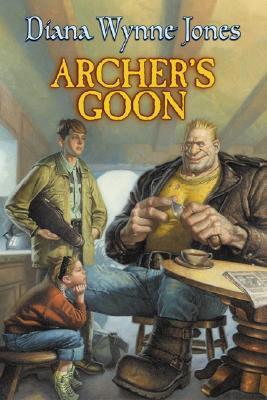
Read this only if you want a clever palate cleanser rather than another epic.
This is the odd one out on the list, so be clear about what it is: a 1984 Diana Wynne Jones novel in which a boy named Howard comes home to find a hulking Goon in the kitchen, sent by a mysterious figure named Archer, and gradually uncovers that seven strange siblings secretly run, or 'farm,' every aspect of his town. What it shares with Eragon is a young protagonist discovering hidden power and his own surprising place in the scheme, plus real magic and real stakes under the surface.
Everything else is different. It is set in modern Britain, not a secondary world; there are no dragons, swords, or quests; and the pleasure is in the wit, the twisty plotting, and a genuinely great final reveal rather than in epic sweep. Diana Wynne Jones (best known for Howl's Moving Castle) is one of the sharpest fantasy writers the genre has produced, but readers who want more Alagaësia specifically should pick almost anything else here first.
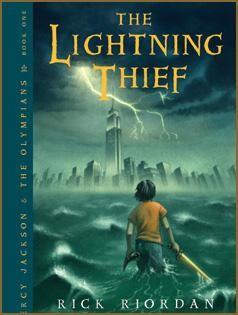
Percy Jackson & The Olympians: The Lightning Thief
by Rick Riordan
Read this if you want a young hero's destiny story told at triple the speed with jokes.
Strip away the settings and Percy and Eragon are the same boy: an ordinary teenager who learns his parentage makes him extraordinary, gets a powerful companion and wise mentors, and is thrown into a war among forces older than he can grasp. Riordan's version trades Alagaësia for modern America with Greek gods living above the Empire State Building, and a monster-fighting quest from New York to Los Angeles keeps the destiny arc moving at a pace Paolini never attempts.
The trade-offs are obvious within a chapter. Percy narrates in first person with constant wisecracks, the chapters are short, and the book skews younger and lighter than Eragon, with no real worldbuilding to sink into and no dragon. Pick it if Eragon's pacing dragged for you, or hand it to a younger reader not ready for 500-page epics; skip it if the slow immersion in an invented world was exactly what you loved.
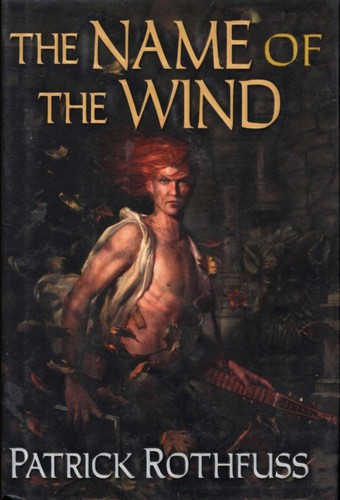
Read this if you loved the magic system and are ready for adult fantasy.
Patrick Rothfuss's novel is the most common 'what's next after Eragon' answer for readers aging up, and the overlaps are specific. Kvothe, like Eragon, is a gifted rural boy orphaned by supernatural killers (the Chandrian, his version of the Ra'zac) who trains in a structured, rule-bound magic, and the University chapters deliver the learning-magic-step-by-step pleasure of Eragon's apprenticeship under Brom and Oromis. Sympathy, Rothfuss's energy-transfer magic, is the kind of rigorous system Paolini fans tend to love, and the prose is a class above almost anything in the genre.
It is an adult book, slower and more interior, framed as Kvothe narrating his own legend from retirement, and there are no dragons in any Eragon sense. The bigger warning is practical: this is book one of a trilogy whose third volume has not been published since the second appeared in 2011, and there is no release date. Read it knowing you are signing up for an unfinished story that is still, for most readers, worth it.
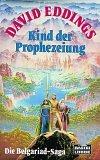
Read this for the purest farm-boy-of-destiny series ever written.
If Eragon's underlying story is what you loved, David Eddings wrote its cleanest version two decades earlier. Garion is a kitchen boy on a quiet farm who is swept into a continent-crossing quest by his mysterious Aunt Pol and the old storyteller Belgarath, both of whom are far more than they appear, and the prophecy slowly closing around him works exactly the way Eragon's destiny does. Mentor figures, an evil god's stolen artifact, a band of companions each from a different nation: every comfort-food beat is here, executed with charm.
The Belgariad is lighter than Eragon, leaning on banter among the traveling party rather than battle scale, and the first book is mostly setup that the next four volumes pay off; the whole five-book series reads fast. Modern readers should expect some dated, formulaic edges, Eddings was openly writing to a template, but as a next series for a teenager who just finished the Inheritance Cycle, it is the easiest recommendation on this list.
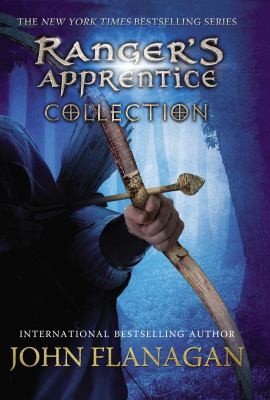
Read this if the Brom apprenticeship chapters were your favorite part.
John Flanagan's series takes the mentor relationship at the heart of early Eragon and makes it the entire engine. Will, a small orphan passed over for knight training, is apprenticed instead to Halt, a grim, laconic Ranger, and the book is built from the patient details of his training: tracking, stealth, archery, knife work. Halt is the closest thing on this list to Brom, right down to the dry corrections and the hidden past, and the bond that forms between master and apprentice is the series' real subject.
There is no magic to speak of and no dragons; the Rangers' 'sorcery' is just skill, and the fantasy kingdom of Araluen is essentially medieval England with the names changed. It also reads younger than Eragon, with simpler prose and lower stakes in the early books. That makes it ideal for readers on the younger end, or anyone who wanted more training and craft and fewer ancient-language incantations.
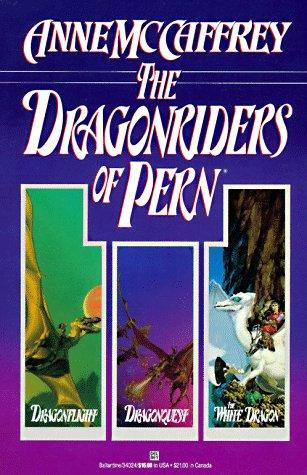
Read this for the original telepathic dragon-rider bond that Eragon borrowed.
Anne McCaffrey invented the thing you miss most. On Pern, dragons hatch and Impress on a single rider in a lifelong telepathic bond, fight a sky-borne menace called Thread, and converse mind-to-mind with their partners; Saphira and Eragon's relationship is a direct descendant, and Paolini has acknowledged McCaffrey's influence. Dragonflight follows Lessa, a dispossessed noblewoman who becomes rider to the queen dragon Ramoth just as Thread returns after a long absence everyone mistook for forever.
This is a 1968 adult novel, and it shows in both interesting and dated ways. Pern is technically science fiction (a lost human colony, which the books gradually reveal), the politics are more central than the action, and some gender dynamics have aged badly. Lessa is also a thornier, more ruthless protagonist than Eragon. Expect a denser read that rewards patience, and the deepest dragon-rider worldbuilding ever put on paper.
What should I read after finishing the Inheritance Cycle?
Stay with Paolini first if you have not exhausted him: The Fork, the Witch, and the Worm and Murtagh both return to Alagaësia after the original four books. After that, the most common next steps are Dragonflight for the dragon bond, The Belgariad for the same hero's-journey comfort, and The Name of the Wind for readers ready to move into adult fantasy.
Is there a book with a dragon bond like Eragon and Saphira's?
Anne McCaffrey's Dragonriders of Pern series is the original source of the idea: dragons Impress on a single rider at hatching and share a lifelong telepathic link, which is essentially the model Paolini used. For a more recent take, Naomi Novik's Temeraire series pairs a Napoleonic naval captain with a talking dragon, and Rachel Hartman's Seraphina offers a YA world of dragons in human form.
Is Eragon based on other books?
Paolini has been open about his influences. The story structure tracks the classic hero's journey and closely parallels Star Wars (orphan on a farm, murdered guardians, a wise old mentor who once served a fallen order), while the elves, dwarves, and invented languages come from Tolkien and the rider-dragon bond from Anne McCaffrey's Pern. That borrowing is a common criticism of the book and also a useful map for finding what to read next.
Which of these books are good for younger readers?
The Ranger's Apprentice and Percy Jackson are the most accessible, suitable for roughly ages 10 to 13, and The Hobbit and Archer's Goon work for the same range. Pawn of Prophecy reads comfortably at Eragon's own level, around 12 and up. The Name of the Wind and Dragonflight are adult novels, better saved for older teens, with some mature content and slower pacing.
As an Amazon Associate, we earn from qualifying purchases. · About & methodology