9 books like The Name of the Wind, from The Lies of Locke Lamora to Mistborn and Uprooted: lyrical prose, magic schools, and storyteller heroes.
Updated June 10, 2026
The Name of the Wind casts its spell with voice. Kvothe, a legendary figure now hiding as a small-town innkeeper, narrates his own life to a chronicler over three days, and Rothfuss writes that telling in prose that actually earns the word lyrical: rhythmic, musical, obsessed with names and silence. Underneath the voice is a sturdy frame, an orphaned performer's climb through poverty into the University, where sympathy works like thermodynamics and naming works like poetry, all shadowed by the Chandrian who killed his family. The gap between the broken man telling the story and the brilliant boy in it is the book's real engine.
Nothing replaces that voice exactly, so this list sorts by what you want carried forward. The Wise Man's Fear is the direct continuation and the place to start. For another charismatic underdog narrating his own rise, The Lies of Locke Lamora is the standout. For magic with rules and momentum, Mistborn: The Final Empire and The Way of Kings deliver what Rothfuss only sketches. And for the prose itself, the atmosphere and sentence-level pleasure, The Night Circus and Uprooted come closest, with A Darker Shade of Magic, The Priory of the Orange Tree, and The Bone Season rounding out the worlds worth living in.
One thing to know going in: the Kingkiller Chronicle remains unfinished, with The Doors of Stone unreleased since The Wise Man's Fear came out in 2011. That is a real consideration, and it is part of why this list leans toward completed series. Each entry below says what it shares with Kvothe's story and what it trades away.
Read this first, it is simply the second day of Kvothe's telling.
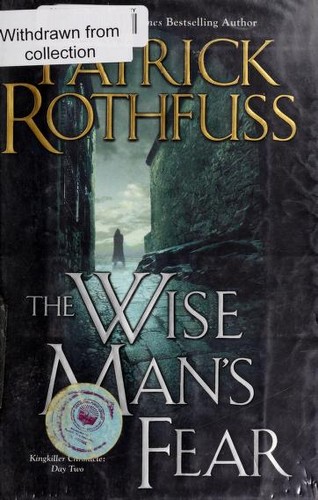
If you finished The Name of the Wind and have not read this, the decision makes itself. The Wise Man's Fear picks up the frame story the next morning and follows Kvothe out of the University and into the wider world: the court of the Maer in Vintas, a bandit hunt in the Eld, the Adem mercenaries and their fighting philosophy, and a detour into the Fae with Felurian. The voice, the music, and the slow accumulation of the Chandrian mystery are unchanged, and at over a thousand pages it is a third again longer than the first book.
It is also a looser book, and honesty requires saying so. The middle stretch is episodic, the Felurian section divides readers sharply, and Kvothe's competence starts shading toward wish fulfillment in ways the first book mostly avoided. And the larger caveat stands: day three, The Doors of Stone, has no release date after more than a decade. Read it knowing you are signing up for a magnificent, unresolved middle.
Read this if you want the magic system Rothfuss implies, fully built and paid off.
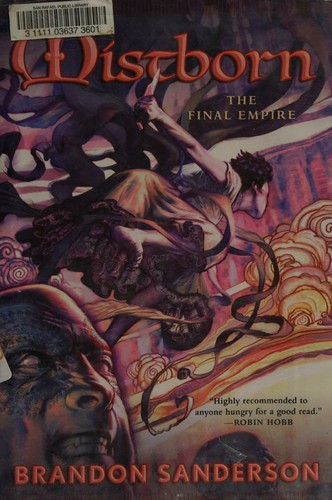
Rothfuss and Sanderson are the two names most often said in the same breath, and the pairing makes sense. Both write underdogs mastering a craft: where Kvothe learns sympathy at the University, street thief Vin learns Allomancy, burning swallowed metals for precise powers, under the charming crew leader Kelsier. Sanderson treats magic with the same rigor Rothfuss gives sympathy's laws of energy and binding, and the training scenes, the found-family crew, and the rise from poverty all hit the Kvothe notes directly.
What you trade is the prose and the intimacy. Sanderson's writing is workmanlike, clear glass rather than music, and there is no first-person voice, no frame story, no unreliable legend. What you gain is structure: a heist plot that tightens every hundred pages, twists that are genuinely set up, and a trilogy that is actually finished, with an ending widely considered one of the genre's best. For readers burned by waiting on book three, that completeness is the whole argument.
Read this if you want the epic scale Kingkiller hints at, with a finished-feeling arc per book.
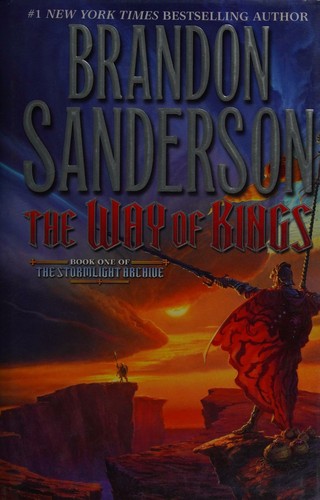
The Way of Kings shares with The Name of the Wind a patient, character-first approach to epic fantasy: long stretches of ordinary struggle that make the eventual triumphs land. Kaladin, a gifted surgeon's son betrayed into slavery and forced to run siege bridges into arrow fire, is the closest thing on this list to Kvothe's arc of brilliance ground down by poverty and injustice, and his flashback structure echoes the way Kingkiller cuts between past and present. The world of Roshar, scoured by highstorms, is built with a thoroughness Rothfuss's Four Corners only gestures at.
It is a different reading experience: third person, multiple viewpoints, over a thousand pages, and prose that serves the story without ever being the point. The Stormlight Archive also runs long, five of a planned ten books exist, though each volume resolves far more than a Kingkiller book does. Choose it when you want immersion measured in weeks and a world that rewards the investment.
Read this for the closest match to Kvothe himself.
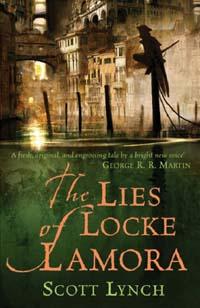
Locke Lamora is the character most often recommended to people who love Kvothe, and the kinship is obvious: a quick-tongued orphan of uncommon talent, raised hard, trained in an unusual education (a fake priesthood of con artists rather than a University), surviving on wit, audacity, and performance. Lynch even interleaves flashbacks of Locke's upbringing with the present-day plot, giving the same two-timeline pleasure as Kingkiller's frame. The city of Camorr, canals and shark fights and towers of alien glass, is rendered with real flavor, and the dialogue is the best on this list.
The differences are tone and content. There is almost no magic and no school of it; Locke's genius is entirely mundane. The book is also far coarser and crueler than Rothfuss, with inventive profanity and sudden, brutal losses that Kingkiller never inflicts. Where Kvothe narrates with melancholy, Lynch writes with swagger and a knife behind his back. Pick it for the charismatic schemer, not for lyricism, and know the series is ongoing but each book closes its story.
Read this for a quick, stylish magic fix between epics.
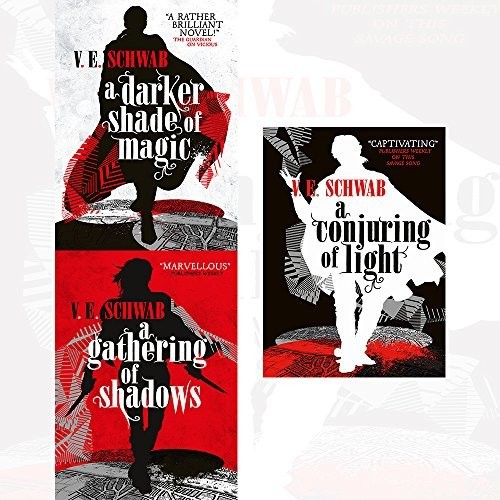
Schwab offers the part of The Name of the Wind that is pure atmosphere and competence: a gifted young magician moving through dangerous, beautiful places. Kell is one of two surviving Antari, blood magicians who can cross between four parallel Londons, and the novel runs on the contrast between them, magic-soaked Red London, starving White London, mundane Grey. His pairing with Lila Bard, a thief who wants a ship and a bigger life, supplies the banter and ambition that Kvothe and Denna circle around, with less ache and more momentum.
This is a leaner, faster book than anything Rothfuss writes, closer to three hundred pages of chase than a thousand of telling. The magic is intuitive rather than studied, there is no school, no music, and the prose is sleek rather than lyrical. Treat it as a palate cleanser with sequels on deck, not as the next great immersion. Readers who want Kingkiller's depth should set expectations accordingly.
Read this if you want a complete epic in one enormous volume.
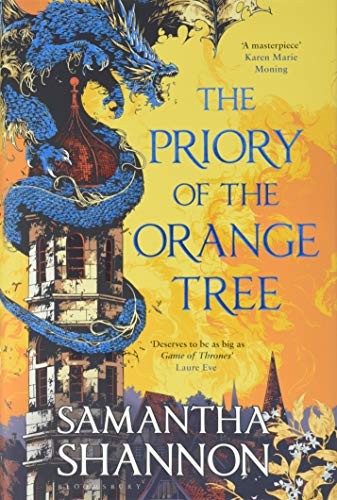
Priory answers a specific Kingkiller frustration: it delivers the full epic arc, dragons, ancient evil rising, secret histories, mage orders, in a single standalone book. Shannon builds two civilizations in conflict, a West that reveres dragonslaying queens and an East that rides dragons as sacred partners, and threads four viewpoints toward the return of the Nameless One. Like Rothfuss, she cares about how myths distort the events underneath them; the gap between the legend of Galian the Saint and the truth is very much a Kvothe-shaped theme.
What it lacks is a Kvothe. There is no single intimate voice, no frame story, and the rotating perspectives keep you at more distance than Kingkiller's confessional first person. The opening few hundred pages ask patience while the map fills in, and the prose is solid rather than musical. Pick it when you want scope with a guaranteed ending, particularly if you also want an epic where women hold most of the power.
Read this if Rothfuss's prose mattered more to you than his plot.
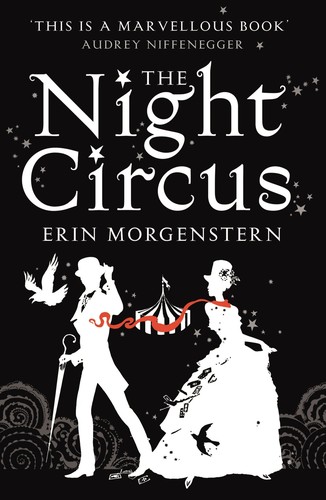
The Night Circus is the purest prose-and-atmosphere pick here. Morgenstern's circus arrives without warning, opens only at night, and contains tents of impossible wonders, and the novel moves through it in sensory, present-tense set pieces that aim for the same enchantment as Kvothe's nights in the Eolian or the Fae. The story is a decades-long magical duel between two young illusionists, Celia and Marco, bound to the competition as children by their teachers, and like Rothfuss, Morgenstern is more interested in wonder, performance, and the price of artistry than in battles.
Be clear about what it is not: there is no epic quest, no magic system with rules, no underdog climb, and the plot is thin and nonlinear by design, drifting across years and viewpoints. Readers who loved Kingkiller's University rigor sometimes bounce off it; readers who loved its language usually do not. Read it slowly, in the evening, as mood rather than momentum.
Read this for fairy-tale magic written at Rothfuss's sentence level.
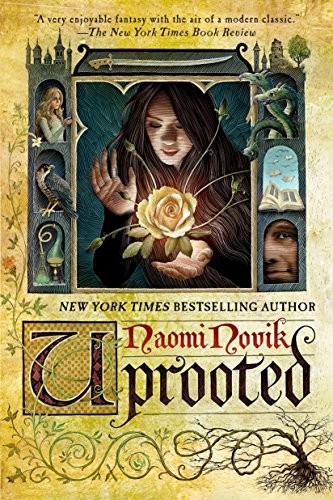
Novik's standalone is the best answer on this list to the question of where else the prose lives. Agnieszka, a village girl taken by the wizard known as the Dragon as his once-a-decade tribute, discovers her own magic works nothing like his: where he casts with rigor and notation, hers is song-like, intuitive, half-remembered from a witch out of folklore. That tension between studied and felt magic is the sympathy-versus-naming divide from The Name of the Wind made into the book's central argument, and the malevolent Wood is as memorable an antagonist as the Chandrian.
It is a single complete novel with a fairy-tale shape, drawn from Polish folklore rather than an invented world's deep history, and its scale is one valley and one kingdom rather than a continent. The romance is more central and more divisive than anything in Kingkiller. Read it in a weekend; it is the most satisfying complete story here for the least commitment.
Read this if you want another gifted outsider mastering forbidden power, in a dystopian key.
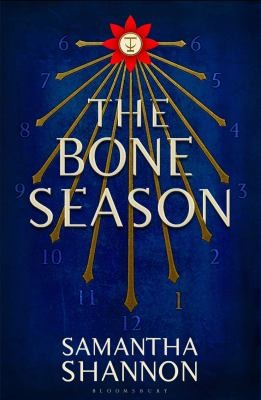
The Bone Season transposes the Kvothe shape into a 2059 dystopia: Paige Mahoney is a dreamwalker, the rarest order of clairvoyant in a Britain where clairvoyance is a capital crime, surviving inside a criminal syndicate until she is captured and shipped to Oxford, now a secret prison city run by the otherworldly Rephaim. Her uneasy apprenticeship under Warden, the Rephaite assigned to train her, carries the mentor tension and talent-under-pressure dynamic that drives Kvothe's University years, and Shannon builds her spirit world with genuine ambition.
This is the furthest pick from Kingkiller's tone: urban, grim, jargon-heavy up front, with prose that works hard rather than sings. The clairvoyance taxonomy takes a hundred pages to settle, and the series is a planned seven books, most now published, with a revised anniversary edition of this volume. Choose it if the underdog and the hidden world appeal more than the lyricism, and you want a heroine instead of another storyteller.
Will The Doors of Stone, the third Kingkiller book, ever come out?
No release date has been announced. The Wise Man's Fear was published in 2011, and Rothfuss has given no firm timeline since, though he has said the book is not abandoned and has published shorter Kingkiller-world work like The Slow Regard of Silent Things and The Narrow Road Between Desires. Most readers plan their next reads assuming a long wait.
What is the closest book to The Name of the Wind?
For the character, The Lies of Locke Lamora: a brilliant, silver-tongued orphan whose story alternates between his hard upbringing and his present-day schemes. For the magic-school climb and rule-based magic, Mistborn. For the prose and atmosphere, Uprooted or The Night Circus. No single book matches Kingkiller's combination of confessional voice and epic frame, which is why the list splits by strength.
Should I read Rothfuss's novellas while waiting for book three?
If you want more of the world, yes. The Slow Regard of Silent Things follows Auri through the Underthing in a strange, plotless, beautiful novella that Rothfuss himself warns is not for everyone, and The Narrow Road Between Desires (2023) expands his earlier Bast story The Lightning Tree. Neither advances Kvothe's story, so treat them as bonus material rather than continuation.
Is Kvothe a reliable narrator?
Deliberately not, and the books signal it. Kvothe is a trained performer telling his own legend, the frame story shows a broken man who does not match the hero he describes, and characters like Bast push back on his telling. Many fan theories hinge on what he is exaggerating or hiding. If that gap is what hooked you, The Lies of Locke Lamora and Priory's myth-versus-truth thread play with similar ideas.
As an Amazon Associate, we earn from qualifying purchases. · About & methodology