7 books like Pawn of Prophecy, from Magician to the Malloreon: classic farm-boy epics, found-family quests, and where to go when you outgrow Eddings.
Updated June 10, 2026
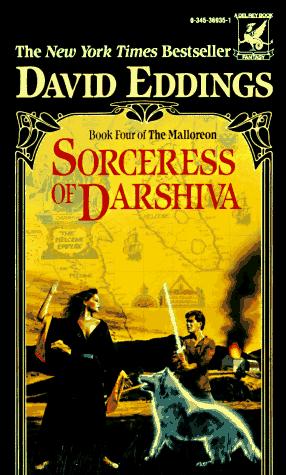
Pawn of Prophecy, the 1982 opener of David Eddings's five-book Belgariad, is comfort-food epic fantasy done with unusual craft. Garion is a farm boy at Faldor's farm who slowly discovers that his Aunt Pol and the vagabond storyteller Mister Wolf are far older and far more important than they appear, and that an ancient prophecy has plans for him. The plot beats are deliberately classic (stolen artifact, gathering of companions, hidden royal blood), but what readers remember is the banter. Eddings wrote some of the warmest, funniest traveling-party dialogue in the genre, and the books feel like spending time with friends.
The list below is sorted by what you want more of. If you want the direct continuation, The Malloreon: Guardians of the West picks up Garion's story. If you want the same era and flavor of farm-boy-to-hero epic, Magician and Dragons of Autumn Twilight are the closest cousins. The Earthsea Cycle and His Dark Materials offer coming-of-age fantasy with more literary weight, Nine Princes in Amber swaps the cozy quest for sharp-elbowed family intrigue, and The Blade Itself is the pick for readers ready to see the Eddings formula turned inside out.
A practical note: Pawn of Prophecy is mostly setup, and the Belgariad really pays off across all five volumes, so finish the series before judging it. Most of the recommendations here are also series openers, so check that you are starting at book one.
Books to Read If You Like The Belgariad: Pawn of Prophecy
The Malloreon: Guardians of the West
by David Eddings
Read this if you simply want more Garion, Belgarath, and Polgara.
This is the obvious first stop: Guardians of the West opens the Malloreon, Eddings's five-book sequel series set years after the Belgariad ends. Garion is grown now, and a new prophecy pulls the familiar company back onto the road. Everything that made the first series pleasurable is intact, the bickering between Belgarath and Polgara, the long journeys through well-mapped kingdoms, the sense that fate is a character with a sense of humor.
The honest caveat is that the Malloreon retraces the Belgariad's structure quite openly, a point the characters themselves joke about, so it reads as a victory lap rather than a reinvention. If you loved the company more than the plot, that is no problem at all, and most Belgariad readers go straight here. If you finished Pawn of Prophecy wanting something genuinely new, start with one of the other picks and save this for a comfort read.
Read this for the closest thing to the Belgariad written by someone else.
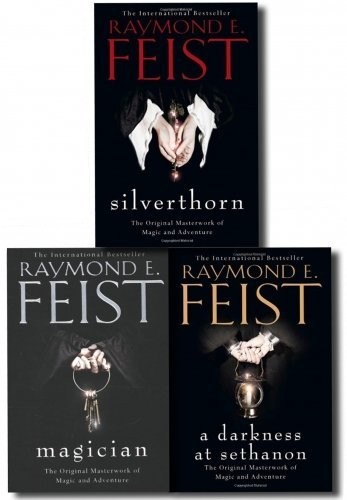
Raymond E. Feist's Magician (1982, the same year as Pawn of Prophecy) is the Belgariad's nearest neighbor in the genre. Pug is an orphan kitchen boy in the kingdom of Crydee who is taken as a magician's apprentice just as a war between two worlds breaks open around him. Like Eddings, Feist delivers the full classic package: a low-born boy with a great destiny, mentors with hidden depths, court politics, and a sprawling map that the later books keep expanding.
Feist's tone is more earnest and his scope is bigger; the Riftwar involves an invasion from a second, Asian-inflected world called Kelewan, and the story splits to follow it there, which gives Magician an epic sweep the cozier Belgariad does not attempt. You trade some of Eddings's wit for scale and a faster-moving war plot. If you only read one non-Eddings book from this list, this is the one most likely to feel like home.
Read this if the scheming royal families were your favorite part.
Roger Zelazny's 1970 classic shares the Belgariad's interest in hidden royalty and ancient families maneuvering behind the scenes, then makes that the whole story. Corwin wakes in a hospital with no memory and gradually discovers he is a prince of Amber, the one true world of which all others, including ours, are shadows, and that his many siblings are locked in a ruthless contest for the throne. The amnesia opening does the same job as Garion's sheltered childhood, letting you learn the world as the hero does.
Everything else is different. Zelazny writes in a clipped, wisecracking first person closer to noir than to high fantasy, the books are short, and there is no comforting found family; Corwin's relatives are mostly threats. It is also genuinely strange in ways Eddings never is, with shadow-walking and card-based travel between worlds. Pick this when you want the prophecy-and-bloodline intrigue with the coziness stripped out and the pace doubled.
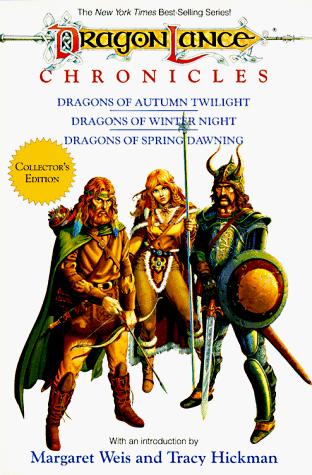
The Dragonlance Chronicles: Dragons of Autumn Twilight
by Margaret Weis and Tracy Hickman
Read this if the traveling company's banter is what you miss most.
Margaret Weis and Tracy Hickman's 1984 novel is the other great found-family fantasy of the Belgariad's era. A band of old friends, the knight Sturm, the twins Caramon and Raistlin, the dwarf Flint, the irrepressible kender Tasslehoff, reunite at an inn just as dragons return to the world of Krynn, and the story is carried by the same companionable warmth and on-the-road bickering that Eddings fans love. Raistlin, the cynical, golden-skinned mage, became one of the genre's most famous characters for a reason.
The difference is provenance: Dragonlance began as a Dungeons and Dragons campaign setting, and the early chapters in particular read like a party of adventurers working through encounters. The prose is functional rather than polished, and the plot is even more archetypal than Eddings's. Come for the characters and the nostalgic quest feel, not for surprises. It is the most purely comfortable read on this list after the Malloreon itself.
Read this if you want a boy-discovers-magic story with real literary depth.
Ursula K. Le Guin's A Wizard of Earthsea (1968), which opens the Earthsea Cycle, is the refined version of the story Pawn of Prophecy tells: a talented village boy, Ged, discovers his power, goes to learn wizardry, and must grow into the responsibility that comes with it. Le Guin's magic system, built on knowing the true names of things, is one of the most influential in fantasy, and the archipelago world of Earthsea is drawn with the same care Eddings gave his kingdoms, in a fraction of the page count.
The tone is the trade-off. Earthsea is spare, serious, and almost mythic where the Belgariad is chatty and warm; Ged's great enemy is a shadow of his own making, not a god of evil, and there is little comic relief. These are short books that read like legends. Choose this when you are ready for the same coming-of-age arc handled by one of the genre's finest prose writers, and accept that you will miss the banter.
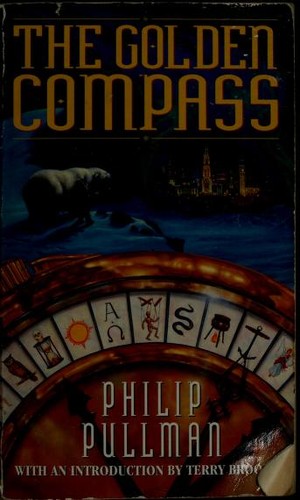
Read this for a destined child and a prophecy with much higher stakes.
Philip Pullman's trilogy, beginning with The Golden Compass (1995), shares the Belgariad's central engine: a child, Lyra, who does not know who she really is, a prophecy that turns on her, and adult guardians whose true natures and agendas are revealed in stages. Like Garion, Lyra travels through a richly imagined world (and then several worlds) in the company of allies ranging from armored bears to witches, and the revelation of her parentage lands with the same force as Garion's.
Pullman is playing a more dangerous game, though. His Dark Materials is a deliberate argument with organized religion and with Milton's Paradise Lost, and by the third book the series is openly philosophical in a way Eddings never attempts. It is darker, sadder, and aimed at readers happy to be challenged as well as entertained. Pick it if you want destiny-of-a-child fantasy that asks real questions; skip it if you read Eddings precisely to avoid them.
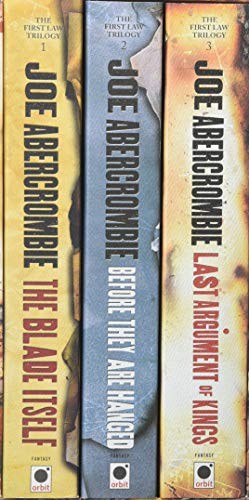
Read this only if you are ready for the anti-Belgariad.
Joe Abercrombie's The Blade Itself (2006) is on this list because it is built from the Belgariad's parts: a legendary wizard who gathers a company, a barbarian warrior, a journey toward an ancient threat, a young man with more potential than sense. Abercrombie clearly knows the classic quest template inside out, and readers who do too get an extra layer of pleasure watching what he does with it. The character work is superb, and the dialogue is as quotable as Eddings's, just considerably nastier.
Because what he does with the template is sabotage it. Bayaz, the Belgarath figure, is manipulative rather than twinkly, the quest curdles, and the trilogy's endings withhold exactly the satisfactions Eddings always delivers. This is grimdark's founding modern text, violent, cynical, and very funny. Read it when you have finished the cozy classics and want to see the formula interrogated. Do not read it expecting comfort, because denying you comfort is the point.
What order should I read David Eddings's books in?
Start with the Belgariad in order: Pawn of Prophecy, Queen of Sorcery, Magician's Gambit, Castle of Wizardry, and Enchanters' End Game. Then read the five-book Malloreon sequel series, which begins with Guardians of the West. The prequels Belgarath the Sorcerer and Polgara the Sorceress are best saved for after both series, since they assume you know the full story.
What is the most similar book to Pawn of Prophecy by another author?
Magician by Raymond E. Feist is the usual answer, and it earns it. Published the same year, it follows an orphan boy apprenticed to a magician as a great destiny and a great war find him, with the same blend of coming-of-age, mentors with secrets, and detailed world-building. Dragons of Autumn Twilight is the closest match for the traveling-party camaraderie specifically.
Is the Belgariad good for younger readers?
Yes, it is one of the standard gateway series for readers roughly twelve and up. The violence is mild by modern fantasy standards, the humor carries the story, and Garion's age and perspective suit younger readers well. From this list, Earthsea and the Dragonlance books are similarly suitable, while The Blade Itself is firmly adult.
Does Pawn of Prophecy stand alone?
Not really. It is the first fifth of one continuous story and ends with the quest barely underway; Eddings planned the Belgariad as a single arc across five volumes. The good news is that the books are short and quick, so committing to the series is a smaller ask than it sounds. Most readers finish all five in a few weeks.
As an Amazon Associate, we earn from qualifying purchases. · About & methodology