7 books like As a Man Thinketh, from Think and Grow Rich to Man's Search for Meaning: classic and modern mindset reads, sorted by what you loved.
Updated June 10, 2026
James Allen's As a Man Thinketh is barely a book at all. It runs about thirty pages, written in 1903 in a clipped, almost biblical cadence, and it makes one argument over and over: that your circumstances are the harvest of your thoughts, and that a person is literally what they think all day long. There is no program, no checklist, no anecdotes. It is closer to a meditation or a sermon than a how-to, and that aphoristic moral seriousness is exactly why it has stayed in print for more than a century while flashier titles vanished. Nearly every self-help book you have ever read traces some root back to it.
What you want next depends on which part of Allen gripped you. If it was the promise that thought builds wealth and success, the classic American prosperity tradition (Hill, Schwartz, Robbins) carries that forward, sometimes too eagerly. If it was the calm insistence that you control your inner life and nothing else, that is really Stoicism, and Viktor Frankl's hard-won version of it sits on this list. If it was the gentle push toward mastering your own mind, modern mindset and presence books (Tolle, Covey, Sincero) update the idea for a contemporary reader. The seven picks below are grouped along those lines, and each entry says plainly which Allen you are chasing.
One practical note: As a Man Thinketh is in the public domain, so you can read it free online or in a one-dollar edition, and you can finish it in a single sitting. Several books below are far longer and far more commercial. Where a title leans into prosperity-gospel territory or overpromises, this list says so.
Read this if Allen's link between thought and wealth is what hooked you.
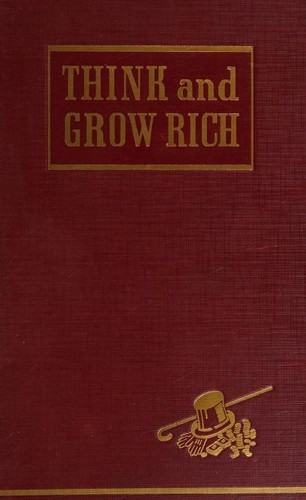
Napoleon Hill's 1937 blockbuster is the direct descendant of As a Man Thinketh, and the resemblance is no accident: Hill took Allen's premise that thought shapes circumstance and built an entire system on it, complete with the famous mantra that whatever the mind can conceive and believe, it can achieve. Where Allen states the principle and stops, Hill expands it into thirteen steps, drawn from interviews he claimed to have conducted with Andrew Carnegie and other tycoons. If you wanted Allen to actually tell you what to do with the idea, this is the obvious next book.
Be a skeptical reader here. Think and Grow Rich is foundational, but it veers into territory Allen never did: near-magical claims about a Master Mind, vague stories whose sourcing has been questioned, and a relentless focus on money as the measure of a thought. It is more prosperity gospel than philosophy. Read it for the historical bloodline and the genuinely useful chapters on persistence and desire, not as a reliable method, and keep your guard up.
Read this if Allen's call to govern your inner life pulled you toward the spiritual.
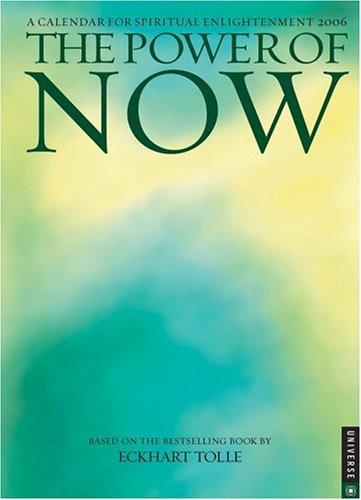
Eckhart Tolle shares Allen's core conviction that suffering is largely manufactured by the mind, and that freedom comes from changing your relationship to your own thoughts rather than rearranging your circumstances. Both books are more contemplative than practical, both treat the mind as something to be observed and mastered, and both can read as a series of quotable spiritual aphorisms. If the calm, almost devotional tone of As a Man Thinketh appealed to you more than any promise of success, Tolle is a natural fit.
The difference is direction. Allen wants you to think better thoughts so you build a better life; Tolle wants you to step out of compulsive thinking altogether and rest in present-moment awareness. It is less about character and consequence, more about consciousness and ego. The language can drift into the mystical, and readers who liked Allen's plainspoken moral clarity sometimes find Tolle abstract. Best for those drawn to the meditative rather than the motivational thread.
Read this if you want Allen's principle turned into a real, structured practice.
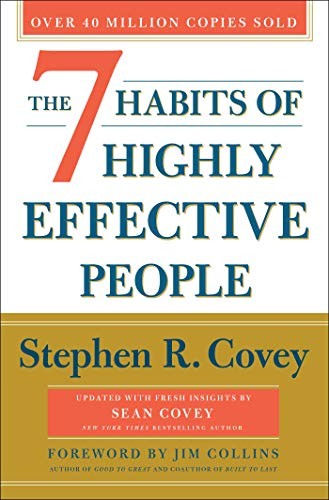
Stephen Covey opens from the same place Allen does: lasting change is inside-out, a matter of character and the way you see the world, not surface tricks or personality tactics. His idea that we are responsible, response-able, and free to choose our reaction to any circumstance is Allen's thought-shapes-life argument restated for working adults. If you nodded along to As a Man Thinketh but wanted scaffolding you could actually build on, Covey supplies the framework Allen deliberately withheld.
This is a far bigger, more corporate book, oriented toward productivity, leadership, and relationships rather than quiet self-mastery. The seven habits, being proactive, beginning with the end in mind, putting first things first, and so on, are concrete and well argued, but the tone is the boardroom, not the garden path. Expect diagrams and acronyms where Allen gave you stillness. Excellent if you want the philosophy operationalized, less so if brevity was the appeal.
Read this if you want Allen's optimism at maximum volume and energy.
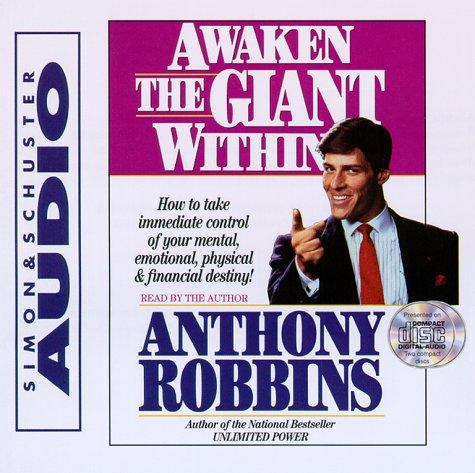
Tony Robbins runs on the same engine as Allen: the belief that your thoughts, beliefs, and the meanings you assign to events decide the quality of your life. Robbins makes the case that by deliberately controlling your mental focus and language you can transform your emotions, body, finances, and relationships, which is Allen's thesis amplified into a full self-empowerment program. If you finished As a Man Thinketh feeling charged up and wanting momentum, Robbins delivers it in bulk.
Temper expectations on tone and length. This is a long, high-intensity 1990s motivational tome, dense with exercises, capitalized affirmations, and the unmistakable Robbins hard sell. It promises a great deal and occasionally overpromises, treating mindset as a near-universal solvent for life's problems. The practical tools on decision-making and reframing are genuinely useful; the breathless packaging is the price of admission. Pick it for energy and actionable drills, not for the calm gravity Allen offered.
Read this for the most serious, hard-earned version of Allen's central claim.
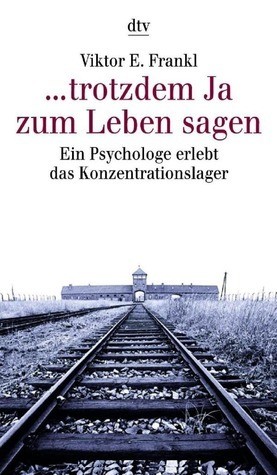
No book proves Allen's thesis under more brutal pressure than Viktor Frankl's. A psychiatrist who survived Nazi concentration camps, Frankl observed that even when everything is stripped away, one freedom remains: the freedom to choose your attitude toward your circumstances. That is As a Man Thinketh tested in the worst conditions imaginable, and it lands with a moral weight Allen's gentle essay only gestures at. If you took Allen seriously, this is where the idea earns its authority.
It is a different kind of book, half memoir of the camps and half introduction to logotherapy, Frankl's school of psychology built around the search for meaning rather than pleasure or power. There is no talk of wealth or success here; the question is survival and purpose. It is more philosophy and witness than self-help, and it is unflinching about suffering. Read it when you want depth and truth instead of motivation, and you may never read another mindset book the same way.
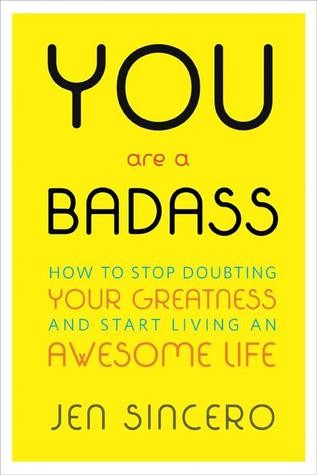
You Are a Badass: How to Stop Doubting Your Greatness and Start Living an Awesome Life
by Jen Sincero
Read this if you want Allen's message modern, casual, and funny.
Jen Sincero is essentially Allen for the twenty-first century with the collar loosened: her whole premise is that your self-limiting thoughts and beliefs are what hold you back, and that changing your inner monologue changes your outer life. The classic New Thought lineage runs straight through her, from the focus on belief and self-talk to the conviction that you are responsible for your own reality. If the old-fashioned diction of As a Man Thinketh kept you at arm's length, Sincero translates the same ideas into breezy, profane, contemporary English.
Know what you are getting. This is a light, comic, deeply quotable pep talk, not a rigorous book, and it leans on Law-of-Attraction and money-mindset claims that are more cheerleading than evidence. Allen's moral seriousness is mostly traded for fun and confidence. That is the point, and many readers find the jolt of energy worth it, but if you wanted substance over swagger, look to Frankl or Covey instead.
Read this if you want the closest practical cousin to Allen, minus the magical thinking.
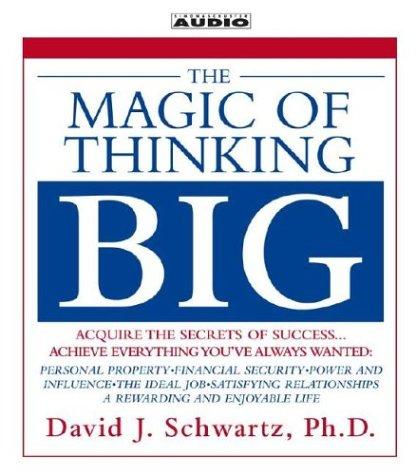
David Schwartz's 1959 classic is arguably the best overall companion to As a Man Thinketh because it shares Allen's bedrock idea, that the size and quality of your thinking sets the ceiling on your life, while staying grounded and usable. Schwartz argues that success is determined less by intelligence or luck than by belief and attitude, and he backs it with plain, sensible advice on confidence, action, and how you talk to yourself. It is Allen's principle turned into a friendly, no-nonsense playbook.
Compared to the more mystical books on this list, Schwartz is refreshingly down to earth: more about habits of thought and behavior than cosmic forces or attraction. The examples are dated, drawn from mid-century American business and salesmanship, and the framing is squarely about career and money. But the core is durable and free of the worst overpromising. If you want one practical, optimistic book that extends Allen without the prosperity-gospel baggage, start here.
How long is As a Man Thinketh, and is it free to read?
It is extremely short, roughly 30 pages or about 8,000 words, and most people read it in under an hour. Because it was published in 1903, it is in the public domain, so you can read it free online (Project Gutenberg and similar sites) or buy a one-dollar print edition. None of the books on this list match it for brevity; The Magic of Thinking Big and Think and Grow Rich are full-length books.
Which book is most influenced by As a Man Thinketh?
Think and Grow Rich by Napoleon Hill is the most direct descendant. Hill built his entire thought-creates-wealth system on Allen's premise, and the famous line that whatever the mind can conceive and believe it can achieve is essentially Allen expanded into a program. The Magic of Thinking Big and The Power of Now also draw heavily on the same New Thought lineage.
I liked the philosophical, Stoic side of As a Man Thinketh. What should I read?
Man's Search for Meaning by Viktor Frankl is the strongest pick on this list. Frankl's argument that you always keep the freedom to choose your attitude toward your circumstances is Allen's idea tested in concentration camps, and it carries real moral weight. If you want actual Stoicism, the next step beyond this list is Marcus Aurelius's Meditations or Epictetus's Enchiridion.
Are these books religious or about the Law of Attraction?
It varies, so the list flags it. As a Man Thinketh comes from the New Thought movement and has a spiritual streak without being tied to a single religion. Think and Grow Rich and You Are a Badass lean into Law-of-Attraction and money-mindset claims, which this list calls out honestly. The Seven Habits and Man's Search for Meaning are grounded and secular by comparison.
As an Amazon Associate, we earn from qualifying purchases. · About & methodology