8 books like The Power of Now, from A New Earth to The Untethered Soul and The Miracle of Mindfulness: presence and mindfulness reads, honestly compared.
Updated June 10, 2026
The Power of Now made Eckhart Tolle famous for one idea pressed from every angle: you are not your mind. Written after what Tolle describes as a spontaneous awakening following years of depression, the book argues that nearly all suffering comes from identification with compulsive thinking, with the voice in the head that lives in past and future, and that freedom is available right now through presence. The question-and-answer format, the concepts of the 'pain-body' and the egoic mind, and the complete absence of any program or technique beyond attention itself are what make it feel less like self-help and more like a transmission. Readers either feel something shift or bounce off entirely.
This list is organized around three directions readers go next. If you want more Tolle, A New Earth extends the same teaching with more on ego and a wider social lens. If you want the same insight in other voices, The Untethered Soul covers nearly identical ground in plainer American English, and Radical Acceptance and The Four Agreements approach inner freedom from Buddhist psychology and Toltec framing. If what you actually want is practice, something to do rather than realize, the mindfulness teachers deliver: Thich Nhat Hanh in The Miracle of Mindfulness and You Are Here, Jon Kabat-Zinn in Wherever You Go, There You Are, and the Dalai Lama in The Art of Happiness.
A practical note: do not read these back to back. They share so much DNA that binging them blurs into repetition. The pattern that works better is one book at a time, slowly, paired with actually practicing, even a few minutes of attention to breath or body a day, since every author here agrees the words are pointers and the practice is the point.
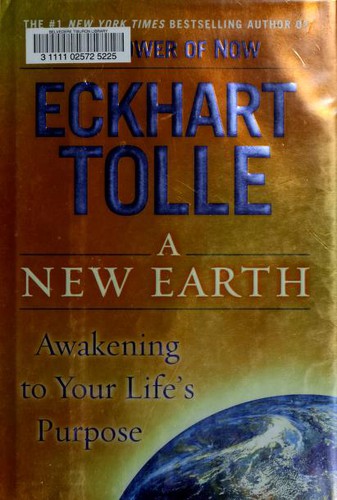
Read this if The Power of Now worked on you and you want the fuller version.
This is Tolle's 2005 follow-up and the natural next step: the same core teaching, presence over identification with thought, but developed with more structure and more material. Where The Power of Now stays close to individual experience, A New Earth spends most of its length anatomizing the ego, how it builds identity from possessions, roles, grievances, and opinions, and expands the pain-body concept into collective forms carried by families, nations, and history. An Oprah's Book Club selection in 2008, it reached an even larger audience than the first book.
Readers split on which is better. A New Earth is more organized and gives you more conceptual handles; it is also longer, more repetitive, and lacks the raw, compressed urgency that makes The Power of Now feel like an encounter rather than an explanation. If the first book changed something for you, this consolidates it. If you were on the fence about Tolle's style, this is more of the same and will not convert you.
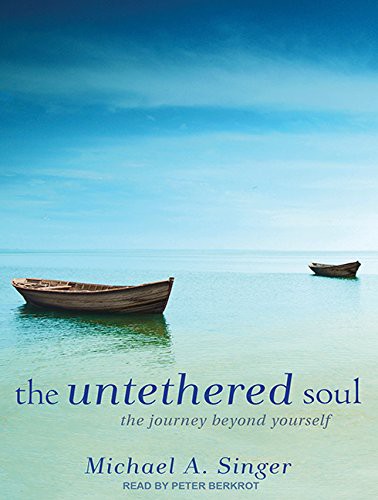
Read this if you want Tolle's central insight in plainer language.
Michael Singer starts exactly where Tolle starts: with the voice in your head, and the observation that since you can hear it, you cannot be it. The book's first chapters on the inner roommate are the most accessible treatment of witness-consciousness in print, and from there Singer builds the same case as The Power of Now, that suffering comes from clinging to stored pain (his version of the pain-body) and that freedom means relaxing and letting experience pass through instead of closing around it.
The differences are tone and frame. Singer, a former computer-business founder who later wrote the memoir The Surrender Experiment, writes in straightforward American prose with almost no spiritual vocabulary, no pain-body terminology, less mysticism, more psychology. The book is also more practical about the moment-to-moment mechanics of noticing and releasing. Many readers who found Tolle repetitive or vaguely esoteric finish this one; it is the best single alternative on the list.
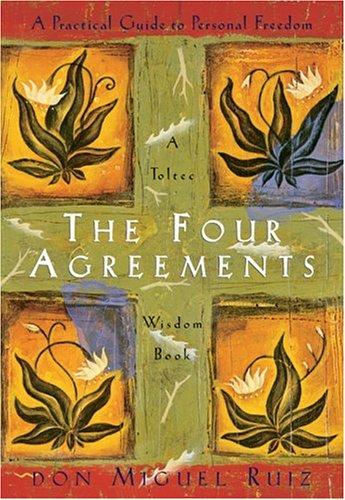
The Four Agreements: A Practical Guide to Personal Freedom
by Don Miguel Ruiz
Read this if you want rules to live by rather than a state to realize.
Don Miguel Ruiz shares Tolle's diagnosis: we suffer inside a mind-made story, what Ruiz calls the 'dream' we were domesticated into, full of judgments and assumptions that we mistake for reality. His response is to replace realization with conduct: four agreements (be impeccable with your word, don't take anything personally, don't make assumptions, always do your best) that interrupt the mental machinery Tolle wants you to observe. The second agreement alone overlaps heavily with Tolle's teaching on ego and reactivity.
It is a much smaller book in every sense: very short, very simple, framed as ancient Toltec wisdom, and content to give you maxims rather than an account of consciousness. Some readers find that simplicity is exactly what makes it usable day to day; others find it thin after Tolle's depth. It works best as a companion piece, something to hand a friend who would never read 250 pages on presence, or to reread yourself in an hour when the noise comes back.
Radical Acceptance: Embracing Your Life With the Heart of a Buddha
by Tara Brach
Read this if your obstacle to presence is self-judgment rather than overthinking.
Tara Brach, a Buddhist teacher and clinical psychologist, addresses the reader Tolle largely skips: the one whose inner voice is not just noisy but cruel. Her subject is the 'trance of unworthiness,' the chronic feeling of being deficient, and her remedy is the same present-moment awareness Tolle teaches, but paired explicitly with compassion: meeting what arises with a clear recognition and a kind heart. Where The Power of Now says watch the thinker, Brach adds, and stop attacking yourself while you do it.
This is also the most therapeutic book on the list, weaving Buddhist teaching with case studies from her clinical work, personal disclosure, and guided meditations you can actually use at the end of each chapter. It is warmer and more emotionally direct than Tolle, and more grounded in a specific tradition. Choose it if shame, perfectionism, or old wounds are what keep pulling you out of the moment; it covers territory Tolle's pain-body concept names but never really treats.
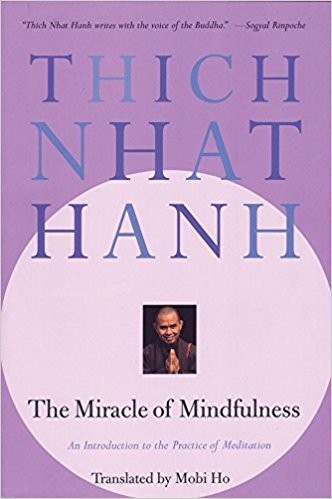
The Miracle of Mindfulness: An Introduction to the Practice of Meditation
by Thich Nhat Hanh
Read this for the practice The Power of Now points at but never teaches.
Thich Nhat Hanh's classic, which began as a long letter to a colleague in the Vietnamese peace movement in the 1970s, teaches exactly what Tolle gestures toward: how to actually be present. Its method is disarmingly concrete, wash the dishes to wash the dishes, follow the breath, take one mindful step, and its famous instructions turn ordinary chores into the practice itself. Tolle tells you the present moment is all there is; Nhat Hanh shows you, with exercises, what inhabiting it feels like on a Tuesday.
The voice is the biggest difference: where Tolle is abstract and oracular, Nhat Hanh is gentle, modest, and rooted in Zen Buddhist tradition, with stories from his own life and community rather than metaphysical architecture. The book is short and includes a section of simple exercises. If The Power of Now convinced you but left you unsure what to do at 7 a.m. the next morning, this is the answer, and it is many readers' favorite book on this list.
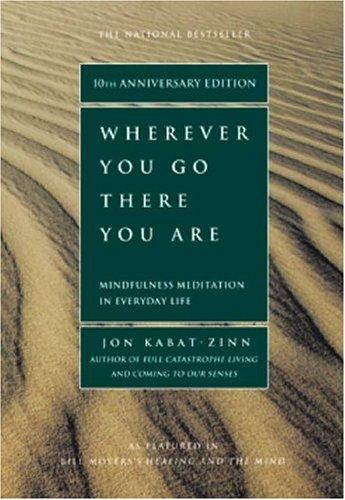
Wherever You Go, There You Are: Mindfulness Meditation in Everyday Life
by Jon Kabat-Zinn
Read this if you want presence without any spiritual framework at all.
Jon Kabat-Zinn is the scientist of this list: the founder of Mindfulness-Based Stress Reduction at the University of Massachusetts Medical School, who spent his career translating meditation into secular, clinical language. This book delivers Tolle's central prescription, attention to the present moment, on purpose, without judgment, in short standalone chapters, a few pages each, with none of Tolle's metaphysics: no pain-body, no consciousness shift for humanity, no claims beyond what attention does for a human life.
That secular restraint is the trade-off in both directions. Readers who found Tolle's cosmic register inspiring may find Kabat-Zinn dry by comparison; readers who kept wincing at Tolle's grander claims will find this trustworthy and durable. The chapters-as-meditations format makes it ideal for reading one page at a time rather than straight through. It is the book on this list you can hand to a skeptic, a scientist, or your most practical relative.
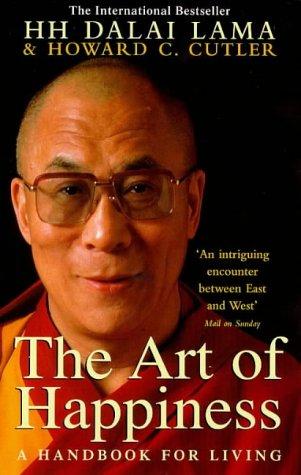
Read this if you want the goal reframed from presence to compassion.
Built from psychiatrist Howard Cutler's extended conversations with the Dalai Lama, this book shares Tolle's basic claim that suffering is generated by the untrained mind and that happiness is an inner achievement rather than a circumstance. The Dalai Lama's program overlaps with presence, awareness of mental states, loosening attachment, but its center of gravity is different: compassion, warm-heartedness, and connection with others as the most reliable source of well-being, where Tolle stays focused on individual consciousness.
The format takes getting used to: Cutler narrates, questions, and frames everything through Western psychology, so you are reading about the Dalai Lama as much as reading him, and some find the scaffolding intrusive. It is also the least mystical book here aside from Kabat-Zinn's, practical and conversational throughout. Choose it if Tolle's inward turn started to feel solitary and you want the same calm pointed back toward other people.
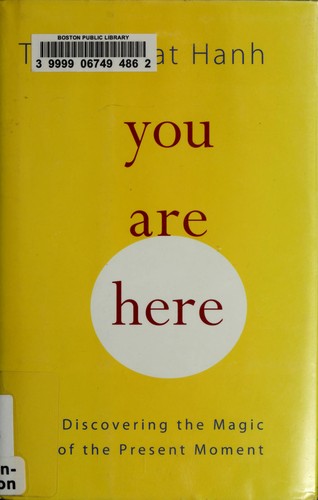
You Are Here: Discovering the Magic of the Present Moment
by Thich Nhat Hanh
Read this for the gentlest, most distilled treatment of presence on this list.
Drawn from Thich Nhat Hanh's retreat talks, You Are Here compresses his teaching into its essentials: mindful breathing as the fastest way home to the present, and presence as something you offer, his teaching that the most precious gift you can give someone is your true presence. The overlap with The Power of Now is nearly total at the level of message, the present moment is the only place life is available, but the delivery is tender where Tolle's is stark, full of breathing practices and short phrases meant to be used, not just understood.
It covers some of the same ground as The Miracle of Mindfulness, so you likely do not need both immediately; Miracle is the better first pick because of its concrete exercises, while this one goes a little deeper into impermanence, love, and being with suffering. It is short enough for an afternoon and suits rereading. Pick it when you want reassurance and warmth rather than instruction or argument.
The two most common next steps are Tolle's own A New Earth, which extends the teaching with a deeper treatment of ego, and The Untethered Soul by Michael Singer, which covers nearly the same ground in plainer language and is the best pick if you want a different voice. If you want practice rather than more theory, start with The Miracle of Mindfulness by Thich Nhat Hanh.
Is A New Earth better than The Power of Now?
They teach the same thing, so it comes down to format. The Power of Now is rawer and more compressed, built as questions and answers, and most readers find it the more powerful first encounter. A New Earth is more organized, spends far more time on how the ego operates, and adds a collective dimension. Reading The Power of Now first is the usual and sensible order.
Is The Power of Now a Buddhist book?
No. Tolle draws freely on Buddhism, Christianity, and other traditions but belongs to none, and the book has no rituals, lineage, or doctrine. Readers who want the same ideas inside an actual tradition usually go to Thich Nhat Hanh or Tara Brach, who teach from Buddhist practice, while Jon Kabat-Zinn offers the fully secular, clinically tested version.
Which of these books is most practical?
The Miracle of Mindfulness is the most practical: it includes specific exercises, from following the breath to doing chores mindfully, and is short enough to put into practice the same week. Wherever You Go, There You Are is a close second, written in brief chapters meant to accompany a daily practice. Tolle, by contrast, offers almost no technique; his book aims to trigger a shift in perspective rather than train a skill.
As an Amazon Associate, we earn from qualifying purchases. · About & methodology