Loved Zero to One? Find startup, innovation, and contrarian business books with clear reasons each pick matches Peter Thiel's classic.
Updated June 10, 2026
Peter Thiel's Zero to One is short, blunt, and built around a few unforgettable ideas. The contrarian interview question (what important truth do very few people agree with you on?) sets the tone: Thiel argues that real progress comes from going from zero to one, creating something genuinely new, not from copying what works and going from one to n. From there he makes the case that competition is for losers, that durable companies are monopolies that escape competition entirely, and that founders should hold a definite view of the future rather than hedging their bets.
Readers who finish it usually want one of three distinct things next: more on why incumbents lose and challengers win, more hands-on guidance for the brutal day-to-day of actually building a company, or a wider lens on innovation, history, and where ideas come from. The eight books below are organized around those threads. Some are strategy classics that sharpen the monopoly-versus-competition argument, some are operator memoirs that fill in everything Thiel skips, and a couple zoom out from startups entirely. Each entry says which part of Zero to One it extends and where it pulls in a different direction.
A practical note: Zero to One is opinionated and deliberately provocative, and several picks here argue the opposite of Thiel on purpose. The Lean Startup and The Four Steps to the Epiphany champion the iterative, customer-validation approach Thiel is partly pushing back against. Reading them alongside Zero to One is the point, not a contradiction.
Read this if you want the rigorous theory behind why challengers beat incumbents.
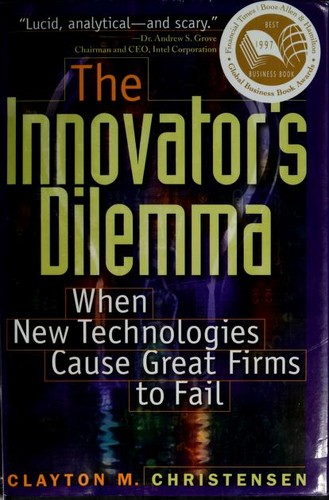
Clayton Christensen's classic is the academic backbone for one of Thiel's core instincts: that big, well-run companies lose not by failing but by doing everything their best customers ask. Christensen shows how disruptive technologies enter at the low end or in new markets, beneath the radar of established players, and then climb. If Zero to One left you wanting to understand the mechanics of how a small, new company can build something incumbents structurally cannot copy, this supplies the framework Thiel mostly assumes.
The difference in temperament is real. Christensen is a careful researcher building a theory from disk-drive and steel-mill data, where Thiel is a contrarian essayist throwing sparks. The Innovator's Dilemma is denser and more cautious, and it is about disruption from below rather than Thiel's preferred monopoly-from-day-one. Read it for evidence and rigor; you will supply your own provocation. It rewards readers who want to know why an idea is true, not just that it sounds clever.
Start-Up Nation: The Story of Israel's Economic Miracle
by Dan Senor and Saul Singer
Read this if you want to understand the culture and conditions that produce innovation.
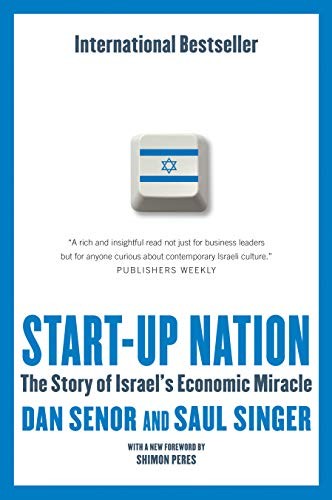
Dan Senor and Saul Singer ask a question Thiel circles but never fully answers: why do some places produce a wildly disproportionate number of new companies? Their case study of Israel digs into military service, immigration, a tolerance for risk and argument, and a national comfort with failure. It shares Zero to One's conviction that genuine innovation is rare and worth examining closely, and it gives texture to Thiel's abstract claims about definite optimism and building the future.
This is reportage and economic history, not a founder's playbook, so do not come to it for tactics. It is also a focused portrait of one country in one era, and some of its data is now dated. What carries over is the macro lens: where Thiel zooms into the single great company, Senor and Singer zoom out to the ecosystem that makes great companies likely. Best for readers curious about the soil, not just the seed.
Read this for the iterative, test-everything method Thiel partly argues against.
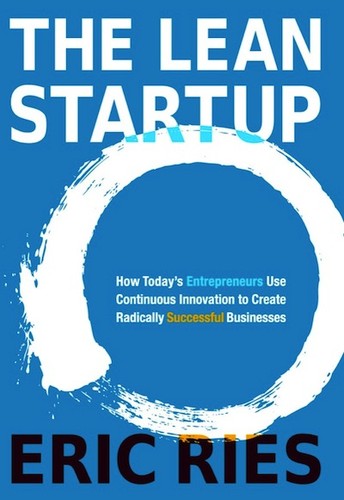
Eric Ries built the dominant framework of the last startup decade: treat a new company as a series of experiments, ship a minimum viable product, measure, and pivot when the data says to. It overlaps with Zero to One in its obsession with avoiding waste and finding what is actually true about a market, and both books are reacting to the same wreckage of companies that built things nobody wanted.
But this is the productive opposite of Thiel in spirit. Where Thiel wants founders to hold a bold, definite vision and commit, Ries is comfortable with iteration and discovery, the path Thiel calls indefinite optimism. That tension is exactly why you should read them together. The Lean Startup is more procedural and at times jargon-heavy (validated learning, innovation accounting), and its examples skew toward software. Best for an operator who wants a repeatable process rather than a manifesto.
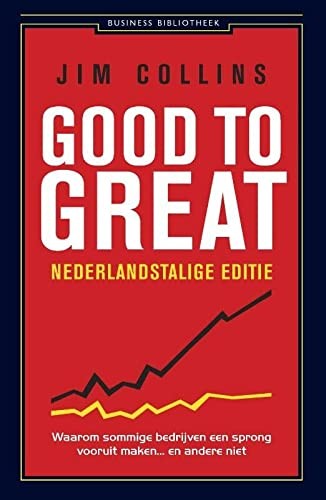
Good to Great: Why Some Companies Make the Leap... and Others Don't
by Jim Collins
Read this if you want a data-driven take on what makes a company durable.
Jim Collins and his team studied companies that outperformed the market for fifteen years and reverse-engineered the patterns: disciplined leaders, the right people, brutal honesty about reality, and a tight focus on what you can be best in the world at. That focus on durability and defensibility rhymes with Thiel's argument that a great company is built to last, not just to launch, and the Hedgehog Concept echoes his push to find the one thing you can dominate.
The two books look at different stages and through different lenses. Collins studies established public companies making a leap, not zero-to-one creation, and his method has drawn criticism because some of his exemplar companies later stumbled. Thiel is forward-looking and provocative; Collins is backward-looking and empirical. Read it for the long view on what separates enduring companies from merely good ones, and hold its conclusions a little loosely.
Read this for everything Zero to One leaves out about the actual day-to-day.
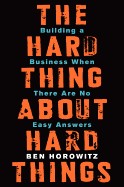
Ben Horowitz wrote the book Thiel did not: an unsentimental, scar-tissue account of running a company when it is going badly. Layoffs, demotions, near-bankruptcy, firing a friend, the loneliness of the CEO at 3 a.m. He shares Thiel's respect for the rare founder who builds something real, and like Zero to One it is allergic to comfortable platitudes. Both books assume you are serious about creating a company, not just reading about one.
The orientation is completely different. Thiel operates at the level of strategy and worldview; Horowitz operates in the trenches of management and survival. There is little here about monopoly theory or contrarian thinking and a great deal about what to do when the wheels come off. It is candid to the point of bleakness, which some readers find bracing and others find grim. Best read once you are actually building, or about to.
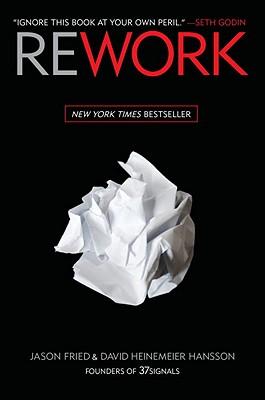
Read this if you liked Thiel's contrarian, anti-conventional-wisdom voice.
Jason Fried and David Heinemeier Hansson of Basecamp share Zero to One's instinct to question startup orthodoxy, just from a different vantage point. In short, punchy chapters they argue against planning for the sake of it, against chasing growth and outside funding, and against copying competitors. The anti-imitation streak directly echoes Thiel: do not enter a crowded race and try to win on execution; do something distinct.
Where they part ways matters. Thiel celebrates the world-changing monopoly built on bold, capital-intensive bets, while Fried and Hansson make the case for staying small, profitable, and independent. Rework is deliberately lightweight, more a collection of opinionated maxims than an argued system, and skeptics find it glib. Read it as a fast, contrarian palate-cleanser and a reminder that not every great company needs to swing for the fences.
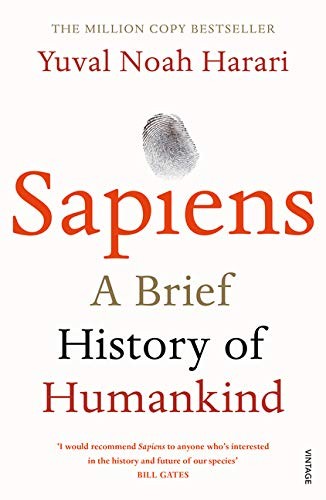
Read this if Thiel's big-picture thinking about progress was the draw.
Yuval Noah Harari zooms out further than any other book here, tracing how Homo sapiens built civilization on shared fictions: money, religion, nations, and corporations. It connects to Zero to One at the level of ideas about progress and the future. Thiel is obsessed with whether humanity is still capable of genuine breakthroughs, and Harari gives you the deep-time context for that question, from the cognitive and agricultural revolutions to the scientific one.
This is not a business book in any literal sense, so set expectations: no startups, no strategy, no tactics. It is sweeping intellectual history, and Harari's bold generalizations have drawn pushback from specialists. What it shares with Thiel is ambition and a willingness to make provocative claims about where humanity is headed. Best for the reader who liked Zero to One less for the startup advice and more for its restless thinking about civilization and the future.
The Four Steps to the Epiphany: Successful Strategies for Products that Win
by Steve Blank
Read this for the rigorous customer-discovery method beneath modern startup thinking.
Steve Blank's book is the dense, foundational text that The Lean Startup later popularized. Its central idea, customer development, argues that startups fail not from bad products but from a lack of customers, so you must get out of the building and systematically validate who wants what you are making. It shares Thiel's seriousness about finding what is actually true in a market before pouring resources into it.
Like The Lean Startup, it sits on the iterative, validation-driven side of the aisle that Thiel partly resists, so it works as a counterweight to his definite-vision stance. Fair warning: this is the most academic and least polished read on the list, closer to a textbook than a narrative, with a structure that can feel like a manual. Read it if you want the original, rigorous source rather than the popularized version. Best for founders who want process and method over inspiration.
It depends what hooked you. For the theory of why challengers beat incumbents, start with The Innovator's Dilemma. For the unvarnished reality of actually running a company, start with The Hard Thing About Hard Things. If you want a productive counterargument to Thiel's definite-vision approach, read The Lean Startup next.
Did Peter Thiel write any other books?
Zero to One (2014) is his best-known book, co-written with Blake Masters and based on notes Masters took during Thiel's Stanford startup class. Thiel has written and co-authored other works and essays over the years, but among general readers Zero to One remains by far his most widely read book and the natural anchor for this list.
Is The Lean Startup the opposite of Zero to One?
Not the opposite, but a genuine counterpoint. Eric Ries favors iteration, testing, and pivoting based on customer feedback, while Thiel argues for a bold, definite vision and committing to it. Thiel even gently criticizes the lean approach in Zero to One. Reading both gives you the full debate rather than just one side.
Are these books only useful for founders?
No. Founders will get the most direct value, but most of these work for investors, operators, product people, and curious readers. Good to Great and The Innovator's Dilemma apply to any business, Sapiens is broad intellectual history, and Zero to One itself is as much about how to think about the future as it is about starting a company.
As an Amazon Associate, we earn from qualifying purchases. · About & methodology