Books Like The Hard Thing About Hard Things: Building a Business When There Are No Easy Answers
8 books like The Hard Thing About Hard Things by Ben Horowitz, from Shoe Dog to The Lean Startup: honest reads on the ugly parts of building a company.
Updated June 11, 2026
Ben Horowitz wrote The Hard Thing About Hard Things to cover what other business books skip: laying people off, demoting a loyal friend, managing your own psychology when the company is weeks from death. The credibility comes from his story, running Loudcloud and then Opsware through the dot-com crash, taking a doomed company public, and eventually selling to HP for $1.6 billion before co-founding the venture firm Andreessen Horowitz. The format, rap lyrics opening chapters about firing executives, wartime CEO versus peacetime CEO, the Struggle, made it the rare management book founders actually quote to each other.
Nothing on this list replicates that exact mix of memoir and field manual, so the books below are sorted by which half you want more of. If it was the war stories, Shoe Dog is the best founder memoir ever written and the clear next read. If it was the operating advice, The Lean Startup gives you the methodology Horowitz mostly assumes, Good to Great and The Innovator's Dilemma supply the research and strategy he riffs against, and Extreme Ownership covers leading under fire. The softer leadership picks, Start with Why and Dare to Lead, are included with honest caveats, because they are closer to the genre Horowitz was reacting against.
A practical note: read these as a working founder reads them, not cover to cover for completion. Shoe Dog is the only one that works purely as a story. The rest earn their keep a chapter at a time, ideally next to whatever problem you are actually facing this quarter.
Books to Read If You Like The Hard Thing About Hard Things: Building a Business When There Are No Easy Answers
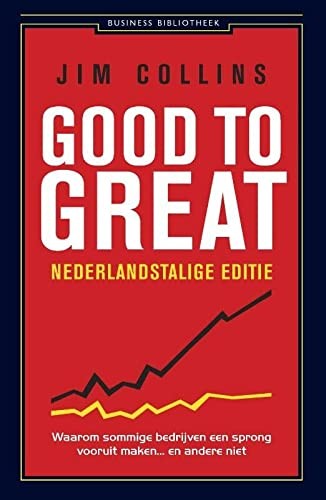
Good to Great: Why Some Companies Make the Leap... and Others Don't
by Jim Collins
Read this for the research-backed view Horowitz both respects and pushes against.
Jim Collins's study compared companies that sustained market-beating performance for fifteen years against matched peers that did not, and extracted the now-famous findings: Level 5 leaders who blend humility with fierce will, getting the right people on the bus before deciding where to drive it, the Hedgehog Concept, the flywheel. First who, then what is essentially the academic version of Horowitz's obsession with executive hiring and firing, and the two books agree that people decisions dominate everything else.
The gap is altitude. Collins studied large public companies in stable industries, and his calm, inevitable-sounding principles can feel like they were written from a research office rather than a foxhole, which is exactly the genre Horowitz says fails you when things break. Some of Collins's great companies (Circuit City, Fannie Mae) later collapsed, which is worth keeping in mind. Read it for the people framework and the discipline, with Horowitz as the corrective for what it leaves out.
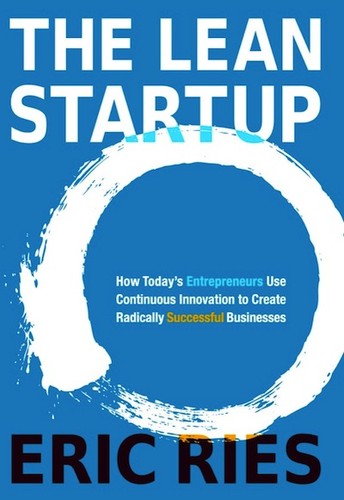
The Lean Startup: How Today's Entrepreneurs Use Continuous Innovation to Create Radically Successful Businesses
by Eric Ries
Read this for the methodology Hard Things assumes you already have.
Horowitz writes about managing a startup once it exists and is on fire; Eric Ries writes about how to build one so it is less likely to catch fire in the first place. The Lean Startup codified the vocabulary an entire generation of founders uses, minimum viable product, build-measure-learn, pivot, validated learning, drawn from Ries's experience at IMVU and from Toyota's lean manufacturing. If you read Hard Things without a product methodology underneath, this is the missing layer.
The two books are almost perfectly complementary and almost perfectly opposite in temperament. Ries is systematic and optimistic that process reduces risk; Horowitz's whole point is that no process survives contact with the truly hard things. The Lean Startup is also more useful pre-product-market fit, and its examples have aged (it was published in 2011). Read it early in a company's life, and reread Horowitz when the company is big enough to have executives worth firing.
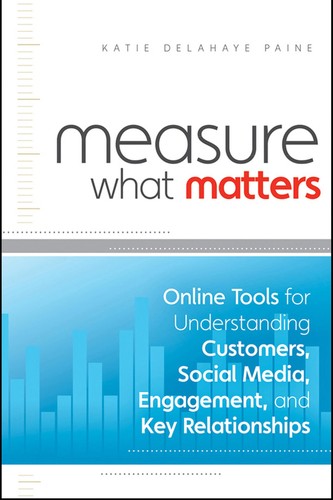
Read this only if your specific gap is measuring communications and customer engagement.
One clarification first: this is Katie Delahaye Paine's 2011 book on measurement for marketing, PR, and social media, not John Doerr's better-known 2018 book of the same main title about OKRs at Google. Paine's subject is making communications accountable: defining goals, building real metrics for engagement and reputation instead of vanity numbers, and tying activity to business results. The connection to Horowitz is the shared insistence that what you do not measure honestly will quietly kill you.
It is the narrowest fit on this list. Horowitz writes for CEOs about companies; Paine writes for communications and marketing teams about programs, and the tool landscape she describes has aged considerably since publication. The durable part is the discipline of starting from objectives rather than available data. If you came here wanting the OKR system that startups actually use, seek out Doerr's Measure What Matters instead; if you run marketing and need measurement religion, Paine is a credible source.
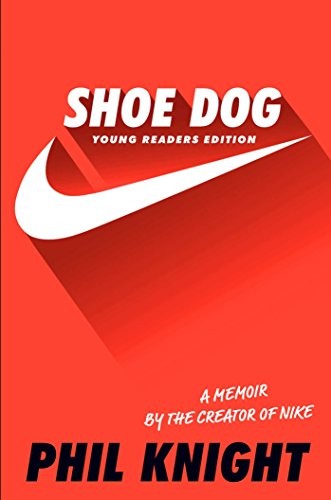
Read this if the Struggle was the part of Horowitz's book you could not put down.
Phil Knight's memoir of building Nike is the fullest account in print of what Horowitz calls the Struggle. From 1962 through the 1980 IPO, Knight is more or less continuously about to lose everything: banks pull his credit lines, his Japanese supplier tries to cut him out, the US government hits him with a ruinous customs bill, and Nike runs on the financial equivalent of fumes for nearly two decades. It is the same lesson as Hard Things, that the difference between success and catastrophe is often a single desperate week, told over twenty years instead of three.
The difference is that Knight offers almost no advice. This is pure memoir, beautifully written with a ghostwriter's polish, and it deliberately ends before Nike becomes a giant, so you get the scramble rather than the empire. There are no frameworks to apply Monday morning. Read it for company and perspective when you are in your own Struggle; read Horowitz when you need to know what to actually do about it.
Extreme Ownership: How U.S. Navy SEALs Lead and Win
by Jocko Willink and Leif Babin
Read this if wartime CEO was the chapter you underlined.
Jocko Willink and Leif Babin led a SEAL task unit in Ramadi during some of the worst fighting of the Iraq war, and their book translates that experience into business leadership: the leader owns every failure in their world, no excuses, full stop. Each chapter pairs a combat story with a client case from their consulting work. The kinship with Horowitz is real; his wartime CEO, who breaks protocol and tolerates no daylight between strategy and execution, is recognizably the same animal as Willink's combat leader.
The limits are also real. The business sections are noticeably thinner than the combat sections, the client examples are generic, and the central principle, repeated across twelve chapters, can be absorbed in one. Horowitz gives you specific mechanics (how to run a board meeting during a death spiral, how to fire an executive); this gives you a posture. It is best consumed as reinforcement when accountability is slipping in your team, not as an operating manual.
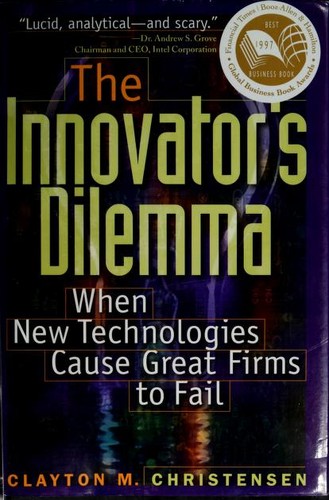
The Innovator's Dilemma: When New Technologies Cause Great Firms to Fail
by Clayton M. Christensen
Read this if you want the strategy theory underneath Horowitz's war stories.
Clayton Christensen's 1997 classic explains the battlefield Horowitz fought on. Its argument, that well-run incumbents fail precisely because they listen to their best customers while cheap disruptive technologies mature beneath them, is the standard intellectual frame in venture capital, and Andreessen Horowitz's whole thesis about software eating the world is downstream of it. Loudcloud and Opsware were attempts to ride exactly the kind of technology transition Christensen describes, and Hard Things makes more sense once you understand the structural forces involved.
This is an academic book built on case studies of disk drives, excavators, and steel minimills, so expect rigor rather than narrative. There is no memoir, no psychology of the CEO, and the prose is functional. It rewards readers who want to understand why markets shift; it does nothing for readers who want to feel less alone running a company. Pair it with Hard Things the way you would pair a map with a war diary.
Start with Why: How Great Leaders Inspire Everyone to Take Action
by Simon Sinek
Read this only if you want the inspiration layer Horowitz mostly skips.
Simon Sinek's argument is that people do not buy what you do, they buy why you do it, and that durable companies communicate from purpose outward (his Golden Circle: why, then how, then what). The legitimate overlap with Hard Things is culture and retention; Horowitz writes at length about why employees stay or quit, and Sinek's answer, that they stay for a mission they believe in, is part of any honest account of that.
Be honest about what this book is, though: a single TED-talk idea extended to book length, leaning heavily on the same few examples (Apple, Southwest, the Wright brothers) and stronger on assertion than evidence. It is the most airport-business-book entry on this list, and readers who loved Horowitz precisely for refusing easy answers may find it thin. Read it quickly for the framing, which is genuinely useful when writing a mission or a pitch, and do not expect operational depth.
Dare to Lead: Brave Work. Tough Conversations. Whole Hearts.
by Brené Brown
Read this if the hardest things in your company are conversations, not markets.
Brené Brown is a University of Houston researcher on vulnerability and shame, and Dare to Lead applies that research to management: clear is kind, unclear is unkind; trust is built in small moments; armored leadership fails. The connection to Horowitz is more genuine than it first looks. His hardest chapters, demoting a friend, telling the truth during layoffs, the right way to fire an executive, are all about doing brutal things humanely, and Brown supplies the emotional mechanics for exactly those conversations.
The vocabulary gap is large, and you should know your tolerance. Brown writes in the language of rumbling with vulnerability and living into values, which lands as essential to some operators and as corporate therapy-speak to others. There are no startup war stories and no strategy. Pick it up if feedback, trust, and difficult conversations are your current bottleneck; skip it if what you need is help with cash, boards, or competition.
What should I read after The Hard Thing About Hard Things?
Start with Shoe Dog by Phil Knight if you want another founder living through the Struggle, or The Lean Startup by Eric Ries if you want the company-building methodology Horowitz does not cover. Horowitz's own follow-up, What You Do Is Who You Are, applies the same blunt style to company culture and is the natural sequel. High Growth Handbook by Elad Gil is the closest thing to a modern operating companion.
Is The Hard Thing About Hard Things still relevant?
Yes, because its core material does not date: layoffs, executive hiring and firing, managing your own psychology, and leading when there is no good option. The Loudcloud and Opsware stories are from the early 2000s and the fundraising environment has changed, but founders going through downturns tend to find the book more relevant, not less. It remains one of the most recommended books inside venture-backed startups.
What is the wartime CEO versus peacetime CEO idea?
It is Horowitz's distinction between leading when a company has comfortable advantages (peacetime, where you expand creativity and follow process) and leading when survival is at stake (wartime, where you violate protocol, demand precision, and tolerate no distraction). His point is that the styles are nearly opposite, most management literature only trains the peacetime version, and great CEOs like Andy Grove could do both.
Is the Measure What Matters on this list the OKR book?
No. This list includes Measure What Matters by Katie Delahaye Paine, a 2011 guide to measuring marketing, PR, and social media programs. The famous OKR book is John Doerr's Measure What Matters from 2018, which describes the objectives and key results system used at Intel and Google. They share a title but not a subject, so check the author before buying.
As an Amazon Associate, we earn from qualifying purchases. · About & methodology