8 books like Who Moved My Cheese?, from The One Minute Manager to Switch and Mindset: parables and research-backed reads on handling change.
Updated June 10, 2026
Spencer Johnson's Who Moved My Cheese? is barely a book by page count, around 90 pages, and that is the point. Two mice (Sniff and Scurry) and two mouse-sized people (Hem and Haw) live in a maze and one day find that the cheese they depend on is gone. The mice move on immediately; the littlepeople argue, deny, and stall. The whole argument fits on Haw's wall writings: anticipate change, let go of the old cheese quickly, and enjoy the search for new cheese. Since 1998 it has been handed out in conference rooms by the millions, and it splits readers cleanly. Some find the simplicity clarifying, others find it condescending, especially when it arrives stapled to a reorg announcement.
Readers who liked it usually want one of three things next, and this list covers all three. If the parable format itself is what worked, The One Minute Manager (co-written by Johnson), The Energy Bus, and The Alchemist all teach through story. If you want the same change-and-adaptability message backed by actual research instead of cheese, Switch, Mindset, and Dare to Lead are the substantive upgrades. And The 7 Habits of Highly Effective People is the classic next step for readers ready to move from a single lesson to a whole operating system. There is also the teen adaptation for younger readers facing their own moved cheese.
A practical note: the fables here (One Minute Manager, Energy Bus) read in an evening, like the original. Switch, Mindset, 7 Habits, and Dare to Lead are full-length books that ask for real attention. Pick by how much time you want to spend, not just by topic.
Read this if you want more of Spencer Johnson's parable formula, applied to managing people.
This is the most direct lineage on the list: Spencer Johnson co-wrote it with Ken Blanchard in 1982, sixteen years before Who Moved My Cheese?, and it uses the exact same method. A short allegorical story carries a few memorable, repeatable lessons, here the one minute goal, the one minute praising, and the one minute reprimand. A young man searches for an effective manager and learns the system from one, the way Haw learns from the maze. If the format is what you liked, this is the same hand at work.
The subject is different, though. Who Moved My Cheese? is about how you respond to change; The One Minute Manager is about how you handle other people, so it lands best if you manage anyone, even informally. It shows its age in places (later editions were updated as The New One Minute Manager), and the advice is deliberately simple rather than deep. Read it in an evening, the way it was designed to be read.
Read this when you are ready to graduate from a single lesson to a full framework.
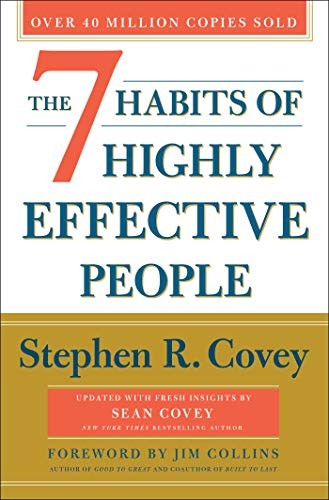
Stephen Covey's 1989 classic shares the core of Who Moved My Cheese?: your results depend less on circumstances than on how you respond to them. Covey's first habit, be proactive, is essentially Haw's arc stated as a principle, focusing on what you can control instead of resenting what changed. Both books became corporate standards for the same reason, they give people a shared vocabulary for behavior, whether that is moved cheese or circles of influence.
The difference is scale and demand. Where Johnson gives you one idea in an hour, Covey gives you a character-based philosophy covering personal vision, prioritization, negotiation, listening, and renewal, and he expects you to do exercises and change habits over months. It is denser and occasionally preachy, but it is the rare business classic that holds up. If Who Moved My Cheese? felt thin to you, this is the book it was thin compared to.
Read this if you want the science of why Hem stays stuck and how to actually move.
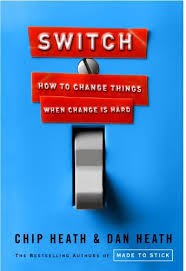
Chip and Dan Heath wrote the book that explains the psychology Who Moved My Cheese? gestures at. Their framework splits the mind into a rational Rider and an emotional Elephant moving along a Path, and shows that people resist change not because they are lazy but because the destination is unclear, the feeling is wrong, or the environment fights them. It answers the question Johnson's parable raises and skips: fine, I should adapt, but how, exactly?
It is a completely different kind of book, research and case studies rather than mice and cheese, with examples ranging from hospital reforms to village nutrition programs. That makes it longer and more demanding, but also far more useful if you are trying to change a team or an organization rather than just absorb a moral. Of everything on this list, this is the best single next read for someone who liked the message and wants the mechanics.
Read this for the research behind why some people treat change as a threat and others as a chance.
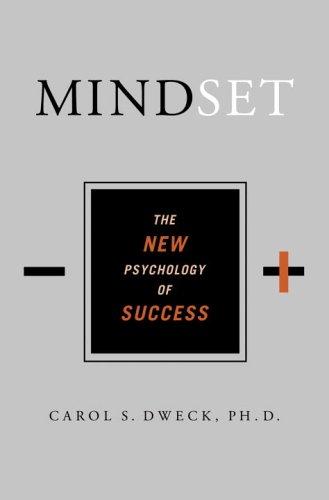
Carol Dweck is a Stanford psychologist, and Mindset is the evidence-based version of the Hem and Haw split. Her decades of research distinguish a fixed mindset, where ability and circumstances feel permanent, from a growth mindset, where setbacks are information and effort changes outcomes. Hem, sitting in the empty cheese station insisting things should go back to how they were, is a textbook fixed mindset; Haw's wall writings are him talking himself into a growth one.
Expect a real psychology book rather than a fable: studies, classroom experiments, and chapters applying the idea to sports, business, relationships, and parenting. The common criticism is fair, the core idea is established early and then repeated across domains, so feel free to read the first third closely and skim the applications you do not need. It pairs well with Switch, theory of the person in one, mechanics of the change in the other.
Read this if the fable format is what you loved and you want another one.
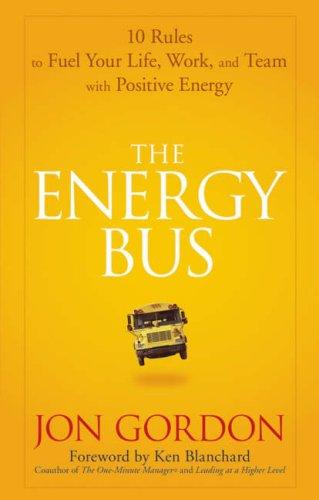
Jon Gordon's 2007 fable is the closest living relative of Who Moved My Cheese? in spirit and structure. George, whose career and marriage are stalling, is forced to ride the bus to work, where a driver named Joy teaches him ten rules for bringing positive energy to his life and team. Like Johnson, Gordon uses a thin story to make simple advice memorable, and like Johnson, he is widely handed out by managers to whole departments at once.
The focus shifts from adapting to change toward attitude and energy, fueling your ride with positivity, refusing to let negative people sit on your bus. That makes it warmer than Who Moved My Cheese? but also easier to roll your eyes at; if you found the cheese parable cloying, this will be worse, not better. If you found it motivating, this is the natural follow-up and reads just as quickly.
Read this only if you are buying for a teenager, not for yourself.
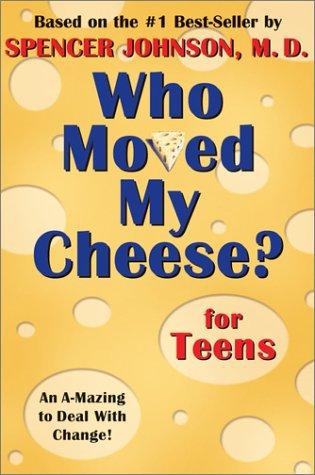
This is Spencer Johnson's own adaptation of the parable for a younger audience, with the maze story reframed around the changes teenagers actually face, new schools, shifting friendships, family upheaval. The core lessons are identical to the original: change happens, holding on to what is gone costs you, and moving toward new cheese feels better than waiting for the old cheese to come back. As a gift for a teen in the middle of a transition, it does its job.
There is no reason for an adult who has read the original to read this one; it is the same cheese in a smaller wedge. Its value is entirely as a handoff, the kind of book a parent, coach, or counselor gives a kid who is fighting a move or a breakup with Hem-level stubbornness. For that specific purpose it is more likely to be finished than the adult edition, simply because it is short and speaks their language.
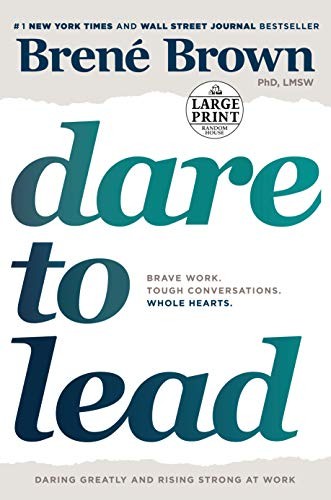
Dare to Lead: Brave Work. Tough Conversations. Whole Hearts.
by Brené Brown
Read this if you want the grown-up, research-driven version of facing what scares you.
Brené Brown's workplace book shares the emotional center of Who Moved My Cheese?: the real obstacle to change is fear, and naming it is half the work. Haw's turning point comes when he writes, what would you do if you weren't afraid? Brown built a research career on that exact question. Dare to Lead applies her work on vulnerability and shame to leadership, arguing that courage is a skill set you can train, built on rumbling with hard conversations rather than armoring up.
It is the least parable-like book here, a blend of research findings, organizational case work, and Brown's personal stories, written in her distinctive voice (you will either enjoy the Texas-flavored candor or tire of it). It also assumes you lead people in some capacity. Choose it if the cheese parable felt aimed at you as a subordinate and you want the version aimed at the person responsible for everyone else's maze.
Read this if you want the parable form elevated into an actual story.
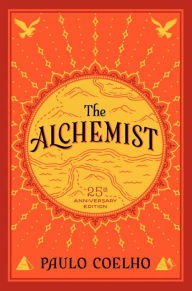
Paulo Coelho's fable about Santiago, a shepherd who crosses from Spain to the Egyptian pyramids chasing a recurring dream, shares more with Who Moved My Cheese? than first appears. Both are short allegories about leaving safety behind, both insist that the search itself changes you, and both deliver their lessons in plain, repeatable lines. Haw venturing back into the maze and Santiago leaving his flock are the same decision at different scales.
The difference is that The Alchemist is a real novel with a landscape, characters, and a spiritual register, omens, the Soul of the World, a Personal Legend, rather than a business handout. It is about destiny and meaning, not careers and reorgs, so it suits readers whose moved cheese is a life question rather than a job change. It is also simply a better piece of writing, which matters if the original left you wanting more craft.
Yes. Spencer Johnson wrote Out of the Maze, published in 2018 after his death in 2017. It returns to Hem, the character who refused to leave the empty cheese station, and is about questioning the beliefs that keep you stuck rather than just chasing new cheese. It is the same length and style as the original.
What should I read after Who Moved My Cheese? if I want something more substantial?
Switch by Chip and Dan Heath is the best single upgrade: it covers the same territory, why change is hard and how to make it happen, with research and real case studies instead of a parable. Mindset by Carol Dweck explains the psychology of the Hem versus Haw split, and The 7 Habits of Highly Effective People is the classic full framework.
Why do some people dislike Who Moved My Cheese?
The main criticism is that it asks workers to adapt cheerfully to change without ever questioning whether the change is fair, which is why it stings when management distributes it during layoffs or restructuring. Others simply find the parable too simple for adult readers. Fans counter that the simplicity is the feature: one memorable story that actually changes behavior.
Did Spencer Johnson write anything else worth reading?
His other famous book is The One Minute Manager, co-written with Ken Blanchard in 1982, which uses the same short-parable format to teach management basics and is included on this list. He also wrote Peaks and Valleys and The Present in a similar style, plus Who Moved My Cheese? for Teens for younger readers.
As an Amazon Associate, we earn from qualifying purchases. · About & methodology