8 books like We Need to Talk About Kevin, from Sharp Objects to Room and A Little Life: dark family stories about motherhood, trauma, and violence.
Updated June 10, 2026
Lionel Shriver's We Need to Talk About Kevin is built on a confession most fiction will not touch: a mother admitting she may never have loved her son. Eva Khatchadourian writes letters to her estranged husband in the aftermath of the school massacre their teenage son Kevin committed, working backward through his childhood and her own ambivalence about motherhood, asking whether Kevin was born wrong or whether she made him that way. The Orange Prize winning novel never settles the nature versus nurture question, and that refusal is exactly what makes it linger. Eva is an unreliable, prickly, often unlikable narrator, and Shriver dares you to judge her.
No single book replicates that combination, so the list below splits along the threads readers want to follow. If it was the taboo honesty about motherhood and family damage you want more of, start with Room and Little Fires Everywhere. If it was the psychological darkness, the sense of something wrong inside a family or inside a narrator, go to Sharp Objects, The Bell Jar, or The Shining. And if you want fiction that sits with the aftermath of violence and trauma the way Eva's letters do, The Lovely Bones and A Little Life carry that weight, with The Road as the bleakest portrait of a parent-child bond under pressure.
A practical note: nothing here is light. Sharp Objects and A Little Life in particular contain self-harm and abuse that some readers find harder going than Kevin itself. Each entry below tells you what it shares with Shriver's novel and where it diverges, so you can match the next read to what you can take on right now.
Read this if you want trauma examined at full length and full intensity.
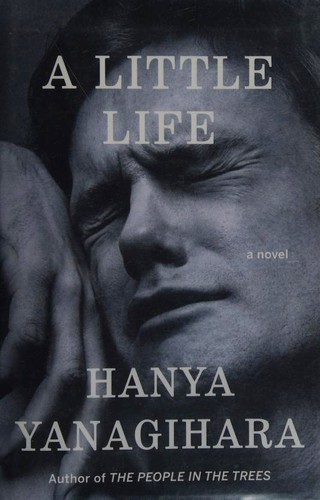
Hanya Yanagihara's 2015 novel shares Kevin's central project: tracing how early damage shapes an entire life, and asking whether love can reach someone formed by it. It follows four college friends in New York across decades, but its real subject is Jude, a brilliant litigator whose childhood of horrific abuse surfaces slowly through the book. Like Shriver, Yanagihara refuses easy redemption, and both novels force the reader to sit inside pain that most fiction would flinch from or resolve.
The differences are scale and angle. At over 700 pages it is a far longer commitment than Kevin, the perspective is the wounded child's rather than the parent's, and the violence is done to the protagonist rather than by him. It is also openly emotional where Shriver is cold and controlled; readers tend to either weep through it or find it manipulative. Pick it up if you want the trauma thread expanded into an epic, and skip it for now if Kevin already took you to your limit on depictions of self-harm.
Read this if the idea of a parent becoming the danger is what gripped you.
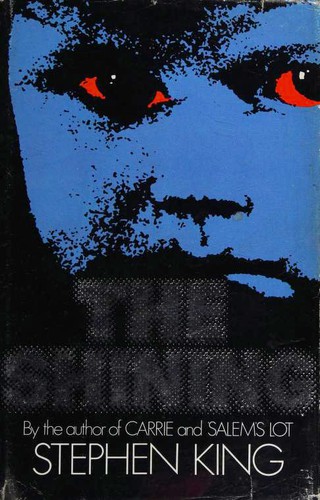
Stephen King's 1977 novel is the supernatural mirror of Shriver's question. Jack Torrance brings his wife and young son Danny to the isolated Overlook Hotel for the winter, and the book watches a flawed, resentful, recovering alcoholic father curdle into a threat to his own family. Like Kevin, it is fundamentally about the violence latent inside a household, and King is unexpectedly careful about the psychology: Jack's failures as a father and Wendy's fear for her child are drawn with real domestic precision before anything ghostly takes over.
The mechanism, of course, is completely different. The hotel is genuinely haunted, so the evil has an external source in a way Shriver deliberately denies Eva, and the book delivers horror set pieces rather than slow epistolary dread. It is also a faster, more conventional read. Choose it if you want the family-turned-deadly premise with momentum and scares, and accept that it answers the nature versus nurture question with a third option Shriver would never allow: the building did it.
Read this for the parent-child bond stripped to its starkest form.
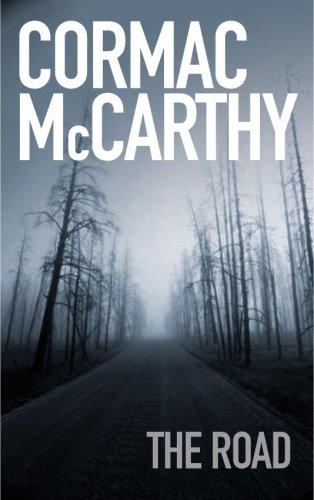
Cormac McCarthy's Pulitzer winner is on this list for one reason, and it is a good one: like Kevin, it stares directly at what a parent owes a child and what the world's darkness does to that bond. A father and his young son walk through a burned, post-apocalyptic America, scavenging and hiding from people who have become predators. Where Eva fails to connect with her son, McCarthy's unnamed father loves his with a devotion that is almost unbearable, and reading the two books together is like seeing the same question lit from opposite sides.
Everything else is different. There is no domestic realism, no suburbia, no whodunit-of-the-soul structure, just gray landscape and spare, unpunctuated prose. The bleakness is environmental rather than psychological, and the child here is innocent, the moral center of the book rather than its mystery. Pick it up if Kevin left you wanting fiction about parenthood at the extremes; pass if what you actually wanted was the dark mother-son psychology, which this inverts.
Read this if you want the motherhood-and-judgment themes with a gentler hand.
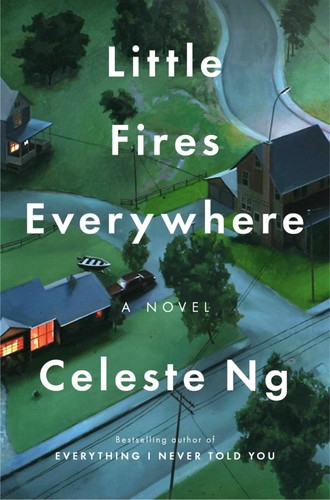
Celeste Ng's 2017 novel asks many of the same questions as Kevin, what makes a good mother, how much of a child's character a parent controls, how a community judges women for their choices, but asks them through a suburban drama rather than a tragedy's autopsy. In planned, orderly Shaker Heights, Ohio, the rule-following Elena Richardson collides with Mia Warren, an artist single mother, while a custody battle over a Chinese-American baby splits the town along lines of class and entitlement. Like Shriver, Ng is sharp about the gap between the performance of motherhood and the reality of it.
This is the most accessible book on the list, a propulsive book-club read with multiple perspectives and an actual warmth that Kevin never permits itself. There is fire and damage but no massacre, and Ng ultimately extends sympathy where Shriver withholds it. Choose it if you want to keep thinking about mothers, expectations, and blame without spending another four hundred pages inside dread. Readers who loved Eva's acid voice specifically may find it too soft.
Read this for motherhood tested at an extreme, told from the child's side.
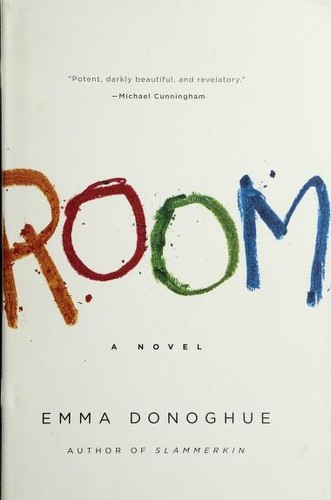
Emma Donoghue's 2010 novel is the strongest companion piece on motherhood here. Five-year-old Jack narrates a life spent entirely inside one room, where he and his Ma are held captive by the man who abducted her, and the book's power comes from watching a mother build a whole world for her child inside a trauma he does not understand. Like Kevin, it was shortlisted for major prizes and turned into an acclaimed film, and like Kevin it is obsessed with the question of what a mother's love can and cannot do for a child shaped by terrible circumstances.
The crucial difference is the direction of the light. Kevin is narrated by a mother who doubts her love; Room is narrated by a child whose mother's love is total, and the result is harrowing but ultimately hopeful rather than damning. The child's-eye voice is a craft achievement some readers find magical and others find limiting over a full novel. Pick it if Kevin left you needing proof that the mother-child bond can survive the worst; it is the closest thing to an antidote on this list.
Read this if you want another poisonous family and an unreliable woman narrating it.
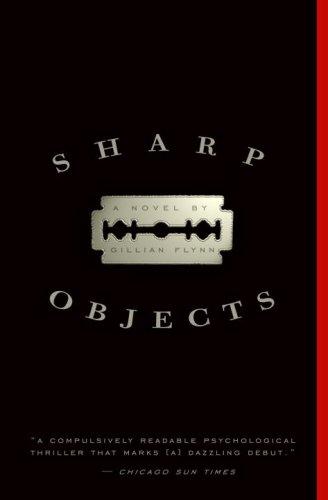
Gillian Flynn's 2006 debut is the closest match on this list for sheer psychological nastiness. Journalist Camille Preaker returns to her small Missouri hometown to cover the murders of two girls and is pulled back into the orbit of her controlling mother and eerie half-sister. Like Kevin, it is a book about whether damage is inherited, about a mother whose care conceals something monstrous, and about a female narrator whose own wounds (Camille carves words into her skin) make her testimony slippery. Flynn shares Shriver's willingness to write women who are allowed to be genuinely dark.
It is also a much faster machine: a compact thriller with an actual mystery and a twist ending, where Kevin tells you the ending on page one and works backward. The prose is pulpier and the violence more explicit, including self-harm that some readers should know about going in. Choose it if you want Kevin's themes delivered with plot momentum; choose Kevin-style literary patience elsewhere on this list if twists feel cheap to you.
Read this for the interior descent and the weight of expectations placed on women.
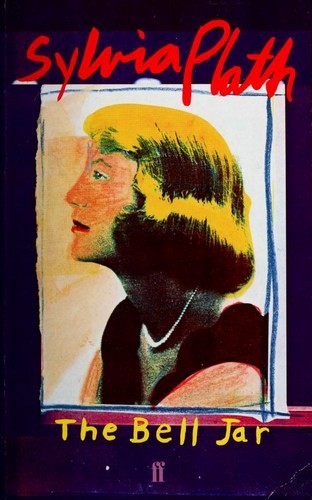
Sylvia Plath's only novel connects to Kevin through Eva more than through Kevin himself. Esther Greenwood, a talented college student interning at a New York magazine in the 1950s, narrates her own slide into depression and breakdown with the same unnerving, articulate detachment Eva brings to her letters. Both books are really about the gap between what a woman is supposed to feel (gratitude, maternal warmth, ambition channeled properly) and what she actually feels, and both made readers uncomfortable precisely because the voice is so lucid about it.
There is no crime here and no child; the stakes are one young woman's mind, and the novel is semi-autobiographical, published weeks before Plath's death in 1963. It is shorter and stranger than Kevin, with flashes of black comedy people forget to mention. Read it if Eva's voice, the honesty about feelings women are not supposed to admit, was what held you. Skip it for now if you are specifically chasing the family-violence thread, which this does not contain.
Read this if you want the aftermath of violence on a family, with consolation.
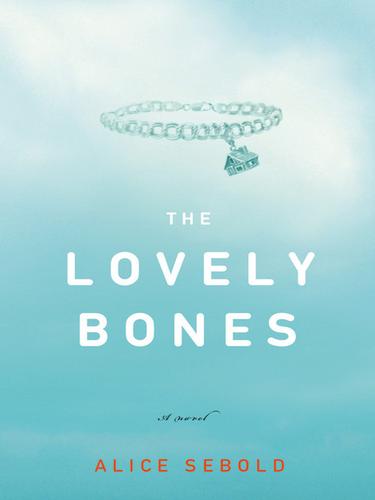
Alice Sebold's 2002 bestseller shares Kevin's structure of looking back at a catastrophe that has already happened. Fourteen-year-old Susie Salmon narrates from her own heaven after being murdered by a neighbor, watching her parents' marriage strain, her siblings grow, and her killer evade suspicion. Like Shriver, Sebold is interested less in the crime than in its long wake, the way one act of violence rearranges every relationship in a family for years afterward.
The temperature, though, is entirely different. Sebold's novel grieves where Shriver's accuses; its supernatural frame is consoling, almost gentle, and it moves toward healing in a way Kevin pointedly refuses. The victim narrates instead of a perpetrator's mother, which changes where your sympathy sits from the first page. Pick it if Kevin left you wanting the aftermath-of-violence story with some light in it. Readers who valued Shriver's refusal to comfort may find the heaven sections sentimental.
What book is most similar to We Need to Talk About Kevin?
From this list, Sharp Objects by Gillian Flynn is the closest match: another unflinching novel about inherited damage, a toxic mother figure, and an unreliable female narrator. Beyond this list, readers often pair Kevin with Shriver's other work, or with Defending Jacob by William Landay, which puts parents of an accused child at the center of a legal thriller.
Is We Need to Talk About Kevin based on a true story?
No. It is fiction, though Shriver wrote it in the wake of the school shootings of the late 1990s, including Columbine, and the novel references real cases. Kevin, Eva, and the massacre at the fictional Gladstone High are invented. The book won the Orange Prize in 2005 and was adapted into a 2011 film starring Tilda Swinton as Eva.
Does the book ever answer whether Kevin was born evil or made that way?
Deliberately, no. Eva is an unreliable narrator reconstructing Kevin's childhood through her own guilt, so every piece of evidence about his nature is filtered through a mother with reasons to blame herself or to excuse herself. Shriver has said the ambiguity is the point. That open question is why books like Sharp Objects and A Little Life, which probe how damage is formed, make good follow-ups.
Which of these books is the least disturbing to read next?
Little Fires Everywhere is the gentlest entry point: it explores motherhood, judgment, and family conflict without graphic violence. Room is harrowing in premise but ultimately hopeful. At the other end, A Little Life and Sharp Objects contain extended depictions of abuse and self-harm, so save those for when you are ready for something at least as dark as Kevin.
As an Amazon Associate, we earn from qualifying purchases. · About & methodology