8 books like Sharp Objects, from Dark Places to The Silent Patient: damaged narrators, toxic families, and small-town secrets in Gillian Flynn's vein.
Updated June 11, 2026
Sharp Objects was Gillian Flynn's 2006 debut, and it is meaner and more intimate than Gone Girl, the book that later made her famous. Camille Preaker, a Chicago reporter who self-harms by carving words into her skin, is sent back to her Missouri hometown of Wind Gap to cover the murders of two young girls, which means moving back in with Adora, her hypochondriac southern-gothic mother, and Amma, her unnervingly precocious half-sister. The whodunit matters less than the excavation: this is a book about mothers and daughters, inherited damage, and the violence that festers in small towns and pretty houses. The 2018 HBO adaptation with Amy Adams sent a new wave of readers looking for more like it.
More like it splits a few ways, and this list covers each. If you want Flynn's voice itself, corrosive narrators and rural rot, Dark Places and Gone Girl are the direct line. If the unreliable, psychologically frayed narrator was the hook, The Girl on the Train, Before I Go to Sleep, and The Silent Patient run variations on it. And if the toxic family hiding its secrets behind a respectable front was what gripped you, Big Little Lies, The Wife Between Us, and We Were Liars work that territory at different ages and temperatures.
A reading note: nothing here is quite as grim as Sharp Objects, which is genuinely one of the darkest mainstream thrillers of its era. Dark Places comes closest. Big Little Lies and We Were Liars are the gentler entry points if you want the family-secrets engine with less gore and self-harm.
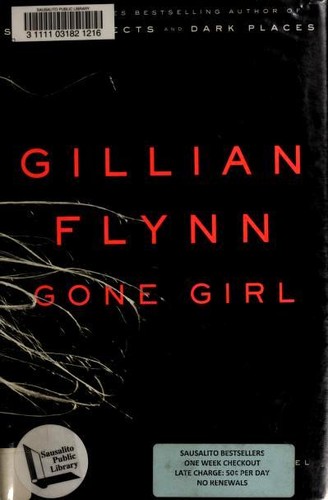
Read this if you somehow have not yet; it is Flynn's sharpest plot machine.
Gone Girl is Flynn's third novel and her phenomenon: Amy Dunne vanishes on her fifth wedding anniversary, her husband Nick becomes the prime suspect, and the alternating he-said, she-said narration builds to one of the most famous twists in modern crime fiction. The DNA it shares with Sharp Objects is the voice, acid, funny, and unsparing about women who refuse to be likable, and the conviction that the real crime scene is a relationship everyone outside it envies.
The differences are worth knowing. Gone Girl is a marriage thriller, not a family one; the small-town gothic of Wind Gap gives way to recession-era Missouri suburbia and a media-circus plot that is glossier and more contrived than Sharp Objects' slow rot. Some Sharp Objects devotees actually prefer the debut's rawness. But as pure plotting, this is Flynn's best machine, and if you only know the movie, the novel's interiority still earns the read.
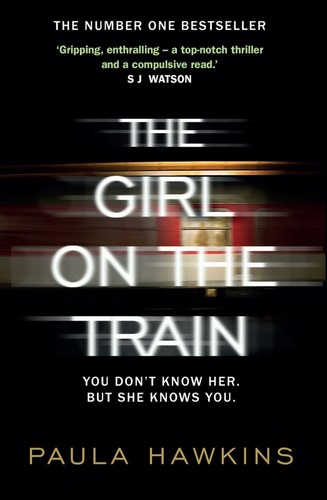
Read this for a narrator as damaged and doubted as Camille, on a faster commercial track.
Paula Hawkins's 2015 blockbuster owes an obvious debt to Flynn, and the kinship with Sharp Objects specifically is the narrator. Rachel Watson is an alcoholic who watches a seemingly perfect couple from her commuter train, inserts herself into the investigation when the wife disappears, and cannot trust her own blackout memories. Like Camille, she is a woman whose addiction and history make everyone, including herself, doubt what she knows, and the book wrings real suspense from that self-doubt.
It is a leaner, faster, more conventional thriller than Sharp Objects, set among London commuter suburbs rather than the American gothic South, and the prose does not aim for Flynn's literary bite. The psychology is the selling point; the twist itself is guessable for seasoned thriller readers. Pick it when you want the unreliable-woman engine running at page-turner speed, and do not expect the family excavation that gives Sharp Objects its depth.
Read this if you want the secrets and the mothers without the bleakness.
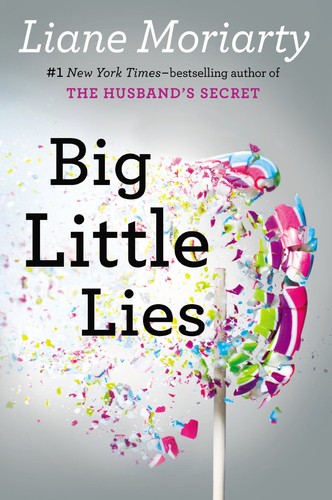
Liane Moriarty's novel works the same seam as Sharp Objects, the violence hiding inside enviable domestic lives, but from the sunlit side. Three mothers at a Sydney-area school orbit a death at a trivia night, revealed slowly through a Greek chorus of gossiping parents, and the book's real subjects are domestic abuse, bullying, and the performances women maintain for each other. Like Flynn, Moriarty understands that the most dangerous household on the street is often the most photogenic one.
The temperature is completely different. Moriarty is witty and warm where Flynn is corrosive; there is genuine comedy here, the violence is treated seriously but not luridly, and the ending offers solidarity rather than desolation. Readers who loved Sharp Objects for its darkness may find this soft, while readers shaken by Flynn often find this the right next step. It is the gentlest book on the list and, in its HBO adaptation, the natural companion piece to the Sharp Objects series.
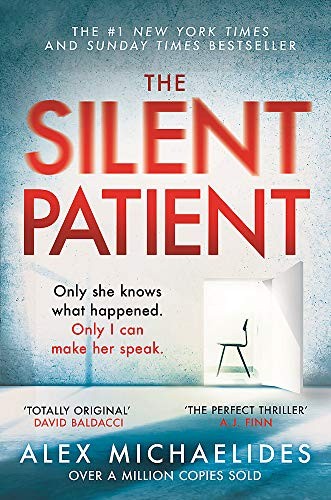
Read this if you want trauma at the center of a twist you likely will not see coming.
Alex Michaelides's 2019 debut shares Sharp Objects' core preoccupation: the way buried trauma writes itself on a woman's body and behavior. Alicia Berenson, a painter, shoots her husband five times and never speaks again; Theo Faber, a psychotherapist, becomes obsessed with making her talk. Where Camille carves words into her skin, Alicia communicates only through a single painting, and both books treat silence and self-harm as testimony the world refuses to read correctly.
It is a tighter, more mechanical book than Sharp Objects, built almost entirely to deliver its final-act reversal, which is one of the most effective in recent thriller memory. The prose is plain, the Greek-myth garnish is light, and the characters outside the central pair are thin. Choose it for the puzzle and the payoff, not for atmosphere or family texture. It reads in two or three sittings and is best gone into knowing as little as possible.
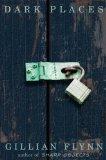
Read this if you want the closest thing to Sharp Objects that exists, including by Flynn herself.
Dark Places is Flynn's second novel, sitting between Sharp Objects and Gone Girl, and it is the truest readalike on this list. Libby Day was seven when her mother and sisters were massacred on their Kansas farm, and her testimony put her brother Ben in prison; twenty-five years later, broke and corrosive, she starts selling her story to a true-crime club that believes Ben is innocent. Like Camille, Libby is a damaged, abrasive woman dragged back into the wreckage of her own family, and Flynn alternates her present-day digging with the 1985 day of the murders.
It trades Sharp Objects' southern-gothic claustrophobia for a bleak rural-poverty noir, with the 1980s satanic-panic hysteria woven through the flashbacks. It is arguably even grimmer than the debut, and Libby is even harder to like than Camille, which is the point. If Sharp Objects worked on you, this is the first book to pick up, before any of the non-Flynn options here.
Read this for marriage-as-crime-scene with a structural trick worth the price.
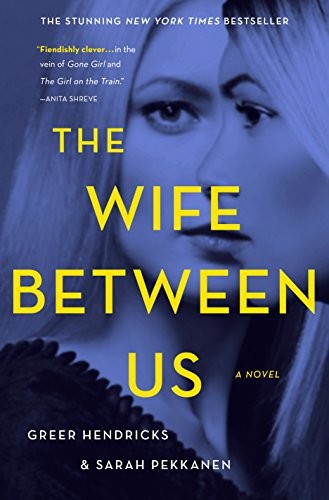
Greer Hendricks and Sarah Pekkanen's co-written thriller belongs to the same family as Sharp Objects in its interest in how an abusive relationship distorts a woman's reality. A jealous ex-wife appears to be stalking her replacement, the younger woman about to marry her ex-husband, and the book's early twist reshuffles everything you think you know about who these women are to each other. Like Flynn, the authors are less interested in whodunit than in how control and gaslighting actually operate.
It is a domestic thriller, not a gothic one: no small town, no murdered girls, no family-of-origin excavation, and the prose is commercial and quick. The middle section slows once the central reveal lands, and the final pages stack one twist too many for some readers. Pick it when you want the psychology of a poisonous marriage, somewhere between Gone Girl's territory and Big Little Lies', with a structure that rewards going in blind.
Read this if Camille's untrustworthy memory was the thread that hooked you.
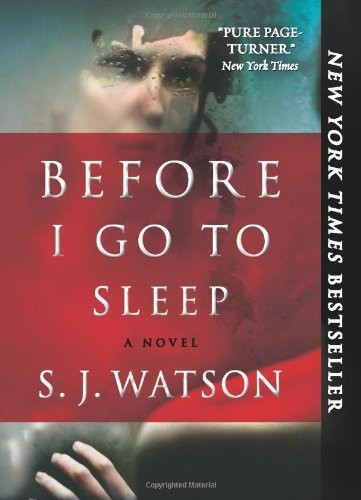
S.J. Watson's debut is the purest unreliable-narrator experiment here. Christine Lucas wakes every morning with no memory of her adult life, the result of a decades-old trauma, and rebuilds herself daily from a hidden journal whose first line warns her not to trust the man who says he is her husband. Sharp Objects readers will recognize the central horror: a woman whose own mind has been shaped by harm she cannot fully see, dependent on people who may be the harm itself.
It is a chamber piece, essentially three characters and a house, with none of Flynn's social texture or family sprawl, and the amnesia device requires some suspension of disbelief about the neurology. The momentum is real, though; the journal structure makes the book genuinely hard to put down, and the ending is earned. Choose it for a single tense weekend read focused entirely on memory and gaslighting.
Read this for a privileged family rotting from the inside, in a shorter and younger key.
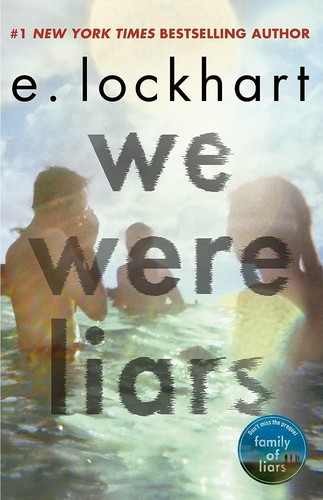
E. Lockhart's novel is YA, but it earns its place next to Sharp Objects: a wealthy, image-obsessed family (the Sinclairs, old money, private island off Cape Cod) whose surface perfection conceals real damage, narrated by a teenage girl, Cadence, whose memory of one catastrophic summer has been wiped by trauma. The mothers competing for inheritance and approval echo Adora's poisonous matriarchy, and the slow recovery of what actually happened builds to a reveal that genuinely lands.
It is much shorter and far less graphic than anything by Flynn, with a fairy-tale-inflected, fragmented prose style that readers either find haunting or affected. The concerns are adolescent, first love, family loyalty, guilt, rather than adult corrosion. Pick it as a one-sitting palate cleanser that keeps the toxic-family engine running, or as the right recommendation for a younger reader who is not ready for Sharp Objects itself.
Start with Gillian Flynn's own Dark Places, which is the closest match in voice and darkness: another damaged woman dragged back into her family's violent past. After that, Gone Girl completes the Flynn catalog. Among other authors, The Silent Patient is the strongest pick for trauma-driven twists, and Big Little Lies is the best choice if you want family secrets with less bleakness.
Is Sharp Objects part of a series, and did Gillian Flynn write more books?
Sharp Objects is a standalone, and Flynn has written only three novels: Sharp Objects (2006), Dark Places (2009), and Gone Girl (2012), plus the novella The Grownup (2015). All are standalones sharing her trademark corrosive narrators and bleak Missouri settings. Camille's story ends with the book; the HBO series adapted it as a closed single season.
Which of these books is most like the Sharp Objects HBO series?
Big Little Lies is the natural companion: both were HBO limited series from director Jean-Marc Vallee, both center on mothers, secrets, and violence behind beautiful facades, and both star A-list casts (Amy Adams in one, Reese Witherspoon and Nicole Kidman in the other). On the page, though, Dark Places is far closer to Sharp Objects' tone than Moriarty's lighter touch.
Are these books as dark as Sharp Objects?
Mostly no, and that is worth knowing going in. Sharp Objects deals graphically with self-harm, child violence, and abuse. Dark Places matches its bleakness, and The Silent Patient and The Girl on the Train are dark but less visceral. Big Little Lies and We Were Liars handle serious subjects, domestic abuse and family trauma, with a much lighter hand and far less graphic content.
As an Amazon Associate, we earn from qualifying purchases. · About & methodology