7 books like Verity by Colleen Hoover, from The Silent Patient to Behind Closed Doors: twisty psychological thrillers about marriages hiding something terrible.
Updated June 10, 2026
Verity is Colleen Hoover's one true thriller, and it works because of a single nasty device: a manuscript within the book. Struggling writer Lowen Ashleigh is hired to finish the bestselling series of Verity Crawford, an injured and unresponsive author, and while sorting Verity's office she finds an autobiography that reads like a confession about Verity's marriage and her daughters. Hoover alternates Lowen's growing dread (and her attraction to Verity's husband, Jeremy) with chapters of that manuscript, and the final-page letter forces you to decide which version of Verity to believe. People argue about that ending years later, which is exactly the point.
Readers who finish Verity tend to want one of two things. Most want another marriage with something rotten at the center, told by a narrator you cannot fully trust, which is where Behind Closed Doors, The Wife Between Us, The Silent Patient, and The Last Mrs. Parrish live. Others want the propulsive, everyone-has-a-secret domestic suspense that made Verity unputdownable, which The Girl on the Train and Big Little Lies deliver. One pick, Daniel Silva's The Other Woman, is a genuine outlier (an espionage novel), and its entry says so plainly.
A practical note: Verity is more graphic, both sexually and in its violence toward children, than most mainstream thrillers. Nothing below goes quite that far. If the disturbing-manuscript element was what hooked you, start with The Silent Patient; if it was the wife-versus-wife dynamics, start with The Last Mrs. Parrish.
Read this if the dread of what happens inside the Crawford house was what gripped you.
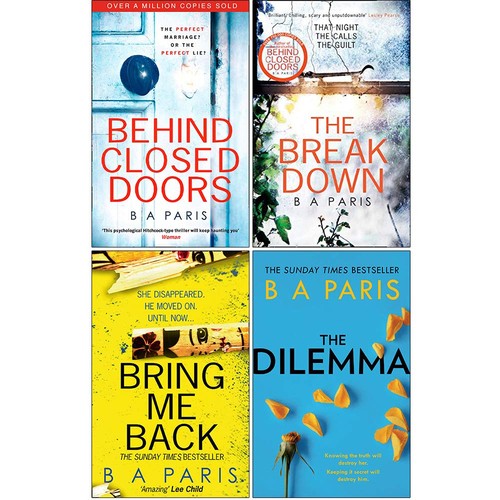
B.A. Paris's debut is the most claustrophobic book on this list, and it shares Verity's core unease: a marriage that looks enviable from the outside and is monstrous within. Jack and Grace Angel host perfect dinner parties; the novel alternates between past and present to show how Grace became a prisoner in her own home and what Jack actually is. Like Verity, it derives its tension less from whodunit than from watching a hidden truth get worse the closer you look.
It is a leaner, more single-minded book than Verity. There is no manuscript device, no ambiguity about who the villain is, and no romance subplot; once you understand the situation, the suspense is purely whether Grace can get out. Some readers find it almost unbearably tense, and the abuse it depicts is psychological and sustained. Pick it when you want Verity's darkness distilled into a fast, ruthless single sitting.
Read this if you loved having your assumptions yanked out from under you.
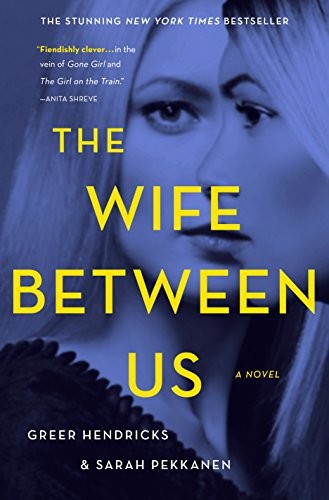
Greer Hendricks and Sarah Pekkanen built this novel around misdirection the way Hoover built Verity around the manuscript. It appears to be a familiar triangle, an obsessive ex-wife watching her replacement, and then the book reveals that what you thought you were reading is not what is happening at all. The big structural twist lands around the halfway mark and reframes everything, which gives it the same did-I-misread-everything jolt as Verity's final letter.
The difference is temperature. This is a cooler, more conventional psychological thriller, without Verity's explicit sex or its violence toward children, and its sympathies ultimately settle in a way Hoover deliberately refuses. It also rewards readers who pay attention; the early chapters are engineered to mislead, and skimmers miss the trick. Choose it when you want the twist mechanics of Verity in a less disturbing package.
Read this if you want another book built on one shocking final reveal.
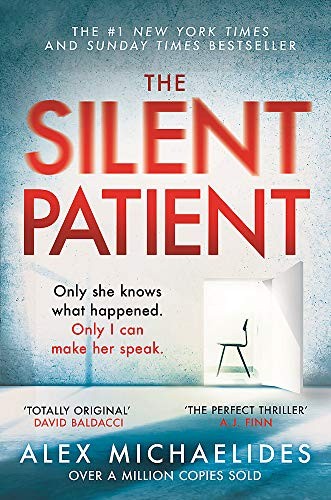
Alex Michaelides's 2019 debut is the natural next read after Verity, and the two books are recommended together constantly for a reason. Alicia Berenson shoots her husband five times and never speaks again; Theo Faber, a psychotherapist, becomes obsessed with making her talk. Like Verity, it splices the investigator's account with the woman's own written record (Alicia's diary stands in for Verity's manuscript), and like Verity it saves a reveal for the very end that forces you to rethink the entire book.
It is a tidier, more plotted novel than Verity, drawing openly on Greek tragedy, and it has none of Hoover's romance-novel DNA; there is no love story pulling against the suspense. The ending also resolves cleanly rather than leaving you arguing about what was true. If Verity's ambiguity frustrated you, that resolution will feel like a relief. If the ambiguity was the best part, you may find this one almost too neat.
Read this if you want domestic secrets with more wit and more breathing room.
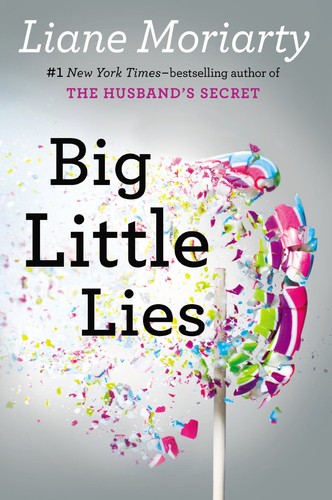
Liane Moriarty's novel shares Verity's conviction that the worst things happen inside ordinary, even glamorous, households. Three mothers in an Australian beach town orbit a school community where someone ends up dead at a trivia night, and Moriarty withholds both the victim and the killer while peeling back each marriage. The thread about Celeste's outwardly perfect, privately violent marriage gets closer to Verity's darkness than the book's breezy reputation suggests.
The tone is the real difference. Moriarty is funny, warm, and interested in friendship and motherhood as much as menace, so the dread arrives in flashes rather than as a constant pressure. It is also told from multiple points of view with a Greek-chorus structure of police interview snippets, nothing like Lowen's tunnel-vision narration. Pick it when you want the secrets and the gut-punch reveal but need a break from Verity's relentlessness.
Read this if the unreliable narration was your favorite part of Verity.
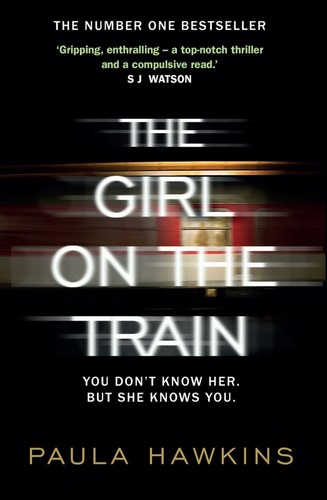
Paula Hawkins's blockbuster runs on the same fuel as Verity: a narrator whose account you cannot trust, watching a household that is not what it seems. Rachel rides past the same house every day, invents a perfect life for the couple she sees, and then the woman vanishes. Rachel drinks, blacks out, and inserts herself into the investigation, and the gaps in her memory do the same destabilizing work as the contradictions between Verity's manuscript and Jeremy's account.
Where Verity makes you doubt the woman being read about, this makes you doubt the woman doing the reading, and Rachel is a far messier, sadder narrator than Lowen. The pace is slower in the first half, more character study than thriller, before it tightens. There is no romance to root for and not much warmth anywhere. Choose it for narration you have to read against, not for the gothic house-with-a-secret atmosphere.
Read this if you wanted more of the new-woman-in-another-wife's-life dynamic.
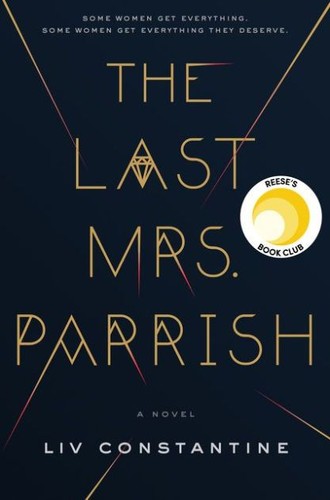
Liv Constantine's novel takes the position Lowen occupies in Verity, the outsider woman drawn into a wealthy couple's world, and makes it openly predatory. Amber Patterson schemes her way into the life of golden couple Daphne and Jackson Parrish, intending to replace Daphne. Then the perspective shifts to Daphne, and the marriage you have been envying turns out to be something else entirely. That mid-book reversal, where the supposed victim's account rewrites the villain's, is the closest structural cousin to Verity's manuscript whiplash on this list.
It is glossier and soapier than Verity, with designer-label detail and a revenge arc that builds to a genuinely satisfying ending rather than an ambiguous one. The darkness is real (Jackson's abuse is depicted seriously) but the book ultimately wants you cheering, not unsettled. Pick it when you want Verity's two-women-one-man tension with the moral lines redrawn clearly by the final page.
Read this only if you want a well-made spy novel, because it is not domestic suspense.
Honesty first: this is the odd one out. Daniel Silva's The Other Woman is an espionage thriller, the eighteenth book in his long-running Gabriel Allon series about an Israeli intelligence officer and art restorer. The connection to Verity is thin and thematic at best: a buried secret about who someone really was, a hidden written record, and a woman at the center of a decades-old deception involving a Soviet mole. It shares Verity's interest in betrayal and concealed identity, but in the world of intelligence services rather than marriages.
Silva is one of the most reliable craftsmen in the spy genre, and the book works fine as an entry point even mid-series, with the Kim Philby history woven through it giving it real-world weight. But if you came to this page wanting another Verity, twisted marriages, unreliable narrators, domestic dread, skip it and take The Silent Patient or Behind Closed Doors instead. Pick it only if you are also a thriller reader in the broader sense and fancy a change of scenery.
What should I read after Verity by Colleen Hoover?
The Silent Patient by Alex Michaelides is the most common and best-fitting recommendation: like Verity, it pairs an outside investigator with a woman's own written record and saves a reframing twist for the final pages. Behind Closed Doors by B.A. Paris is the closest match for the trapped-in-a-marriage dread, and The Wife Between Us delivers the strongest assumption-flipping twist.
Is Verity like Colleen Hoover's other books?
Not really. Most of Hoover's catalog (It Ends with Us, Ugly Love, November 9) is contemporary romance with heavy emotional themes. Verity is her one full psychological thriller, darker and more graphic than the rest of her work. Readers who loved Verity specifically usually do better moving to thriller writers like Freida McFadden, B.A. Paris, or Alex Michaelides than to Hoover's romances.
Does Verity have a sequel?
No. Verity is a standalone novel, though editions published since 2021 include a bonus chapter that adds a little more material around the ending without settling the central question. The famous ambiguity, whether Verity's manuscript or her letter tells the truth, is intentional, and Hoover has declined to give a definitive answer.
Which of these books is the least disturbing?
Big Little Lies. It deals seriously with domestic abuse but wraps it in humor, friendship, and a propulsive mystery, with none of Verity's graphic content. Behind Closed Doors sits at the other end of the scale: nothing in it matches Verity's most shocking scenes, but its sustained psychological captivity is the most oppressive reading experience on this list.
As an Amazon Associate, we earn from qualifying purchases. · About & methodology