9 books like Tomorrow, and Tomorrow, and Tomorrow, from Kavalier & Clay to The Art of Fielding: novels about creative partnership, work, and love that is not romance.
Updated June 10, 2026
Gabrielle Zevin's Tomorrow, and Tomorrow, and Tomorrow is a love story that never becomes a romance, which is exactly why people cannot stop recommending it. Sam Masur and Sadie Green meet as kids in a hospital game room, reunite in college, and spend thirty years making video games together, collaborating, betraying each other, and circling a bond that is deeper than friendship and never quite love. Zevin takes game design seriously as art, and the novel's real subject is creative partnership: what it costs to build things with another person, and the games' promise of infinite restarts set against a life that only runs once.
No single book does all of that, so this list splits by what you loved most. If it was the decades-long creative partnership, go straight to The Amazing Adventures of Kavalier & Clay, the novel Zevin's is most often compared to, or The Art of Fielding for ambition and friendship inside an institution. If it was the play with timelines, restarts, and alternate lives, you want The Midnight Library, Cloud Atlas, or 100 Years of Solitude. And if it was the meditation on art, meaning, and mortality, Station Eleven, The Unbearable Lightness of Being, Invisible Man, and Please Ignore Vera Dietz each take one of those threads further than Zevin does.
A practical note: this list runs an unusually wide range, from a quick book-club read (The Midnight Library) to genuinely demanding literary fiction (Invisible Man, Cloud Atlas). Each entry below is explicit about which part of Zevin's novel it matches and how hard it works you, so choose by appetite as much as by theme.
Read this if the 'infinite lives' idea was what stayed with you.
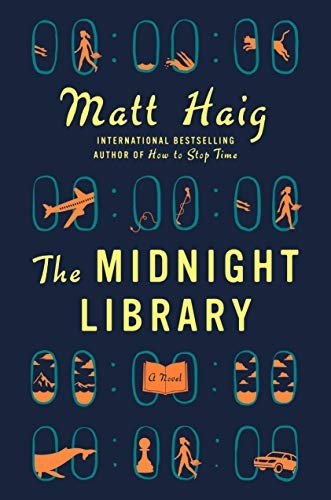
Matt Haig's bestseller literalizes the metaphor at the center of Zevin's novel. Tomorrow, and Tomorrow, and Tomorrow keeps returning to the idea that games offer what life cannot, the chance to die and restart; The Midnight Library hands its heroine exactly that. Nora Seed, suspended between life and death, browses a library where every book is a life she might have lived had one choice gone differently, and tries them on one by one. The preoccupations overlap cleanly: regret, the roads not taken, and what makes a single unrepeatable life worth playing through.
The gap is in execution. Haig writes a warm, direct fable with its lessons close to the surface, where Zevin builds her themes into character and lets them stay complicated. There is no creative partnership here and no equivalent of Sam and Sadie's thirty-year tangle; it is one woman's interior journey, readable in a couple of sittings. Pick it when you want the comfort and the concept, not when you want the friction and craft of the Zevin.
Read this if you loved the structural ambition and want it multiplied by six.
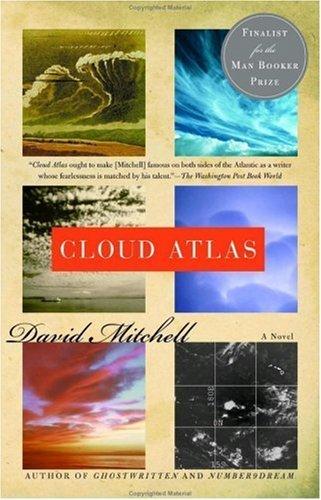
David Mitchell's novel is for readers who noticed how much of Zevin's book is built from structure: timelines that loop, a chapter inside a game, stories nested in stories. Cloud Atlas takes that instinct to its limit, six narratives running from a nineteenth-century Pacific voyage to a post-collapse far future, each interrupted and then resumed in reverse order, each connected to the next. Like Zevin, Mitchell is interested in how acts and works echo across time, and how art (a journal, a sextet, a film) carries people forward after they are gone.
It is a much more demanding book. Each section is written in a different genre and voice, including invented dialects, and the connections reward attention rather than announcing themselves. There is no central pair to root for across the whole span, which is the biggest emotional difference from Sam and Sadie. Choose it for the architecture and the long view of human connection; expect to work for it.
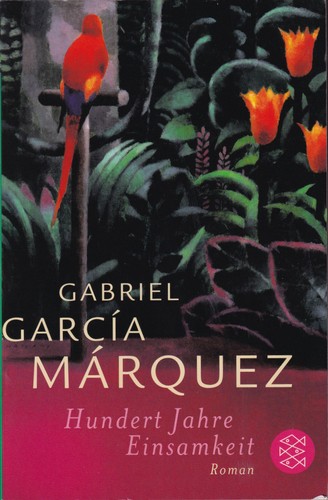
Read this for the full-life, full-generations sweep in a single masterpiece.
Gabriel García Márquez's classic shares with Zevin a fascination with time as something that loops rather than runs straight. The Buendía family repeats names, mistakes, and passions across generations in the town of Macondo, and the novel's circular structure makes the same point Zevin's game-restarts do: people keep replaying the same level, in love and in failure. Both books also span decades and watch their characters' youthful brilliance curdle, mellow, or come due. The novel's title even echoes in Zevin's pages, where solitude and connection are the constant stakes.
This is magical realism, not contemporary realism: insomnia plagues, levitating priests, four years of rain. There are no clean protagonists to attach to the way you attach to Sam and Sadie, and the repeating names ask you to keep a family tree handy. Pick it when you want a towering book about time, memory, and inheritance, and accept that its pleasures are mythic rather than intimate.
Read this if you believe, as Zevin's characters do, that making art is a reason to live.
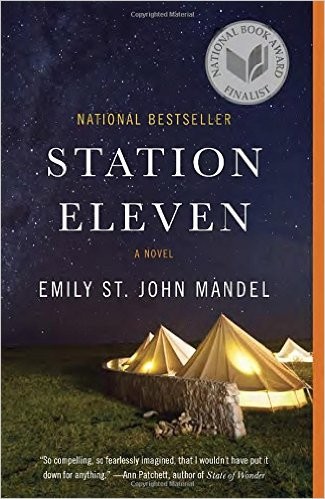
Emily St. John Mandel's novel shares Zevin's deepest conviction: that art is not decoration but survival. After a pandemic ends civilization, a troupe of actors and musicians walks the Great Lakes region performing Shakespeare under the motto 'survival is insufficient,' and the story moves back and forth across the collapse, tracing how a comic book, a play, and a few relationships ripple across decades. Like Tomorrow, and Tomorrow, and Tomorrow, it cuts between timelines and trusts the connections to accumulate emotional force rather than spelling them out.
The difference is register. Zevin's catastrophes are personal (a betrayal, an accident, a death); Mandel's is civilizational, and her book is quieter and more elegiac, less interested in any single partnership than in the web linking strangers. Nobody here builds anything together for thirty years. Pick it for atmosphere, structure, and the art-and-mortality theme, and note that it reads faster and gentler than its premise suggests.
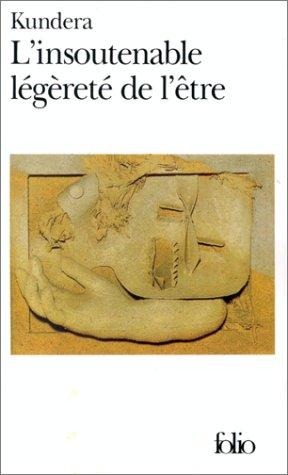
Read this if the philosophical asides were a feature, not a bug.
Milan Kundera's novel starts from the same question Zevin smuggles in through game design: if life runs only once, with no restarts and no saved games, can any choice carry weight? Kundera calls this unbearable lightness, the impossibility of testing your decisions against an alternate run, and he follows two couples in Prague around the 1968 Soviet invasion as they live out the problem. Readers who loved Zevin's digressions on play, identity, and mortality will recognize a writer who interrupts his story to think out loud, except Kundera makes the essayistic voice the main event.
It is a colder and more sexual book than Zevin's, openly philosophical, with a narrator who reminds you the characters are inventions. The warmth of Sam and Sadie's history has no real counterpart here, and the politics of occupied Czechoslovakia are load-bearing. Choose it when you want the ideas at full strength and you do not need to be held while you read.
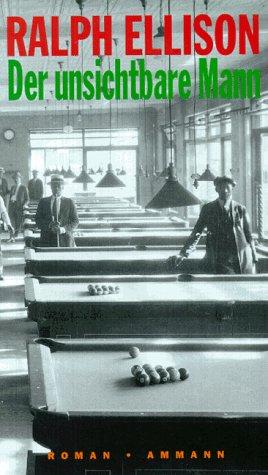
Read this for the identity themes pushed to their most serious form.
Ralph Ellison's 1952 novel connects to Zevin's at the level of theme rather than plot. Tomorrow, and Tomorrow, and Tomorrow keeps asking what it means to be seen, and how identity gets built, performed, and erased: Sam's disability and mixed heritage, Sadie's erasure in a male industry, the avatars they hide inside. Invisible Man is the great American novel on exactly that question. Ellison's unnamed Black narrator moves from a Southern college to Harlem, repeatedly remade and rendered invisible by people who see only their idea of him, until he claims the telling of his own story.
Be honest about the distance: this is a dense, episodic, sometimes surreal mid-century classic about race in America, with no creative partnership, no games, and little of Zevin's narrative comfort. It is on this list because it is a profound character study of selfhood and being unseen, not because it resembles the Zevin experience page to page. Pick it when you are ready for a major book that demands and rewards slow reading.
Read this first; it is the closest thing to Zevin's novel ever written.
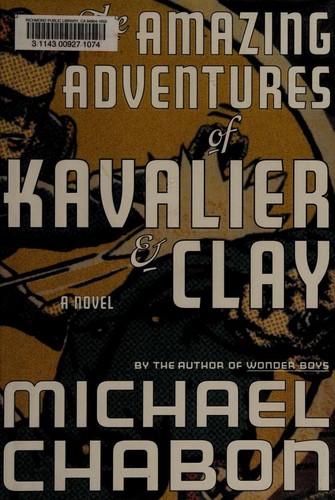
Zevin has named Michael Chabon's Pulitzer winner as a direct inspiration, and Tomorrow, and Tomorrow, and Tomorrow even tips its hat with its Unfair Games echo of Chabon's Empire Comics. The blueprint is the same: two cousins, Joe Kavalier and Sam Clay, meet young, discover they create better together than apart, and build a popular art form (Golden Age comic books) while love, war, and betrayal strain the partnership across decades. Everything readers love in Zevin, the collaboration that is deeper than romance, the craft talk taken seriously, the long arc of a working friendship, is here at full scale.
The differences are size and period. Chabon's novel is longer, denser, and set against the Holocaust and World War II, with sentences far more ornate than Zevin's clean contemporary prose. It earns its 600-plus pages but asks for them. If you want one book from this list, this is it; just clear the time it deserves.
Read this for the wreckage of a best friendship that never got to become love.
A.S. King's novel takes the emotional core of Zevin's book, a years-long friendship shot through with unspoken love and a terrible rupture, and pours it into a sharper, shorter story. Vera Dietz loved her best friend Charlie all her life; he betrayed her, then died, and now she is the only one who can clear his name. Like Zevin, King is interested in the things friends cannot say to each other, and in how grief over someone you were furious with does not resolve cleanly. The could-have-been ache that powers Sam and Sadie's story is the entire engine here.
It is YA, narrated by a teenage girl working pizza delivery shifts in small-town Pennsylvania, with flashes of dark comedy and a few surreal touches. There is no creative partnership and no decades-long span; the scale is one girl, one year, one loss. Pick it for the emotional precision, especially if you found Sam and Sadie's withheld feelings the truest thing in Zevin's novel.
Read this if you loved watching brilliant people's talent and friendships collide.
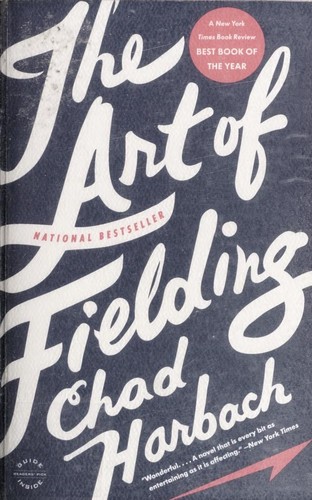
Chad Harbach's novel does for college baseball what Zevin does for game design: it treats a pursuit outsiders dismiss as unserious with complete seriousness, and builds its drama out of craft, ambition, and the people bound together by the work. Henry Skrimshander is a shortstop of genius at a small Wisconsin college until one errant throw breaks something in him, and the novel follows five intertwined lives as his collapse ripples through them. Like Tomorrow, and Tomorrow, and Tomorrow, it understands that mentorship and friendship around a shared obsession can be as consequential as any romance, and that early brilliance is a burden as much as a gift.
The canvas is more compressed than Zevin's: a few years on one campus rather than three decades across coasts. There are no games and no timeline tricks; it is a warm, traditional campus novel with echoes of Melville. Pick it when you want character depth, the psychology of performance, and ambition-and-failure handled tenderly.
What is the closest book to Tomorrow, and Tomorrow, and Tomorrow?
The Amazing Adventures of Kavalier & Clay by Michael Chabon. Zevin has cited it as an influence, and the parallels are direct: two close friends build a beloved pop-culture art form together (comic books rather than video games) across decades of love, betrayal, and creative tension. It is longer and more historical, but readers who loved Sam and Sadie's partnership almost always connect with Joe and Sam's.
Are there other books about video games like Zevin's novel?
Few literary novels treat game design as seriously as Zevin does, which is part of why the book stood out. None of the picks on this list are about games specifically; they match the partnership, timeline, and art themes instead. If you want games on the page, readers often pair Zevin with Ready Player One by Ernest Cline for fun rather than depth, or with nonfiction like Blood, Sweat, and Pixels by Jason Schreier about how games actually get made.
Is Tomorrow, and Tomorrow, and Tomorrow a romance?
No, and that is deliberate. Sam and Sadie love each other for thirty years but never become a couple; Zevin has said she wanted to write about creative collaboration as a relationship as significant as marriage. Readers who valued that not-quite-romance dynamic should look at Please Ignore Vera Dietz on this list, which centers on a best friendship with the same unspoken charge.
Do I need to know video games to enjoy these books, or Zevin's?
No. Zevin explains everything a non-player needs, and the games function as the characters' shared art form, the way comics do in Kavalier & Clay or baseball does in The Art of Fielding. None of the nine books on this list require any gaming knowledge at all; the connections run through friendship, creativity, time, and identity rather than the medium itself.
As an Amazon Associate, we earn from qualifying purchases. · About & methodology